

17.2.2 Cross Sectoral Dialogue About SDGs
Cross-Sectoral Dialogue on the Sustainable Development Goals (SDGs)
Universitas Sebelas Maret (UNS) actively initiates and participates in cross-sectoral dialogue about the Sustainable Development Goals (SDGs) through various conferences and collaborative forums throughout 2025. These activities bring together UNS and representatives from government, policymakers, academics, researchers, industry, practitioners, professional organizations, civil society, and international partners to discuss sustainable development issues relevant to achieving the SDGs. Through these forums, UNS connects different sectors and facilitates the exchange of knowledge, perspectives, and ideas to support SDG implementation.
1. ICoDMC 2025: Cross-Sectoral Dialogue on Climate Resilience and the SDGs
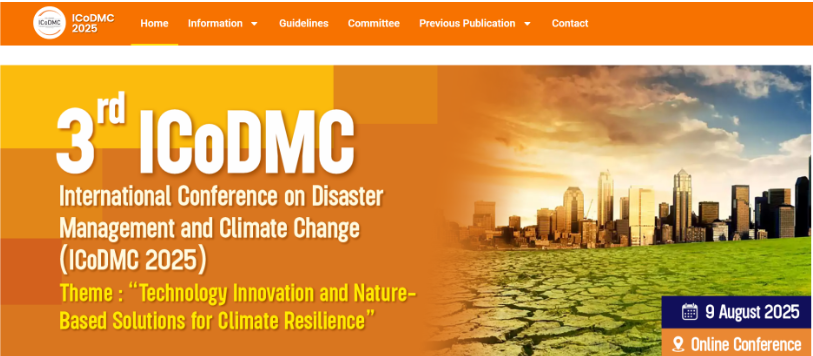
The 3rd International Conference on Disaster Management and Climate Change (ICoDMC) 2025 was organized by the Center for Disaster Studies (P3B), Institute for Research and Community Service (LPPM), Universitas Sebelas Maret (UNS), on August 9, 2025, in an online format. The conference theme was “Technology Innovation and Nature-Based Solutions for Climate Resilience.” It provided a platform for cross-sectoral dialogue about SDG-related issues, particularly those concerning disasters, climate change, community resilience, and environmental protection.
As a cross-sectoral forum, ICoDMC 2025 brought together representatives from government, academia, research, practice, and community groups. One keynote speaker was Dr. Andre Notohamijoyo, Assistant Deputy for Disaster Risk Reduction at the Coordinating Ministry for Human Development and Cultural Affairs, who discussed strengthening disaster risk reduction awareness through the involvement of government, the private sector, and communities. The forum also featured international experts who discussed disaster risk reduction, climate empowerment and adaptation, and coastal communities’ perspectives.
The dialogue continued through 14 parallel sessions, which brought participants and presenters together to exchange knowledge, experiences, and innovative ideas on disaster risk reduction, climate change adaptation, and sustainable environmental management. These topics are directly connected to SDG 11, SDG 13, and SDG 17.
Through ICoDMC 2025, UNS, as an institution, initiated and participated in cross-sectoral dialogue on the SDGs by connecting scientific knowledge, policy, technology, local wisdom, and community experience. The forum also strengthened cross-sectoral and international collaboration to support sustainable development.
Source:
https://icodmc.uns.ac.id/
2. International Conference on Law, Economics, and Good Governance 2025: Cross-Sectoral Dialogue to Support the Achievement of the SDGs
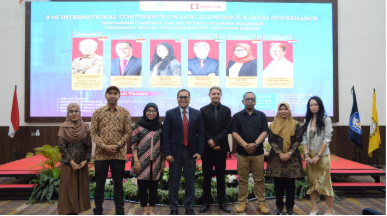
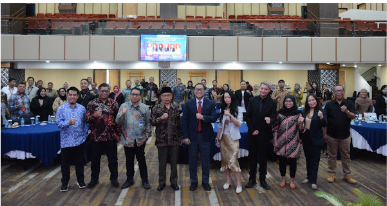
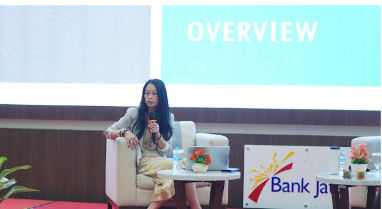
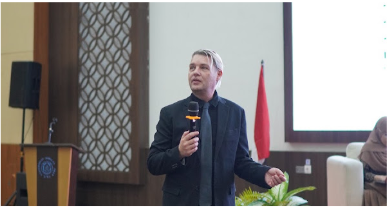
The Doctoral Program in Law (PDIH), Faculty of Law, Universitas Sebelas Maret (UNS), initiated and organized the International Conference on Law, Economics, and Good Governance on July 2–3, 2025. With the theme “Law and Economics to Achieve Sustainable Development Goals in Democratic and Non-Democratic Regimes,” the conference served as a cross-sectoral dialogue on the SDGs, bringing together legal experts, economists, academics, practitioners, and policymakers from various countries to discuss achieving sustainable development.
The discussions specifically addressed the relationship between law, policy, governance, and SDG implementation. Topics included harmonizing international agreements with national law within the SDG framework, the role of judicial institutions in advancing the SDGs, and issues related to SDG 16, SDG 6, and SDG 13. Perspectives from academics, legal practitioners, and policymakers expanded the exchange of knowledge on the challenges and mechanisms involved in implementing sustainable development.
The conference also emphasized the importance of cross-sectoral collaboration among government, judicial institutions, civil society organizations, and legal experts to ensure that the SDGs are translated into effective policies, accountability, and implementation.
Through this conference, UNS, as an institution, initiated and participated in cross-sectoral dialogue about the SDGs by connecting academic, government and policymaking, practitioner, judicial, and civil society perspectives in discussions on sustainable development.
3. The 16th EASTS Conference 2025: Cross-Sectoral Dialogue on Sustainable Transportation and Development
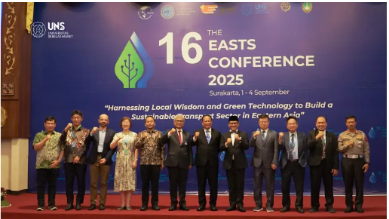
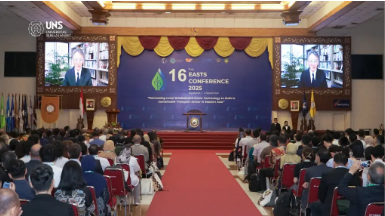
Universitas Sebelas Maret (UNS) hosted and participated institutionally in the 16th Eastern Asia Society for Transportation Studies (EASTS) Conference 2025, held at UNS on September 1–3, 2025. Under the theme “Harnessing Local Wisdom and Green Technology to Build a Sustainable Transport Sector in Eastern Asia,” the conference served as a cross-sectoral dialogue on sustainable transportation and development, bringing together more than 600 participants from 28 countries.
The forum involved government policymakers, academics, researchers, practitioners, industry representatives, and professional transportation organizations. Government participants included Indonesia’s Deputy Minister of Transportation, the Secretary General of the Ministry of Public Works, representatives from the Central Java and Yogyakarta provincial governments, and the Mayor of Surakarta. The involvement of these different sectors enabled the exchange of knowledge, perspectives, and ideas on transportation challenges, connectivity, green technology, and sustainable development.
During the forum, the Rector of UNS emphasized that sustainable transportation should integrate green technology and local wisdom to build an inclusive, resilient, and future-oriented system while supporting economic growth, social justice, and environmental protection. The Deputy Minister of Transportation also encouraged the EASTS community and all participants to use the conference as a space for collaboration, reflection, and developing progressive ideas and policies for sustainable transportation.
By hosting the conference, UNS, as an institution, initiated and participated in cross-sectoral dialogue that contributes to the achievement of the SDGs by bringing together government, industry, academics, practitioners, and professional organizations. The forum strengthened cross-sectoral collaboration and partnerships while contributing to SDG 9, SDG 11, and SDG 13 through sustainable infrastructure development, sustainable cities and communities, and environmental action and innovation.
4. ICESD 2025: Cross-Sectoral Dialogue on the Environment, Sustainable Development, and the SDGs
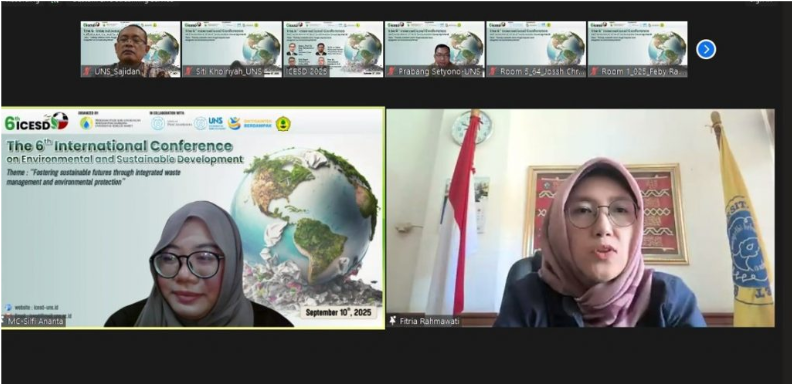
The Environmental Science Study Program, Graduate School of Universitas Sebelas Maret (UNS), initiated and organized the 6th International Conference on Environmental and Sustainable Development (ICESD) on September 10, 2025, under the theme “Fostering Sustainable Futures through Integrated Waste Management and Environmental Protection.” The conference served as a forum for cross-sectoral dialogue about sustainable development and the SDGs, bringing together academics, researchers, industry practitioners, policymakers, and environmental observers from various countries.
Discussions at ICESD 2025 focused on sustainable development issues, including integrated waste management, the circular economy, pollution control, ecosystem protection, climate change, land restoration, and sustainable natural resource management. A total of 76 presenters shared their research in parallel sessions, creating opportunities for discussion and the exchange of knowledge, ideas, and experiences across disciplines and countries.
Policymakers from Indonesia’s Ministry of Environment and Forestry, along with academics, researchers, and practitioners, strengthened dialogue between science, policy, and practice in addressing global environmental challenges. The keynote sessions included interactive Q&A, and speakers also shared perspectives on policy practices and field experiences relevant to sustainable development.
Through ICESD 2025, UNS, as an institution, initiated and participated in cross-sectoral dialogue about the SDGs by bringing together government, academics, researchers, industry, and environmental stakeholders in a solution-oriented forum. The activity strengthened cross-sectoral collaboration and partnerships while supporting SDG 6, SDG 11, SDG 12, and SDG 13.
5. AppliedHE Xchange 2025: Cross-Sectoral Dialogue among Higher Education, Industry, and Government to Support the SDGs
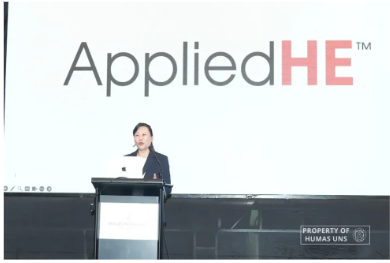
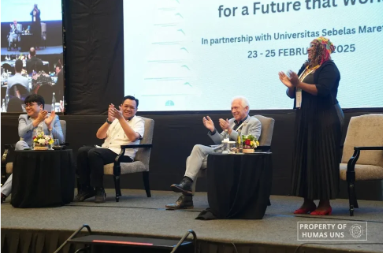
Universitas Sebelas Maret (UNS) co-hosted AppliedHE Xchange 2025 on February 24, 2025, at The InterContinental Bali, under the theme “Where Education Meets Industry for a Future that Works.” The event provided a platform for cross-sector dialogue among higher education institutions, government, industry, and international partners to discuss higher education’s contribution to sustainable development.
As part of the dialogue, UNS initiated and participated in discussions on strengthening education–industry relations, aligning curricula with market needs, building industry partnerships, and promoting innovation for a sustainable future. Panel sessions involved representatives from government, higher education institutions, and industry, including Indonesia’s Ministry of Trade, international universities, PT KAI Indonesia, and BPKH. Their participation enabled the exchange of perspectives and experiences across sectors.
The discussions also addressed sustainable development and its connection to the SDGs, particularly through the session “Quadruple Helix and Collaborations for a Sustainable Railway Future” and discussions on strengthening global partnerships between higher education institutions and other sectors. The participation of universities from Indonesia and other countries further expanded opportunities for cross-sectoral and international dialogue on the role of education, industry, and partnerships in supporting sustainable development.
Through its role as co-host, UNS, as an institution, helped initiate and participate in cross-sectoral dialogue that supports the achievement of the SDGs by bringing together government, higher education institutions, industry, and international partners. The event directly supported SDG 17 by strengthening cooperation and partnerships across institutions and sectors to advance sustainable development.
Source:
https://uns.ac.id/en/appliedhe-xchange-2025-uns-strengthens-education-industry-collaboration/
Conclusion
These activities show that UNS, as a university, not only participates in SDG-related forums but also initiates, organizes, or co-hosts cross-sectoral dialogue platforms involving stakeholders at national and international levels. Some of these forums explicitly address the SDGs, while others focus on sustainable development issues that contribute to their achievement. Through these activities, UNS strengthens cross-sectoral collaboration and partnerships, facilitates knowledge exchange, and supports the development of solutions to advance the SDGs.
By connecting government, academia, industry, professional organizations, civil society, and international partners, UNS helps build meaningful partnerships and encourages collective action. These efforts strengthen the university’s contribution to sustainable development by promoting cooperation, shared knowledge, and coordinated responses to complex global and local challenges.