

SDG 13 In Number
Total energy used (GJ)
20.148
Total energy used from low-carbon sources (GJ)
9.308
13.3.4 Inform and Support Government
Strengthening Local Government Capacity Through Disaster Risk Information and Early Warning Systems
Universitas Sebelas Maret (UNS) actively supports local governments and communities in strengthening disaster preparedness through risk information, technical assistance, and early warning system (EWS) implementation. Through its disaster research and community engagement initiatives, UNS works with regional disaster management agencies (BPBD), village governments, and local disaster risk reduction forums to improve their capacity to identify, monitor, and respond to climate-related disaster risks.
In 2025, UNS contributed to local disaster risk reduction through several initiatives, particularly in landslide-prone areas of Central Java and East Java. These initiatives combined hazard mapping, public education, technical guidance, and installing early warning devices. By sharing scientific knowledge and practical technologies with local authorities and communities, UNS contributes to SDG 13, particularly by strengthening resilience and adaptive capacity to climate-related hazards and natural disasters.
1. Strengthening Landslide Preparedness through Risk Mapping and Early Warning Systems in Bulugunung, Magetan
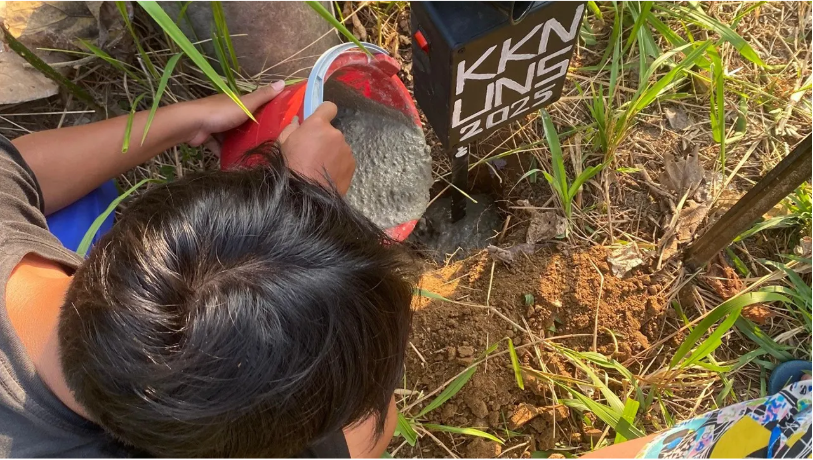
In August 2025, an UNS student community service team worked with the village government and the Regional Disaster Management Agency (BPBD) of Magetan Regency to strengthen disaster preparedness in Bulugunung Village. The initiative began by introducing Web GIS-based village maps, including administrative information and landslide susceptibility mapping, to help identify areas exposed to landslide risks. BPBD representatives also provided information on family-level disaster preparedness and the development of Disaster-Resilient Villages (DESTANA).
The initiative continued with technical education and a simulation of the landslide Early Warning System (EWS), delivered jointly by BPBD Magetan and the UNS team. On August 17, 2025, the team installed an EWS device in Babar Kidul Hamlet, with local residents and village officials involved. Through risk mapping, public information, and early warning technology, UNS supported local government efforts to improve disaster risk awareness and community preparedness. This initiative contributes to SDG 13 by strengthening local adaptive capacity and resilience to climate-related landslide hazards.
Reference: Mahasiswa UNS Gelar Sosialisasi Desa Tangguh Bencana di Bulugunung – Krajan.id
2. Providing Technical Support for Landslide Early Warning in Beruk Village, Karanganyar
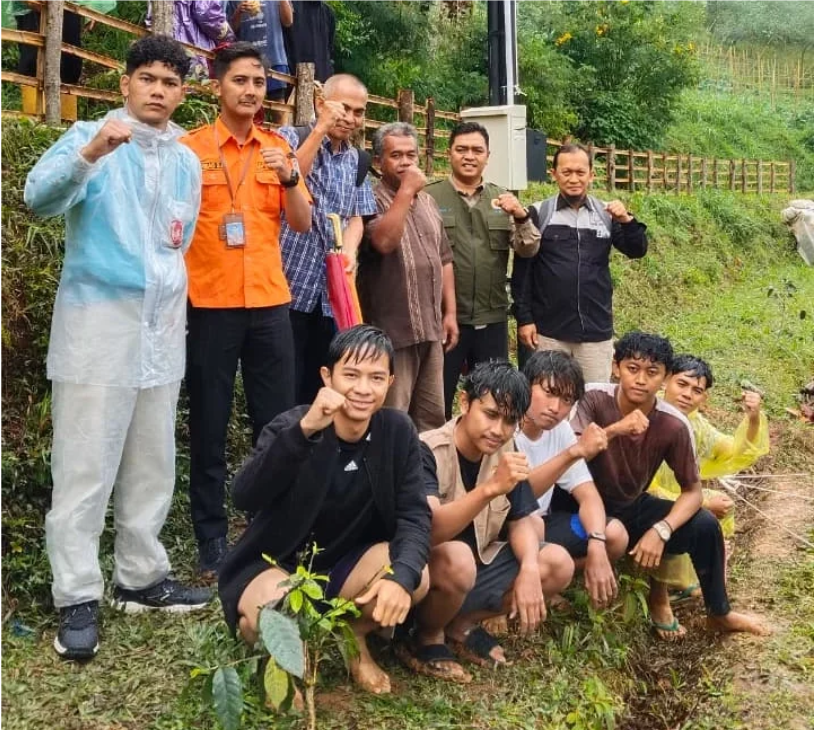
In August 2025, UNS KKN Team 80 introduced a locally adaptable landslide Early Warning System (EWS) in Beruk Village, Jatiyoso District, Karanganyar Regency. The system uses a simple mechanical mechanism consisting of gears, chains, and ropes to detect ground movement on vulnerable slopes. When ground movement occurs, the mechanism triggers an alarm to alert residents and allow them to take timely precautions. The device was installed at two landslide-prone locations: Ngantirejo Hamlet and Mount Lading, and was officially inaugurated on August 13, 2025.
The initiative was supervised by Ahmad Marzuki, S.Si., Ph.D., and involved technical coordination with BPBD Karanganyar, which provided guidance and participated in disaster preparedness education for local residents. The collaboration helped strengthen local knowledge of the early warning system and appropriate emergency responses. By providing practical technology and technical support in collaboration with the regional disaster management agency, UNS supports local government efforts in early warning and disaster risk reduction, advancing SDG 13 by strengthening community resilience to climate-related hazards.
Reference: Tim KKN 80 UNS Hadirkan Inovasi Alat Pendeteksi Longsor di Desa Beruk – Media Mahasiswa Indonesia
3. Providing Technical Assistance for Community-Based Early Warning in Pucung Village, Wonogiri
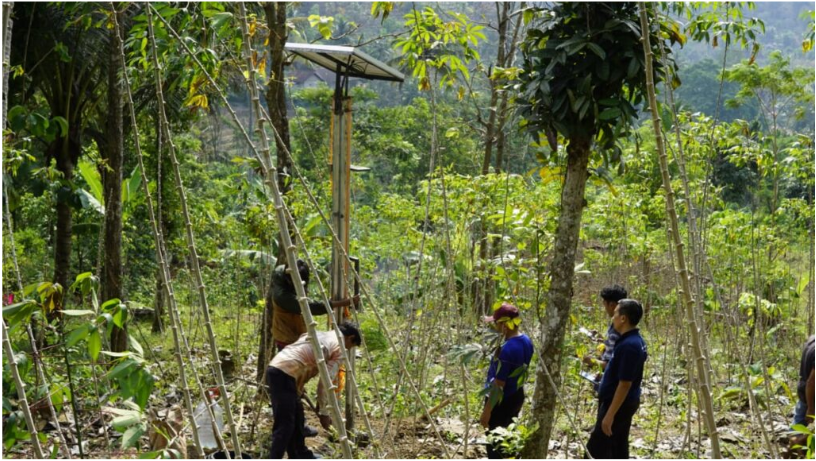
In October 2025, the Center for Disaster Research and Management (P3B) of UNS’s Institute for Research and Community Service (LPPM) provided technical and scientific assistance to install a landslide Early Warning System (EWS) in Pucung Village, Kismantoro District, Wonogiri Regency. The activity was part of the 2025 Kosabangsa program, which aimed to develop a locally based Disaster-Resilient Village (DESTANA) model. Dr. Ir. Sorja Koesuma, S.Si., M.Si., an EWS expert from P3B LPPM UNS, provided technical guidance and scientific expertise during implementation.
Universitas Duta Bangsa Surakarta served as the implementing university, alongside the village government, the Pucung Village Disaster Risk Reduction Forum (FPRB), and local residents. The installed EWS was intended to provide early warnings in landslide-prone areas, helping residents respond more quickly to potential hazards. Through its expert assistance and collaboration with local stakeholders, UNS supported local disaster preparedness and the application of science-based early warning technology. This contribution supports SDG 13 by strengthening the adaptive capacity of vulnerable communities and promoting locally appropriate approaches to climate-related disaster risk reduction.
Reference: Desa Pucung Siapkan Desa Tangguh Bencana Melalui Pemasangan EWS Tanah Longsor – P3B LPPM UNS
4. Strengthening Institutional Collaboration with Regional Disaster Management Agencies in Wonogiri and Sukoharjo
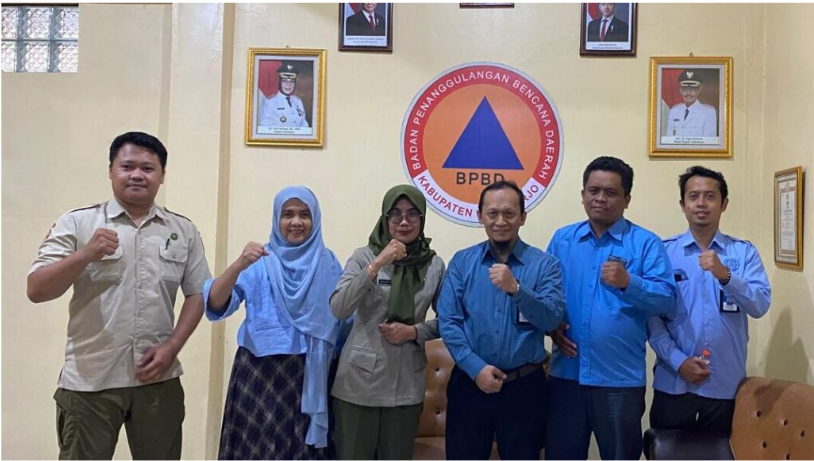
On January 21, 2025, the Center for Disaster Research and Management (P3B) of UNS’s Institute for Research and Community Service (LPPM) held coordination meetings with the Regional Disaster Management Agencies (BPBD) of Wonogiri and Sukoharjo Regencies. The meetings provided an opportunity to exchange information on local disaster risks, including flooding following prolonged rainfall, landslides in Jatiroto, seasonal water shortages in Wonogiri, and strong winds and waterlogging in Sukoharjo. Discussions also addressed the need to update Regional Disaster Risk Assessments (Kajian Risiko Bencana/KRB) and strengthen community awareness of existing early warning systems.
Through these meetings, UNS established opportunities for research collaboration, community engagement, and technical assistance to support regional disaster risk reduction initiatives. The discussions also highlighted the importance of scientific knowledge and university expertise in helping local authorities identify vulnerabilities and improve disaster preparedness planning. This institutional engagement supports SDG 13 by promoting cooperation between universities and local governments to strengthen resilience and adaptive capacity to climate-related hazards.
5. Deploying Community-Based Landslide Early Warning Systems in Ngledoksari Village, Karanganyar
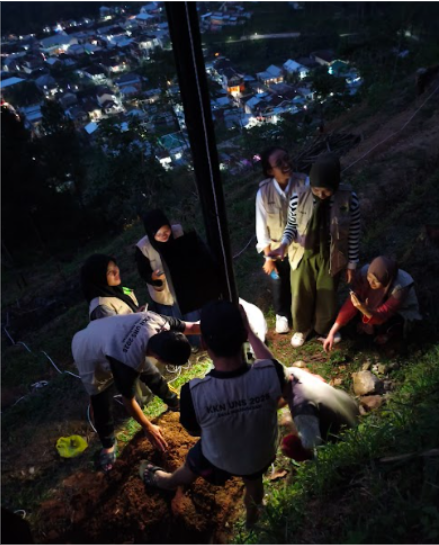
In August 2025, UNS KKN Team 81 designed and installed a landslide Early Warning System (EWS) at two vulnerable locations in Ngledoksari Village, Tawangmangu District, Karanganyar Regency. The system uses a mechanical pulley mechanism that activates an alarm when ground movement is detected, allowing residents to receive early warnings and take appropriate precautionary measures. Before the installation, the team organized a landslide disaster preparedness session at the village hall on August 7, 2025, featuring a resource person from BPBD Karanganyar.
During the session, BPBD shared information on landslide mitigation, including the relationship between soil moisture and slope stability, and introduced residents to appropriate disaster response measures. The EWS was subsequently installed on August 20, 2025, at two strategic locations in the village. Through this initiative, UNS supported local disaster preparedness by combining early warning technology, technical knowledge, and public education in collaboration with disaster management stakeholders. This contribution advances SDG 13 by strengthening community resilience and adaptive capacity to climate-related landslide risks.
Reference: Hadapi Ancaman Longsor, Tim KKN UNS 81 Bangun Early Warning System di Tawangmangu – Krajan.id
Conclusion
Through its disaster research, community engagement, and institutional collaboration initiatives in 2025, Universitas Sebelas Maret actively contributed to informing and supporting local governments in disaster risk early warning and preparedness. Its collaboration with BPBD agencies, village governments, and local disaster risk reduction forums enabled the transfer of scientific knowledge, technical assistance, hazard information, and the implementation of practical early warning technologies in disaster-prone areas.
These initiatives demonstrate UNS’s contribution beyond academic research by translating scientific expertise into practical support for local authorities and communities. By strengthening access to disaster risk information, improving early warning capacity, and promoting collaboration in disaster preparedness and risk reduction, UNS supports SDG 13, particularly by building resilience and adaptive capacity to climate-related hazards and natural disasters.