

SDG 11 In Number
University expenditure (IDR)
1,561,027,263,159
University expenditure on arts and heritage (IDR)
220,320,172,206
11.4.7 Local Authority Collaboration Regarding Planning and Development
Local Authority Collaboration on Planning and Development for Sustainable and Affordable Housing
Universitas Sebelas Maret (UNS) works closely with local authorities and government institutions to address local planning and development challenges, particularly in housing and settlement planning, housing improvement, and access to affordable housing for local residents. Through academic expertise, applied research, and community engagement, UNS supports local governments in identifying housing needs, setting housing improvement priorities, and promoting inclusive and sustainable residential development.
In 2025, UNS implemented several initiatives that contributed to local housing development and regional planning. These initiatives involved collaboration with the Central Java Provincial Government, the Ministry of Housing and Settlement Areas, and regional planning agencies. Together, these activities demonstrate UNS’s contribution to addressing housing-related planning issues, strengthening local development planning, and supporting the development of inclusive and sustainable communities in line with Sustainable Development Goal 11 (SDG 11): Sustainable Cities and Communities.
1. Housing Data Verification and Validation in Colomadu, Karanganyar
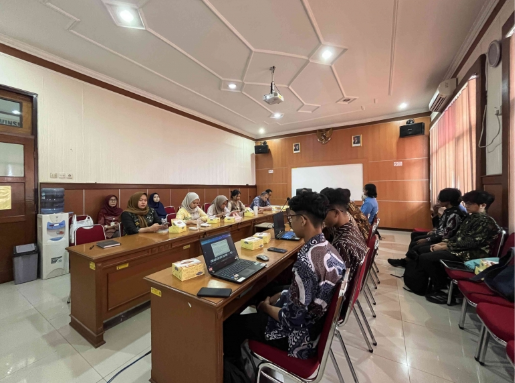
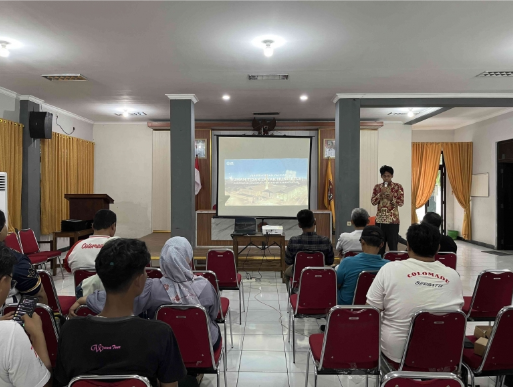
In 2025, Universitas Sebelas Maret, through its Urban and Regional Planning (PWK) Study Program, collaborated with the Central Java Provincial Housing and Settlement Areas Office (Disperakim) to support the verification and validation of inadequate housing data (Rumah Tidak Layak Huni/RTLH) in Colomadu District, Karanganyar Regency. The initiative was implemented through a community service program involving nine UNS students, with initial technical training conducted on July 28, 2025, before field activities began in September.
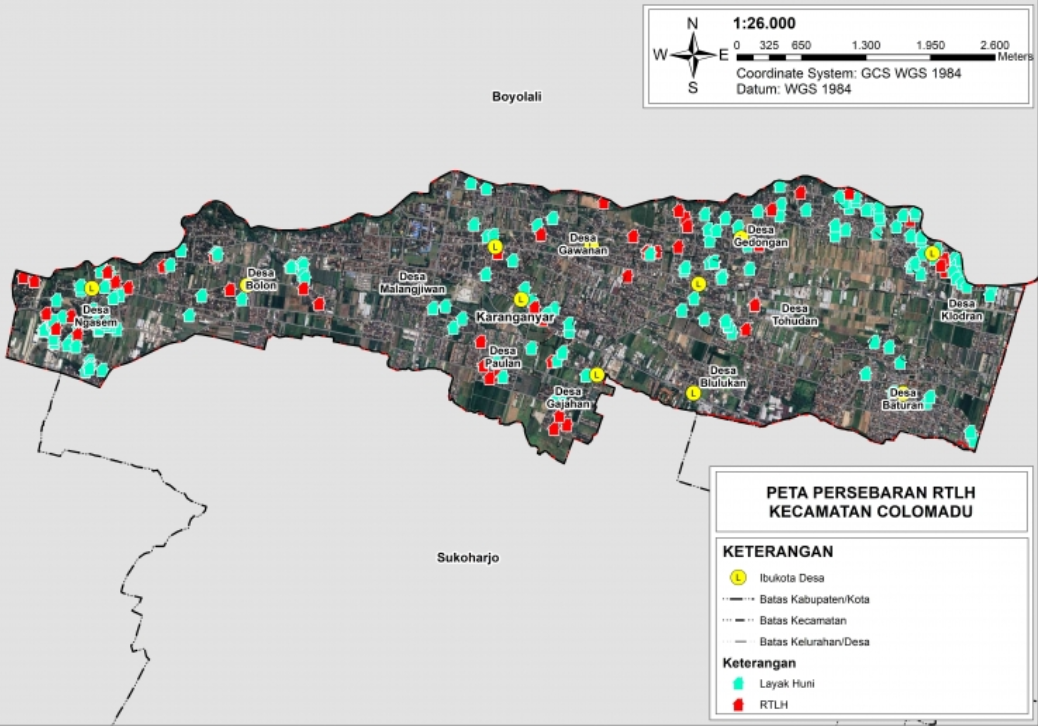
Working with village and district authorities, the students verified records for 277 housing beneficiaries across 11 villages. The assessment examined actual housing conditions, including structural and non-structural components, particularly roofs, floors, and walls. The results identified 164 houses that met habitability standards, 49 houses that remained inadequate, and 64 records that could not be verified because the registered residents had moved or passed away.
UNS entered the verified data into the SIMPERUM housing information system and presented it to Disperakim on December 2, 2025. UNS also conducted spatial analysis using Geographic Information Systems (GIS) and Zonal Statistics to identify priority areas for housing improvement based on environmental risks, including flooding, earthquakes, extreme weather, and proximity to riverbanks. The findings were presented to local government representatives on December 19, 2025, to support local housing improvement planning and decision-making.
This collaboration directly supports local authorities in addressing housing-related planning issues by providing verified data on inadequate housing and identifying priority areas for housing improvement. The findings provide an evidence base for local development planning and government decisions on housing needs and improvement priorities for local residents.
Reference: Housing Data Verification and Validation in Colomadu, Karanganyar – Kompasiana
2. Collaboration between the Faculty of Engineering and the Central Java Provincial Government on Housing and Regional Development
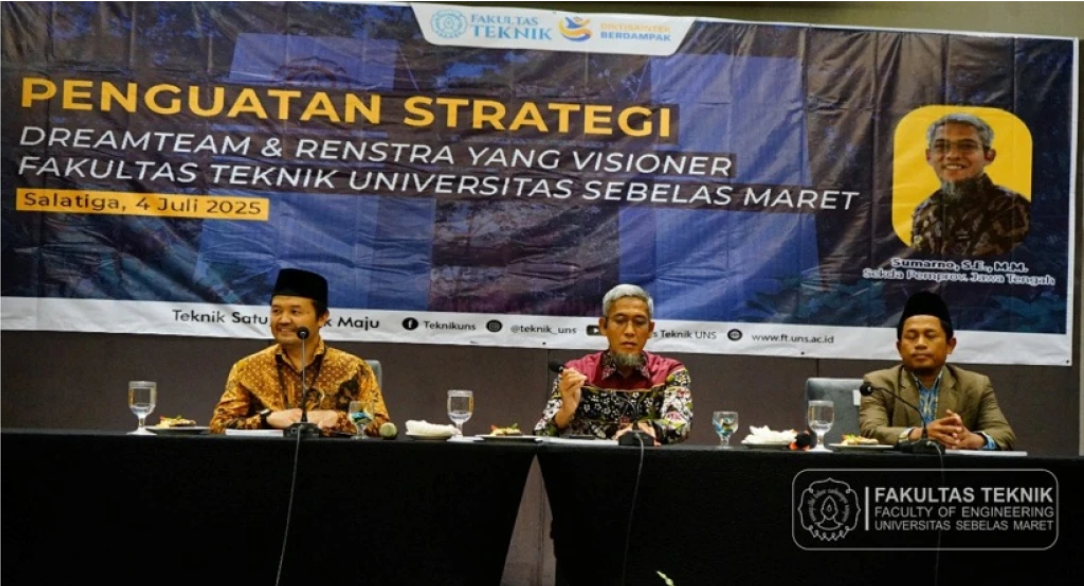
On July 4, 2025, the Faculty of Engineering (FT) of UNS strengthened its collaboration with the Central Java Provincial Government through a strategic forum entitled “Strengthening the Dream Team Strategy and Developing a Visionary Strategic Plan for FT UNS,” held in Salatiga. The forum brought together UNS university leaders and provincial government representatives, including the Regional Secretary of Central Java, to discuss how university expertise could support regional development priorities.
During the meeting, both parties identified several potential areas of cooperation, including evaluating housing adequacy and habitability through the Civil Engineering and Urban and Regional Planning study programs. Other areas included regional infrastructure development, flood control in the Rawa Pening area, environmental management, and renewable energy development. The discussion provided a framework for potential collaboration in applying technical expertise and research-based recommendations to regional planning and housing-related policy.
This partnership strengthens collaboration between UNS and the Central Java Provincial Government in addressing regional planning and development challenges. By identifying housing adequacy and habitability evaluation as potential areas of cooperation, the initiative provides a basis for applying engineering and urban planning expertise to support safer, more sustainable, and inclusive residential development.
3. Affordable Housing Financing through the Housing Credit Program (Kredit Program Perumahan)
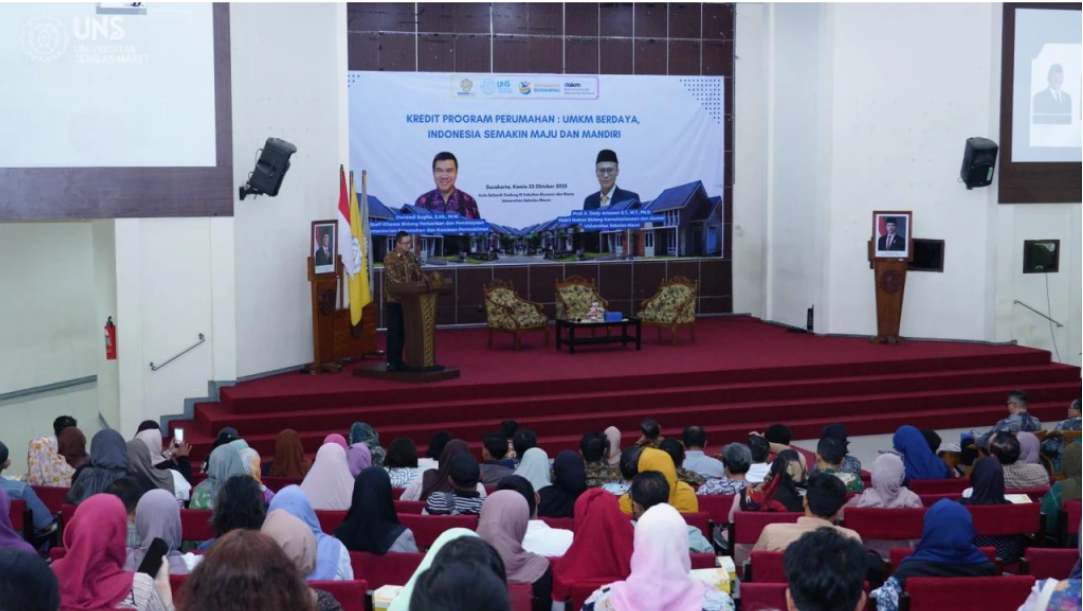
On October 23, 2025, UNS, through its Directorate of Alumni and Student Entrepreneurship, collaborated with the Ministry of Housing and Settlement Areas to organize a socialization program on the Housing Credit Program (Kredit Program Perumahan/KPP) at the Faculty of Economics and Business. The initiative aimed to introduce accessible housing-related financing schemes and strengthen the capacity of businesses involved in the housing sector.
The event included housing-sector micro, small, and medium-sized enterprises (MSMEs), property developer associations such as Himperra Solo Raya, and representatives from banks including BRI and BTN. The program introduced working capital and investment financing facilities for housing developers, contractors, and building material suppliers. These facilities are intended to strengthen housing supply chains, support business development, and encourage the expansion of housing provision.
Through this collaboration with the Ministry of Housing and Settlement Areas, UNS supported efforts to strengthen the housing business sector by connecting housing-related enterprises with government financing programs and financial institutions. The initiative contributes to a broader affordable housing ecosystem and supports government efforts to expand housing provision for local communities.
Reference: Socialization of the Housing Credit Program: Empowering MSMEs for a More Independent Indonesia – UNS
4. Research-Based Development Policy Planning with Bappenas, BRIDA, and Regional Planning Agencies
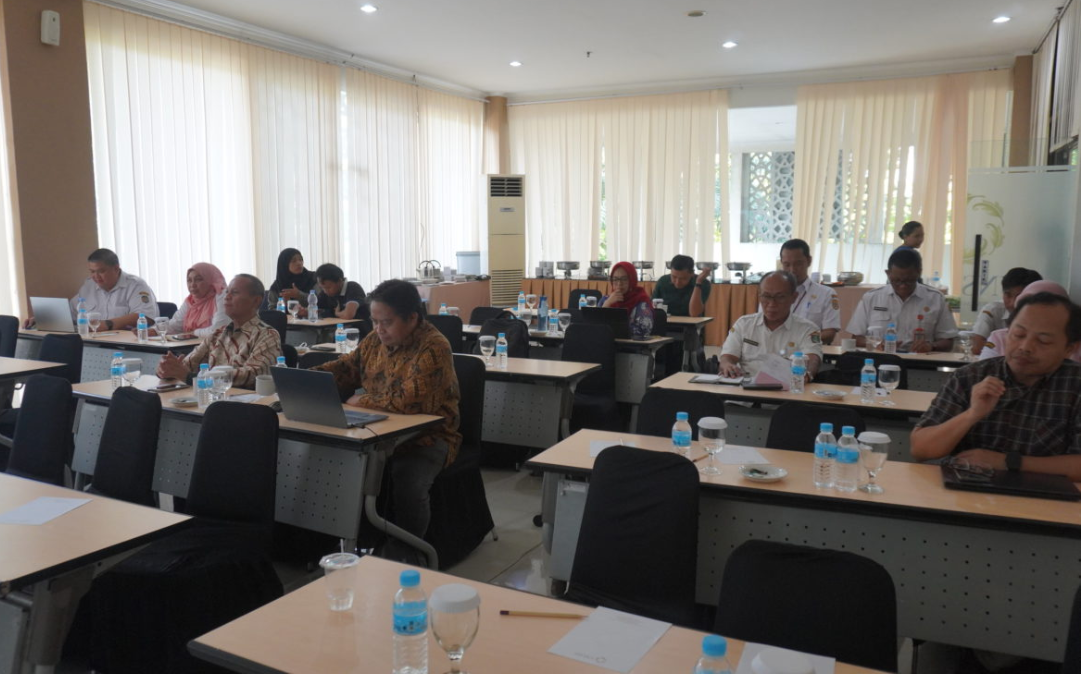
On October 15, 2025, the Economics Development Study Program of the Faculty of Economics and Business (FEB) UNS organized a Research-Based Development Policy Planning Workshop at UNS Inn, Surakarta. The initiative involved collaboration with Indonesia’s National Development Planning Agency (Bappenas) and the Regional Research and Innovation Agency (BRIDA) of Central Java Province, with approximately 25 lecturers, researchers, and representatives from Bappeda and BRIDA in Surakarta and surrounding districts participating.
The workshop focused on strengthening the use of academic research in regional development planning and public policymaking. Discussions covered development planning, policy paper preparation, research-based policy recommendations, regional innovation, budgeting, and data-based policy evaluation. Through these activities, UNS facilitated knowledge exchange between academic institutions and local government planning agencies to support more informed and effective development decisions.
The workshop strengthened collaboration between UNS and regional planning agencies in addressing local planning and development issues. By promoting research-based policy recommendations, regional innovation, and data-driven decision-making, the initiative supports more effective, sustainable local development planning and strengthens local authorities’ capacity to address regional development challenges.
Conclusion
Through these initiatives, UNS demonstrates its commitment to working with local authorities and government institutions to address planning issues and development challenges, particularly in the housing and settlement sectors. By supporting housing data verification, identifying local housing needs, strengthening housing-related policy and institutional collaboration, and facilitating initiatives that support housing provision, UNS contributes to government efforts to improve housing conditions and promote access to adequate and affordable housing for local residents. These collaborative efforts support more inclusive and sustainable residential development and reinforce UNS’s contribution to SDG 11: Sustainable Cities and Communities.