

17.4.3 Education For SDGs In The Wider Community
Extending Sustainability Education and Building Partnerships Beyond the Campus
Universitas Sebelas Maret (UNS) demonstrates its commitment to advancing the Sustainable Development Goals (SDGs) through dedicated outreach educational activities for the wider community. These initiatives extend learning opportunities beyond the university by engaging alumni, local residents, teachers, school students, community groups, and people affected by natural disasters.
UNS delivers these activities through structured training, educational sessions, practical demonstrations, community-based learning, and knowledge-sharing programs. The topics address a range of sustainability challenges, including quality education, environmental protection, public health, disaster preparedness, responsible consumption, and economic empowerment.
Through collaboration with government institutions, schools, community organizations, and other universities, UNS expands access to relevant knowledge and strengthens communities’ capacity to contribute to sustainable development. These partnerships also reflect the spirit of SDG 17: Partnerships for the Goals, which emphasizes cooperation among institutions and communities to achieve shared development objectives.
ALUMNI
Education on Overseas Employment Opportunities and Safe Migration for Students and Alumni
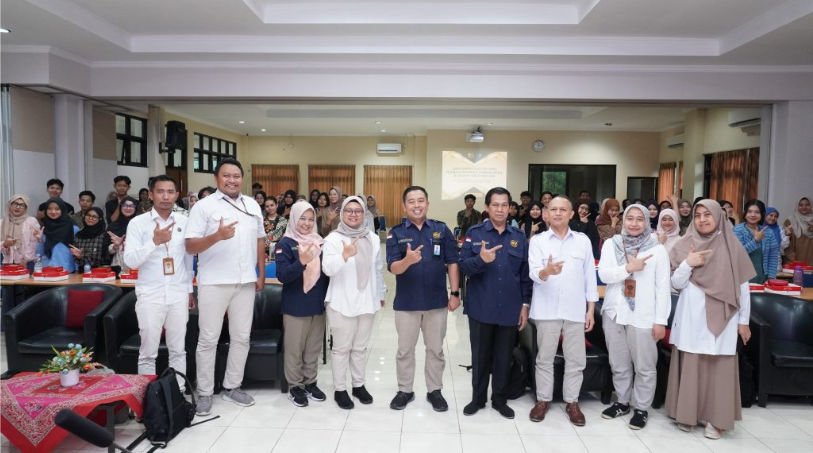
On October 22, 2025, the Vocational School of Universitas Sebelas Maret (UNS) organized an educational outreach activity entitled Education on Employment Information under the Non-Governmental Placement Scheme, in collaboration with the Ministry of Indonesian Migrant Worker Protection (KemenP2MI). The activity took place at the Vocational School and involved approximately 100 participants, including UNS students and alumni.
The program provided practical information about overseas employment opportunities, Indonesian migrant worker placement mechanisms, eligibility requirements, necessary documents, and safe migration procedures. Representatives from KemenP2MI and the Central Java Migrant Worker Protection Service (BP3MI) delivered the sessions, followed by interactive discussions that allowed participants to ask questions about employment opportunities and worker protection.
Through this activity, UNS extended educational opportunities to its wider university community, including alumni, by providing relevant knowledge and career information for international employment. The collaboration with government agencies also demonstrates how partnerships between higher education institutions and public organizations can strengthen access to information, support decent work, and contribute to SDG 17: Partnerships for the Goals.
- LOCAL COMMUNITY
UNS conducts various dedicated outreach educational activities for local residents and community groups across the Subosukawonosraten region. These programs involve schools, teachers, women’s groups, village communities, and local organizations. Through practical training and knowledge-sharing, UNS helps communities develop the skills and awareness needed to address local sustainability challenges.
1. Education for Sustainable Development (ESD) Training for Science Teachers in Surakarta
In July 2025, the Research Group on Science Education for Sustainable Development (SESD) at UNS conducted a community outreach program for 30 teachers from the Science Subject Teachers’ Working Group (MGMP IPA) in Surakarta. The training focused on strengthening teachers’ understanding and capacity to implement Education for Sustainable Development (ESD) in science education.
The program covered ESD implementation, the development of learning media and instructional materials, and sustainability-based assessment methods. By giving teachers practical approaches to integrate sustainability into classroom learning, UNS helped strengthen local educators’ capacity to deliver relevant, meaningful education to their students.
This initiative extends sustainability education beyond the university by transferring knowledge to local schools. It also demonstrates the value of partnerships between universities and teacher networks in advancing quality education and supporting SDG 17: Partnerships for the Goals.
Reference: UNS – RG SESD Conducts Community Outreach with the Surakarta Science Teachers’ Working Group
2. SDGs Education through an Environmental Clean-Up Initiative at Sekolah Alam Solo Raya
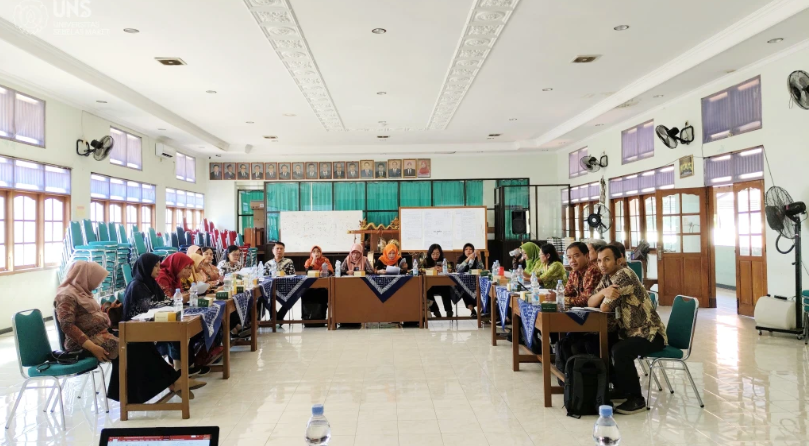
On October 17, 2025, students and academic representatives from the Faculty of Teacher Training and Education (FKIP) UNS organized an educational activity entitled SDGs Education through an Environmental Clean-Up Initiative at Sekolah Alam Solo Raya in Taji Village, Juwiring District, Klaten Regency. The program engaged school students and facilitators in learning about the Sustainable Development Goals and environmental responsibility.
The activity combined educational discussions with direct environmental action. Through contextual learning and a clean-up initiative, participants explored the importance of environmental protection, collective responsibility, and sustainable practices in their daily lives. The program helped students connect SDG principles with practical actions in their school and surrounding community.
By bringing SDGs education directly to a local school and involving its students in community-based environmental activities, UNS expanded sustainability learning beyond the university. This collaboration with the school community also reflects the partnership approach promoted by SDG 17: Partnerships for the Goals.
Reference: FKIP UNS – SDGs Education through an Environmental Clean-Up Initiative at Sekolah Alam Solo Raya
3. Training on the Development of Ecologically Oriented Learning Materials
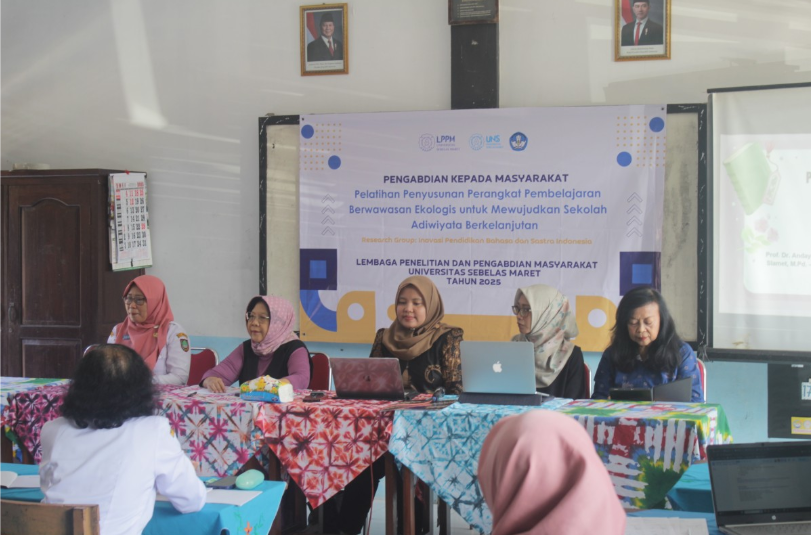
In July 2025, the Faculty of Teacher Training and Education (FKIP) UNS organized a community outreach training program for elementary school teachers on developing ecologically oriented learning materials. The program aimed to strengthen teachers’ capacity to integrate environmental values and sustainability principles into their teaching practices.
The training introduced approaches to developing learning materials that promote ecological awareness and support the implementation of sustainable, environmentally friendly schools, including the Adiwiyata program. Through this activity, teachers gained knowledge and practical insights that could be applied in classroom instruction and school-based environmental education.
By supporting local teachers in developing sustainability-oriented learning resources, UNS helped extend environmental education to younger generations. The initiative also highlights how university–school partnerships contribute to quality education and SDG 17: Partnerships for the Goals.
Reference: FKIP UNS – Training on the Development of Ecologically Oriented Learning Materials
4. Education on Clean, Healthy, and Sustainable Lifestyles at SMA Negeri 1 Wedi
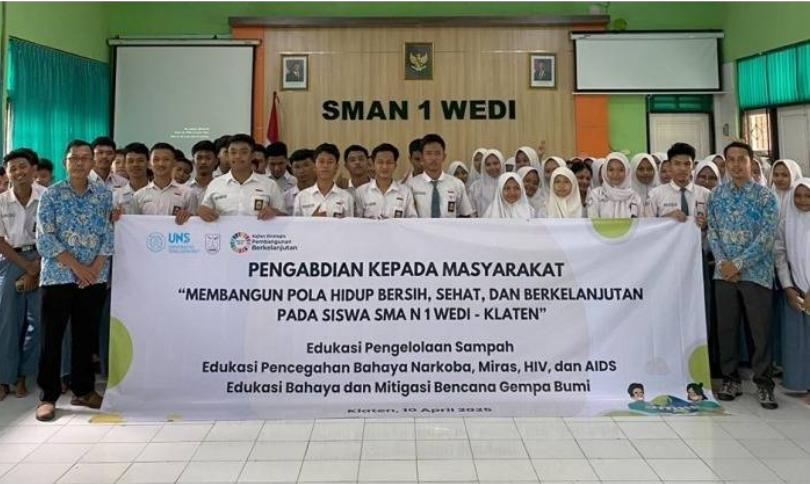
In July 2025, an UNS community outreach team from the Graduate School conducted an educational program on clean, healthy, and sustainable lifestyles at SMA Negeri 1 Wedi, Klaten Regency. The activity reached approximately 150 students and addressed several issues relevant to sustainable community development.
The educational sessions covered waste management, disaster mitigation, public health, and sustainable daily practices. Through these topics, students gained knowledge about environmental responsibility, personal and community health, and preparedness for potential disasters. The program encouraged students to apply these lessons in their daily lives and contribute to a healthier, more sustainable school environment.
This initiative demonstrates UNS’s efforts to provide dedicated educational activities for the wider community, particularly young people outside the university. By working directly with a local school, UNS also strengthened cooperation between higher education and secondary education institutions in support of SDG 17: Partnerships for the Goals.
5. Education and Practical Training on Converting Organic Waste into Marketable Compos
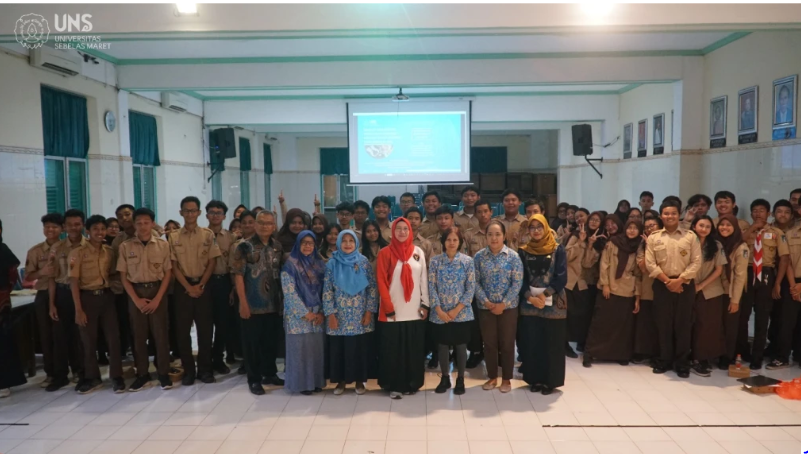
On August 22, 2025, the Center for Biotechnology and Biodiversity Research and Development (P3BB), together with the Institute for Research and Community Service (LPPM) UNS, organized an educational and practical training program at SMA Negeri 1 Surakarta. The activity introduced students and school community members to sustainable waste management and the production of compost with economic value.
The program included educational sessions on sustainable lifestyles, types of waste, and environmentally friendly waste management. Participants also took part in practical demonstrations, including waste sorting, preparing organic materials, mixing with compost activators, and the composting process. The activity used pre-tests and post-tests to assess changes in participants’ knowledge and understanding.
Through this program, UNS provided practical sustainability education that connected environmental awareness with resource efficiency and potential economic benefits. The collaboration between university researchers and the local school community also illustrates how institutional partnerships can promote responsible consumption and environmental education, in line with SDG 17: Partnerships for the Goals.
Reference: UNS – P3BB LPPM UNS Conducts Education and Practical Training on Compost Production
6. TANGKAS Program: Community Education for Landslide Disaster Mitigation
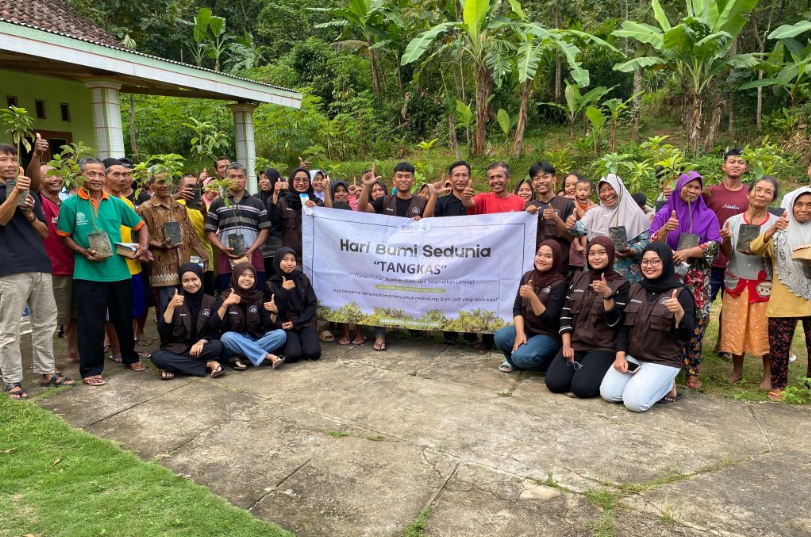
On April 28, 2025, the Geography Education Program of FKIP UNS implemented the TANGKAS program (Plant Trees to Strengthen Nature and Protect Slopes) in Jambeyan Village, Sambirejo District, Sragen Regency. The program aimed to strengthen community awareness and preparedness in addressing landslide risks through environmental conservation and community participation.
The activity began with an educational session on landslide hazards and the importance of slope conservation, involving local residents, village officials, and community leaders. This was followed by the planting of 60 avocado trees on identified landslide-prone slopes. The program combined knowledge-sharing with practical action and encouraged residents to participate in planning, implementation, and long-term maintenance.
Through this initiative, UNS provided dedicated educational outreach to local residents on disaster risk reduction and environmental protection. The collaboration between the university, village authorities, and the local community demonstrates the importance of partnerships in building resilient communities and supports SDG 17: Partnerships for the Goals.
Reference: Geography FKIP UNS – TANGKAS Program for Landslide Disaster Mitigation in Jambeyan Village
7. Community Education and Training on Eco-Enzyme Production through the Community Service Program
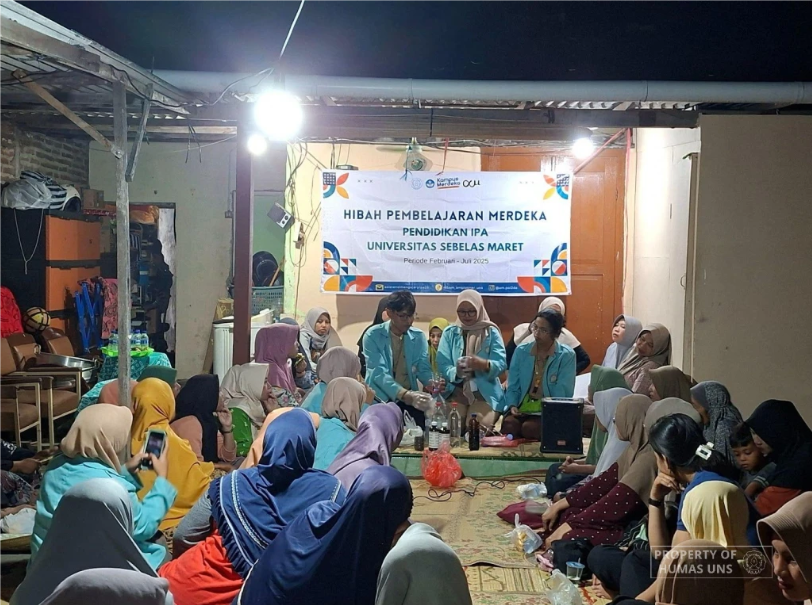
In May 2025, UNS students participating in the Community Service Program (KKN) conducted an educational outreach activity on eco-enzyme production in Jatisobo Village, Polokarto District, Sukoharjo Regency. The activity introduced local residents to using household organic waste as a resource that can be processed into eco-enzyme products.
Through socialization and practical training, residents learned about the basic process of producing eco-enzymes and the potential benefits of reusing organic waste. The activity encouraged households to adopt more responsible waste management practices and reduce the amount of organic waste discarded into the environment.
By providing practical environmental education directly to village residents, UNS helped expand sustainability knowledge within the local community. The program also demonstrates how university–community collaboration can encourage responsible consumption and production while supporting SDG 17: Partnerships for the Goals.
Reference: UNS – UNS KKN Students Promote Eco-Enzyme Production to Support SDG 12
8. Yogurt Processing Training for Women Farmers in Boyolali
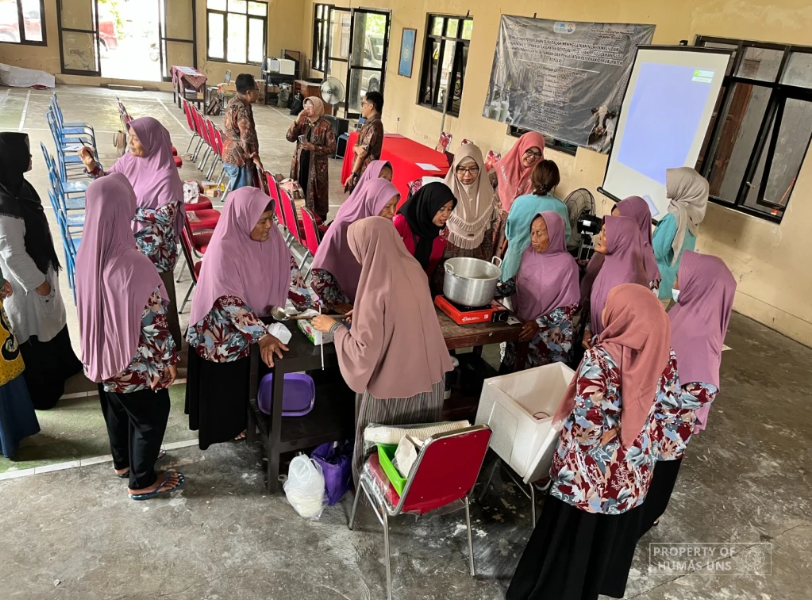
In June 2025, the Sustainable Agribusiness Research Group at UNS organized a community training program on milk processing for a Women Farmers Group (Kelompok Wanita Tani) in Boyolali Regency. The program introduced participants to yogurt production as a way to improve the added value of locally produced milk.
The training provided practical knowledge of milk processing and yogurt production, helping participants understand how agricultural products can be developed into value-added food products. By strengthening local women’s skills, the activity also created opportunities for community-based economic development and small-scale entrepreneurship.
This initiative represents a dedicated educational activity for a local community group, combining knowledge transfer with practical skills development. The collaboration between UNS researchers and local women farmers demonstrates how partnerships can support inclusive economic opportunities and contribute to SDG 17: Partnerships for the Goals.
Reference: UNS – Sustainable Agribusiness Research Group Conducts Yogurt Processing Training in Boyolali
9. Family Medicine Management Education in Geneng Village
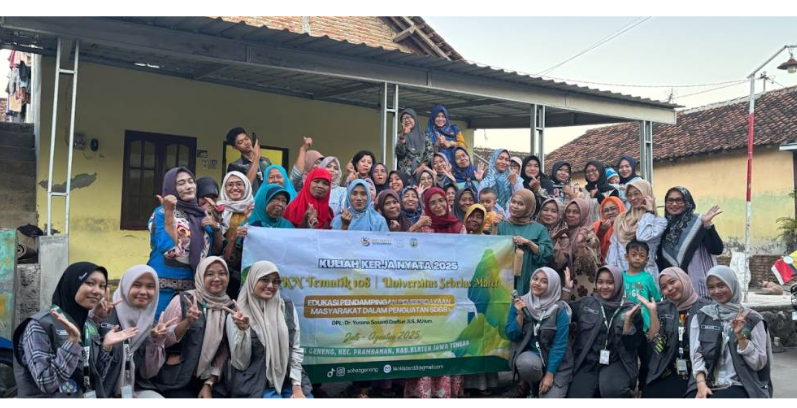
On July 20, 2025, students from UNS participating in Community Service Program Group 108 organized an educational activity on family medicine management in Geneng Village, Prambanan District, Klaten Regency. The program involved members of the Family Welfare Movement (PKK), community leaders, and local residents.
The educational sessions covered medicine classification, proper use, safe storage, and the handling of expired medicines. Participants were also encouraged to ask questions about unused medicines and traditional medicine. To support continued learning, the program provided the village administration and its community library with a practical booklet on family medicine management.
Through this activity, UNS provided accessible health education that residents could apply at home. The initiative demonstrates how university–community partnerships can improve public health knowledge and promote responsible medicine management, while supporting SDG 17: Partnerships for the Goals.
Reference: FIB UNS – KKN Group 108 Provides Family Medicine Management Education in Geneng Village, Klaten
10. Education on Sanitation and Food Waste Management in Gebang Village
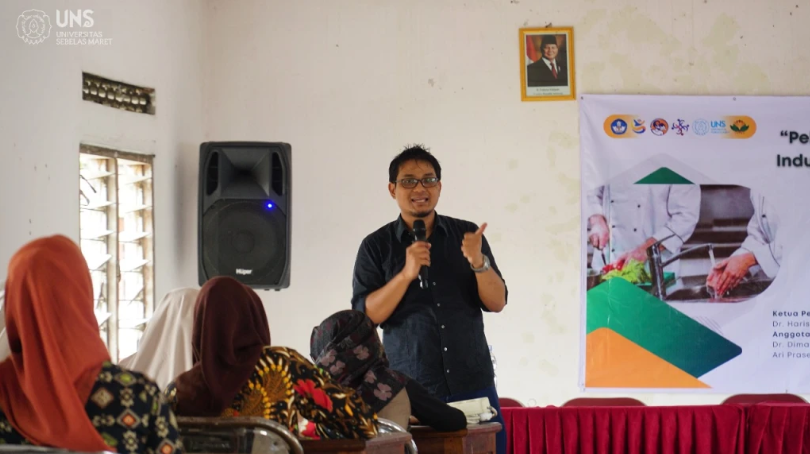
In November 2025, the Student Executive Board (BEM) of UNS organized an educational outreach activity for residents of Gebang Village, Nguntoronadi District, Wonogiri Regency. The program focused on the importance of sanitation and responsible food waste management to support a healthier, more sustainable community.
Through this initiative, residents learned about sanitation practices, food waste management, and environmentally friendly water management approaches. The activity aimed to raise community awareness of the relationship between household practices, environmental quality, and public health.
By bringing practical sustainability knowledge directly to village residents, UNS extended its educational contribution beyond the university campus. The involvement of student organizations and the local community also reflects the role of partnerships in addressing local development challenges and advancing SDG 17: Partnerships for the Goals.
Reference: UNS – BEM UNS Provides Education on Sanitation and Food Waste Management in Gebang Village, Wonogiri
- DISPLACED PEOPLE AND REFUGEES
Humanitarian Outreach and Community Recovery Support for Disaster-Displaced Communities in Sumatra
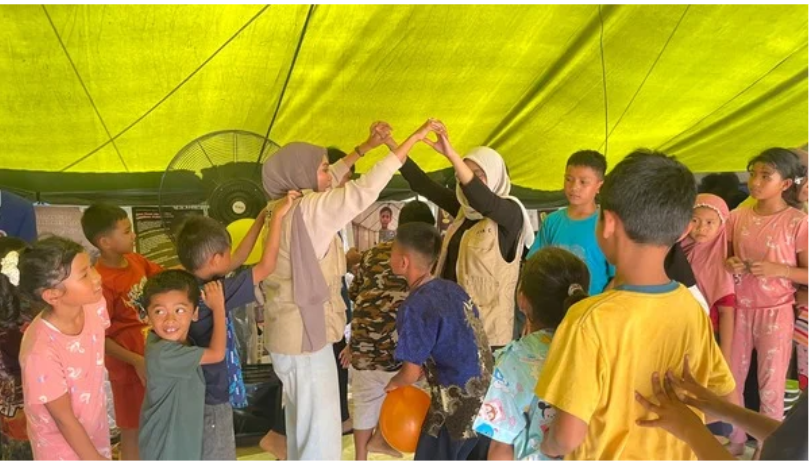
UNS extends its educational and community engagement efforts to vulnerable populations beyond the university through outreach initiatives for communities affected by natural disasters. In December 2025, UNS provided humanitarian support to flood- and landslide-affected communities in West Sumatra and North Aceh, including people displaced from their homes. These initiatives involved collaboration with Universitas Negeri Padang (UNP), local health institutions, and other community partners to address urgent needs and support post-disaster recovery.
In West Sumatra, UNS worked with the UNP Disaster Response Post to support environmental health recovery through water purification equipment and devices for monitoring water consumption and quality. UNS also deployed 15 volunteers to Batu Busuak, Palembayan, and Malalak to provide health-related assistance and psychosocial support, particularly for children and other vulnerable groups. These activities helped address the health, environmental, and psychosocial challenges displaced communities face.
In North Aceh, UNS, through its University Hospital and Faculty of Medicine, provided humanitarian assistance worth IDR 466 million to communities affected by floods and landslides in Langkahan District. The support included medicines, medical supplies, medical volunteers, and essential goods. The initiative also aimed to support the recovery of local healthcare services at Langkahan Community Health Center, in coordination with local health workers, military representatives, and community leaders.
Through these outreach initiatives, UNS strengthened its engagement with disaster-displaced communities by bringing health support, psychosocial assistance, and environmental recovery resources directly to affected areas. The collaboration among universities, healthcare institutions, humanitarian teams, and local stakeholders demonstrates the importance of partnerships in responding to community needs and strengthening resilience. These efforts reflect SDG 17: Partnerships for the Goals by mobilizing collective action to support vulnerable communities and advance sustainable recovery.
Reference: UNS Focuses on Clean Water and Trauma Healing for Disaster Victims – Jateng Pos
Conclusion
Through its dedicated outreach educational activities, Universitas Sebelas Maret extends the benefits of higher education beyond its campus and into the wider community. Its initiatives engage alumni, local residents, teachers, school students, women’s groups, and displaced communities through training, practical demonstrations, educational sessions, and community-based learning.
These activities address important sustainability challenges, including quality education, environmental protection, public health, disaster preparedness, responsible consumption, and economic empowerment. By working with schools, government agencies, community organizations, other universities, and humanitarian partners, UNS strengthens knowledge exchange and supports community capacity development.
Overall, these initiatives demonstrate that UNS contributes to the SDGs not only through teaching and research within the university, but also by sharing knowledge and building meaningful partnerships with communities beyond its institutional boundaries. This approach reflects the central role of SDG 17: Partnerships for the Goals in connecting universities, public institutions, and communities to achieve sustainable development.