
SDG 6 In Number
Volume of water used in the university: Inbound (treated/extracted water) (m³)
60,056
Campus population
31.279
6.5.1 Water Management Educational Opportunities
Empowering Communities Through Water Management Education and Sustainable Practices
Universitas Sebelas Maret (UNS) is committed to supporting Sustainable Development Goal (SDG) 6: Clean Water and Sanitation by providing educational opportunities for local communities to learn about good water management. Through community service programs, student-led initiatives, and technology-based training, UNS engages local residents in learning practical approaches to water conservation, water quality management, rainwater infiltration, and efficient water use.
These initiatives aim not only to raise public awareness but also to strengthen community knowledge and skills in managing local water resources. By combining education, practical demonstrations, and community participation, UNS encourages residents to adopt sustainable water management practices they can continue independently. The following activities show how UNS extends its educational role beyond campus and contributes to SDG 6.
Educational Opportunities for Local Communities
Through its community engagement and outreach programs, UNS gives local communities opportunities to gain practical knowledge and develop skills in sustainable water management. These activities cover key aspects of water management, from drinking water treatment and groundwater conservation to rainwater infiltration and efficient irrigation.
The following initiatives show UNS’s efforts to make water management education accessible to communities through direct engagement, practical training, and appropriate technology.
1. Community Training on Drinking Water Filtration and Maintenance in Padang, West Sumatra
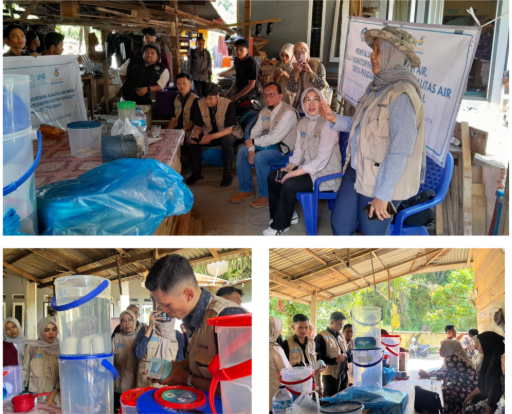
UNS, through its Community Service Team, provided educational opportunities for residents of Kampung Batu Busuk, Pauh District, Padang City, West Sumatra, as part of its emergency disaster response program in December 2025. In addition to providing drinking water filtration equipment to communities affected by flooding, the team provided technical education on operating the filtration system independently and trained residents on regular filter maintenance. The initiative also introduced technology-based water quality monitoring to help residents understand the importance of safe drinking water and appropriate treatment methods.
Through direct instruction and practical guidance, residents gained knowledge and skills to manage their drinking water supply, maintain filtration equipment, and monitor water quality. This community-based approach supports sustainable access to clean water and strengthens local capacity for good water management, contributing directly to SDG 6.
References:
2. Biopore Infiltration Training for Rainwater Management in Bumi Graha Indah, Karanganyar
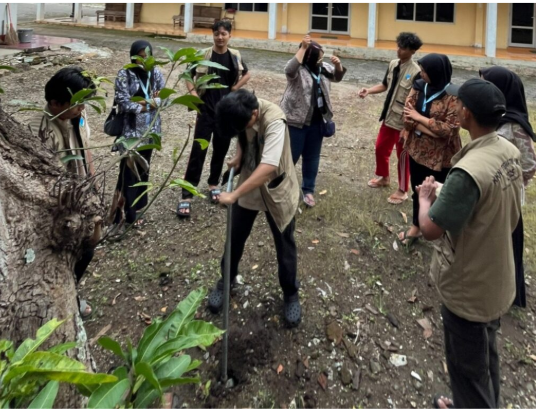
Through its community service program, the Faculty of Mathematics and Natural Sciences (FMIPA) UNS organized a biopore infiltration training program for residents of Bumi Graha Indah Housing Complex, Jaten, Karanganyar, on September 20–21, 2025. The program included community outreach, practical training, and installing biopore infiltration holes to help residents understand how to manage rainwater, increase soil infiltration, reduce surface runoff, and prevent waterlogging. The activity installed 20 biopore infiltration holes.
By involving residents directly in constructing and applying biopore technology, UNS provided practical education on rainwater management and groundwater conservation. The initiative also encouraged community participation in maintaining infiltration facilities and adopting sustainable water management practices at the household and neighborhood levels, supporting the objectives of SDG 6.
References:
3. Community Education on Groundwater Quality and Safe Well Water in Kaliwader, Purworejo
Through the Kaliwader Bersih initiative in 2025, members of the UNS academic community engaged residents of Kaliwader Village, Purworejo, in educational activities on groundwater quality and safe well water management. The program combined water quality testing with community education to introduce the importance of monitoring well water and understanding the parameters that determine its suitability for daily use. Residents were also encouraged to recognize that water quality cannot be assessed through appearance, taste, or smell alone.
By providing practical information and water quality assessment, the initiative strengthened community awareness of safe water use and responsible groundwater management. This educational approach supports local efforts to protect water resources and improve access to safe water, in line with SDG 6.
4. Water Filtration Education Through SEMARAK 2025 in Gentungan Village
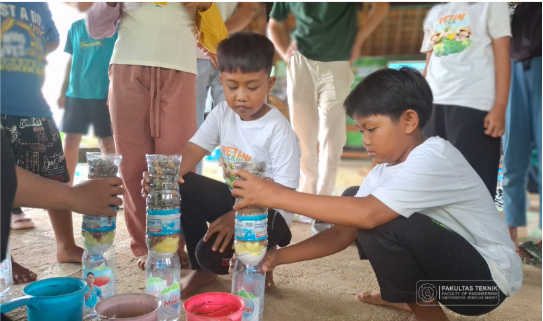
Through its Architecture Study Program and Urban Rural Design and Conservation Laboratory (URDC), the Faculty of Engineering UNS collaborated with Rotterdam University of Applied Sciences to organize SEMARAK 2025 in Gentungan Village, Karanganyar. The program provided local communities, particularly children, with educational opportunities to learn about water management through interactive activities, educational posters, and a simple water filtration workshop. Participants learned basic water filtration concepts and took part in hands-on activities using accessible materials to understand how simple filtration systems work.
By combining environmental education with practical demonstrations, UNS introduced the community to basic water treatment methods and the importance of responsible water use. The activity built early awareness of clean water protection and encouraged participants to understand how simple technologies support sustainable water management, contributing to SDG 6.
5. Tetes Hijau: Community Education on Efficient Drip Irrigation in Watukarung, Pacitan
Through its student community service program (KKN), UNS introduced the Tetes Hijau initiative to farmers and residents of Watukarung Village, Pacitan, in August 2025. The program provided community education on efficient irrigation practices through a simple drip irrigation system. Residents were introduced to a water distribution method that lets them control water flow and deliver it more efficiently to plants. The initiative also introduced the potential use of alternative water sources, including rainwater and collected dew, to support agricultural activities during periods of limited water availability.
Through direct community engagement and technology demonstrations, UNS provided local residents with opportunities to learn about efficient water use in agriculture. The initiative encouraged farmers to adopt water-saving irrigation practices and use available water resources more responsibly, supporting sustainable water management under SDG 6.
Reference: Krajan.id – Mahasiswa KKN UNS Hadirkan Inovasi Tetes Hijau Atasi Kekeringan di Watukarung
6. Groundwater Resource Education Through Geoelectrical Surveys in Kulurejo, Wonogiri
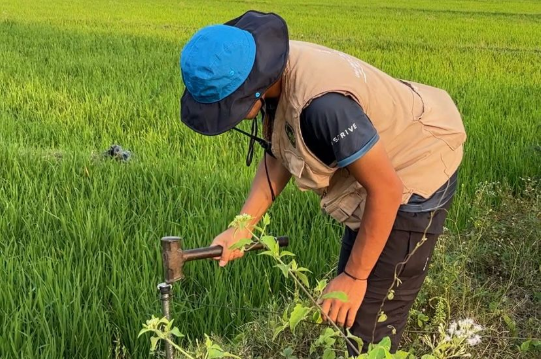
Through its thematic community service program, UNS students conducted geoelectrical surveys in 2025 to identify potential groundwater resources in Kulurejo Village, Nguntoronadi, Wonogiri. Following the field research, the students presented their findings to village representatives and local residents at the village hall on August 19, 2025. The outreach activity introduced geoelectrical technology for identifying underground water potential and provided information to support local planning for future water resource development.
By sharing research findings directly with the community, UNS provided educational opportunities for local residents to understand groundwater exploration and the importance of evidence-based water resource planning. The initiative helped increase awareness of local groundwater potential and encouraged more informed decisions on sustainable water resource management, supporting the broader goals of SDG 6.
Conclusion
Through these six initiatives, Universitas Sebelas Maret demonstrates its commitment to providing local communities with educational opportunities to learn about good water management. By combining community-based training, practical demonstrations, scientific knowledge, and appropriate technologies, UNS addresses different aspects of water management, including drinking water treatment, groundwater quality monitoring, rainwater infiltration, and efficient agricultural irrigation.
These initiatives extend learning opportunities beyond the university campus and empower communities with practical knowledge and skills to manage local water resources more responsibly. By promoting community participation, improving public understanding, and encouraging the adoption of sustainable water management practices, UNS contributes to SDG 6: Clean Water and Sanitation, particularly by supporting more sustainable and inclusive access to clean water and improved water resource management.