

17.2.1 Relationships With Regional NGOs and Government for SDG Policy
Universitas Sebelas Maret (UNS) actively provides input and is directly involved in the development of sustainable development policies through collaboration with central and regional governments.
In 2025, UNS collaborated with the Central Java Province Regional Research and Innovation Agency (BRIDA), the Ministry of National Development Planning/National Development Planning Agency of the Republic of Indonesia (Bappenas), the Central Java Provincial Government, and the Surakarta City Government throughout various stages of SDG policy development. These stages included identifying problems and challenges, conducting data-driven research and analysis, formulating recommendations and strategies, and carrying out policy monitoring, evaluation, and follow-up. This involvement covered food and nutrition security, development planning, environmental management, and employment issues, all of which directly contribute to the achievement of various SDGs.
1. Collaboration between UNS and Central Java BRIDA on Research into the Implementation of the Free Nutritious Meals Program to Support Evidence-Based Policy Development
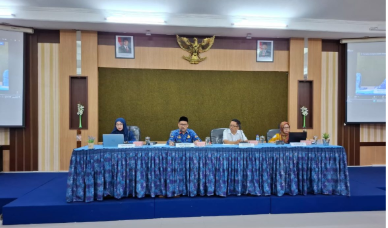
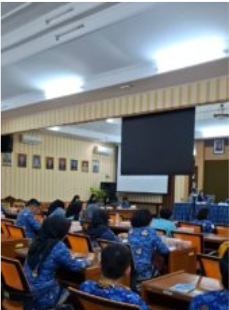
In 2025, the Faculty of Economics and Business (FEB) of Universitas Sebelas Maret (UNS) collaborated with the Central Java Province Regional Research and Innovation Agency (BRIDA) to conduct research on the implementation of the Free Nutritious Meals Program (MBG). This collaboration demonstrates UNS’s direct engagement with the regional government in identifying implementation issues and challenges, particularly those related to community nutrition, local food availability, and the strengthening of family economies.
The research was conducted in Demak Regency, Wonosobo Regency, and Pekalongan City to examine the implementation of the MBG program in the field. The findings indicated that the involvement of local producers was not yet optimal and required further strategies and policies, including improving food distribution efficiency and strengthening partnerships among local governments, food providers, and other stakeholders.
Based on these findings, UNS provided data-driven policy recommendations covering the development of supporting infrastructure, stakeholder capacity building, waste management, and nutrition and health education. Data on MBG implementation through October 2025 also served as a basis for local governments to monitor and evaluate interventions and strengthen implementation strategies.
Through this collaborative research, UNS serves as a strategic government partner in the development, monitoring, and evaluation of evidence-based policies, contributing to SDG 2, SDG 3, and SDG 17.
2. Collaboration between UNS, Bappenas, and Central Java BRIDA on Research-Based Policy Planning
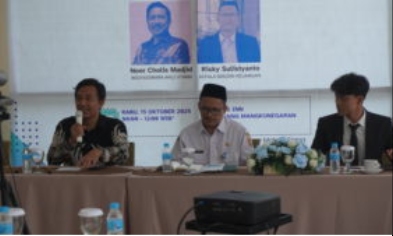
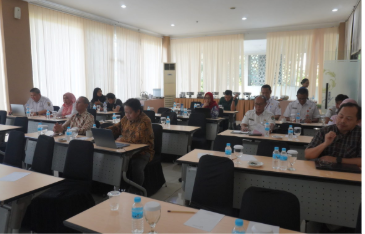
On 15 October 2025, the Development Economics Study Program of FEB UNS held a Research-Based Policy Planning Workshop in collaboration with the Ministry of National Development Planning/Bappenas and the Central Java Province BRIDA. This activity demonstrates UNS’s direct engagement with national and regional governments in supporting SDG policy development through evidence-based development planning.
The workshop discussed the role of academic research in identifying development problems and challenges and translating research findings into policy papers and policy briefs as inputs for policy and strategy development. Bappenas discussed the role of academics in formulating research-based policies, while Central Java BRIDA discussed the use of regional research and innovation as a basis for long-term development planning.
Discussions involving representatives of the Regional Development Planning Agencies (Bappeda) and BRIDA from the Greater Solo area also covered data-driven policy planning, budgeting, monitoring, and evaluation. This approach supports adaptive decision-making (adaptive management) based on research findings and evaluations of development interventions.
This government–university collaboration strengthens UNS’s position as a strategic partner in the development, evaluation, and refinement of development policies, and contributes to SDG 8, SDG 9, and SDG 17.
3. Collaboration between UNS and the Central Java Provincial Government on Developing a Sustainable Management Strategy for Rawa Pening
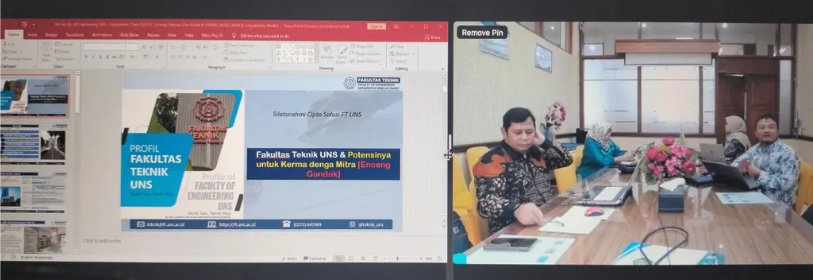
On 12 February 2025, the Faculty of Engineering at UNS took part directly in cross-institutional coordination with the Central Java Provincial Government, the Bureau of Infrastructure and Natural Resources, the Environment and Forestry Agency, and the Transition Team of the Elected Governor of Central Java. This collaboration focused on identifying environmental problems and challenges related to the management of water hyacinth in Rawa Pening.
UNS provided technical and policy input on the impact of water hyacinth on the functions of Rawa Pening and proposed strategies for utilizing it to produce briquettes, paving blocks, and furniture. UNS also committed to preparing preliminary designs, providing training and assistance to the community, and coordinating with the lake management authority and the Pemali-Juana River Basin Organization (BBWS Pemali-Juana) as part of the development and implementation of the intervention.
UNS’s involvement also included perspectives on public policy and community empowerment. These inputs supported the Central Java Provincial Government’s green infrastructure program and the development of interventions that respond adaptively to environmental problems and community needs.
This collaboration demonstrates UNS’s role as a government partner in problem identification, strategy and intervention development, and the implementation of research-based solutions, contributing to SDG 6, SDG 7, SDG 11, SDG 12, SDG 13, and SDG 17.
4. Collaboration between UNS and the Surakarta City Government on Data-Driven and Participatory Wage Policy Development
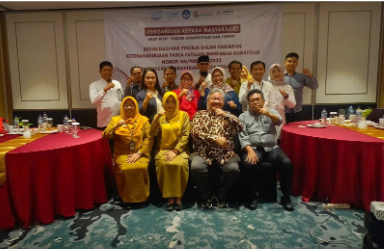
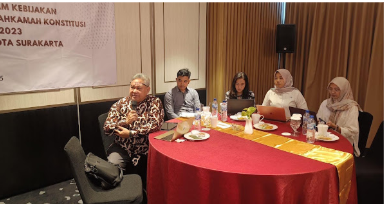
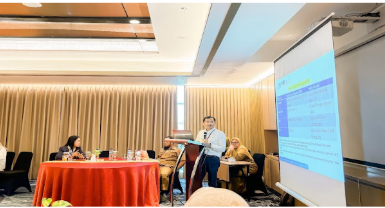
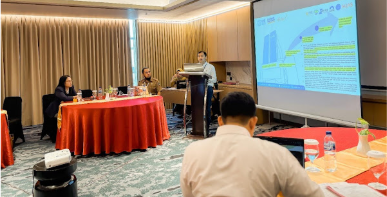
On 7 July 2025, the Administrative Law and Energy Research Group of the Faculty of Law at UNS collaborated with the Surakarta City Manpower Office and the Surakarta City Wage Council to discuss employment policy following Constitutional Court Decision No. 168/PUU-XXI/2023. This activity demonstrates UNS’s direct engagement with the regional government in identifying problems and challenges in wage policy, particularly those related to the regional government’s authority to determine the Regency/City Sectoral Minimum Wage (UMSK).
UNS provided academic and policy input on the implications of the decision for the decentralization of wage-setting authority and the strengthening of the role of regional governments. The forum involved government representatives, employers, labor unions, academics, and social security institutions to support the development of policies that are participatory, transparent, and based on regional sectoral conditions.
Through the involvement of UNS academics in the Surakarta City Wage Council, UNS also supported the preparation of data-driven policy recommendations grounded in sectoral realities, which serve as a reference for regional heads in decision-making. This mechanism also supports policy monitoring and follow-up through evaluations of sectoral conditions and the submission of recommendations to the regional government.
This collaboration strengthens adaptive management in employment policy through the use of data, input from multiple stakeholders, and assessments of sectoral needs as a basis for policy refinement, and contributes to SDG 8 and SDG 16.
These four activities demonstrate the various forms of UNS’s direct involvement in SDG policy development in collaboration with central and regional governments. This involvement includes research and problem identification, the preparation of data-driven policy recommendations, planning and strategy development, the provision of technical and policy input, the implementation of interventions, as well as policy monitoring, evaluation, and follow-up. Thus, UNS’s portfolio demonstrates not only institutional relationships with government, but also the substantive contribution of the university to the development and refinement of sustainable development policies. Overall, these practices strengthen UNS’s contribution to SDG 17 (Partnerships for the Goals) and demonstrate the application of various forms of policy engagement that support the achievement of related SDGs.