

SDG 5 In Number
Number of women starting a degree
6,185
Number of first-generation women starting a degree
4,124
Number of students starting a degree
8,965
Number of first-generation students starting a degree
6,191
Number of students
27,537
Number of employees
3,699
Number of academic staff
1,923
Number of senior academic staff
639
Number of female senior academic staff
292
Number of graduates by subject area (STEM, Medicine, Arts & Humanities / Social Sciences): Total
6,213
Number of graduates: STEM
2,042
Number of graduates: Medicine
721
Number of graduates: Arts & Humanities / Social Sciences
3,450
Number of female graduates by subject area (STEM, Medicine, Arts & Humanities / Social Sciences): Total
4,464
Number of female graduates: STEM
1,308
Number of female graduates: Medicine
367
Number of female graduates: Arts & Humanities / Social Sciences
2,623
Number of graduates: Total
6,213
5.6.6 Women’s Mentoring Schemes
Women’s Mentoring Schemes and Access Provisions
Universitas Sebelas Maret (UNS) supports women’s access to education, personal development, leadership opportunities, and institutional support through mentoring initiatives and other provisions. These efforts are designed to empower women, strengthen their participation in academic and social activities, and create a more inclusive and supportive environment within the university and the wider community.
Through student-led initiatives, international partnerships, community engagement, and institutional support services, UNS provides opportunities for women to develop their knowledge, skills, confidence, and leadership capacity. These initiatives contribute to Sustainable Development Goal (SDG) 5: Gender Equality, particularly by promoting women’s empowerment, equal opportunities, and access to support systems.
A. Mentoring
UNS supports women’s mentoring and capacity development through initiatives that provide opportunities for female students to strengthen their leadership, personal development, and professional readiness. These initiatives include peer-support activities organized by student communities and collaborative programs that address gender gaps in higher education and employment.
1. Girl Up UNS: Women’s Mentoring, Peer Support, and Empowerment
Girl Up UNS is a student-led community that promotes women’s empowerment, gender equality, and women’s leadership. Through its internal development and community programs, Girl Up UNS provides female students with opportunities to participate in peer discussions, share experiences, develop their knowledge, and strengthen their confidence and leadership skills. These activities create a supportive environment where women can learn from one another and access opportunities for personal development.
Throughout 2025, Girl Up UNS organized several initiatives that supported women’s mentoring, capacity development, and empowerment. These included regular internal discussions, International Women’s Day activities, menstrual health education, and campaigns against gender-based violence. Together, these initiatives demonstrate the organization’s efforts to provide peer support, promote women’s participation, and improve access to knowledge and support systems, contributing to SDG 5: Gender Equality.
- Monthly Internal Discussion and Peer Support – Tukar Pikiran


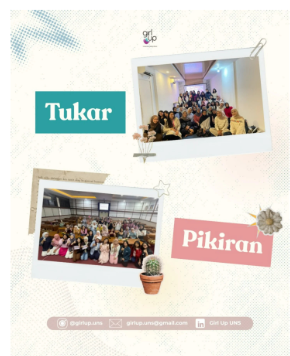
During the September 2024–June 2025 period, Girl Up UNS conducted Tukar Pikiran, a monthly internal discussion program designed to strengthen members’ personal development and peer support. The sessions covered topics such as Beauty Standards and Feminism: A Journey Towards Body Positivity and Nenengism and Ecofeminism. The discussions provided members with opportunities to exchange perspectives, build awareness of gender-related issues, and learn from one another. The program reportedly involved more than 80 participants.
In addition to regular discussions, Girl Up UNS conducted departmental visits every three months to monitor members’ well-being and encourage open communication. Individual follow-up and member evaluation activities also supported a more personal approach to guidance and peer support. Through these activities, Girl Up UNS provides an ongoing platform for women to access peer mentoring, share experiences, and strengthen their personal and leadership development, supporting women’s empowerment under SDG 5.
Sources: Girl Up UNS Instagram
- International Women’s Day 2025 – Shattering the Limits
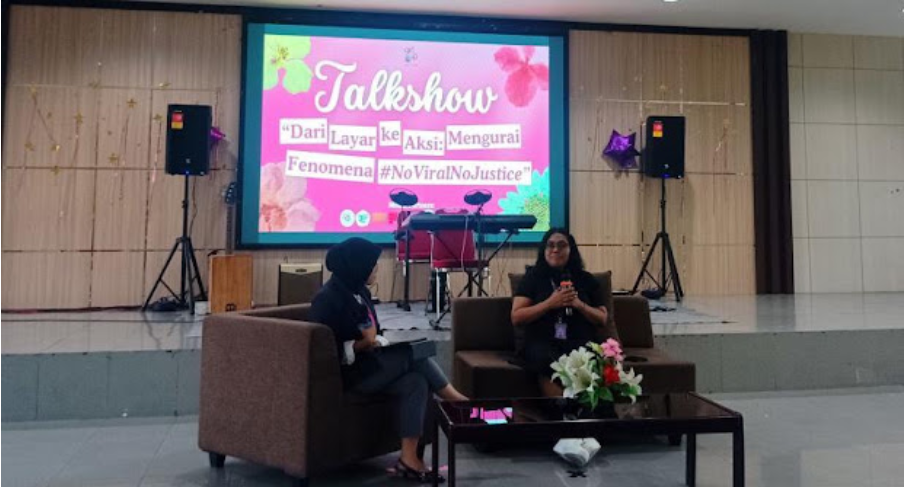
On 22 February 2025, Girl Up UNS organized its annual International Women’s Day event under the theme Shattering the Limits at the Faculty of Economics and Business, UNS. The event aimed to celebrate International Women’s Day while raising awareness of gender equality issues that are often overlooked. Its main activity was a talk show entitled Dari Layar ke Aksi: Mengurai Fenomena #NoViralNoJustice, featuring Fitri Haryani, Manager of the Community-Based Violence Prevention and Response Division at SPEK-HAM Solo. The discussion explored the relationship between social justice and gender equality, highlighting the importance of ensuring that justice is accessible without relying on public attention or social media exposure.
The event also featured a special beads workshop, a photo booth, and student performances, creating an interactive space for learning and participation. By combining expert-led discussions with creative activities, Girl Up UNS provided students with opportunities to broaden their understanding of gender-related issues, develop critical awareness, and engage in conversations about social justice and inclusivity. This initiative strengthened students’ access to gender equality education and women’s empowerment activities, supporting the advancement of SDG 5: Gender Equality.
- Surakarta Menstrual Care Project 2025
On 14 June 2025, Girl Up UNS implemented the Surakarta Menstrual Care Project in collaboration with Biyung Yogyakarta at Panti Pelayanan Sosial Wanita Wanodyatama, Surakarta. Supported by the Girl Up Project Awards from the United Nations Foundation, the initiative aimed to improve women’s access to information on menstrual and reproductive health. Activities included seminars and discussions on menstrual hygiene, menstrual poverty, safe and environmentally friendly menstrual products, and the use of reusable menstrual pads.
As part of the program, 155 reusable menstrual pads were distributed to participants and residents of the institution. By combining health education with practical support, the project helped improve women’s knowledge and access to menstrual health resources. Although the program primarily served women in the wider community rather than UNS students, it demonstrates Girl Up UNS’s broader commitment to women’s empowerment, health education, and gender equality under SDG 5.
- 16 Days of Activism Against Gender-Based Violence 2025
During November–December 2025, Girl Up UNS participated in the 16 Days of Activism Against Gender-Based Violence campaign through online and offline educational activities. One of its initiatives, the #SuaraAman campaign, involved students from several faculties and provided a platform for collecting students’ voices and concerns through Padlet. The campaign also used Instagram Stories and educational infographics to raise awareness of gender-based violence and encourage more empathetic responses to survivors.
Through these activities, Girl Up UNS encouraged students to recognize gender-based violence, understand its impact, and contribute to creating a safer and more supportive campus environment. By promoting awareness, encouraging student participation, and providing space for women’s voices, the campaign supports women’s protection and empowerment and contributes to SDG 5.
Source: Girl Up UNS – 16HAKBG: Violence Is More Than Just a Statistic; It Is a Public Issue
Through these interconnected activities, Girl Up UNS provides a supportive platform for women’s peer mentoring, personal development, leadership, health education, and protection. While its internal discussions and member support activities directly contribute to peer mentoring, its wider programs extend women’s access to knowledge, empowerment, and support networks beyond the university. Collectively, these initiatives strengthen women’s participation and contribute to UNS’s commitment to advancing gender equality and achieving SDG 5.
2. SheRises Project: Advancing Gender Equality in Higher Education
UNS promotes women’s professional development and access to equal opportunities through the SheRises Project, an initiative developed under the Gender Equality Program in collaboration with Aston University, United Kingdom, with support from the British Council’s Global Equality Partnerships. The project addresses gender gaps experienced by female university graduates when entering the workforce, particularly the challenges that limit their access to professional opportunities and career development.
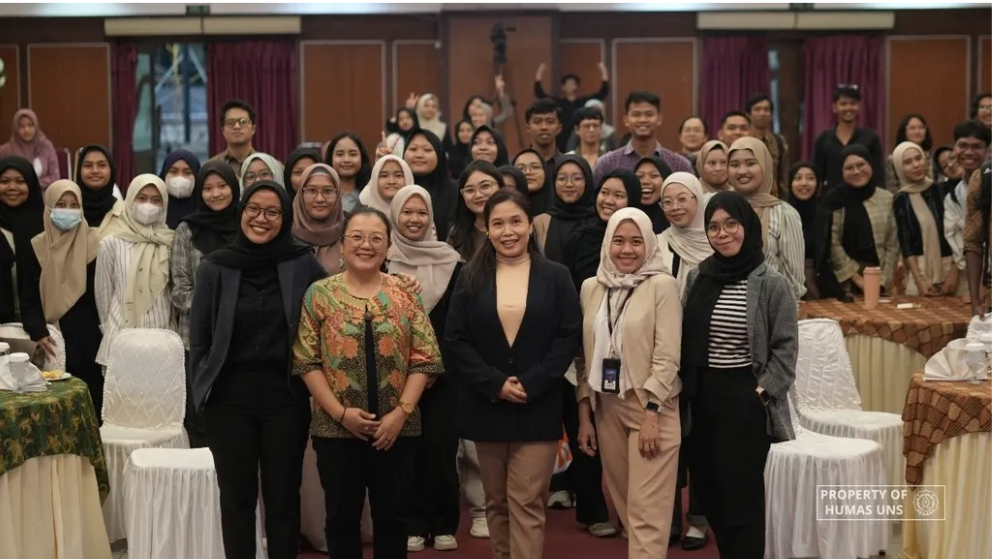
On 20 February 2025, UNS organized the seminar Advancing Gender Equality in Higher Education as part of this initiative. The event brought together academic representatives and members of the university community to discuss barriers faced by female students and graduates. Through research, training, educational resources, and institutional collaboration, the project aims to strengthen women’s skills, professional readiness, and access to opportunities in the workplace.
The SheRises Project provides an important form of support for women’s access to education, training, and professional development. By addressing gender-related barriers and promoting equal opportunities for female graduates, the initiative contributes to SDG 5 and supports women’s empowerment during their transition from higher education to professional life.
Sources:
B. Other Provisions
In addition to mentoring initiatives, UNS provides other forms of support that improve women’s access to protection, capacity development, and opportunities for active participation in society. These provisions include student support services, community-based training, and partnerships with local governments to promote women’s empowerment and gender equality.
We Care: Student Support and Assistance Services
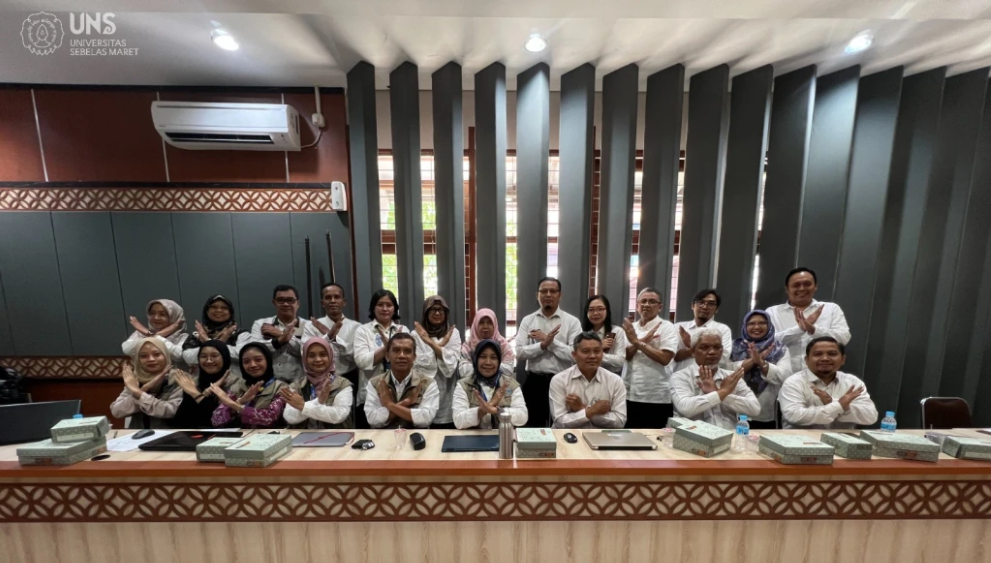
UNS strengthens access to support and protection for students through We Care, a collaborative initiative between the University’s Task Force for the Prevention and Handling of Violence (Satgas PPK UNS) and the BEM UNS Ministry of Equality. The initiative was strengthened through a cooperation agreement in May 2025 to improve student access to assistance and support services, particularly for those experiencing violence or facing difficult personal situations.
The program provides two main services: Layanan Berkisah (Storytelling Service), which offers a safe space for students to share their experiences and concerns, and Layanan Pengawalan (Assistance Service), which helps students access further support and connects them with Satgas PPK UNS for formal reporting and follow-up. These services provide access to assistance through a supportive process that emphasizes confidentiality and protection.
Through We Care, UNS provides an institutional support mechanism that helps students, including female students, access assistance and protection when facing gender-based violence. This initiative contributes to SDG 5 by supporting women’s safety, dignity, and equal access to a secure and inclusive educational environment.
Source: Satgas PPK UNS – We Care Cooperation and Student Assistance Services
Through its mentoring initiatives and other institutional provisions, Universitas Sebelas Maret demonstrates its commitment to improving women’s access to personal development, leadership opportunities, professional preparation, protection, and community empowerment. Initiatives such as Girl Up UNS and the SheRises Project provide opportunities for peer support, capacity development, and professional readiness, while We Care strengthens access to assistance, protection, and empowerment at both university and community levels.
These efforts reflect UNS’s broader commitment to creating an inclusive environment in which women can participate actively, develop their potential, and access opportunities without gender-based barriers. By combining mentoring, institutional support, and community engagement, UNS contributes to SDG 5: Gender Equality, particularly through promoting women’s empowerment, strengthening leadership and participation, and expanding access to support and development opportunities.