
No | Program |
1. | Emission-Free Day
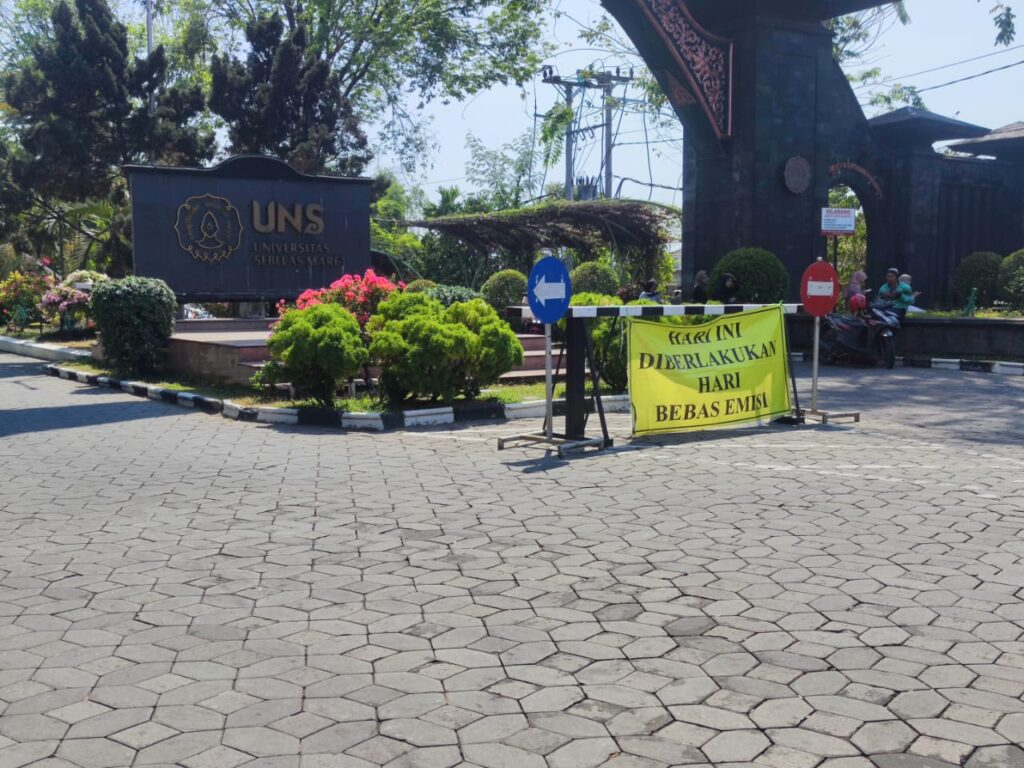
In 2025, Universitas Sebelas Maret (UNS) continued its Emission-Free Day as a regular sustainability initiative, held on the first Friday of each month at the Kentingan Main Campus in Surakarta. During the program, access for motorized vehicles is restricted to encourage students, lecturers, staff, and visitors to adopt more environmentally friendly modes of transportation. To support mobility within the campus, UNS provides public transportation facilities, including campus buses and electric golf carts, which are specifically operated during the Emission-Free Day. The initiative aims to reduce dependence on private motorized vehicles, promote low-emission transportation practices, and strengthen environmental awareness within the academic community. Through this program, UNS contributes to the achievement of the Sustainable Development Goals (SDGs), particularly SDG 7: Affordable and Clean Energy, SDG 11: Sustainable Cities and Communities, and SDG 13: Climate Action. |
2. | Electric Vehicles
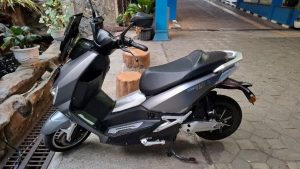
In 2025, Universitas Sebelas Maret (UNS) continued to strengthen its commitment to sustainable campus transportation by gradually replacing conventional fossil-fuel-powered operational vehicles with electric vehicles. As part of this transition, UNS introduced hybrid vehicles and converted existing conventional motorcycles into electric motorcycles, while gradually developing the supporting infrastructure needed to move toward fully electric transportation. These vehicles are utilize d for daily campus operations, including staff transportation, facility monitoring, logistics, and administrative activities. This gradual transition represents UNS’s efforts to reduce the carbon footprint of its operational activities, improve t ransportation efficiency, and support the national transition toward net-zero emissions. Through the integration of electric and hybrid vehicles into its daily operations, UNS demonstrates the application of cleaner transportation technologies in support of sustainable campus development and SDG 7 on Affordable and Clean Energy. https://uns.ac.id/id/uns-update/secara-bertahap-uns-gantikan-kendaraan-operasional-konvensional-dengan-kendaraan-listrik.html |
3. | Renewable Energy
Distribution of Renewable Energy Sources Across UNS Faculties and Facilities. UNS records its renewable energy installations across 11 faculties and supporting facilities, with 224 installations in total. The Drinking Water Treatment System (SPAM) holds the highest number, with 100 installations (about 44.6% of the total), followed by the Faculty of Engineering with 83 installations (about 37.1%). The lowest number is recorded at the Graduate School and the Faculty of Animal Science, with one installation each. The average is approximately 20.4 installations per faculty or facility (224 installations divided by 11 locations), so only SPAM and the Faculty of Engineering lie above the average, while the other locations contribute smaller numbers that add up to the university-wide total. These records cover identified installations and do not represent individual metering in every university building. In terms of energy use, the 2025 energy review (see 7.2.5) recorded 19,141 GJ of consumption across 13 faculties and units. The Faculty of Teacher Training and Education recorded the highest consumption at 3,875 GJ, followed by the Faculty of Medicine at 2,942 GJ and the Faculty of Engineering at 2,255 GJ, while the Faculty of Fine Arts and Design recorded the lowest at 470 GJ. The average is approximately 1,472 GJ per faculty or unit, with five faculties above it. Renewable energy production of 9,413 GJ is therefore equivalent to about 49.2% of this recorded consumption. |
4. | Research and Innovation
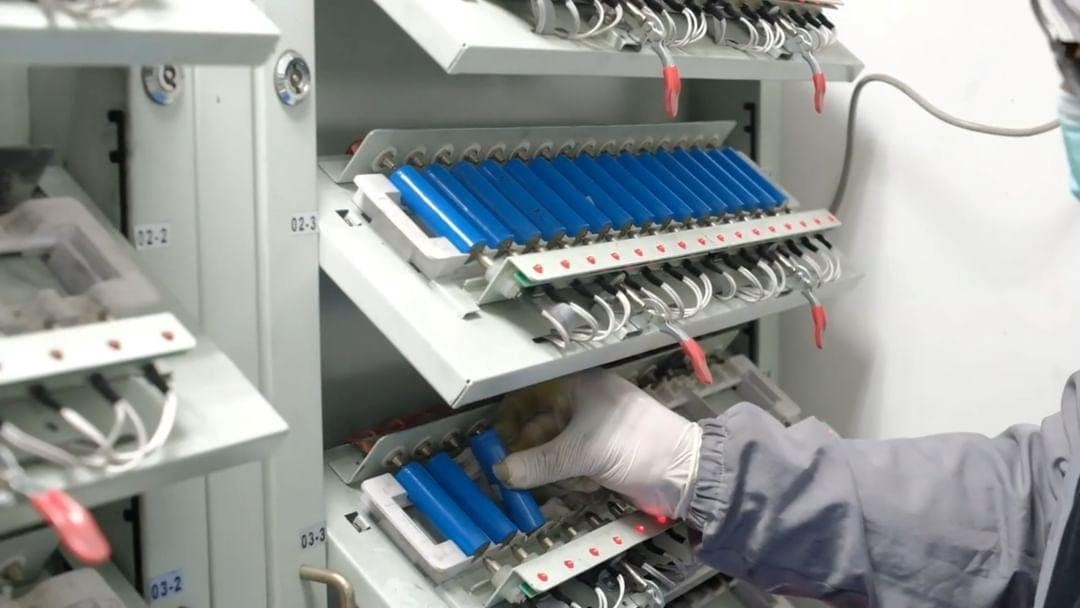
Beyond its daily campus operations, Universitas Sebelas Maret (UNS) continues to strengthen research and innovation in clean energy technologies through the Center of Excellence for Electric Energy Storage Technology (PUI-PT TPEL). Building on its longstanding research in battery technology, PUI-PT TPEL has advanced the development and application of Battery Energy Storage Systems (BESS) to support the integration of renewable energy and the transition toward cleaner energy systems. In 2025, UNS further strengthened the downstream application of its battery research through the development of a 100 Ah/51.2 V BESS Powerwall prototype equipped with a Battery Management System (BMS) and integrated with solar panels. The prototype was tested in collaboration with PT PLN Indonesia Power to provide clean electricity for lighting and office equipment, demonstrating the practical application of UNS research in renewable energy systems. Through research collaboration, technology development, and partnerships with industry, UNS continues to translate battery and energy-storage research into practical solutions that support energy independence, reduce carbon footprints, and accelerate Indonesia’s transition toward clean and sustainable energy. UNS research further supports these carbon reduction efforts. A 2025 study by Prof. Dr.Eng. Nugroho Agung Pambudi, M.Eng. and colleagues from the Department of Mechanical Engineering Education (Journal of Sustainable Development of Energy, Water and Environment Systems), titled “Analysis of Serpentine Collector Performance Based on Flow Rate Variation for Improving Efficiency and Environmental Impact of Solar Water Heater,” tested a serpentine solar water heater in Solo and identified an optimal flow rate of 180 L/h, achieving a thermal efficiency of 57.02%, a heat absorption efficiency of 81.93%, and a collector efficiency of 69.60%. A life cycle assessment showed that the usage phase, although dominant in energy consumption, contributed significantly to carbon dioxide emission reduction, while materials and manufacturing were the main sources of costs and emissions. The study, supported by UNS through the International Collaboration Research TOP 100 (iTOP-100) program administered by LPPM UNS, presents the solar water heater as an efficient and eco-friendly heating solution that reduces reliance on non-renewable energy. |
 Universitas Sebelas Maret (UNS) utilizes three types of renewable energy: solar panels, biodiesel, and biogas. In 2025, UNS recorded renewable energy production of 9,413 GJ, compared with a total electricity consumption of 19,141 GJ. On this basis, renewable energy covered approximately 49.2% of the electricity used on campus. Solar panels are installed at several faculties and supporting facilities, including the UNS Hospital, UNS Library, UNS Arboretum, and the Drinking Water Treatment System (SPAM). Biodiesel serves mainly as an alternative energy source during power outages, and biogas supports energy generation and cooking activities at the Jatikuwung Animal Husbandry Laboratory Campus of the Faculty of Animal Science. Together, these sources demonstrate UNS’s continued efforts to diversify its energy supply, reduce its reliance on conventional energy, and strengthen low-carbon energy management on campus.