

SDG 13 In Number
Total energy used (GJ)
19,141
Total energy used from low-carbon sources (GJ)
9,413
13.3.1 Local Education Programmes On Climate
Local Education Programs on Climate Change
Universitas Sebelas Maret (UNS) provides local education programs and community campaigns to improve public awareness and strengthen local capacity to address climate change risks and impacts. Through community service, school-based education, and partnerships with local government and community organizations, UNS promotes climate change mitigation, adaptation, and impact reduction. These initiatives support the objectives of Sustainable Development Goal (SDG) 13: Climate Action by helping local communities build practical knowledge and respond to climate-related challenges.
Local Education Programs and Community Engagement
1. Thematic Community Service Program on Climate Villages (KKN ProKlim) in Gondangrejo
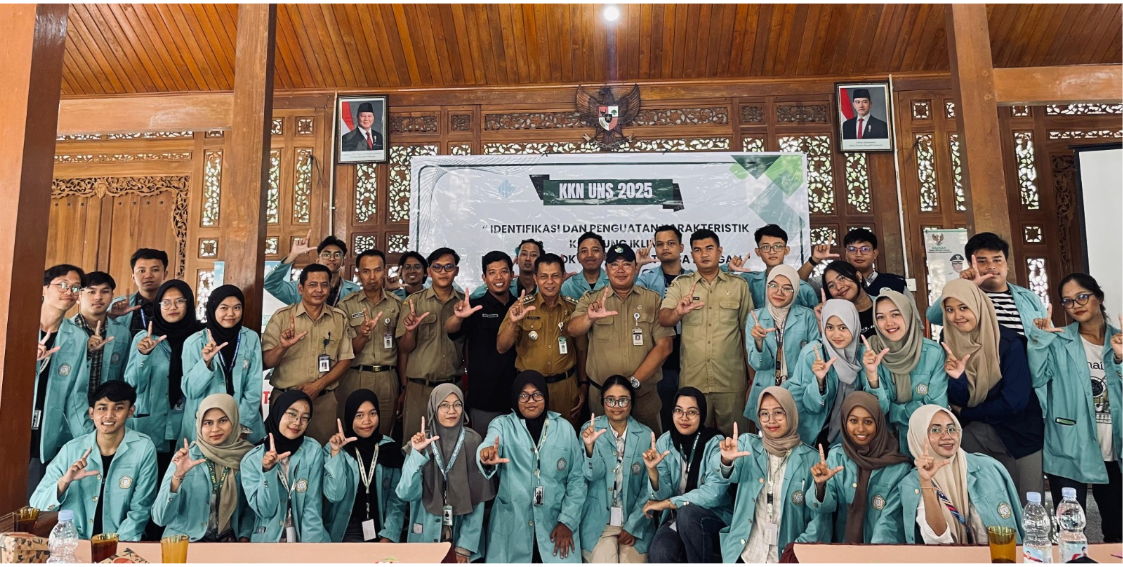
In January and February 2025, the Rural Sociology Research Group of the Agricultural Extension and Communication Study Program, Faculty of Agriculture, UNS, collaborated with the Karanganyar Regency Environmental Agency to implement a thematic Community Service Program (KKN) based on the Climate Village Program (ProKlim). The initiative involved 100 students working across five villages in Gondangrejo District: Karangturi, Wonosari, Kragan, Tuban, and Bulurejo. The team also held a workshop with village officials and students at Kragan Village Hall on January 20, 2025.
The program provided education on local climate change adaptation and mitigation actions, village data collection, and the role of community institutions in supporting climate initiatives. Through direct engagement with village stakeholders, the program helped identify local climate-related challenges and strengthen community capacity to develop climate-adaptive villages. The initiative contributes to SDG 13 by promoting local education on climate change risks, impacts, mitigation, and adaptation.
References:
2. Community Education and Climate Adaptation through KKN 75 in Karangturi Village
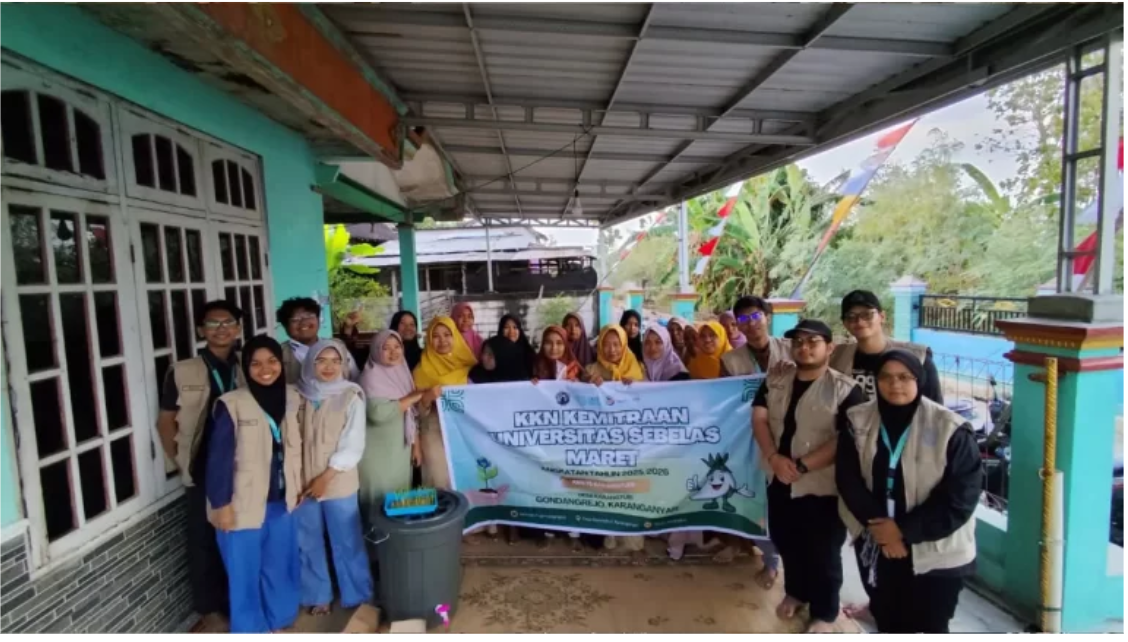
In July and August 2025, KKN 75 UNS implemented a community engagement program in Karangturi Village, Gondangrejo District, as part of the Climate Village Program (ProKlim). The activities built on existing community environmental initiatives, including waste banks, women farmers’ groups, maggot cultivation, and ecoprint activities. Students worked with local community groups, including the Family Welfare Movement (PKK), to promote practical environmental management and climate-responsive practices.
The program included demonstrations of biopore infiltration holes and composters, education on plastic waste management, and the conversion of used cooking oil into soap. These activities helped residents improve household waste management, increase rainwater infiltration, and reduce potential flooding during the rainy season. Through practical education and community participation, UNS promoted climate change adaptation, mitigation, and impact reduction at the village level, supporting SDG 13.
Reference: KKN 75 UNS Develops Karangturi Village into an Independent Climate Village – Krajan.id
3. Climate Education through Ecological Citizenship at SDIT Kasih Ibu
In 2025, UNS conducted a community-based educational program at SDIT Kasih Ibu in Karawang, West Java, to promote ecological citizenship and strengthen students’ awareness of environmental issues and climate change. The program involved 36 fourth-grade students and used an experiential learning approach that combined classroom sessions, practical activities, educational materials, worksheets, and videos.
The educational activities promoted energy conservation, sustainable transportation, waste prevention and recycling, responsible consumption, and environmental protection. These topics introduced students to practical climate change mitigation measures and ways to reduce environmental impacts through everyday behavior. The program also used pre-test and post-test assessments to evaluate changes in students’ understanding and environmental awareness. By introducing climate-related knowledge and responsible environmental practices at an early age, UNS contributes to SDG 13 through education and public awareness.
4. Teacher Empowerment through Low-Carbon Education at SMP Negeri 2 Polokarto
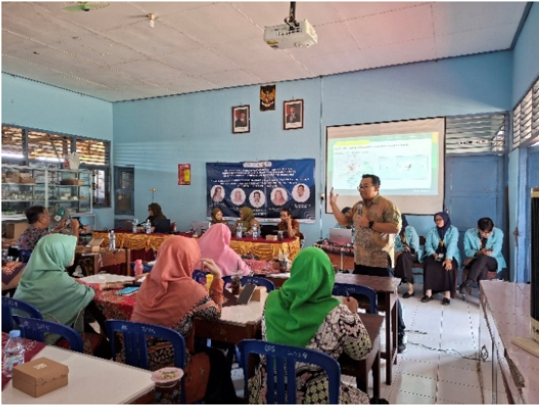
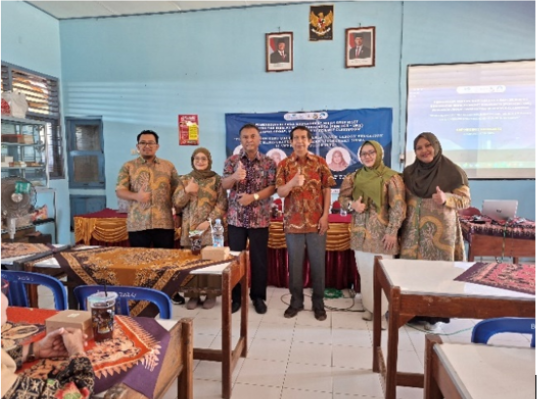
On July 9, 2025, lecturers from the Science Education Study Program, Faculty of Teacher Training and Education (FKIP), UNS, conducted a community service program at SMP Negeri 2 Polokarto, Sukoharjo Regency. The program focused on empowering teachers to implement low-carbon education and strengthen students’ environmental awareness through school-based learning.
The program introduced approaches to integrating climate-related topics and energy efficiency into project-based learning. By strengthening teachers’ capacity to deliver environmental education, UNS supports the dissemination of knowledge on climate change mitigation and low-carbon practices to local schools. This initiative contributes to SDG 13 by promoting climate change education and encouraging students and educators to adopt sustainable practices.
5. Community-Based Ecological Literacy and Waste Management through Bank Sampah Gama Bareta
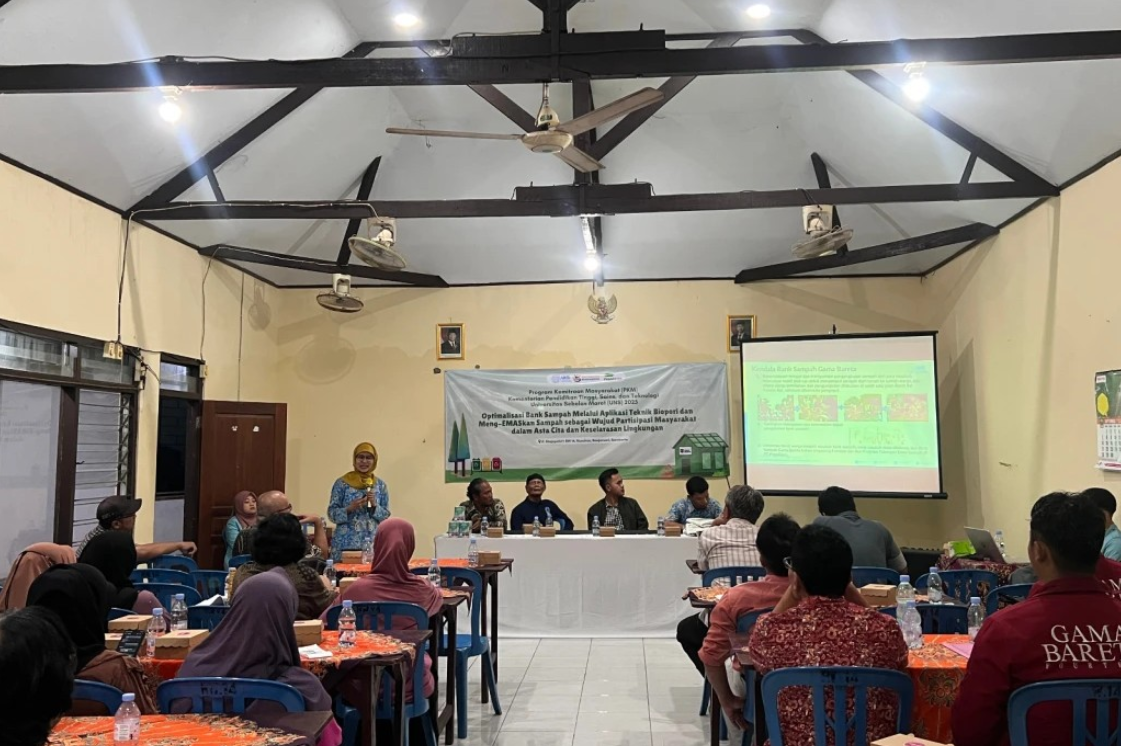
In September 2025, UNS conducted a community service program with Bank Sampah Gama Bareta in RW XIV, Nusukan, Banjarsari, Surakarta. The program aimed to strengthen ecological literacy and community participation in waste management as part of local environmental and climate action. Residents received education and practical guidance on sorting household waste, managing organic and inorganic waste, and improving community-based waste bank operations.
The activities also introduced biopore techniques and encouraged residents to adopt more sustainable waste management practices. By reducing waste accumulation and promoting responsible resource management, the program supports climate change mitigation and reduces community-level impacts. It also strengthens local awareness of the relationship between waste management, greenhouse gas emissions, and climate action, contributing to SDG 13.
Reference: Community Service Program to Optimize Bank Sampah Gama Bareta – Faculty of Psychology, UNS
6. Community Education on Rainwater Infiltration through Biopore Technology in Bumi Graha Indah, Karanganyar
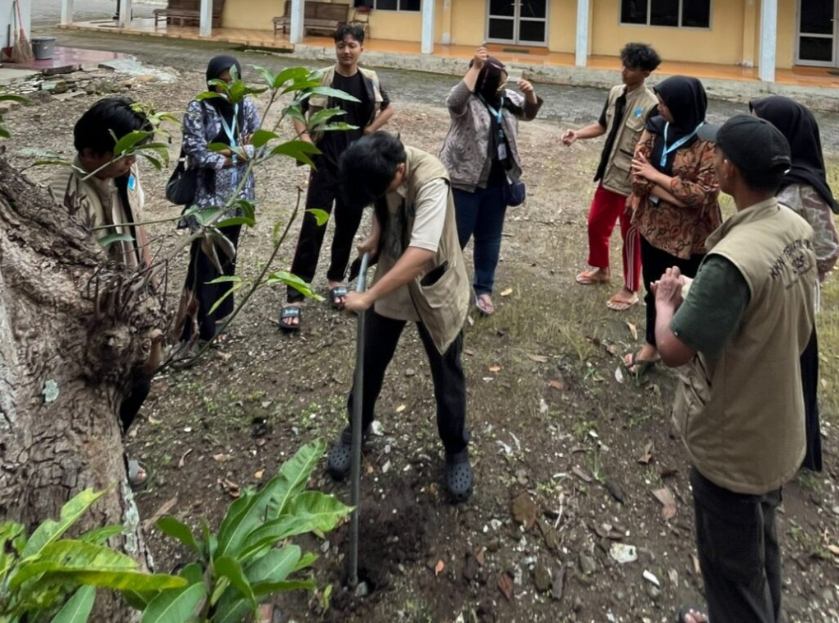
In 2025, a community service team from the Faculty of Mathematics and Natural Sciences (FMIPA), UNS, introduced biopore infiltration technology at Bumi Graha Indah Housing Complex, Jaten, Karanganyar Regency. The program focused on reducing surface water runoff and improving local rainwater infiltration by installing biopore infiltration holes. Activities included community education, hands-on training, and the installation of 20 biopore holes.
Through this program, residents gained practical knowledge of rainwater management and how to use biopore technology to reduce surface runoff and potential flooding during the rainy season. The initiative supports local climate change adaptation by introducing a practical measure to address climate-related rainfall impacts and strengthen community resilience. It also reduces impacts through improved water infiltration and local environmental management, supporting SDG 13: Climate Action.
Reference: UNS FMIPA – Application of Biopore Technology to Control Surface Water Runoff in Bumi Graha Indah
Conclusion
Through these initiatives, Universitas Sebelas Maret demonstrates its commitment to providing local education programs and community campaigns on climate change. The programs reach different local groups, including village communities, school students, and teachers, through practical education, community mentoring, and partnerships with local government and community organizations.
Together, these initiatives address climate change risks and impacts, promote mitigation and adaptation measures, and encourage practical actions to reduce environmental and climate-related impacts. They strengthen local knowledge, public awareness, and community capacity to respond to climate change. Through these sustained educational and community engagement efforts, UNS contributes to SDG 13: Climate Action by integrating climate education into local development and promoting more resilient, sustainable communities.