

SDG 13 In Number
Total energy used (GJ)
20.148
Total energy used from low-carbon sources (GJ)
9.308
13.3.3 Co-Operative Planning For Climate Change Disasters
Strengthening Collaborative Climate Disaster Preparedness and Resilience through Local and Regional Partnerships
Universitas Sebelas Maret (UNS) actively contributes to strengthening climate disaster preparedness and resilience through collaborative initiatives with local and regional governments, disaster management agencies, and other stakeholders. Recognizing the growing risks of climate-related hazards, including floods, landslides, and other hydrometeorological disasters, UNS connects its academic expertise, research capacity, and community engagement with government-led disaster risk reduction efforts.
Through the Center for Disaster Research and Management (P3B) under the Institute for Research and Community Service (LPPM), the UNS Search and Rescue (SAR) Team, and university-led community engagement programs, UNS participates in disaster risk assessment, preparedness initiatives, early warning systems, emergency evacuation, and post-disaster recovery. These activities support cooperative planning and coordinated action with government institutions at both local and regional levels, contributing to SDG 13 (Climate Action) by strengthening community resilience and adaptive capacity to climate-related hazards and natural disasters.
A. Local-Level Collaboration
At the local level, UNS works with district and municipal governments, particularly Regional Disaster Management Agencies (BPBD), to strengthen disaster preparedness and community resilience. These partnerships combine institutional coordination, risk awareness, early warning initiatives, and emergency response to address climate-related hazards affecting surrounding communities.
1. Strengthening Disaster Risk Reduction through Collaboration between P3B UNS and BPBD Wonogiri and Sukoharjo
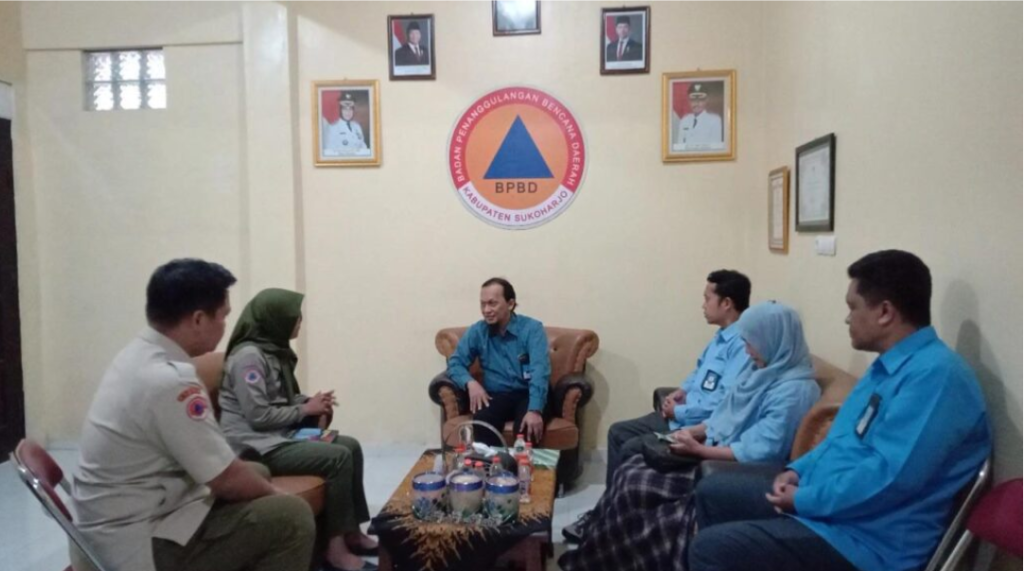
In January 2025, the Center for Disaster Research and Management (P3B) of UNS conducted coordination meetings with the Regional Disaster Management Agencies (BPBD) of Wonogiri and Sukoharjo Regencies. These meetings aimed to strengthen institutional cooperation and identify opportunities for joint initiatives in disaster risk reduction, including research, community engagement, technical assistance, and developing Disaster-Resilient Villages (Desa Tangguh Bencana or DESTANA).
The discussions addressed local disaster risks and government priorities, including flooding, landslides, drought-related water shortages, and the need to strengthen community preparedness. Potential areas of cooperation included updating disaster risk assessments, supporting regional disaster management plans, and improving early warning and community education systems. Through these discussions, UNS contributed its academic and technical expertise to support local government efforts to identify disaster risks and strengthen preparedness strategies.
This collaboration supports SDG 13 by promoting cooperative planning with local government institutions, strengthening disaster risk reduction capacity, and improving community preparedness for climate-related hazards. It also provides a foundation for more coordinated disaster management at the village and district levels.
2.Joint Emergency Flood Evacuation with the Surakarta City Government
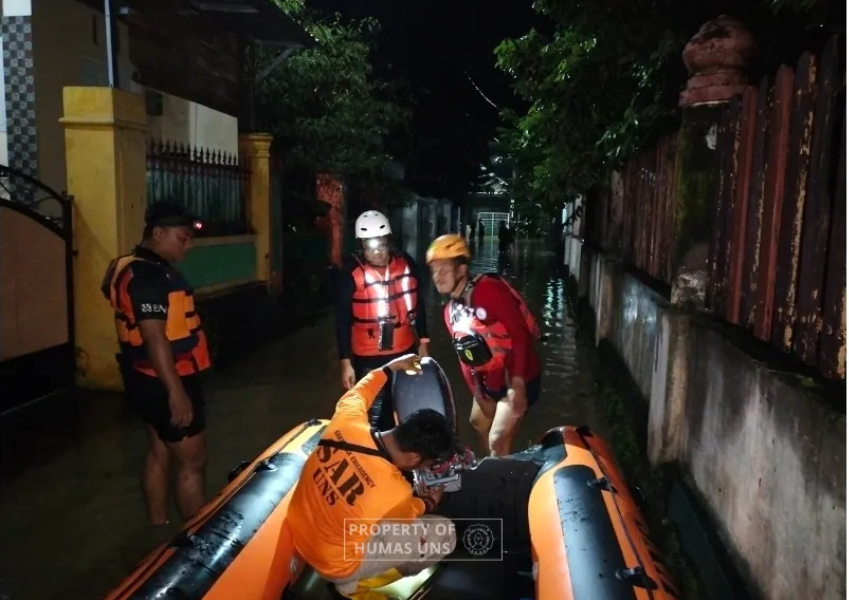
On April 3, 2025, heavy rainfall accompanied by strong winds triggered flooding in several areas of Surakarta City, including Kampung Bayan, Kampung Sruni, Kampung Sumpingan, Kampung Gambirejo, and Kampung Sambirejo. In response, the UNS Search and Rescue (SAR) Team deployed five personnel equipped with a rubber boat to support the evacuation of affected residents, particularly in Kampung Sruni, Kadipiro, where floodwaters inundated approximately 30 houses and affected at least 96 people.
The evacuation operation was carried out in coordination with other emergency response elements in the affected area. Surakarta Mayor Respati Ardi visited the affected locations and expressed appreciation for the UNS SAR Team’s contribution. This involvement showed how UNS mobilized its institutional resources and emergency response capabilities to support local government efforts to protect residents during a climate-related disaster.
Through this joint operation, UNS contributed to SDG 13 by supporting coordinated disaster response, protecting communities exposed to extreme rainfall and flooding, and strengthening local adaptive capacity. The evacuation also demonstrates the importance of cooperation between universities and local governments in addressing the immediate impacts of climate-related hazards, including the temporary displacement of affected residents.
References:
3. Community-Based Landslide Early Warning System in Ngledoksari Village, Karanganyar
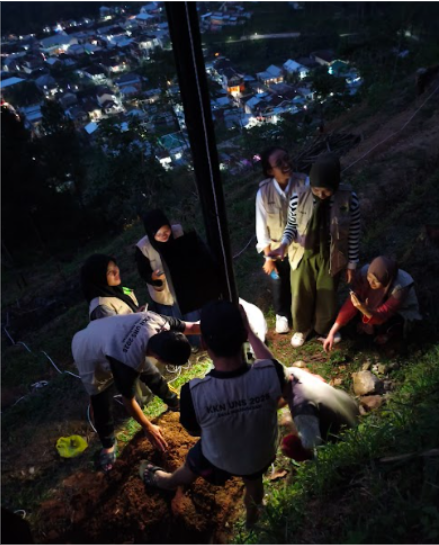
In August 2025, UNS students participating in the university’s Community Service Program (KKN) developed and installed an analog-based Early Warning System (EWS) for landslides in Ngledoksari Village, Tawangmangu District, Karanganyar Regency. The initiative addressed the village’s landslide risk, particularly in areas with steep slopes and vulnerable terrain.
The program involved community education and coordination with BPBD Karanganyar. On August 7, 2025, the KKN team held a disaster preparedness session with a BPBD representative, who provided information on landslide mitigation and the relationship between soil moisture and slope stability. The team then installed the early warning system at two identified locations on August 20, 2025, helping residents recognize potential landslide risks and prepare for timely preventive action.
This initiative supports SDG 13 by strengthening community-based climate disaster preparedness, promoting cooperation with local disaster management authorities, and improving access to early warning information. By combining government expertise, student participation, and community engagement, UNS helped strengthen local adaptive capacity and reduce the potential impacts of climate-related landslides.
Reference: Krajan.id – UNS KKN Team Develops Early Warning System to Address Landslide Risks in Tawangmangu
B. Regional-Level Collaboration
At the regional level, UNS contributes to broader disaster risk reduction efforts through cooperation with provincial and national government institutions, as well as cross-regional academic and disaster management networks. These initiatives include policy discussions, regional flood management, coordinated emergency assistance, and knowledge-sharing platforms focused on climate resilience and disaster preparedness.
1. P3B UNS as Co-Chair of the Academic Pentahelix Discussion at the Indonesian Disaster Management Summit 2025
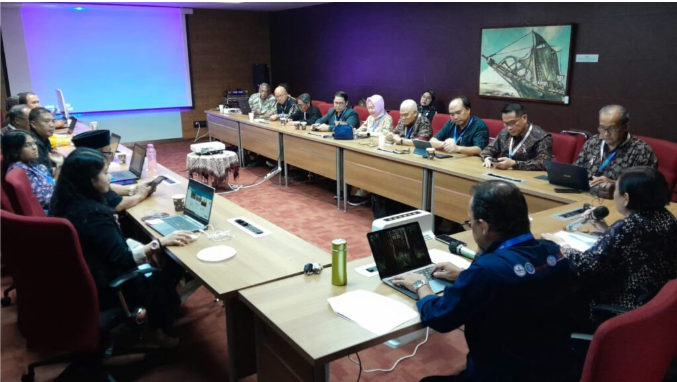
On December 2–3, 2025, the Ministry of Coordinating Human Development and Cultural Affairs (Kemenko PMK) organized the Indonesian Disaster Management Summit (IDMS) 2025 as a national platform to strengthen disaster management policies and cross-sector cooperation. UNS participated through its Center for Disaster Research and Management (P3B), whose head also serves as Chair of the Forum of Universities for Disaster Risk Reduction (FPT-PRB).
The Head of P3B UNS was invited to serve as Co-Chair of the Academic Pentahelix Discussion, bringing together government institutions, universities, businesses, media, and civil society. The discussion addressed strategic recommendations across the disaster management cycle, covering pre-disaster preparedness, emergency response, post-disaster recovery, and post-disaster social conflict management. It also highlighted increasing hydrometeorological disasters and the impacts of climate change as important challenges requiring coordinated action.
Through its leadership in this national forum, UNS contributed academic perspectives and recommendations to support government-led disaster management policies. This participation directly supports SDG 13 by strengthening institutional cooperation, promoting integrated disaster risk reduction planning, and connecting academic knowledge with public policy to improve resilience to climate-related disasters.
References:
2. Collaboration between UNS and the Central Java Provincial Government on Flood Control in the Rawa Pening Area
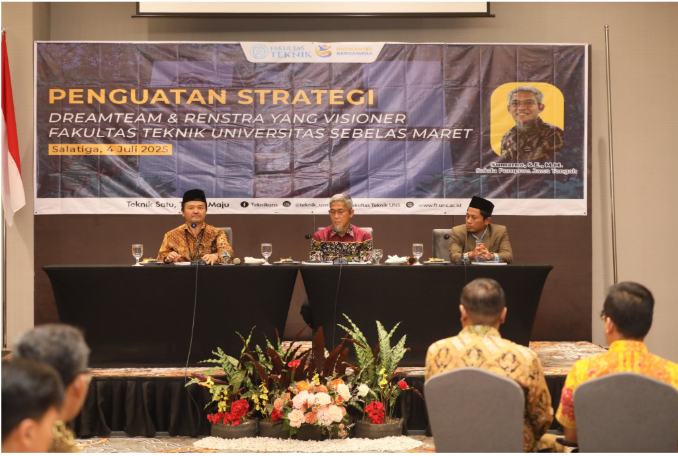
In March 2025, UNS and the Central Java Provincial Government established a cooperation agreement to strengthen the role of higher education institutions in addressing regional development challenges. As part of this collaboration, the Faculty of Engineering UNS was encouraged to contribute technical expertise to developing the Rawa Pening area, including initiatives related to flood control and regional planning.
The cooperation was further discussed in July 2025, when the Provincial Secretary of Central Java encouraged universities to contribute to solving regional problems through research-based solutions and practical programs. UNS emphasized the importance of coordination with provincial government agencies, including the Regional Development Planning Agency (Bappeda), to integrate university expertise into regional development planning.
This partnership supports SDG 13 by promoting cooperative planning with provincial government institutions to address flood risks and strengthen regional climate resilience. Through research-based approaches and institutional cooperation, UNS contributes to improving flood management strategies and supporting more resilient regional development.
References:
3. Emergency Disaster Response and Post-Disaster Recovery Programs in Sumatra
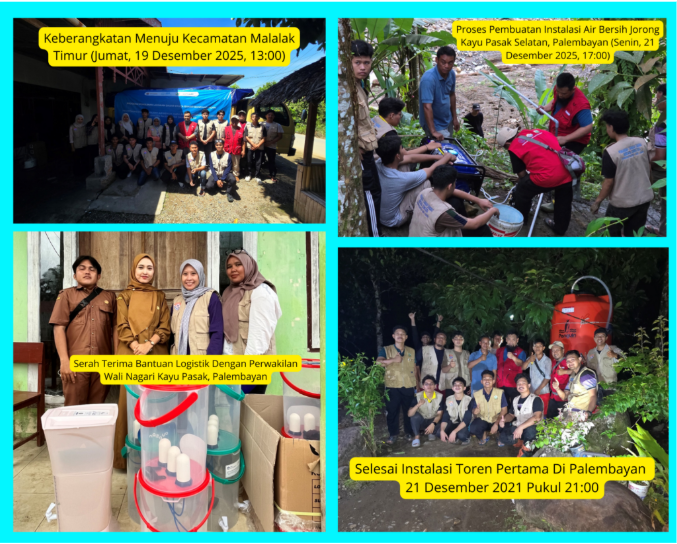
In December 2025, UNS participated in emergency disaster response and recovery initiatives in Aceh, North Sumatra, and West Sumatra following severe floods and landslides. Through the Center for Disaster Research and Management (P3B), the Disaster Management Coordination Agency (BKPB), and the Institute for Research and Community Service (LPPM), UNS mobilized academic teams, volunteers, and technical resources to support affected communities.
The university’s contributions included initial needs assessments, emergency water treatment support, and coordination with local institutions. In Aceh, UNS teams conducted assessments in affected communities. They distributed two tons of polyaluminum chloride (PAC) to PDAM Tirta Pasai in North Aceh Regency to support restoring clean water services. In West Sumatra, UNS worked with local universities and disaster risk reduction organizations to provide water filtration technology and digital water quality monitoring systems. In Agam Regency, UNS collaborated with Universitas Andalas to restore essential services, including clean water, emergency electricity, and basic health services, reaching 308 disaster-affected residents.
These initiatives demonstrate UNS’s contribution to coordinated disaster response and post-disaster recovery across provincial boundaries. Through collaboration with local institutions, government-supported programs, and disaster risk reduction networks, UNS helped address the needs of affected communities and strengthen their capacity to recover from climate-related hazards. These efforts support SDG 13 by promoting cross-regional cooperation, improving community resilience, and supporting the recovery of essential services following hydrometeorological disasters.
References:
- UNS – Three Community Engagement Proposals Selected for the Ministry’s Emergency Disaster Response Program
- UNS – Supporting Clean Water Recovery in North Aceh through the Distribution of Two Tons of PAC
- LPPM UNS – UNS Provides Water Filtration and Smart Water Monitoring Technology to the West Sumatra Disaster Risk Reduction Forum
- LPPM UNS – UNS Supports Post-Disaster Recovery of Essential Services in Agam Regency, West Sumatra
4. The 3rd International Conference on Disaster Management and Climate Change (ICoDMC) 2025
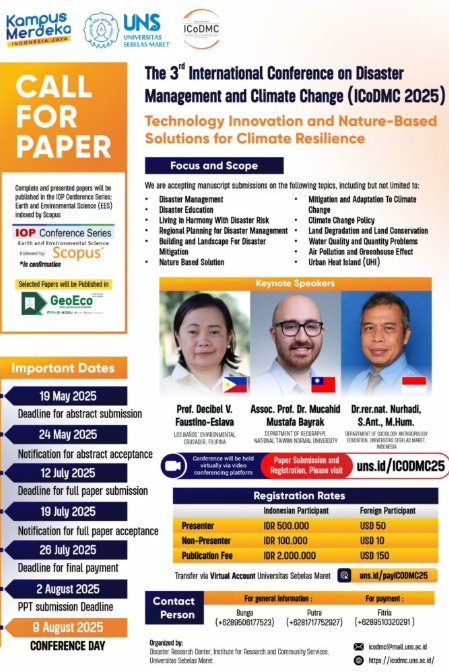
In August 2025, P3B LPPM UNS organized the 3rd International Conference on Disaster Management and Climate Change (ICoDMC) under the theme Technology Innovation and Nature-Based Solutions for Climate Resilience. The conference provided a platform for academics, researchers, and policymakers to exchange knowledge and discuss strategies for strengthening disaster resilience in the context of climate change.
The conference featured contributions from government representatives, including the Assistant Deputy for Disaster Risk Reduction at Kemenko PMK, who discussed the importance of strengthening disaster risk reduction through cooperation among government institutions, private organizations, communities, universities, and media. Discussions covered disaster management strategies, climate adaptation, technological innovation, and nature-based solutions to improve resilience against climate-related hazards.
By organizing this conference, UNS strengthened the exchange of scientific knowledge and policy perspectives between universities and government stakeholders. The initiative supports SDG 13 by promoting collaborative approaches to climate resilience, strengthening disaster risk reduction awareness, and encouraging the development of innovative solutions for climate-related disaster preparedness and management.
References:
Conclusion
Through its local and regional partnerships in 2025, Universitas Sebelas Maret demonstrated its commitment to strengthening cooperative approaches to climate-related disaster management. Its contributions ranged from direct coordination with local disaster management agencies and community-based early warning initiatives to emergency evacuation, regional flood management, national policy discussions, and cross-regional post-disaster recovery programs.
These initiatives demonstrate how UNS works with government institutions and other stakeholders to connect disaster risk assessment, preparedness, emergency response, and recovery efforts. By contributing academic expertise, technical solutions, institutional resources, and community engagement, UNS helps strengthen adaptive capacity and reduce the vulnerability of communities exposed to climate-related hazards.
Overall, these efforts reinforce UNS’s contribution to SDG 13 (Climate Action) by promoting collaborative disaster risk reduction, improving preparedness and response capacity, and supporting more resilient communities at local and regional levels.