

SDG 2 In Number
Total food waste (mt)
1,66
Campus population
31,279
Number of graduates
6,213
Number of graduates from agriculture and aquaculture courses including sustainability aspects
1,727
2.5.3 University Access to Local Farmers and Food Producers
UNS Provides Access to University Facilities for Local Farmers and Food Producers to Support Sustainable Agriculture
Universitas Sebelas Maret (UNS) supports Sustainable Development Goal (SDG) 2: Zero Hunger by providing local farmers and food producers with access to university facilities, technologies, equipment, and scientific resources. Through facilities across the university, UNS offers local agricultural communities opportunities to use research infrastructure, laboratory services, and agricultural resources to improve production capacity and adopt sustainable farming practices.
These facilities are accessible through free services, institutional permission, collaborations, and community engagement programs, while selected laboratory testing and technical services are also available through paid arrangements. These initiatives connect university resources and expertise with the practical needs of local farmers and food producers, supporting improvements in agricultural productivity, food quality, and sustainable food production.
1. UNS Integrated Laboratory
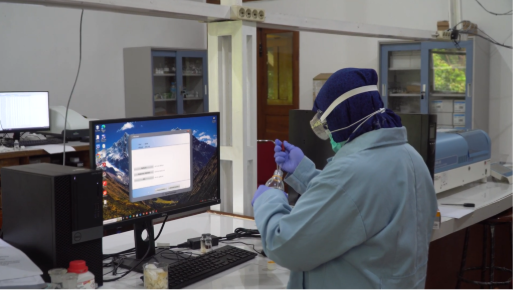
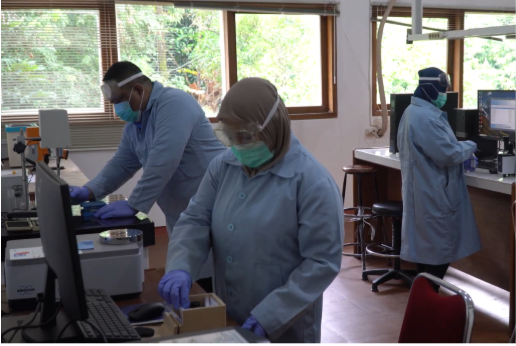
UNS, through its UPT Integrated Laboratory, provides external parties, including local farmers and food producers, access to university laboratory facilities, testing equipment, and analytical services. In addition to supporting Basic Sciences practical sessions for students and lecturers, the laboratory serves as a center for education, research, community engagement, testing, and calibration. Its facilities and services are open to government institutions, industries, and the general public through both free-of-charge and paid access arrangements.
The laboratory provides various testing and analytical services, including water and wastewater quality testing, drinking water analysis, air quality testing, and chemical substance analysis. It also offers testing services for agricultural and food products, including vanilla and honey, in accordance with applicable Indonesian National Standards (SNI). While some services are provided free of charge through community engagement programs and institutional collaborations, other testing, research, and calibration services are available through paid arrangements. The laboratory maintains quality assurance through accreditation by the National Accreditation Committee (KAN) and the implementation of ISO/IEC 17025 standards to ensure reliable and accurate testing and calibration results.
A practical example of free access was demonstrated in 2025 through a community engagement program entitled Socialization of Vanilla Testing Based on SNI 01-0010-2002 for the Karavan Donohudan Vanilla Farmers Cooperative. On July 8, 2025, UNS provided free laboratory testing of vanilla samples from local farmers through the UPT Integrated Laboratory. The program involved 30 farmer representatives and provided scientific information on vanillin content and product quality based on national standards. Testing results showed vanillin contents of 2.57% for Vania 1, 2.51% for Vania 2, and 2.38% for the local variety.
Through this initiative, local farmers gained free access to university laboratory testing services and scientific expertise to assess and improve the quality of their agricultural products. By providing both free and paid access to its laboratory resources and analytical services, UNS enables local farmers and food producers to benefit from university facilities and supports the adoption of science-based agricultural practices. These initiatives contribute to Sustainable Development Goal (SDG) 2: Zero Hunger by strengthening local agricultural production systems, improving food product quality, and supporting sustainable food production.
References:
- UNS Integrated Laboratory Website
- Socialization of Vanilla Testing Based on SNI 01-0010-2002 for the Karavan Donohudan Vanilla Farmers Cooperative
- UNS FMIPA Plant Biomaterials Research Group Conducts Vanilla Quality Testing Outreach and Donates a Drying Machine to the Karavan Donohudan Vanilla Farmers Cooperative
- UPT Integrated Laboratory UNS – List of Laboratory Services
2. Agricultural Greenhouse, Faculty of Agriculture

UNS, through the Greenhouse of its Faculty of Agriculture, provides local farmers and food producers free access to university agricultural facilities to support the development of sustainable farming practices. Although the greenhouse is primarily used for teaching and research activities by students and lecturers, it is also open to local farmers and food producers free of charge, subject to permission and through institutional collaborations or community engagement programs.

The greenhouse serves as a research and innovation facility for developing crop cultivation technology, conserving plant genetic resources, and conducting food security research. Through access to this facility, local farmers and food producers can benefit from UNS’s agricultural infrastructure, research resources, and technical expertise. Activities facilitated through collaborations and community engagement programs give farmers opportunities to learn and apply modern crop cultivation techniques, organic fertilizers, environmentally friendly pest management, and efficient irrigation systems.

By providing free access to its greenhouse facilities and related agricultural expertise, UNS helps local farmers and food producers improve their knowledge and capacity to adopt sustainable farming practices. This initiative strengthens collaboration between the university and local agricultural communities while contributing to Sustainable Development Goal (SDG) 2: Zero Hunger by promoting sustainable agriculture, improving farming productivity, and strengthening local food systems.
Reference: Faculty of Agriculture UNS – Facilities
3. UNS Drinking Water Treatment System (SPAM)
UNS, through its UNS Food unit, operates a Drinking Water Treatment System (SPAM) to provide clean and hygienic water for food production activities on campus. This facility ensures the availability of water that meets relevant quality and health requirements to support UNS Food’s production processes as a food producer within the university.
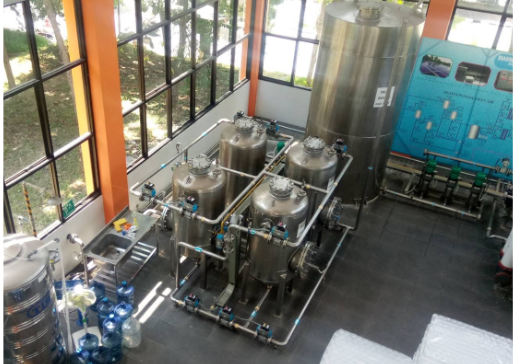
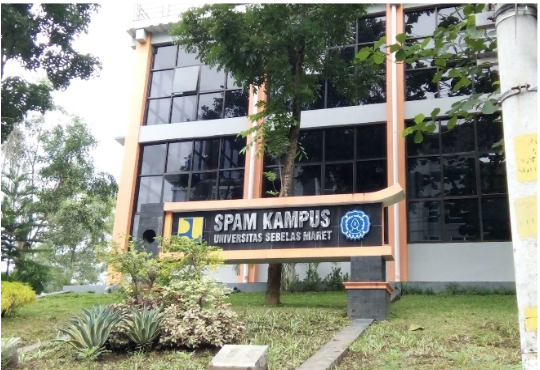
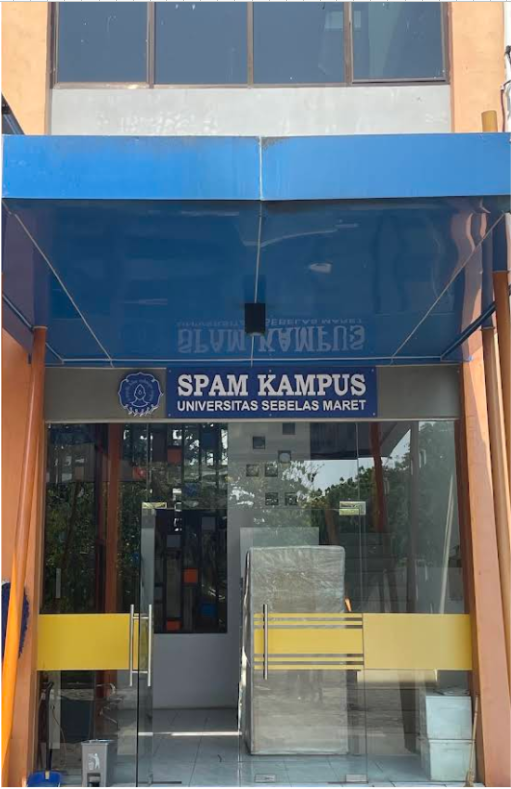
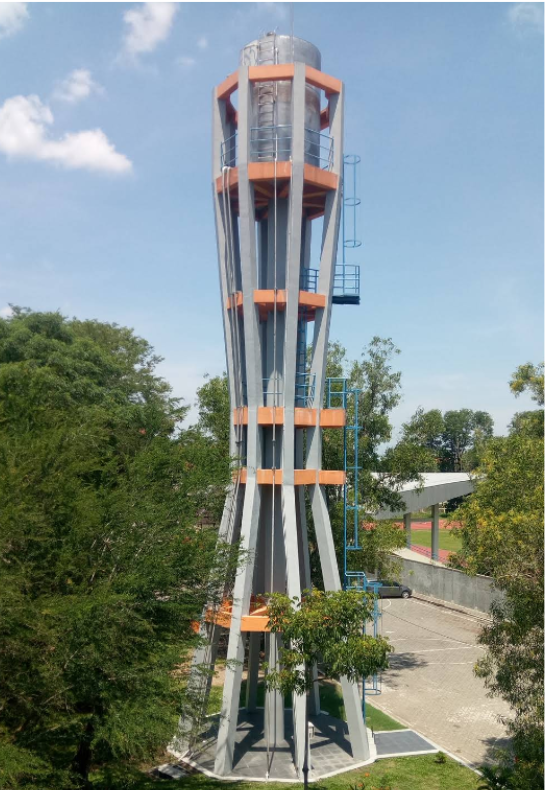
The SPAM system uses water treatment processes, including filtration, sterilization, and quality control. Its application supports hygienic, safe food production while promoting efficient use of water resources. In addition to meeting UNS Food’s operational needs, the system can also serve as a learning resource to demonstrate how water treatment technology supports sustainable food production.
By implementing SPAM, UNS demonstrates its commitment to integrating water treatment technology into safe and sustainable food production systems. The facility also provides opportunities to share knowledge and good practices in water management with stakeholders involved in local food production. By demonstrating water treatment technology, UNS helps improve food production quality, promote efficient resource management, and support Sustainable Development Goal (SDG) 2: Zero Hunger.
4. Agricultural and Food Analysis Equipment
UNS provides access to its agricultural and food analysis equipment to support research, education, and community empowerment, particularly for local farmers and food producers. These university laboratory facilities include instruments for nutritional analysis, food safety testing, and assessing the physical and chemical characteristics of agricultural products. Through access to these facilities, local communities can benefit from product quality and safety testing services supported by qualified laboratory personnel. Access is available free of charge through community engagement programs and institutional collaborations, while other laboratory testing services may be provided through paid arrangements.
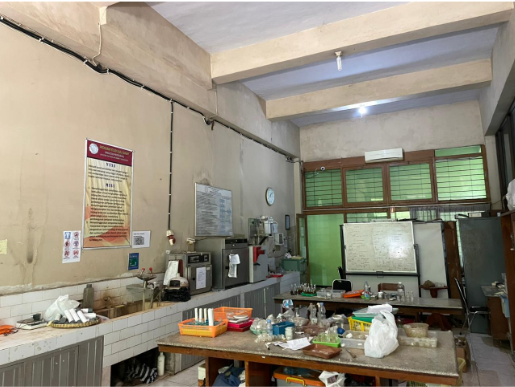
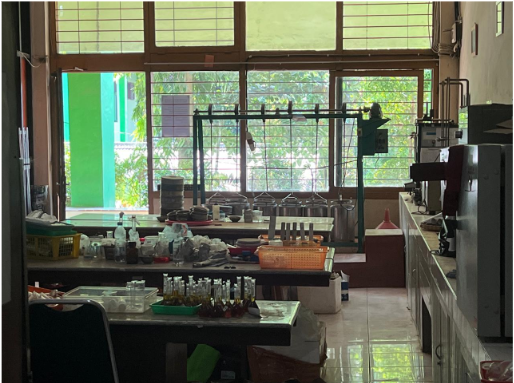
Access to these analytical facilities is facilitated through training programs, collaborative research, and technical assistance for food-related MSMEs, involving relevant UNS units, including the Faculty of Agriculture and the Vocational School. In addition to receiving laboratory testing services, local farmers and food producers can improve their understanding of product quality testing technologies, post-harvest management, and the application of relevant food safety standards.
By making its agricultural and food analysis facilities accessible to local communities, UNS helps farmers and food producers improve the quality, safety, and market value of their products. Through university laboratory facilities and science-based technical assistance, UNS encourages the development of more competitive local products and sustainable production practices, contributing to Sustainable Development Goal (SDG) 2: Zero Hunger.
5. Food Production Equipment
UNS provides access to various food processing equipment and technologies to strengthen the capacity of local farmers, food-related micro, small, and medium-sized enterprises (MSMEs), and food producers. These university resources include agricultural product processing equipment, drying machines, vacuum sealers, packaging tools, and equipment for supporting food product quality testing. Access to these facilities gives local communities opportunities to use food processing technologies to increase the added value of agricultural products and improve product quality. Access is provided free of charge, with permission, through institutional collaborations and community engagement programs.
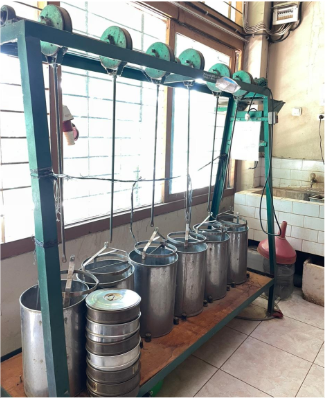
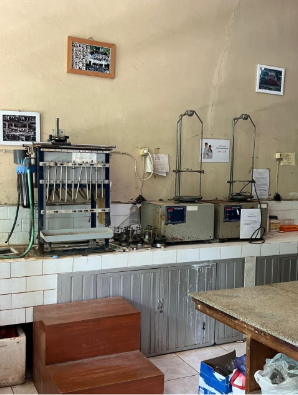
The use of this equipment is supported through training, technical assistance, and collaboration involving UNS lecturers, students, and local businesses. Activities include training on Good Manufacturing Practices (GMP), product certification assistance, and workshops introducing innovative food processing technologies. Through these initiatives, local farmers and food producers gain access to university equipment, technical knowledge, and technologies that can be applied to improve production efficiency, maintain food safety, and strengthen product competitiveness.
By providing access to its food processing equipment and technologies, UNS connects university resources with the practical needs of local agricultural communities and food producers. These efforts support higher-quality, more sustainable food production processes while strengthening the university’s contribution to Sustainable Development Goal (SDG) 2: Zero Hunger by improving local food production capacity.
6. Agricultural Land
UNS supports food security and sustainable agriculture by providing access to its agricultural land as a university facility for education, research, and community empowerment. In addition to serving academic purposes, UNS agricultural land is also available to local farmers, farmer groups, and food producers, allowing them to benefit from university resources and gain practical knowledge and skills in applying agricultural technologies. Access is provided free of charge with permission and through institutional collaborations and community engagement programs.
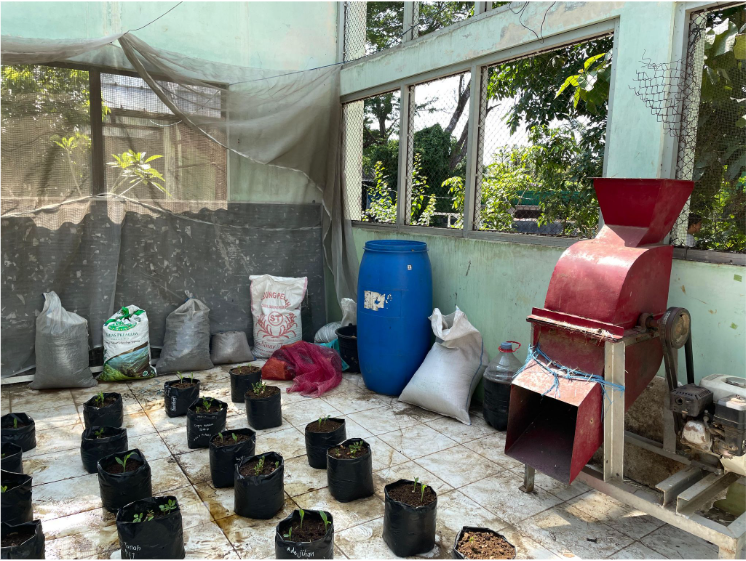
The facilities include several agricultural research and experimental sites, such as approximately 5,000 m² of paddy-field research land in Palur Village, Sukoharjo; approximately 2 hectares of dryland in Jumantono, Karanganyar; and a 6-hectare dryland experimental farm in Jatikuwung, Karanganyar. These university-managed agricultural areas offer opportunities for practical learning, field observation, and applying research findings on soil management, crop cultivation, and sustainable agricultural practices.
UNS also provides access to specialized research and laboratory facilities, including the Soil Chemistry and Fertility Laboratory, Soil Physics and Conservation Laboratory, Soil Pedology and Survey Laboratory, Soil Biology and Biotechnology Laboratory, Agricultural Climatology Laboratory, and Mapping and Geographic Information Systems Laboratory. In addition, the Faculty of Agriculture’s Integrated Laboratory and the UNS Integrated Laboratory Unit provide supporting facilities for scientific analysis and testing. The Agricultural Climatology Station in Jumantono, supported by the central office of the Meteorology, Climatology, and Geophysics Agency (BMKG), is equipped with manual and automatic weather observation instruments, including an Automatic Weather Station (AWS).
Through access to these facilities, local farmers and food producers can benefit from university research infrastructure and scientific expertise in areas such as soil fertility assessment, soil conservation, agricultural climate monitoring, land mapping, and the application of appropriate farming technologies. This access can support more informed agricultural decisions, improve soil and water resource management, and encourage the adoption of sustainable farming practices.
By making its agricultural land, experimental farms, laboratories, and supporting research infrastructure available for broader community utilization, UNS strengthens the connection between university research and the practical needs of local agricultural communities. This approach contributes to SDG 2: Zero Hunger, particularly by supporting sustainable agriculture, improving agricultural productivity, and strengthening the capacity of local farmers and food producers.
Reference: Facilities: Soil Science Study Program at the Faculty of Agriculture
Conclusion
Through its laboratory facilities, agricultural greenhouse, agricultural land, food production equipment, and analytical technologies, UNS strengthens its role as a university that makes its resources accessible to local farmers and food producers. By providing both free and paid access, supported by institutional collaborations and community engagement programs, UNS facilitates the transfer and application of scientific knowledge and technology to address practical challenges in local agriculture and food production.
These efforts strengthen the capacity of local farmers and food producers, improve agricultural product quality, promote resource-efficient production, and encourage sustainable farming practices. By continuing to use its university facilities for the benefit of local communities, UNS supports SDG 2: Zero Hunger, particularly by advancing sustainable agriculture and strengthening local food systems.