
SDG 6 In Number
Volume of water used in the university: Inbound (treated/extracted water) (m³)
60,056
Campus population
31,279
6.4.2 Water Reuse Measurement
Water Reuse Measurement at Universitas Sebelas Maret (UNS)
Universitas Sebelas Maret (UNS) is strongly committed to environmental preservation through a clean water conservation program. Rector’s Instruction No. 31 of 2023 on Clean Water Conservation at UNS Campus regulates this commitment. The policy aims to create a sustainable, environmentally responsible university by ensuring efficient water management and promoting water measurement and reuse across the university.
The internal regulation outlines several important points, including:
- Implement water conservation policies to ensure sustainable management of water resources.
- Integration into the Tridharma of Higher Education, incorporating water conservation efforts into education, research, and community service.
- Groundwater management to ensure the efficient use of clean water.
- Water-saving initiatives, including water reuse and rainwater use for non-consumptive purposes.
- Develop potable water management to provide clean, safe water.
- Utilization of water resources through rainwater harvesting systems, biopores, and infiltration wells.
- Domestic wastewater management through integrated systems.
- Monitoring and treatment of laboratory wastewater to minimize environmental impacts.
Through this comprehensive policy, UNS promotes measuring and optimizing water reuse across campus, ensuring water is conserved, recovered, and managed sustainably.
Concrete Actions in Measuring and Reusing Water
To support sustainable water management, UNS implements several initiatives to measure and reuse water effectively across the university:
1. Centralized Wastewater Treatment and Water Reuse Measurement
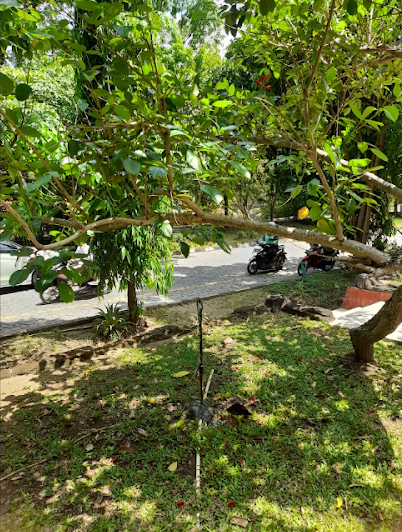
UNS operates an integrated domestic wastewater recycling program through its centralized Wastewater Treatment Plant (WWTP/IPAL). The treatment system collects and processes domestic wastewater from campus facilities before reusing it for non-potable purposes, particularly landscape irrigation.
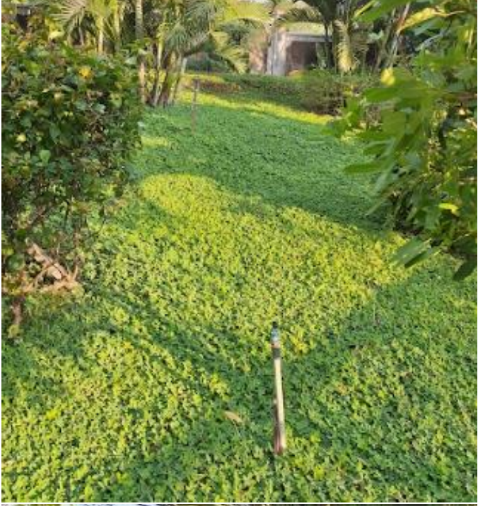
The campus stores and distributes the treated water through a dedicated pipeline network covering about 2.5 km, with 82 irrigation outlets serving campus green spaces. According to the reported program data, the water recycling system achieves a 56% water recycling rate, while approximately 1,000–1,200 m³ of reclaimed water is used daily to irrigate campus trees and grass.
These quantitative measurements demonstrate UNS’s institutional efforts to monitor water reuse, assess the performance of its wastewater recycling infrastructure, and reduce dependence on freshwater resources for campus landscape maintenance.
2. Faculty-Level Reuse of Ablution Water
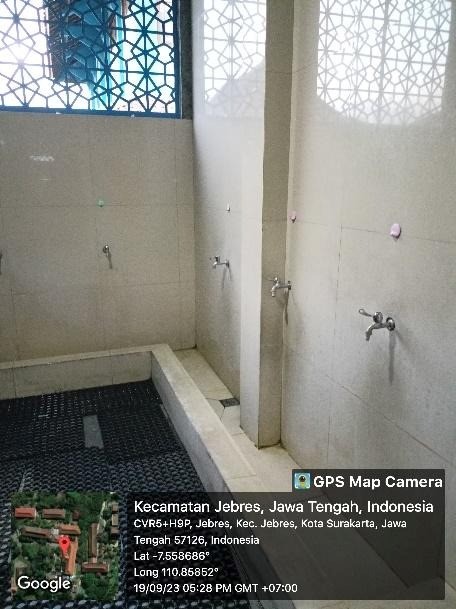
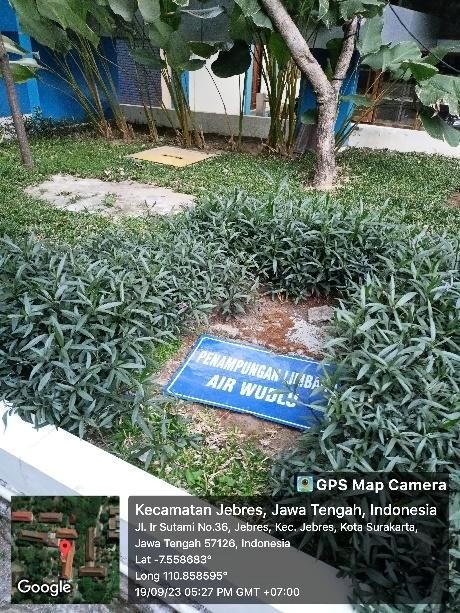
In addition to centralized wastewater recycling, UNS implements decentralized water reuse initiatives at the faculty level. Dedicated piping systems and storage facilities collect used ablution (wudhu) water before redirecting it to irrigate plants and green spaces.
At the Faculty of Mathematics and Natural Sciences (FMIPA), the estimated maximum collection capacity of used ablution water is 1,750 liters per day. At the Faculty of Medicine, the corresponding estimated maximum collection capacity is 1,250 liters per day. These measurements show how individual campus facilities implement and quantify water reuse.
The Faculty of Agriculture also applies an additional treatment process using eco-enzyme before distributing collected ablution water through sprinkler systems. This approach supports campus greening while reducing freshwater use for irrigation.
3. Reuse of Air-Conditioner Condensate

UNS also promotes water reuse by collecting air-conditioner condensate at the Graduate School. The collected condensate is redirected through a gravity-fed irrigation system to water vertical gardens.
This building-level initiative provides an additional source of reusable water for landscape maintenance and prevents usable water from being wasted. It also demonstrates how water reuse practices are integrated into the daily management of campus facilities.
Through these centralized and decentralized initiatives, UNS demonstrates its institutional capacity to measure and implement water reuse across the university. Quantitative information on the wastewater recycling rate, daily reclaimed-water utilization, distribution infrastructure, and estimated faculty-level water collection provides evidence of UNS’s efforts to monitor water reuse and improve resource efficiency.
These initiatives directly support SDG 6: Clean Water and Sanitation, particularly its commitment to improving water-use efficiency, reducing freshwater demand, and expanding the sustainable recycling and reuse of water. By integrating wastewater treatment, quantitative measurement of water reuse, and decentralized reuse practices, UNS strengthens sustainable water management and contributes to a more water-efficient, environmentally responsible campus.
References: