
SDG 11 In Number
University expenditure (IDR)
1.550.122.866.706
University expenditure on arts and heritage (IDR)
20.280.022.432
11.2.1 Public Access to Buildings
UNS Provides Public Access to Buildings, Monuments, and Cultural Landscapes of Significance
Universitas Sebelas Maret (UNS) is committed to supporting Sustainable Development Goal (SDG) 11: Sustainable Cities and Communities by providing public access to buildings, monuments, and natural heritage landscapes of cultural significance on campus. These places represent the university’s historical development, Javanese architectural traditions, cultural heritage, religious diversity, and local identity.
UNS provides both free public access and paid access through venue rental arrangements for selected facilities. These opportunities allow members of the public, cultural communities, organizations, and event participants to visit, appreciate, and use university spaces for educational, cultural, religious, and community activities. Through these initiatives, UNS contributes to cultural heritage preservation, public participation, and the development of inclusive and sustainable communities.
1. Arga Budaya (Argo Budoyo): Historic Open-Air Cultural Performance Space
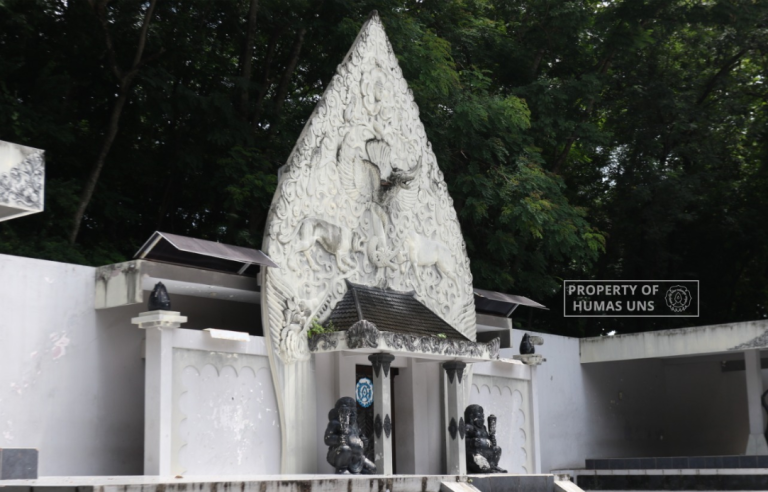
Arga Budaya, also known as Argo Budoyo, is Surakarta’s oldest open-air performance space, established in 1981. Located next to the Faculty of Agriculture and east of the Dr. Prakosa Rectorate Building at the UNS Kentingan Campus, this historic cultural space has played an important role in the city’s development of performing arts and theater. Its name combines two words, arga, meaning mountain, and budaya, meaning culture, reflecting its identity as a cultural space associated with Mount Kendil.
For decades, Arga Budaya has hosted student theater, traditional performances, music, and other cultural activities. Its history is closely tied to the development of Teater Wiswakarman, established in 1989 and recognized as one of Surakarta’s oldest theater groups. UNS provides free public access to Arga Budaya for visitors and cultural appreciation, while also offering paid venue rental for public events, performances, and other organized activities. By maintaining this historic performance space and making it available to the wider community, UNS supports the preservation of local cultural heritage and contributes to SDG 11 through public access to culturally significant spaces.
Reference: UNS Official Website – Arga Budaya: Its History and Cultural Significance
2. Pendapa R.Ng. Yasadipura – PUI Javanologi: Traditional Javanese Cultural Heritage
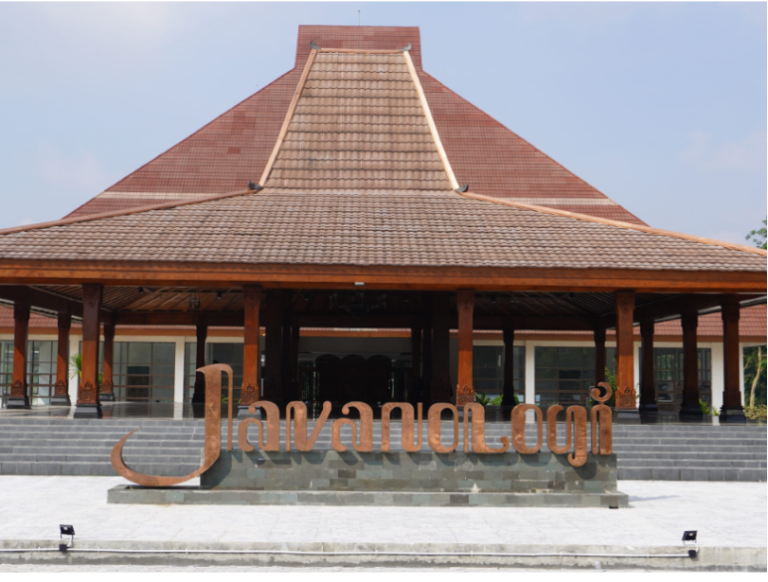
Pendapa R.Ng. Yasadipura is part of the Center of Excellence for Javanology (PUI Javanologi) at Universitas Sebelas Maret. The traditional Javanese pendapa serves as a cultural space dedicated to studying, developing, and preserving Javanese heritage, including traditional arts, literature, language, and cultural practices. PUI Javanologi was established in 2011 to implement UNS’s commitment to promoting national cultural values through education, research, and community engagement.
The pendapa provides a culturally appropriate venue for traditional performances, cultural exhibitions, workshops, seminars, and community gatherings. Examples include the Pandhawa Mranata Bawana Wayang Kulit Performance and Javanese cultural events organized by PUI Javanologi, which have involved artists, academics, students, and the public. UNS provides free public access for designated cultural activities and visits, while also offering paid venue rental for public events and cultural programs through an official reservation procedure. This arrangement lets the community engage directly with Javanese cultural heritage, support its preservation, and promote SDG 11.
References:
3. Museum Universitas Sebelas Maret: Public Access to Historical and Cultural Collections
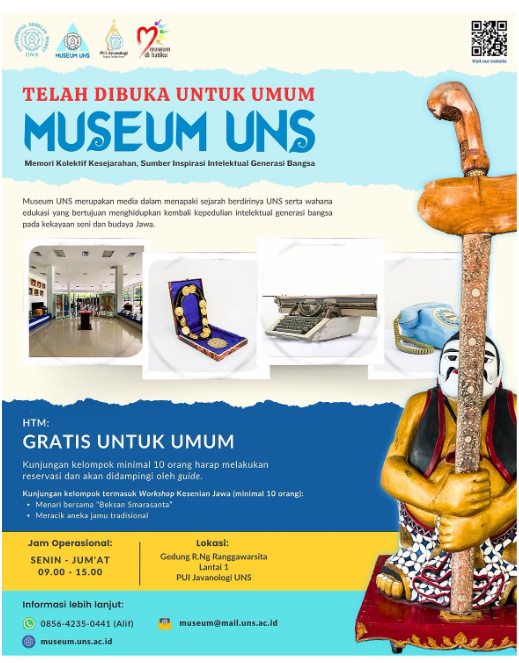
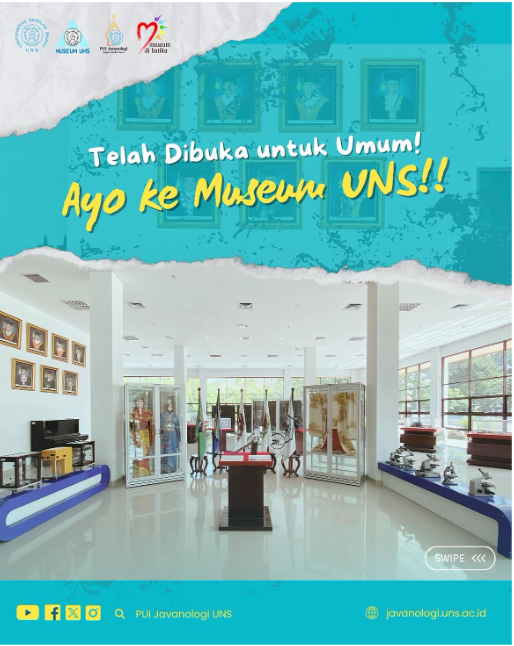
The Museum of Universitas Sebelas Maret (Museum UNS) is a cultural and historical facility that preserves the collective memory of the university and its development. Located on the first floor of the R.Ng. Ranggawarsita Building at PUI Javanologi, the museum displays collections documenting the history of UNS, including historical photographs, traditional artifacts, academic memorabilia, and cultural objects. Its collections include wayang kulit, a Ganesha statue, traditional manuscripts, old typewriters, gramophones, and other historical objects.
The museum offers free public access to its general exhibition areas, allowing visitors, students, researchers, and the wider community to explore the university’s historical and cultural collections. It also provides information and educational resources to support public understanding of local history and cultural heritage. By preserving and publicly presenting these collections, Museum UNS helps safeguard historical knowledge and cultural identity, aligning with SDG 11’s commitment to protecting cultural heritage and ensuring inclusive public access to cultural resources.
References:
4. Dr. Prakosa Rectorate Building: Historic Building with Javanese Architectural Significance

The Dr. Prakosa Rectorate Building is one of Universitas Sebelas Maret’s most historically significant buildings. Construction began on March 11, 1978, during the early development of the integrated Kentingan Campus. Named after Brigadier General Dr. Prakosa, a former rector who played an important role in UNS’s development, the building serves as the university’s central administrative headquarters and represents an important part of its institutional history.
Beyond its administrative function, the building reflects traditional Javanese architectural values. Its roof features the tajug design, a pyramidal form associated with sacred architecture in Javanese tradition. Its position within the campus layout also reflects the pajupat philosophy, or papat kiblat limo pancer, which symbolizes the balance of four cardinal directions around a central point. UNS provides free public access to designated areas and public activities at the building, while paid venue rental or facility-use arrangements may be available for approved public events, subject to university regulations.
By maintaining this historic building and making its facilities accessible, UNS supports appreciation of architectural heritage and contributes to SDG 11 by preserving culturally significant buildings.
References:
5. Benteng Pancasila: A Complex of Six Places of Worship
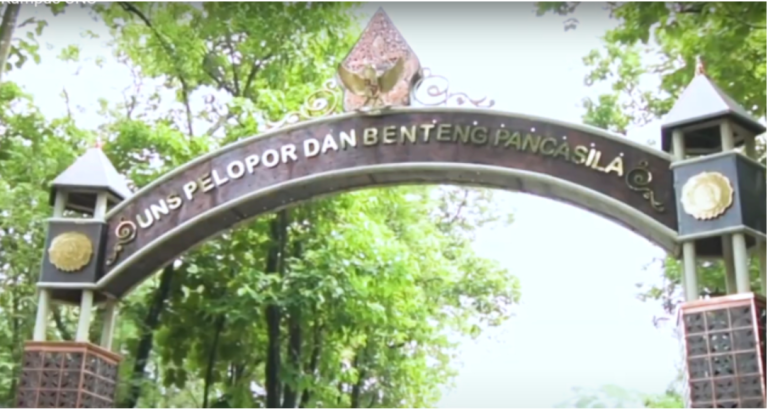
Benteng Pancasila is a religious and cultural complex at Universitas Sebelas Maret that represents religious diversity, tolerance, and social harmony. The complex consists of six places of worship located close to one another: Nurul Huda Mosque, a Protestant church, a Catholic church, Bhuana Agung Saraswati Hindu Temple, Bodhisasana Buddhist Monastery, and Sinar Kebajikan (Ming De Miao) Confucian Temple. Their presence reflects UNS’s commitment to providing an inclusive environment for people from different religious and cultural backgrounds.
UNS provides free public access to these places of worship, allowing people to use the facilities for religious activities, prayer, meditation, and other approved community activities. The complex also symbolizes the university’s identity as a Campus of Pancasila and religious harmony. By maintaining accessible religious spaces that accommodate different beliefs, UNS promotes cultural diversity, mutual respect, and peaceful coexistence. These efforts contribute to SDG 11 by supporting inclusive communities and providing accessible spaces that reflect society’s cultural and religious diversity.
References:
6. Gunung Kendil: Cultural Landscape within the UNS Campus

Gunung Kendil is a natural highland area within the central UNS Kentingan Campus. Its name and cultural meaning are closely connected to Arga Budaya, reflecting the Javanese concept of arga, meaning mountain. The area is part of the campus’s natural landscape and contributes to the university’s historical and cultural identity. Its connection with Arga Budaya also reflects the relationship between the natural environment and the development of cultural spaces at UNS.
UNS provides free public access to the accessible areas of this campus landscape, allowing members of the university community and visitors to experience its natural surroundings. The relationship between Gunung Kendil and Arga Budaya illustrates how the university’s natural and cultural spaces are connected through local identity and cultural meaning. By maintaining this landscape and preserving its connection to the surrounding cultural environment, UNS supports appreciation of culturally meaningful landscapes and contributes to SDG 11 by promoting inclusive and sustainable public spaces.
Reference: UNS – Arga Budaya and Its Connection to Mount Kendil
7. G.P.H. Haryo Mataram Auditorium: Public Venue for Cultural and Community Events
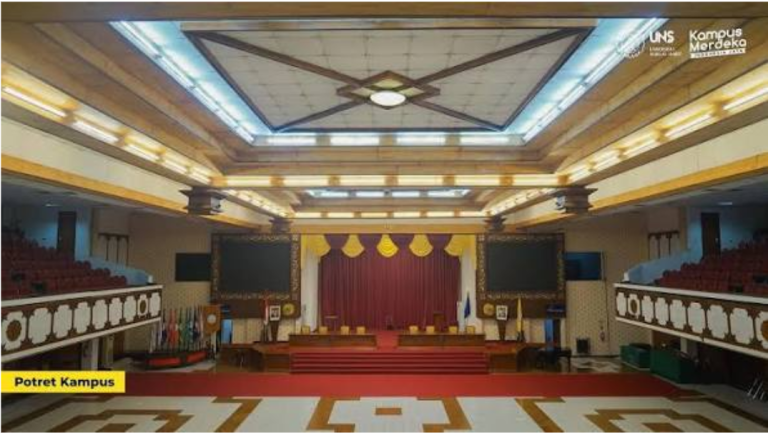
The G.P.H. Haryo Mataram Auditorium is a major university facility located behind the Dr. Prakosa Rectorate Building at Universitas Sebelas Maret. Beyond supporting academic activities, the auditorium provides facilities for cultural performances, seminars, conferences, exhibitions, and other public events. As a multipurpose venue, it enables the university to facilitate interaction between the academic community and the wider public.
UNS provides free public access to designated cultural programs and public events held at the auditorium, while also offering paid venue rental for approved events organized by external institutions and community groups. For example, the auditorium has hosted cultural performances involving students from different regions, including the UNS Cultural Night 2025 cultural performance, which showcased traditional dances and local cultural heritage.
Through these activities, UNS gives the public opportunities to participate in cultural events and appreciate Indonesia’s diverse traditions. Using the auditorium as an accessible venue for cultural and community activities supports SDG 11 by promoting cultural participation and inclusive public spaces.
References:
Conclusion
Through these buildings, monuments, and cultural landscapes, Universitas Sebelas Maret demonstrates its commitment to providing public access to places of historical and cultural significance. By offering both free access and paid venue rental opportunities, UNS enables the wider community to visit, appreciate, and use selected university facilities for cultural performances, educational activities, religious practices, and public events.