

17.2.5 Collaboration with NGOs for SDGs
Advancing Sustainable Development through NGO Partnerships, Education, and Research
Universitas Sebelas Maret (UNS) collaborates with community organizations and non-governmental organizations (NGOs) to support the achievement of the Sustainable Development Goals (SDGs) through three main approaches: student volunteering programs, research programs, and developing educational resources. These collaborations include student involvement in social activities with community organizations, research involving community-based organizations as case studies and research stakeholders, and developing educational resources to strengthen inclusive education and public advocacy. Through these activities, UNS helps address issues of equality, social inclusion, education, and community empowerment while strengthening partnerships between higher education institutions and civil society organizations.
These initiatives also reflect the principles of SDG 17 (Partnerships for the Goals), particularly the importance of strengthening multi-stakeholder partnerships to support sustainable development. Through collaboration with NGOs, community-based organizations, and other societal actors, UNS brings together institutional expertise, research capacity, student engagement, and community knowledge to address shared social and development challenges. These partnerships demonstrate how cooperation between universities and civil society organizations can contribute to more inclusive and sustainable outcomes.
A. Student Volunteering Program
- FMIPA UNS Students’ Social Engagement with Yayasan Anugerah Rumah Cinta
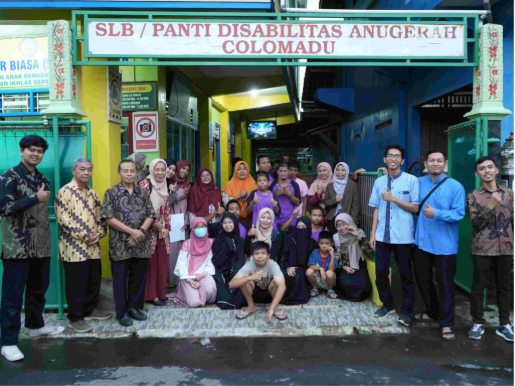
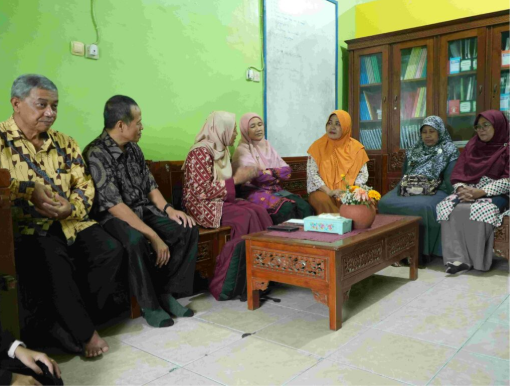
On March 21, 2025, the Faculty of Mathematics and Natural Sciences (FMIPA) of UNS, through its Mosque Committee, organized a social visit to Yayasan Anugerah Rumah Cinta in Karanganyar as part of its community service program. The activity involved lecturers, Mosque Committee members, and students from various study programs within FMIPA UNS. Students’ direct involvement in social activities with the foundation reflects a student volunteering program, giving them opportunities to interact with and contribute directly to the community.
During the activity, FMIPA UNS students and other university representatives provided food and daily necessities. They interacted directly with the foundation’s residents, most of whom were children and teenagers with special needs. These activities demonstrate collaboration with an NGO or community organization through students’ direct participation in social activities and community service. The collaboration went beyond providing material assistance; it also focused on building social interaction, raising awareness, and strengthening relationships between UNS students and community members who need support.
This activity also strengthened UNS’s contribution to the SDGs, particularly in addressing inequalities through engagement with persons with disabilities and individuals with special needs. For students, the activity provided an opportunity for social learning, helping them understand different community conditions and develop greater awareness of equality and social inclusion. Through such initiatives, student volunteering helps UNS collaborate with community organizations to address social challenges related to the SDGs.
FMIPA UNS also aims to make similar activities part of its ongoing social engagement agenda. The faculty has expressed its commitment to participating in more social and community service activities and strengthening relationships between the university and society. This continued engagement reinforces students’ role in UNS’s volunteering programs, enabling them to make meaningful contributions to society while supporting equality and social inclusion.
Source:
FMIPA UNS Conducts a Social Visit to Yayasan Anugerah Rumah Cinta, Karanganya
-
Research Program
UNS Research Collaboration with Rumah Harapan Mulya and GOLD on Disability Inclusion
UNS conducted a research program entitled “Advancing Disability Inclusion through Social and Digital Entrepreneurship in ASEAN,” which examined how inclusive social entrepreneurship can empower persons with disabilities socially and economically. The study used a qualitative case study approach involving two organizations: Rumah Harapan Mulya (RHM) in Karangpatihan, Indonesia, and GOLD (Generating Opportunities for Learning Disabled) in Malaysia. The involvement of these two organizations positioned community-based enterprises as key stakeholders in research on achieving the SDGs through social and economic inclusion.
As part of this research program, UNS used in-depth semi-structured interviews, field observations, and thematic analysis to understand the experiences, empowerment approaches, and inclusion practices implemented by RHM and GOLD. The research explored several aspects, including identity formation, co-creation, digital entrepreneurship, and the development of sustainable empowerment models. Both case studies demonstrated how adaptive vocational training, meaningful social roles, and multi-stakeholder partnerships can support the integration of persons with disabilities into society.
This research program addressed issues related to reducing inequalities and promoting decent work and economic growth by examining social inclusion, economic empowerment, skills training, social entrepreneurship, and the economic participation of persons with disabilities. The research also identified barriers, including digital illiteracy, heavy reliance on volunteers, and limited infrastructure, which need to be addressed to expand the impact of inclusive digital entrepreneurship.
Through this research program, UNS used case-based research and stakeholder engagement to generate knowledge about inclusive and sustainable models of disability empowerment in the ASEAN region. The findings highlighted the importance of systemic support, inclusive policy frameworks, and local adaptation to sustain long-term impact. The involvement of RHM and GOLD demonstrates how UNS research programs can engage community-based organizations to investigate and support solutions to social challenges related to the SDGs.
-
Development of Educational Resources
UNS and Komunitas/Yayasan Difabel Pinilih: Developing Educational and Advocacy Materials for Social Inclusion
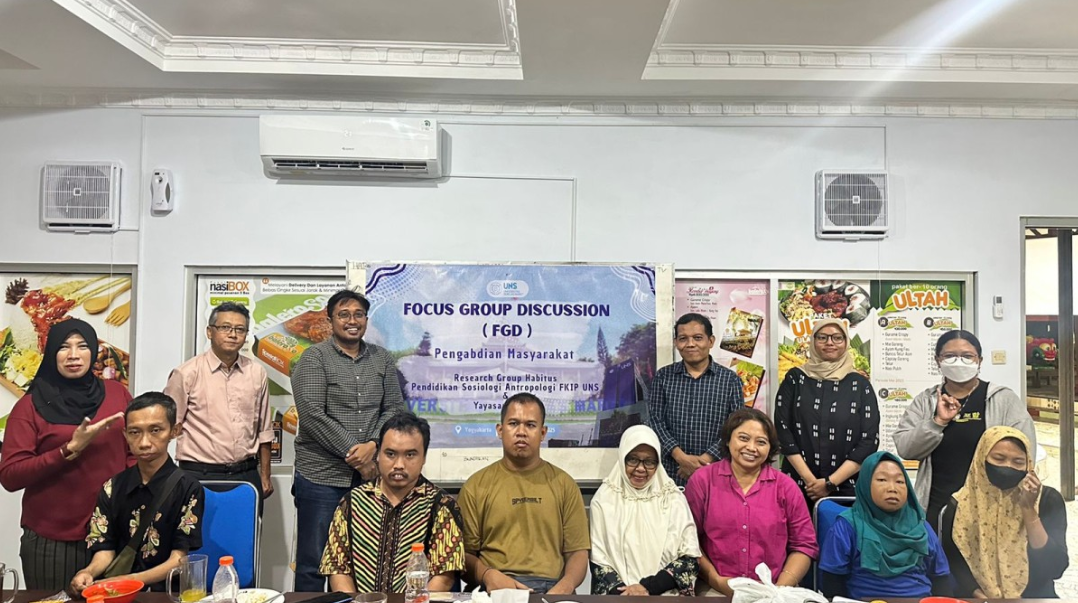
On June 19, 2025, the Habitus Research Group (RG Habitus) of the Sociology and Anthropology Education Study Program, Faculty of Teacher Training and Education (FKIP) at UNS, conducted a community service activity in collaboration with Komunitas Difabel Pinilih in Bantul, Yogyakarta. The activity began with a Focus Group Discussion (FGD) involving members of Komunitas Difabel Pinilih and the UNS academic team. The discussion explored the community’s history, development, empowerment experiences, and efforts to strengthen the rights of persons with disabilities. This process provided a foundation for UNS and the community to document their knowledge and experiences as resources for educational and advocacy purposes.
The collaboration emphasized the importance of documenting and developing a community profile to support social advocacy and inclusive education. The Chairperson of Yayasan Pinilih explained that documenting the community’s history and profile was important as a source of reflection and a tool for promoting equality. Therefore, the information-gathering process through the FGD was intended to go beyond discussion and contribute to the development of an educational resource that represents the experiences and efforts of the disability community.
As a follow-up, the RG Habitus team planned to develop an official profile of Komunitas Difabel Pinilih that could be used as an educational and public advocacy resource on equality and social inclusion. This initiative directly reflects the development of educational resources through UNS’s collaboration with a community organization. By documenting the community’s knowledge and experiences, the initiative aims to create educational materials that can support public learning and raise awareness of disability inclusion.
This activity was part of a community service program that explicitly supported efforts to reduce inequalities. Through documentation, educational materials, and public advocacy, the collaboration between UNS and Komunitas/Yayasan Difabel Pinilih aims to improve public understanding of equal rights and opportunities for persons with disabilities. Developing educational resources therefore serves as a collaborative approach to promoting inclusive education, raising public awareness, and addressing social inequalities in line with the SDGs.
Overall, the collaboration between UNS and Komunitas Difabel Pinilih demonstrates the connection between community knowledge, educational resources, public advocacy, and social inclusion. The documentation developed through this collaboration is intended not only to preserve the community’s history but also to serve as an educational and advocacy resource that strengthens public understanding and recognition of disability issues.
Source: RG Habitus FKIP UNS Conducts Community Service Activities with Komunitas Difabel Pinilih, Yogyakarta
Conclusion
These three activities demonstrate how UNS collaborates with community organizations and NGOs to address the SDGs through different approaches. Student volunteering programs give students opportunities to participate directly in social activities with foundations and local communities. Research programs engage community-based organizations in generating knowledge about disability empowerment and social inclusion. Meanwhile, developing educational resources transforms community knowledge and experiences into materials that support education and public advocacy.
Together, these collaborations strengthen UNS’s contributions to quality education, decent work and economic growth, and reduced inequalities. They also demonstrate UNS’s contribution to SDG 17 (Partnerships for the Goals) by strengthening multi-stakeholder partnerships, facilitating knowledge exchange, fostering institutional cooperation, and mobilizing collective action among universities, NGOs, community organizations, and other stakeholders. Through these partnerships, UNS supports social inclusion and promotes more inclusive educational and economic opportunities.