
SDG 1 In Number
Number of student 2025
27.604
Number of low income students receiving financial aid
20.353
1.3.1 Bottom Financial Quintile Admission Target
Universitas Sebelas Maret (UNS) is committed to expanding inclusive and equitable access to higher education, including for prospective students from economically disadvantaged households. This commitment is reflected in the university’s admission policies and institutional financial support mechanisms, which aim to improve access to higher education and learning opportunities for students facing financial constraints.
This commitment is reinforced by Rector Regulation of Universitas Sebelas Maret No. 18 of 2025 concerning Student Scholarships, enacted on 14 July 2025.
The regulation establishes an institutional scholarship policy framework designed to improve access to and learning opportunities for students who are economically disadvantaged and/or demonstrate academic achievement. It formally incorporates financial support for economically disadvantaged students into UNS’s institutional policies, rather than treating such support as an ad hoc initiative.
UNS’s institutional commitment to expanding access to higher education for students from economically disadvantaged households is complemented by research addressing poverty alleviation, educational expansion, and income inequality. The study “Interplay between Poverty, Poverty Eradication and Sustainable Development: A Semi-Systematic Literature Review” examines the multidimensional causes of poverty and highlights the importance of human capital, public infrastructure, and financial institutions in empowering low-income communities. Complementing this work, “The Long-Run Impact of Educational Expansion on Income Inequality in ASEAN Countries” finds that the expansion of secondary and higher education is associated with reduced income inequality in the long run. Together, these studies provide an academic context for UNS’s efforts to widen educational opportunities and address socioeconomic barriers. The research complements UNS’s formal scholarship policy and KIP Kuliah admission arrangements, which provide more direct evidence of affirmative access for students from economically disadvantaged households.
KIP Kuliah as an Affirmative Admission Mechanism for Economically Disadvantaged Students
To meet the target of admitting students from the bottom 20% of the country’s household income group, the Indonesia Smart College Card program (Kartu Indonesia Pintar Kuliah, or KIP Kuliah) serves as a key affirmative mechanism at UNS. The program supports access to higher education for students from economically disadvantaged households through national admission pathways. It therefore contributes to UNS’s efforts to ensure that prospective students facing financial constraints have opportunities to enter higher education.
In 2025, UNS formally established KIP Kuliah recipients through two national admission pathways: the National Selection Based on Achievement (Seleksi Nasional Berdasarkan Prestasi, or SNBP) and the National Selection Based on Test (Seleksi Nasional Berdasarkan Tes, or SNBT).
1. National Selection Based on Achievement (SNBP)
Through Rector’s Decree No. 3001/UN27/HK.02/2025, UNS appointed 664 students as KIP Kuliah recipients admitted through the SNBP pathway in 2025.
The decree explicitly links KIP Kuliah to efforts to promote equitable access to higher education for students with strong academic potential who face economic disadvantage. By integrating financial eligibility into an established national admission pathway, UNS shows that support for economically disadvantaged students is linked to entry into higher education, rather than limited to assistance provided after enrolment.
This constitutes formal institutional evidence of an affirmative admission mechanism for students from economically disadvantaged households and supports UNS’s commitment to setting and implementing targets to admit students facing financial barriers.
2. National Selection Based on Test (SNBT)
The same affirmative approach was implemented through the SNBT pathway. Under Rector’s Decree No. 3098/UN27/HK.02/2025, UNS appointed 724 students as KIP Kuliah recipients admitted through SNBT in 2025.
The decree likewise identifies equitable access to higher education for academically capable students from economically disadvantaged backgrounds as a basis for the program. The implementation of KIP Kuliah through SNBT demonstrates that financial disadvantage is addressed within the university’s affirmative admission arrangements, including the pathway based on examination results.
Through the SNBP and SNBT pathways, UNS formally appointed 1,388 KIP Kuliah recipients in 2025, comprising 664 recipients through SNBP and 724 through SNBT. The two Rector’s Decrees provide documented evidence of the university’s implementation of affirmative admission mechanisms for students from economically disadvantaged households.
These arrangements demonstrate UNS’s institutional commitment to establishing and implementing targets to admit students from economically disadvantaged households, including prospective students who may fall within the bottom 20% of the national household income distribution.
Additional Scholarship and Financial Support Schemes’
UNS’s commitment to equitable access to higher education extends beyond admission through KIP Kuliah. In line with Rector Regulation No. 18 of 2025 concerning Student Scholarships, the university also provides and facilitates scholarships and financial assistance through internal funding and external sources. These schemes include tuition assistance, tuition payment relief, and scholarships supported by government institutions, philanthropic organizations, and private-sector partners.
Together, these programs complement affirmative admission mechanisms by reducing financial barriers to education and supporting students’ ability to continue their studies. They also demonstrate that UNS’s efforts to improve access for students from economically disadvantaged households are supported by multiple funding sources and forms of financial assistance.
A. Internal Scholarships and Financial Assistance from UNS
UNS provides scholarships and financial assistance from its institutional budget to support students from affirmative groups. These groups include economically disadvantaged students, students with disabilities, and students from disadvantaged, frontier, and outermost regions of Indonesia (3T). In 2025, UNS implemented seven internal scholarship and financial assistance programs, with a combined total of 14,504 recorded recipients, including 5,466 recipients from affirmative groups (37.69%).
The following programs show how UNS’s internal funding supports educational access, financial assistance, and the continuation of students’ studies.
1. UPZ UNS Tuition Fee Subsidy Scholarship
Through its Zakat Collection Unit (Unit Pengumpul Zakat, or UPZ), UNS provides educational support through the UPZ UNS Student Scholarship program. In 2025, the program benefited 146 students, with total disbursements of IDR 262,707,800. One of its main components, the UNS Tuition Fee Subsidy Scholarship, supported 100 students, with total disbursements of IDR 108,045,000. The scholarship is offered every semester, providing a recurring mechanism for financial assistance.
The tuition fee subsidy specifically supports students from economically disadvantaged families, helping reduce their educational expenses and supporting the continuation of their studies. The program complements KIP Kuliah by providing additional financial assistance to students facing economic constraints.
Source: Laporan Tahunan UPZ UNS 2025
2. UNS Tuition Fee Relief
UNS also provides tuition fee relief as an institutional financial assistance mechanism. For the August 2025–January 2026 semester, eligible students in undergraduate, applied undergraduate, and diploma programs could apply for a 50% reduction in tuition fees through the UNS Academic Information System (SIAKAD).
This scheme provides an additional option for students seeking relief from educational costs, subject to the university’s established eligibility requirements. It complements other financial support mechanisms intended to reduce financial barriers to continuing higher education.
Source: https://siakad.uns.ac.id/site/view-berita?id=84972
3. Internal UNS Scholarship
In 2025, UNS provided the Internal UNS Scholarship to 117 students, all of whom were recorded as recipients from affirmative groups. This program is a form of university-funded educational support intended to help students in designated affirmative groups access and continue higher education.
The program shows the role of UNS’s internal funding in promoting equitable learning opportunities for students who need educational assistance. Further evidence of recipients’ household income would be needed to determine how many fall within the bottom 20% of the national household income group.
Source: Internal UNS Scholarship Recipient Data
4. UNS Scholarship for International Students
In 2025, the UNS Scholarship was awarded to 195 international students, all of whom were recorded as recipients from affirmative groups. Funded internally by UNS, the program supports the university’s broader efforts to expand access to higher education for students in its designated affirmative groups.
The documented number of recipients demonstrates the implementation of an institutional scholarship scheme. However, additional information on the scholarship’s economic eligibility criteria is needed to determine the proportion of recipients in the bottom 20% of the national household income distribution.
Source: UNS Scholarship Recipient Data
5. Internal Scholarship for Students Affected by Disasters
In 2025, UNS provided the Internal Scholarship for Students Affected by Disasters to 52 students, all of whom were recorded as recipients from affirmative groups. The program provides educational support to students affected by disasters, whose circumstances may create financial difficulties and disrupt their ability to continue their studies.
Through this program, UNS demonstrates that its internal financial assistance also responds to student vulnerability arising from adverse circumstances. Although the program is not defined by household income quintile, it helps maintain educational continuity for students facing difficult circumstances.
Source: Internal Scholarship for Students Affected by Disasters Recipient Data
6. Educational Assistance for Tuition Fee Payment Deferral
In 2025, 2,689 students received Educational Assistance for Single Tuition Fee (Uang Kuliah Tunggal, or UKT) Payment Deferral. UNS’s report recorded all recipients as belonging to affirmative groups. The program helps students meet tuition payment obligations by easing financial barriers.
With its substantial number of recipients, this program constitutes an important component of UNS’s internal educational assistance. It supports equitable access and continued study, particularly for students identified as belonging to affirmative groups.
Source: Educational Assistance for Tuition Fee Payment Deferral Recipient Data
7. Impactful Learning Educational Assistance (JARPAK)
In 2025, the Impactful Learning Educational Assistance program, known as JARPAK, served 2,591 students, including 436 recipients from affirmative groups, representing 16.82% of all program recipients. These figures demonstrate that the program also reaches students within the groups prioritized by UNS’s affirmative policies.
Although JARPAK is open to a broader student population, identifying recipients from affirmative groups enables UNS to document the program’s contribution to equitable access to educational support. The available data do not, however, specify how many of the 436 affirmative-group recipients fall within the bottom 20% of the national household income distribution.
Source: JARPAK Recipient Data
8. Community Service Program (KKN) Financial Assistance
In 2025, UNS provided Financial Assistance for the Community Service Program (Kuliah Kerja Nyata, or KKN) to 8,041 students, including 1,759 students from affirmative groups, equivalent to 21.87% of all recipients. The assistance supports students participating in KKN, an academic activity that forms part of the university’s community engagement program.
Including recipients from affirmative groups shows that UNS’s internal educational assistance also reaches students undertaking academic activities beyond regular classroom learning. Although the program is not exclusively targeted at economically disadvantaged students, it broadens access to financial support for academic participation.
Source: KKN Financial Assistance Recipient Data
9. New Student Entrepreneurship Program (WIBAWA) Educational Assistance
In 2025, the New Student Entrepreneurship Program (Wirausaha Baru Mahasiswa, or WIBAWA) provided educational assistance to 819 students, including 218 recipients from affirmative groups, representing 26.61% of all recipients. The program forms part of UNS’s internal support for students participating in entrepreneurship development activities.
The participation of affirmative-group students shows that UNS’s educational support also extends to opportunities to develop entrepreneurial skills and experience. Since the program is open to a broader student population, these figures are best understood as supporting evidence of equitable access to student development opportunities, rather than direct evidence of admission targets for students in the bottom 20% of the national household income group.
Source: WIBAWA Recipient Data
B. Externally Funded Scholarships and Financial Assistance
In addition to internally funded programs, UNS facilitates access to scholarships and financial assistance supported by external organizations, government institutions, philanthropic bodies, and private-sector partners. These schemes broaden the support available to students and support the university’s wider commitment to equitable access and educational inclusion.
1. Central Java BAZNAS Educational Scholarship
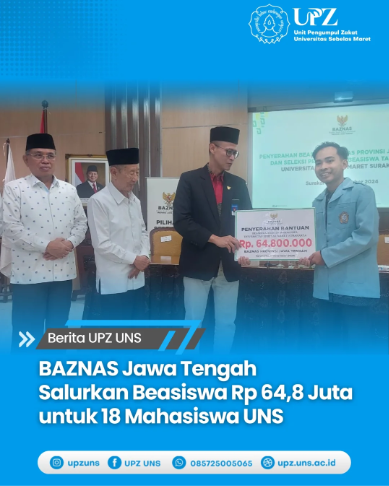
UNS facilitated educational assistance through collaboration with the National Board of Zakat of Central Java (BAZNAS Jawa Tengah). In December 2025, 18 economically disadvantaged UNS students received educational scholarships totaling IDR 64.8 million.
The program provides financial support to students in need through funding from an external philanthropic institution. Its explicit focus on economically disadvantaged students makes it relevant to UNS’s broader efforts to reduce financial barriers to higher education and support students facing economic constraints.
2. Bayan Peduli Scholarship by PT Bayan Resources Tbk
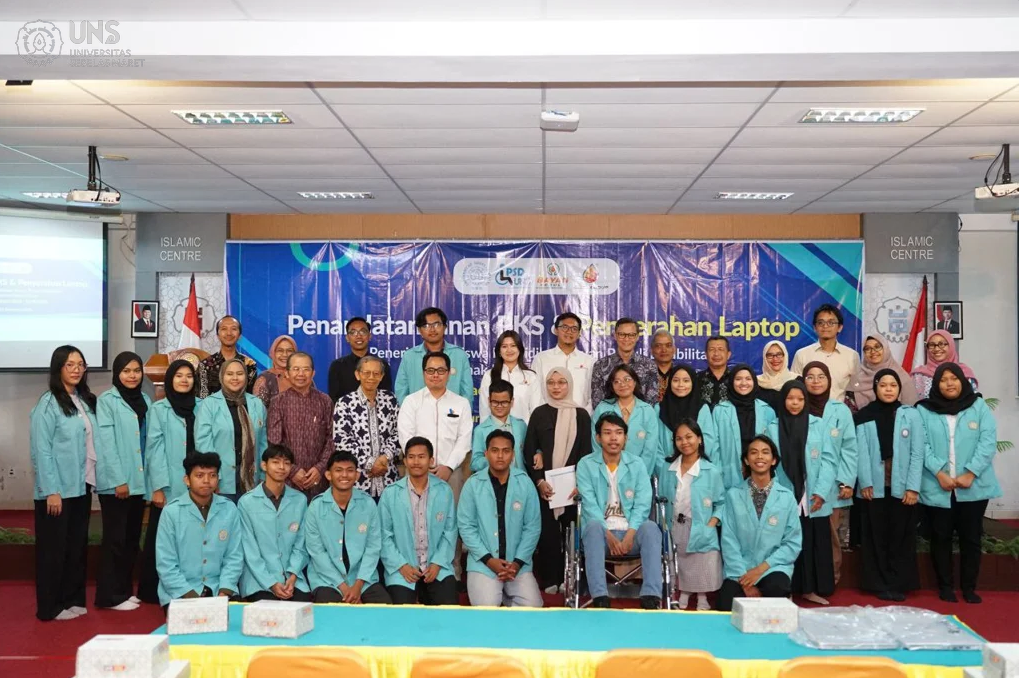
UNS also receives private-sector support through the Bayan Peduli Scholarship from PT Bayan Resources Tbk, which provides educational assistance to students with disabilities. In 2025, 20 UNS students with disabilities received support through the program. UNS also monitored and evaluated recipients as part of its efforts to support program continuity.
The scholarship strengthens inclusive access to higher education by supporting students with disabilities. While it is not specifically targeted by household income quintile, it demonstrates UNS’s collaboration with external partners to address barriers to educational participation.
3. Sobat Bumi Scholarship – Pertamina Foundation
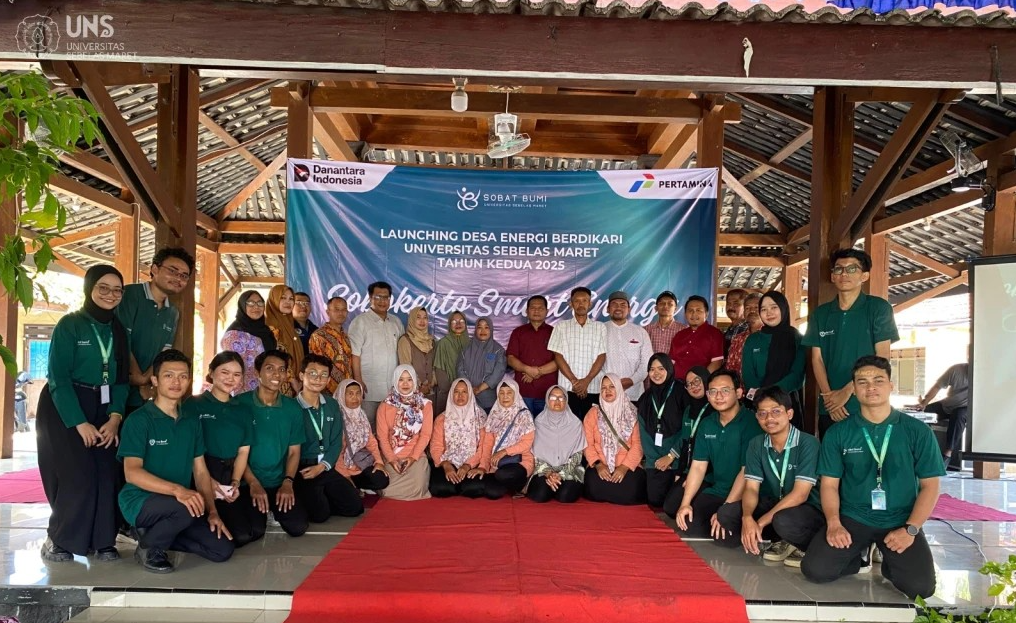
UNS students also received the Sobat Bumi Scholarship from Pertamina Foundation. In 2025, UNS scholarship recipients participated in implementing the Independent Energy Village (Desa Energi Berdikari, or DEB) program in Sobokerto Village, Boyolali.
This program illustrates how an externally supported scholarship can be connected with student participation in activities that generate social and environmental benefits. It forms part of UNS’s wider external scholarship portfolio, although the available evidence does not establish that the scholarship specifically targets students from the bottom 20% of the national household income group.
4. Higher Education Affirmation Program (ADik)
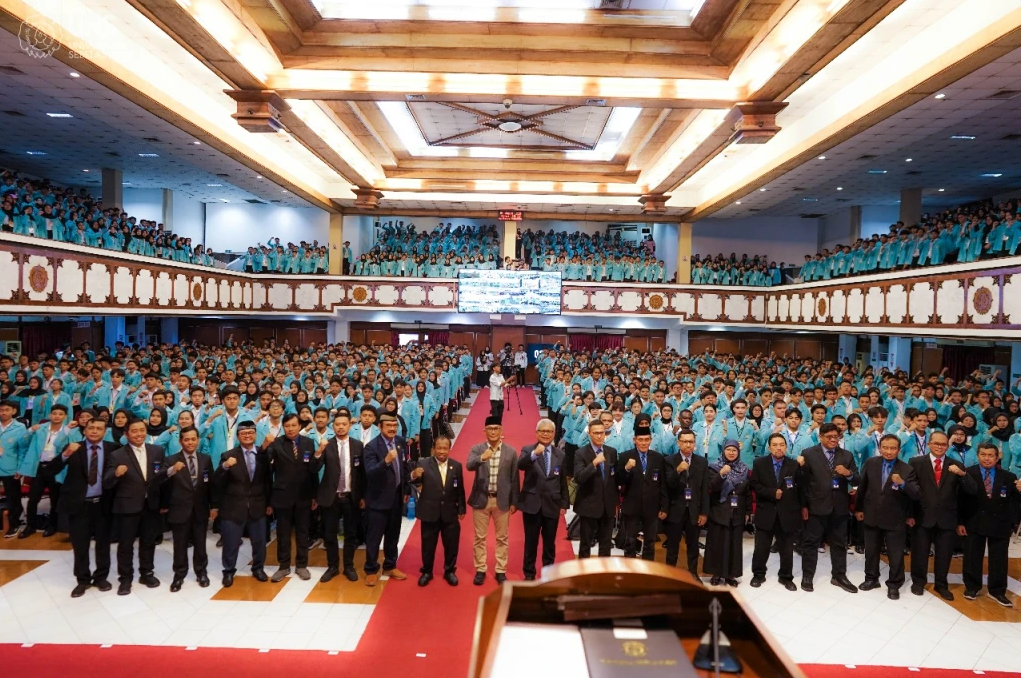
In 2025, UNS welcomed 28 new students through the Higher Education Affirmation Program (Afirmasi Pendidikan Tinggi, or ADik), administered by Indonesia’s Ministry of Higher Education, Science, and Technology. As a government affirmative program, ADik broadens access to higher education for designated groups facing barriers to educational participation.
Admitting these students provides additional evidence that affirmative access is incorporated into UNS’s new student admission arrangements. However, the available evidence does not establish that all ADik recipients belong to the bottom 20% of the national household income distribution.
Source : https://uns.ac.id/id/uns-update/pkkmb-2025-dimulai-selamat-datang-mahasiswa-baru-uns.html
Conclusion
Universitas Sebelas Maret demonstrates its commitment to equitable access to higher education through institutional policy, affirmative admission mechanisms, and financial support programs. At the admission stage, KIP Kuliah provides a documented mechanism for admitting students from economically disadvantaged households through the SNBP and SNBT pathways, with 1,388 recipients formally appointed in 2025. This provides evidence of UNS’s efforts to meet targets for admitting students facing economic disadvantage, including prospective students who may fall within the bottom 20% of the national household income group.
Beyond admission, internally funded scholarships and financial assistance, along with externally supported scholarship programs, help reduce educational costs and support students’ continued studies. The 2025 data show that 5,466 of the 14,504 recipients recorded across seven internal assistance programs belonged to affirmative groups, representing 37.69% of all recipients.
Taken together, UNS’s institutional scholarship policy, documented KIP Kuliah admission decisions, measurable recipient data, and diverse financial support schemes demonstrate a structured commitment to expanding access to higher education for students facing economic and other barriers. To establish the specific proportion of newly admitted students from the bottom 20% of the national household income group, further evidence linking admission records to household income data or an equivalent nationally recognized socioeconomic classification would be required.