

SDG 7 In Number
Total energy used (GJ)
19,141
University floor space (m²)
523,299
Total energy used from low-carbon sources (GJ)
9,413
7.4.1 Local community outreach for energy efficiency
Empowering Local Communities through Clean Energy Education and Sustainable Energy Practices
Universitas Sebelas Maret (UNS) extends its sustainability initiatives beyond campus through community outreach programs that help local communities understand the importance of energy efficiency and clean energy. Through community service projects, educational seminars, practical training, and renewable energy demonstrations, UNS shares its knowledge and expertise to improve public awareness and encourage the adoption of sustainable energy solutions.
These programs involve local residents, village communities, schools, and other community groups in learning about renewable energy technologies and their practical benefits. The following initiatives demonstrate how UNS supports community education and participation in promoting clean energy and more efficient energy use.
1. Desa Energi Berdikari: Promoting Renewable Energy in Sobokerto Village
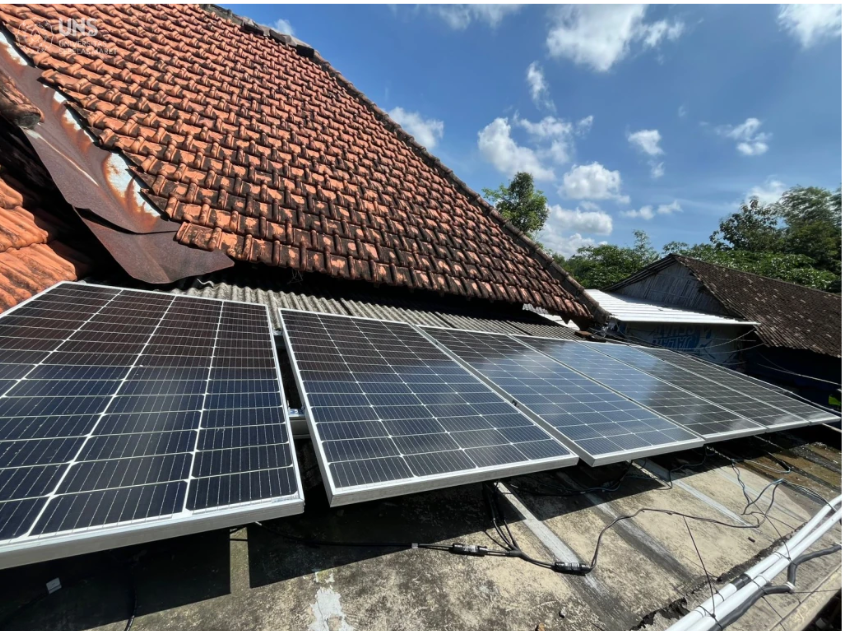
In 2025, a student team from UNS who are recipients of the Sobat Bumi Scholarship, working with Pertamina Foundation, officially launched the second year of the Desa Energi Berdikari (DEB, “Energy Self-Reliant Village”) program in Sobokerto Village, Ngemplak District, Boyolali, under the title “Sobokerto Smart Energy: Mbangun Desa Cerdas, Lestari, lan Makmur” (Building a Smart, Sustainable, and Prosperous Village). DEB offers renewable energy solutions to rural communities in Indonesia, and the UNS team, made up of scholarship awardees and volunteers, works directly in the village, with a total of 13 students involved in the program. This year, the team pursues the E4 vision, covering Energy, Economy, Education, and Environment, to drive sustainable village transformation. The team launched the program at the Sobokerto Village Hall on Sunday, 3 August 2025. The event included an opening, remarks from the DEB team leader, the mentor, the village head, and a UNS student affairs representative; a screening of the program’s after-movie; an inspiring dialogue with residents; and an inauguration ceremony.
The program introduces green technologies, namely a solar power plant (PLTS), a biogas digester fed with livestock manure, and maggot cultivation, developed together with local heroes in Sobokerto to turn the village’s natural and cultural potential into sustainable energy solutions. The team chose Sobokerto because of its abundant livestock waste and the high operating costs of the cattle sheds, so improving the digester system and installing solar panels became the priorities for cutting costs and reducing pollution. The solar installation converts sunlight into electricity for barn operations, while the biogas digester turns manure into a clean fuel for boiling water and making ecoprint, easing residents’ reliance on fossil fuels. Local heroes are central to this work: the Tunas Muda Sejahtera fish-farming group (Pokdakan) raises maggots from eggs to adulthood for sale, and villagers such as Ibu Sri and Bapak Suradi feed manure into the digester, producing biogas. Looking five years ahead, the DEB sustainability roadmap aims to make Sobokerto an educational tourism village for renewable energy that turns waste into high-value products, a model that other villages could replicate.
Close coordination between the UNS DEB Team and local stakeholders has produced tangible results in the second year. The team resolved the biogas digester problems that had arisen in the first year and built a Hybrid Solar Power Plant (Hybrid PLTS). The solar installation has a capacity of 1.2 kWp and is supported by a Battery Energy Storage System rated at 2 kW. On the biogas side, the village now operates two reactors, each 6.3 m³, one for chicken manure and one for cow manure, with a daily feedstock supply of 0.3 m³ of chicken waste and 0.3 m³ of cow waste.
The economic empowerment component has also shown clear progress. The maggot group, Warga Cengklik Tunas Mandiri Sejahtera, has gained legal status through registration approved by the Directorate General of General Legal Administration (AHU) and has expanded its maggot house from 3×2 m to 8×3 m, increasing its capacity to process 5–7 kg of organic waste per day. Beneficiary incomes rose in the second year: members of Warga Cengklik Tunas Mandiri Sejahtera earn an additional Rp600,000 per month, the ecoprint group Rp1,500,000, Ibu Sri and her fellow managers Rp300,000, and Bapak Suradi and his fellow managers Rp42,000.
Community satisfaction with the program continues to grow, and the program has helped around 40 villagers in Sobokerto. A survey found that 75% of beneficiaries felt directly helped, while 76.8% of participants in the bioslurry fertilizer outreach valued the education provided. The highest satisfaction, 88.6%, came from the plastic waste management program, showing that environmental issues are reaching residents’ awareness. Villagers enjoy a double benefit: energy spending has fallen significantly while income has risen through new productive economic activities. This initiative by Pertamina Foundation, delivered through the UNS DEB Team, shows that grassroots empowerment can transform a village as a whole, going beyond installing renewable energy technology to build a sustainable ecosystem that drives the local economy.
References:
2. Solar-Powered CCTV Education and Installation in Triyagan Village
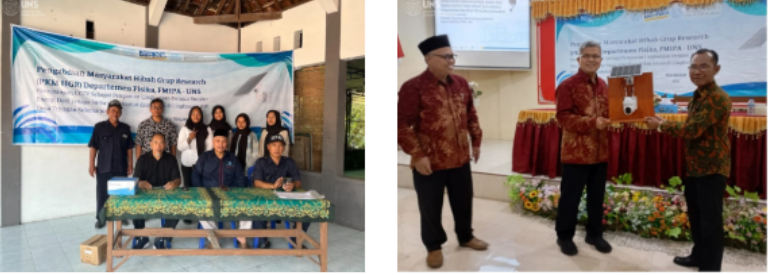
In July 2025, the Physics Study Program of the Faculty of Mathematics and Natural Sciences (FMIPA) UNS conducted a community service program in RW 08, Triyagan Village, Mojolaban District, Sukoharjo. The program included an educational session involving local residents, neighborhood representatives, security coordinators, and village officials. Participants learned about the benefits, operating principles, and practical applications of solar-powered CCTV systems, including using solar energy as an alternative electricity source.
Following the educational session, the team installed solar-powered CCTV equipment to demonstrate the practical use of renewable energy technology in the community. By combining public education with direct technology implementation, UNS helped local residents understand the importance of clean energy and its potential to improve energy efficiency. This initiative supports SDG 7 by increasing community awareness and promoting the adoption of renewable energy solutions beyond the university campus.
References:
3. SMART TECHNO: Educating Communities on Biogas for Electricity Generation
On June 28, 2025, five UNS students from the Building Engineering Education Study Program, participating in the MBKM Grant Program, organized an educational seminar under the SMART TECHNO initiative at Sruni Village Hall, Musuk District, Boyolali. The program introduced local livestock owners, village representatives, and households to converting livestock waste into biogas and its potential for electricity generation. Through this seminar, participants learned about biogas technology, alternative energy sources, and the environmental benefits of utilizing agricultural and livestock waste.
By bringing technical knowledge directly to the village community, UNS gave residents an opportunity to understand how locally available resources can support clean energy production and more sustainable energy practices. The initiative also encouraged greater awareness of energy alternatives that can reduce dependence on conventional fuels. This community education program contributes to SDG 7 by promoting knowledge of renewable energy and strengthening local capacity to explore sustainable energy solutions.
4. Alternative Energy Training through Charcoal Briquette Production in Kepyar Village
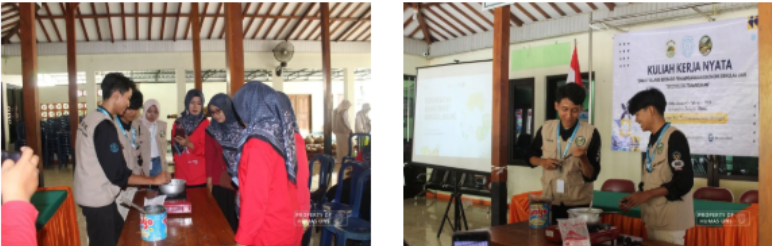
In early 2025, students from UNS Community Service Program (KKN) Group 133 organized practical training for residents of Kepyar Village, Purwantoro District, Wonogiri. The training introduced charcoal briquette production as an alternative fuel, using organic waste as raw material. Through practical demonstrations and direct guidance, community members learned about the production process and the potential benefits of using alternative fuels in everyday activities.
This initiative gave local residents practical knowledge and skills to explore alternative energy sources while better using locally available waste materials. By encouraging awareness of alternative fuels and resource efficiency, UNS contributed to community education on more sustainable energy practices. The program supports SDG 7 by promoting knowledge of alternative energy options and encouraging local initiatives that can reduce reliance on conventional fuels.
5. Electric Vehicle Education and Action for a Cleaner Future: UNS and PLN Collaboration
In November 2025, the Faculty of Engineering UNS collaborated with PT PLN (Persero) to organize the Electric Vehicle Education and Action for a Cleaner Future program across seven schools and higher education institutions in the Solo Raya region. The initiative reached more than 1,000 participants, including vocational high school students, university students, and members of the public. Through educational roadshows, technical workshops, and demonstrations, participants learned about electric vehicle technology, battery systems, vehicle conversion, and the role of electric mobility in supporting the transition to cleaner energy.
The program gave local communities, particularly young people, opportunities to learn about the importance of clean energy and more efficient transportation technologies. Practical workshops on converting conventional motorcycles into electric vehicles also introduced participants to alternative mobility solutions and their potential environmental benefits. Through this collaboration, UNS expanded public awareness of sustainable energy technologies beyond campus and contributed to SDG 7 by promoting knowledge of clean energy, technological innovation, and more sustainable energy use.
References:
- Faculty of Engineering UNS – UNS and PLN Promote Clean Energy Transition through Education, Training, and Collaborative Action in Solo Raya (November 6, 2025)
- Faculty of Engineering UNS – Electric Vehicle Education Roadshow at SMAN 1 Boyolali
- Faculty of Engineering UNS – Electric Vehicle Education Roadshow at SMAN 1 Karanganom, Klaten
- Faculty of Engineering UNS – Electric Vehicle Education Roadshow at SMKN 1 Miri, Sragen
- Faculty of Engineering UNS – Electric Vehicle Roadshow and Motorcycle Conversion Workshop (November 28, 2025)
Research-Based Education and Community Empowerment in Clean Energy
Beyond its community outreach programs, UNS also supports research and community service initiatives that advance knowledge in sustainable energy. In 2025, university-funded research and community engagement activities addressed green energy transformation, renewable energy technologies, and the application of sustainable innovations. One example was the initiative led by Prof. Dr. Yudho Taruno Muryanto, S.H., M.Hum., entitled Green Energy Transformation through a Digital Platform-Based Smart Virtual Power Plant: Socialization and Empowerment of Society Renewable Energy Students. This initiative highlights the role of education and knowledge sharing in strengthening understanding of green energy technologies and sustainable energy development.
Another relevant research initiative, conducted by Triana Rahmawati, S.Sos., M.Sos., was titled “Smart Farming and Its Governance for Rural Agricultural Resilience in Indonesia”. The research explored how smart farming technologies, including solar-powered irrigation and digital monitoring systems, improve agricultural efficiency and rural resilience. It also highlighted the importance of local capacity building, community participation, and institutional support in adopting sustainable technologies. These research activities complement UNS’s broader commitment to SDG 7 by strengthening knowledge and promoting innovation in clean energy and resource-efficient practices.
Conclusion
Through these initiatives, UNS demonstrates its active role in community outreach programs that help local communities understand the importance of energy efficiency and clean energy. By combining educational activities, practical training, technology demonstrations, and community participation, UNS extends its academic knowledge and technological expertise to communities beyond the university. These efforts strengthen public awareness, encourage the adoption of renewable energy solutions, and support more sustainable energy practices.
Collectively, the programs reflect UNS’s contribution to SDG 7: Affordable and Clean Energy, particularly in promoting clean energy awareness and empowering communities to participate in the transition toward a more sustainable energy future.