
SDG 6 In Number
Volume of water used in the university: Inbound (treated/extracted water) (m³)
60,056
Campus population
31,279
6.5.4 Sustainable Water Extraction on Campus
Sustainable Water Extraction at UNS Campus
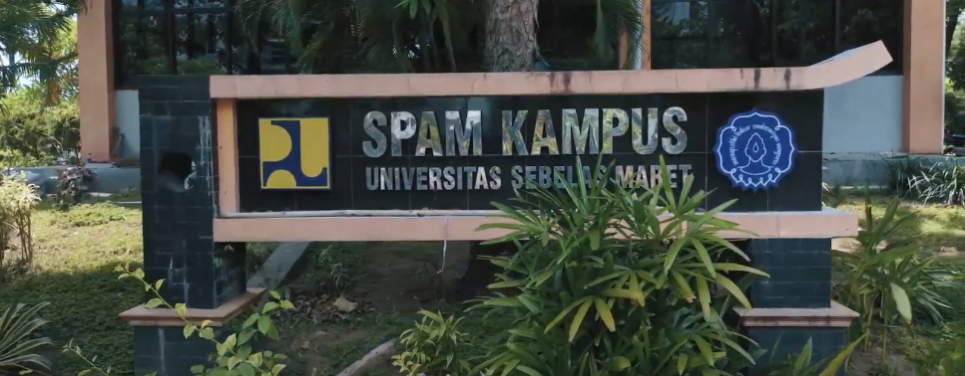
Universitas Sebelas Maret (UNS) has developed a Drinking Water Supply System (SPAM) on campus to provide safe drinking water for all members of the university community. The system draws raw water from deep groundwater wells on campus and treats it using Ultrafiltration (UF) technology. This process ensures the water meets drinking water quality standards. The SPAM system, established with support from the Ministry of Public Works and Public Housing (PUPR), uses environmentally conscious technology to support sustainable water supply operations.
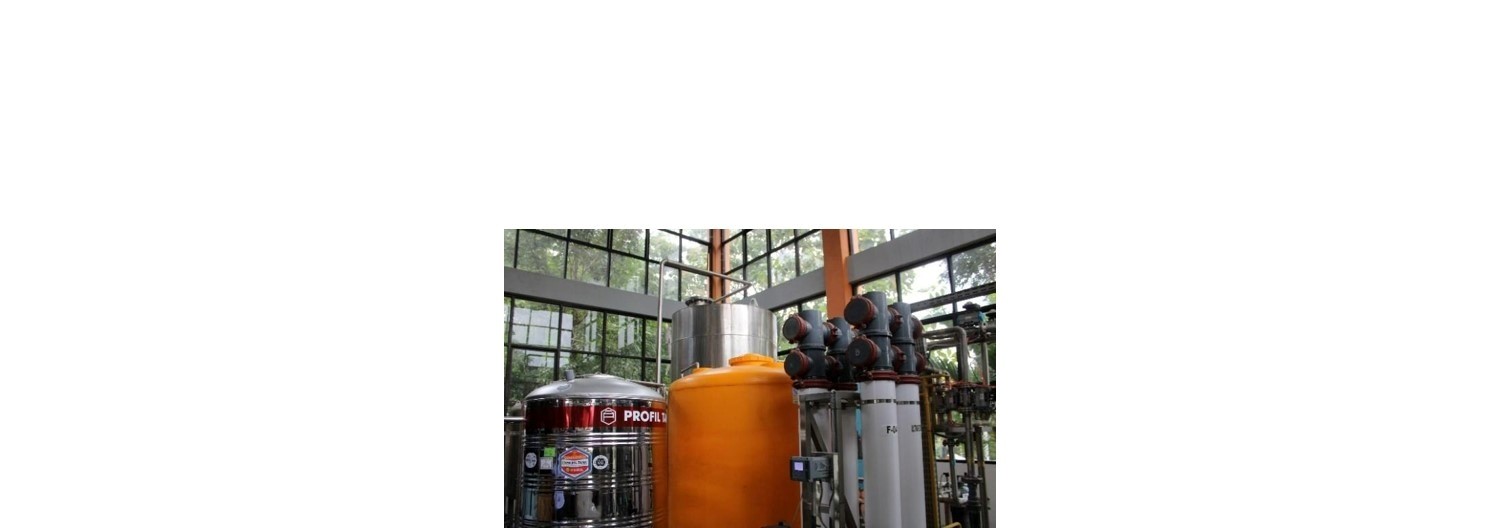
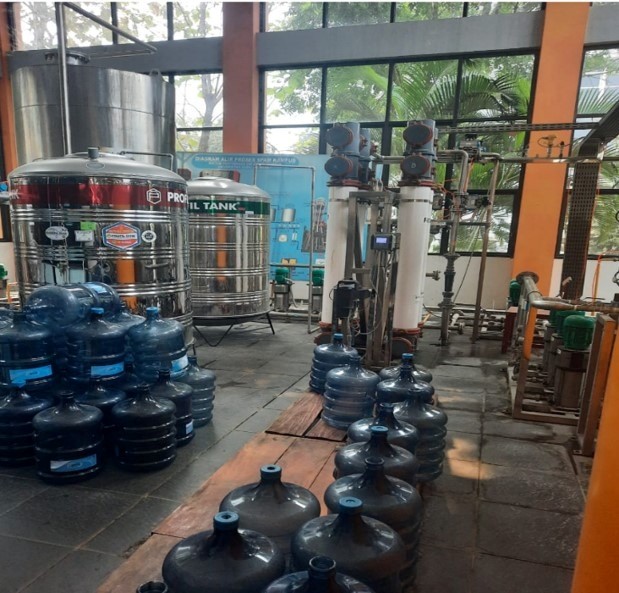
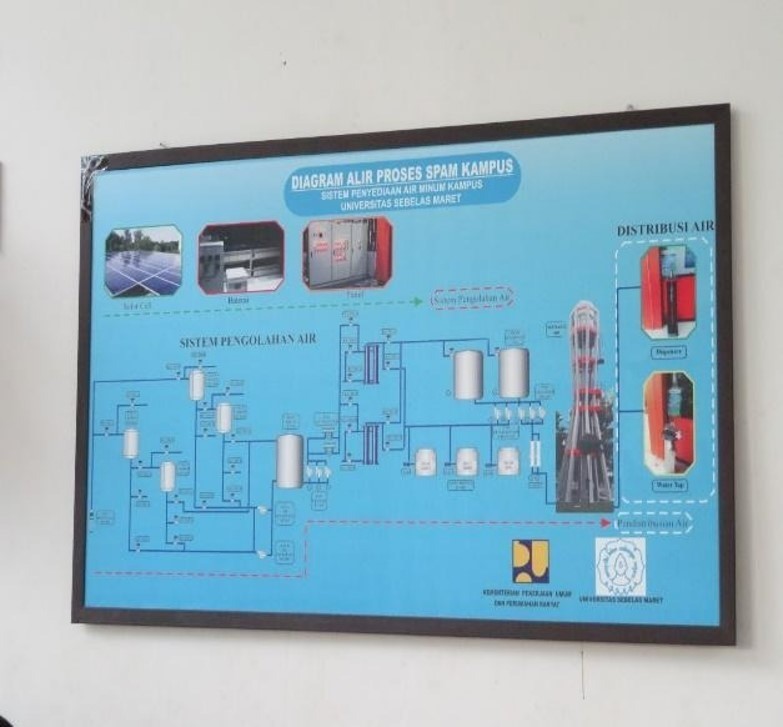
The SPAM system has a reported water delivery capacity of 2.5 liters per second and is supported by a solar-powered pumping system. The university distributes treated water through pipes to water fountains and dispensers at strategic locations across campus, allowing the university community to access drinking water directly and reducing reliance on single-use bottled water.
To ensure sustainable water extraction, UNS applies responsible groundwater management practices supported by technologies that promote groundwater recharge and maintain water availability. Across its campus grounds, UNS has developed 117 infiltration wells, biopore infiltration holes, rainwater catchment ponds, and permeable surfaces. These sustainable water management technologies capture rainfall, increase infiltration into the soil, reduce surface runoff, and support groundwater replenishment. The infiltration wells are installed at campus buildings, each measuring about 0.80 meters in diameter and 7 meters deep. The documented program also reports an increase of more than 50% in the infiltration rate following the construction of infiltration wells.
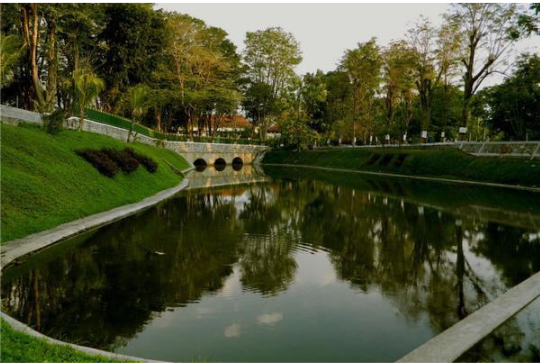
In addition, UNS Lake, covering approximately 1.21 hectares, functions as a surface-water retention facility with an estimated storage capacity of 7,959 m³. Together with rainwater harvesting facilities and biopore systems, these measures help retain rainfall and support groundwater recharge, strengthening the sustainability of campus water resources and reducing pressure on groundwater extraction.
The development of the SPAM system and supporting groundwater recharge infrastructure at UNS demonstrates an integrated approach to sustainable water extraction. By combining responsible groundwater use, ultrafiltration technology, solar-powered pumping, rainwater harvesting, and groundwater recharge facilities, UNS promotes the sustainable utilization and replenishment of its water resources. These initiatives are part of UNS Green Campus programs and serve as an educational platform for students and staff on the importance of sustainable water management, groundwater conservation, and responsible water use. Through these efforts, UNS contributes to SDG 6 (Clean Water and Sanitation) by supporting sustainable water management and the long-term availability of freshwater resources.
References: