

SDG 11 In Number
University expenditure (IDR)
1,561,027,263,159
University expenditure on arts and heritage (IDR)
220,320,172,206
11.2.6 Record and Preserve Cultural Heritage
UNS Cultural Heritage Documentation and Preservation Initiatives
Universitas Sebelas Maret (UNS) delivers various projects and initiatives to record, document, and preserve intangible cultural heritage, including local folklore, traditional practices, language, and indigenous knowledge. These efforts include cultural research, museum collections, documentation, conservation, educational activities, and collaborations with local communities and cultural organizations.
Through the Center of Excellence in Science and Technology for Javanology (PUI Javanologi), Museum UNS, academic research groups, and community engagement programs, the university helps safeguard cultural heritage and ensure its transmission across generations. These initiatives support SDG 11 by protecting cultural heritage, strengthening local cultural identities, and promoting inclusive and sustainable communities.
The following projects and activities are presented under three cultural heritage categories: local or regional cultural heritage, national cultural heritage, and heritage of displaced communities.
A. Local or Regional Cultural Heritage
UNS actively records and preserves local and regional cultural heritage, particularly Javanese traditions, through research, documentation, museum collections, and cultural education. These initiatives cover traditional musical instruments, manuscripts, folklore, performing arts, traditional textiles, and local knowledge. Through PUI Javanologi and Museum UNS, the university documents cultural objects and their historical, philosophical, and social meanings, helping preserve regional cultural identity and traditional knowledge.
1. Traditional Gamelan Musical Instruments
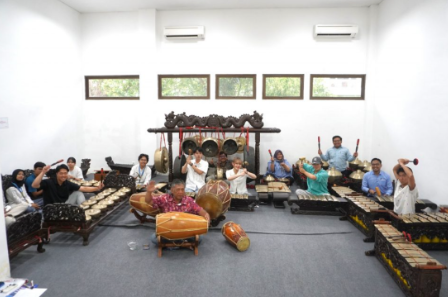
UNS, through Museum UNS under PUI Javanologi, preserves traditional musical instruments as part of its Javanology cultural heritage collection. The collection includes a large gong, angklung, and kendhang, representing traditional musical practices and the diversity of Indonesia’s performing arts.
The museum’s online collection catalog documents these instruments and describes their characteristics and cultural functions. The gong represents an important instrument in traditional ensemble music. The angklung, made from bamboo tubes attached to a bamboo frame, produces musical notes when shaken. Meanwhile, the kendhang plays a central role in Javanese gamelan performances by regulating rhythm and tempo and coordinating the musical ensemble.
By collecting, cataloging, and presenting these instruments through its museum, UNS supports the preservation of material evidence of traditional music and provides educational resources for students, researchers, and the wider public. These activities help safeguard knowledge of traditional musical instruments and their role in local and national cultural heritage.
References:
2. Ancient Lontar Manuscripts
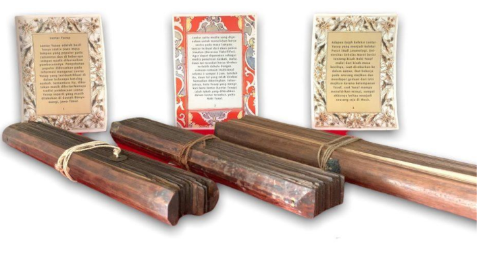
The Museum of UNS, through PUI Javanologi, preserves a collection of 13 ancient lontar manuscripts donated by Huub Gaymans in 2013. Written around the late nineteenth to early twentieth century, the manuscripts contain traditional knowledge, including medicinal remedies, mantras, the Lontar Yusuf, and babad or folk narratives. The collection became part of Javanologi UNS on 3 September 2013 and was incorporated into the Museum UNS collection in 2017. By maintaining these manuscripts as cultural heritage collections and making them available for research and education, UNS helps preserve historical texts and traditional Javanese knowledge for future generations.
Reference: Museum UNS – Ancient Lontar Manuscripts
3. Medang Kamulan Archaeological Artifacts
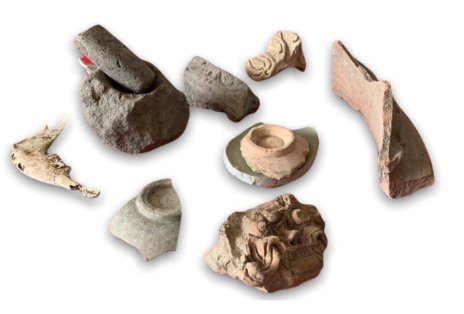
Medang Kamulan archaeological artifacts are part of the Javanology collection at the UNS Museum. Researchers from the UNS Center for Javanology Studies (PUI Javanologi) collected these artifacts at the Medang Kamulan site in Banjarejo Village, Gabus District, Grobogan Regency, Central Java, in 2015. They were subsequently added to the Museum UNS collection in 2020.
Through archaeological research, documentation, and conservation, UNS helps preserve the Medang Kamulan site’s historical and cultural significance. The collection also provides an educational resource for researchers, students, and the public to learn about the region’s archaeological heritage.
By documenting and safeguarding these artifacts, UNS helps preserve local historical knowledge and cultural evidence for future study and public understanding. These efforts support SDG 11 by protecting and preserving regional cultural heritage.
Reference: Museum UNS – Javanology Collection
4. Wayang Kulit (Traditional Shadow Puppetry)
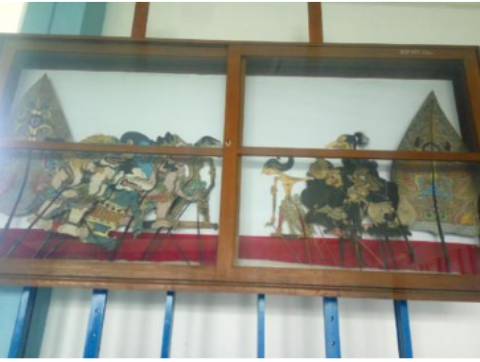
Wayang kulit is part of the UNS Museum’s historical collection. The collection originally belonged to IKIP Surakarta, UNS’s predecessor institution, and was formerly displayed in the dean’s office as a decorative item and a symbol of cultural identity.
Wayang kulit is a traditional Javanese performing art that conveys philosophical values, historical narratives, and moral teachings through intricately crafted leather puppets and shadow-puppet performances. UNS helps preserve this cultural heritage by maintaining, curating, and studying the puppets as part of its museum collection. The university also supports cultural performances and educational programs that introduce traditional Javanese arts to students and the wider public.
By preserving and promoting wayang kulit, UNS helps safeguard traditional stories, cultural values, and artistic knowledge. These activities support SDG 11 by maintaining the continuity of local performing arts and strengthening appreciation of Javanese cultural identity.
Reference: Museum UNS – Javanology Collection
5. Classical Javanese Batik
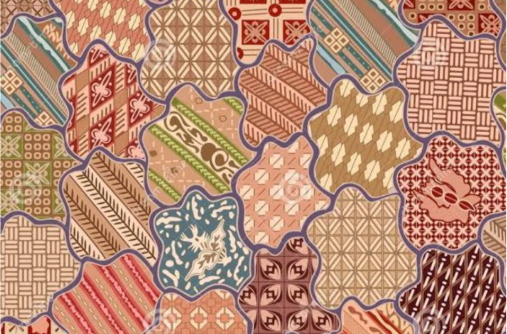
Classical Javanese Batik is part of the Javanology collection at the Museum of UNS. The collection includes three batik fabric pieces donated by the R. Soemarjo family from Surakarta. It features three traditional motifs: Sekar Jagad, symbolizing the beauty of the Indonesian archipelago; Cekok Trenggiling Menthik, reflecting diligence and perseverance; and Cuwiri model Semen, representing fertility.
These motifs demonstrate how classical Javanese batik preserves cultural values and philosophical meanings through traditional textile art. UNS helps preserve this heritage by maintaining and documenting the batik collection through PUI Javanologi and Museum UNS.
The collection also supports cultural education and exhibitions, enabling students, researchers, and visitors to learn about traditional Javanese motifs and their meanings. By documenting traditional designs and the knowledge behind them, UNS helps safeguard local cultural expressions and supports SDG 11.
Reference: Museum UNS – Classical Javanese Batik
6. Lurik Traditional Textile

Lurik Traditional Textile is part of the Javanology collection at the UNS Museum. The collection originated from a lurik design competition organized by the UNS Center for Javanology Studies (PUI Javanologi) in 2012.
Lurik is a traditional Javanese woven textile characterized by its simple striped patterns and its cultural significance in local clothing and textile-making traditions. The collection represents efforts to preserve traditional textile craftsmanship while encouraging creativity and innovation in Javanese cultural design.
UNS contributes to preserving lurik by documenting, curating, and exhibiting the textile through Museum UNS and PUI Javanologi. The collection provides an educational resource for students, researchers, and visitors to learn about traditional Javanese textile heritage and the knowledge associated with its production.
Reference: Museum UNS – Javanology Collection
7. Reog Ponorogo
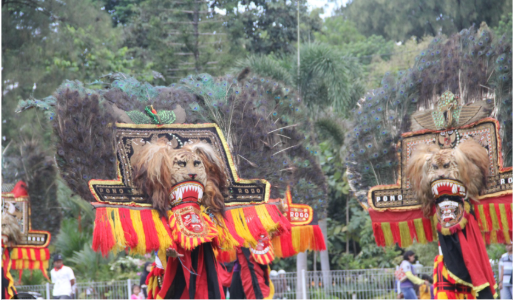
Reog Ponorogo is a traditional performing art from Ponorogo, East Java, and is part of the Javanology collection at the Museum of UNS. The performance is widely recognized for the Dadak Merak, an impressive mask featuring a tiger-like head and a fan of peacock feathers.
Its stories, characters, music, costumes, and choreography reflect the region’s distinctive artistic traditions and cultural identity. Through its museum collection and cultural education activities, UNS helps document and preserve knowledge of this traditional performing art.
Preserving Reog Ponorogo supports the continuity of regional folklore, artistic expression, and traditional performance knowledge. These efforts contribute to SDG 11 by safeguarding local cultural heritage and promoting public appreciation of Indonesia’s regional traditions.
References:
8. UNS Batik
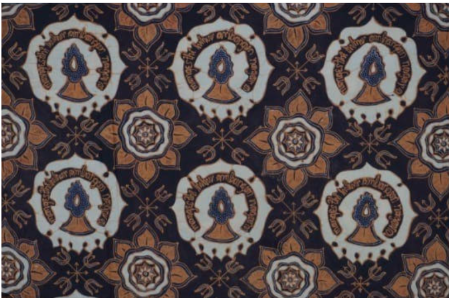
UNS Batik is part of the Javanology collection at the UNS Museum. This hand-drawn batik was donated by RM Restu to the Center of Excellence in Science and Technology for Javanology (PUI Javanologi) in 2020.
Batik is a traditional Indonesian textile art produced using a wax-resist dyeing technique, in which wax is applied to fabric to create patterns before the cloth is dyed. Its motifs and production techniques reflect cultural knowledge, artistic creativity, and the cultural identity of Indonesian communities.
By preserving and documenting Batik UNS as part of its museum collection, the university supports the transmission of traditional textile knowledge and the appreciation of batik as a cultural expression. This initiative contributes to SDG 11 by preserving traditional craftsmanship and cultural identity.
Reference: Museum UNS – UNS Batik
9. Iriban Tradition: Local Wisdom and Water Source Conservation
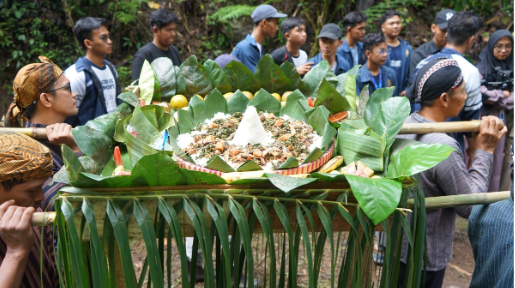
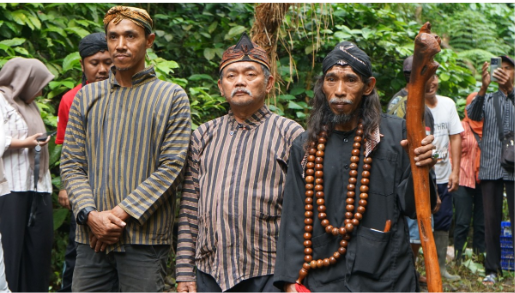
UNS, through the Linguistics and Applied Literature Research Group of the Faculty of Teacher Training and Education (FKIP), contributes to documenting and preserving local cultural heritage by researching the Iriban tradition in Lerep Tourism Village, West Ungaran District, Semarang Regency, Central Java. The research was conducted on 6 August 2025 under the leadership of Prof. Dr. Sumarwati, M.Pd., involving five postgraduate students.
Iriban is a hereditary customary tradition practiced by the local community to express gratitude and collectively maintain the sustainability of water sources in Wangon Cenginging Forest. The ceremony includes communal prayers, customary rituals, and a shared meal, reflecting community solidarity and the relationship between cultural practices and environmental stewardship.
Through this research, the UNS team aims to document the educational values embedded in Iriban and strengthen public awareness of environmental conservation through local wisdom. By recording traditional practices and the knowledge associated with them, UNS helps preserve intangible cultural heritage while supporting SDG 11 by protecting local cultural identity and sustainable community traditions.
Reference: FKIP UNS – Research on the Iriban Tradition in Lerep Village
10. Arga Budaya: Traditional Performing Arts and Cultural Activities

Arga Budaya, also known as Argo Budoyo, is an open-air cultural performance space at the UNS Kentingan Campus in Surakarta. Established around 1981, it has hosted student performances, theater rehearsals, workshops, traditional arts, and other cultural activities. Its history is closely tied to the development of Teater Wiswakarman, officially established in 1989, which became an important part of Surakarta’s student theater community.
For decades, Arga Budaya has given students and members of the wider community opportunities to practice, perform, and share cultural traditions. UNS maintains this historic cultural space and supports the continuity of local performing arts through performances, workshops, and training activities. By providing space for cultural expression and intergenerational learning, UNS helps preserve living cultural heritage and supports SDG 11 by protecting culturally significant spaces and local artistic traditions.
Reference: Arga Budaya UNS
B. National Cultural Heritage
UNS also contributes to documenting and preserving Indonesia’s national cultural heritage through archaeological research, field studies, and educational activities. These initiatives help safeguard significant historical and prehistoric evidence while expanding public knowledge of Indonesia’s cultural development. Through research and documentation, UNS supports the preservation of nationally important heritage sites and their contribution to historical and scientific understanding.
1. Samir of Rector Haryo Mataram
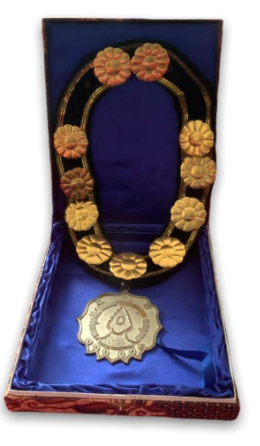
The Samir of Rector Haryo Mataram is a historical ceremonial garment preserved in the Museum of UNS. Made in Surakarta around 1976 from velvet, brass, and sequins, it was worn by G.P.H. Haryo Mataram, the first rector of UNS, during his tenure from 1976 to 1977. The museum added the garment to the UNS collection in 2017.
The samir represents the university’s early institutional identity and academic ceremonial traditions. By conserving, documenting, and exhibiting this historical object, UNS preserves material evidence of its institutional heritage and provides students, researchers, and visitors with opportunities to learn about the university’s history. These efforts support SDG 11 by safeguarding historically significant cultural assets and maintaining institutional heritage for future generations.
Reference: Museum UNS – Samir Rektor Haryo Mataram
2. Samir of the Vice Rector
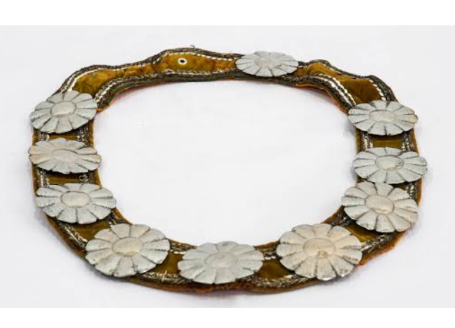
The Samir of the Vice Rector (Samir Pembantu Rektor) is a ceremonial garment in Museum UNS’s cultural heritage collection. It represents Universitas Sebelas Maret’s formal academic traditions and institutional identity. Samir garments are associated with university ceremonies and symbolize honor, responsibility, and the roles of university leaders in academic governance.
By preserving and presenting them as part of the Museum UNS collection, the university documents the development of its academic customs and institutional history. This collection provides historical references that help students, researchers, and visitors understand the ceremonial traditions that have shaped UNS over time. These efforts support SDG 11 by preserving cultural objects tied to the university’s historical development and institutional identity.
3. Pedel Master of Universitas Sebelas Maret
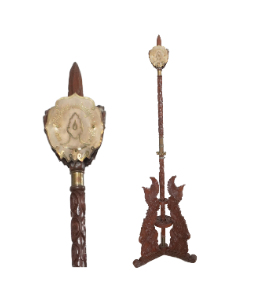
The Pedel Master of Universitas Sebelas Maret is a ceremonial staff used during official university events, including graduation ceremonies and senate sessions. Carried by the pedel officer leading academic processions, it symbolizes authority, honor, and UNS’s academic identity. Its design and carvings reflect the university’s ceremonial traditions and contribute to the formal character of academic events.
The staff entered the Museum UNS collection in 2017 and is preserved as part of the university’s historical and ceremonial heritage. By maintaining, documenting, and exhibiting this object, UNS safeguards material evidence of its institutional traditions and gives the academic community and visitors opportunities to learn about the university’s history. These efforts support SDG 11 by preserving cultural assets and historical identity.
Reference: Museum UNS – Collections: Pedel Master Universitas Sebelas Maret
4. Sangiran Early Man Site

The Sangiran Early Man Site is a nationally significant archaeological site in Central Java, Indonesia, located approximately 15 kilometers north of Surakarta (Solo). Spanning about 5,600 hectares across the Sragen and Karanganyar regencies, the site became internationally renowned after excavations in the 1930s uncovered Homo erectus fossils and prehistoric stone tools. UNESCO inscribed Sangiran on the World Heritage List in 1996 for its outstanding contribution to understanding human evolution and the development of early human culture.
The site contains a significant geological and archaeological record spanning approximately 2.4 million years. Researchers have identified more than 100 Homo erectus individuals at Sangiran, along with animal fossils and stone tools that provide evidence of prehistoric life and environmental change. These discoveries make Sangiran an important resource for archaeological research, scientific education, and public understanding of Indonesia’s prehistoric past.
UNS researchers conduct field studies and archaeological surveys at the site, contributing to documentation, conservation, research, and public education. These activities connect university research with broader efforts to safeguard Indonesia’s national heritage. By documenting and studying Sangiran’s archaeological evidence, UNS helps preserve and share knowledge about human evolution and Indonesia’s prehistoric heritage.
Through these research and documentation activities, UNS supports SDG 11 by helping protect nationally significant cultural and archaeological heritage and ensuring historical knowledge remains accessible to future generations.
C. Heritage of Displaced Communities
UNS promotes cultural heritage preservation by providing international students and diaspora communities with opportunities to share, practice, and transmit their cultural traditions. In particular, its engagement with the Global Javanese Diaspora helps communities living outside Indonesia maintain connections with ancestral traditions. These initiatives demonstrate UNS’s contribution to preserving cultural identity, traditional knowledge, and ancestral practices across national borders and generations.
1. Cultural Exchange through UNS Cultural Night and Sharing Day

UNS promotes cultural heritage preservation by giving international students and diaspora communities opportunities to share, practice, and pass on their cultural traditions. One key initiative is UNS Cultural Night, an event that celebrates the cultural diversity of international students.
At the 2025 event, students from 39 countries presented traditional dances, songs, national clothing, and culinary specialties, creating opportunities for cultural exchange and greater appreciation of diverse cultural identities. In addition, international students participate in Sharing Day activities, introducing aspects of their countries’ cultures and traditions to the university community and local communities through educational and outreach activities.
These activities provide opportunities to share cultural expressions and traditional knowledge across communities. They also support SDG 11 by encouraging inclusive cultural participation, intercultural understanding, and respect for diverse cultural identities.
References:
2. Preservation of Javanese Ancestral Traditions through the Global Javanese Diaspora

UNS also supports the preservation of ancestral traditions among diaspora communities through the Center of Excellence in Science and Technology for Javanology (PUI Javanologi). In June 2025, PUI Javanologi collaborated with cultural partners and members of the Global Javanese Diaspora to organize a Kotek Lesung workshop involving participants from Suriname, the Netherlands, Malaysia, and Singapore.
The activity introduced participants to a traditional Javanese musical practice using a rice mortar and pestle, helping maintain connections with ancestral cultural expressions. The workshop gave diaspora participants an opportunity to practice and experience traditional Javanese music while strengthening their connection to their cultural heritage.
In July 2025, PUI Javanologi also collaborated with Keraton Mbah Anang in Muar, Johor, Malaysia, to provide batik-making and iket workshops for younger generations of the Javanese diaspora. These activities helped transmit traditional skills, cultural symbolism, and local knowledge across generations and national borders.
Through these cultural workshops and diaspora partnerships, UNS contributes to documenting, transmitting, and preserving Javanese intangible cultural heritage. These initiatives support SDG 11 by sustaining ancestral traditions, strengthening cultural identity among diaspora communities, and encouraging intergenerational cultural learning.
References:
D. International Cultural Heritage
This category presents UNS initiatives to preserve and promote cultural heritage from other countries through museum collections, cultural education, and cross-cultural exchange. Although these collections do not represent local or national Indonesian heritage, they demonstrate the university’s role in documenting diverse cultural traditions and encouraging intercultural understanding.
1. Taiko: Traditional Japanese Percussion Instrument
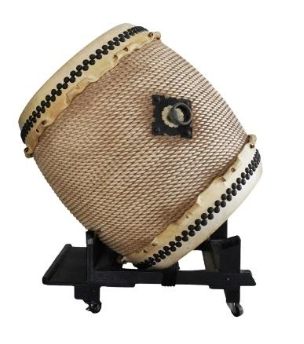
Taiko is a traditional Japanese percussion instrument included in the Javanology collection at the Museum of UNS. It consists of large drums of various sizes and shapes, played using special sticks called bachi. Taiko plays an important role in Japanese cultural traditions, including religious ceremonies, festivals, and traditional performing arts such as Kagura and Kabuki. The instrument also has spiritual significance in Japanese culture.
The taiko in the UNS collection was donated to the UNS Center for Javanology Studies (PUI Javanologi) by a Japanese student in 2023. By maintaining and exhibiting this instrument, UNS provides opportunities for students and visitors to learn about Japanese musical traditions. Its inclusion in the museum collection also supports cultural exchange and music education, contributing to SDG 11 through the preservation and appreciation of diverse cultural heritage.
Reference: Museum UNS – Taiko
2. Batik Kimono: Cross-Cultural Textile Heritage
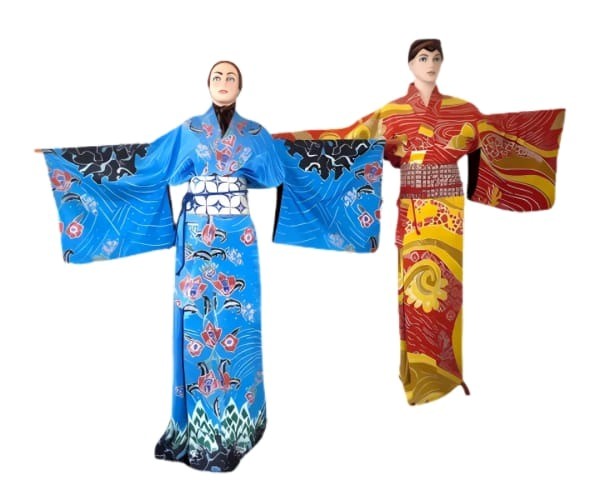
Batik Kimono is a hybrid textile creation featured in the Javanology collection at the Museum of UNS. It combines elements of Javanese batik with the traditional Japanese kimono, reflecting artistic exchange between Indonesian and Japanese cultures. The designs were developed by Dr. Theresia Widiastuti, Prof. Sahid Teguh Widodo, Dr. Kundharu Saddhono, and Dra. Tiwi Bina Affanti. Two variations are available: Summer Batik Kimono and Winter Batik Kimono.
This collection shows how traditional textile elements can come together to create new forms of cultural expression while staying connected to their traditions. Through its preservation, documentation, and presentation at Museum UNS, the university supports cultural education and encourages appreciation of cross-cultural artistic knowledge. These efforts contribute to SDG 11 by preserving cultural expressions and strengthening understanding of cultural diversity.
References:
3. Golden-Thread Kimono
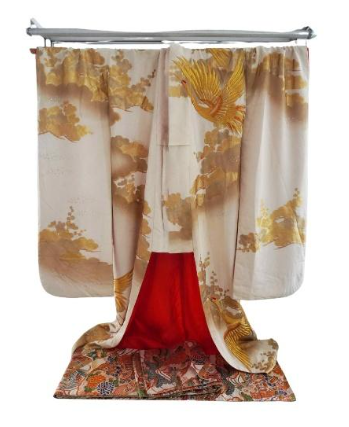
Golden-Thread Kimono (Kimono Benang Emas) is part of the Javanology collection at the Museum of UNS. According to the official Museum UNS website, Professor Masakatsu Tozu of Kokushikan University donated this kimono to PUI Javanologi UNS during a Koh-Do (Japanese incense appreciation) seminar in 2012.
The kimono is a traditional Japanese garment with a distinctive T-shaped design, featuring patterns and colors that may reflect the wearer’s status, the season, or the occasion. By preserving and exhibiting this collection, UNS gives students, researchers, and visitors opportunities to learn about Japanese clothing traditions and their cultural significance. The collection also represents cultural connections between Japan and Indonesia and supports SDG 11 through cultural education, heritage appreciation, and intercultural understanding.
Reference: Museum UNS – Golden-Thread Kimono
Conclusion
Through its research, documentation, museum collections, conservation activities, and community engagement programs, UNS demonstrates its commitment to recording and preserving cultural heritage at local, regional, national, and international levels. Its initiatives cover a wide range of cultural expressions, including local folklore, traditional music, performing arts, historical manuscripts, traditional textiles, archaeological heritage, and ancestral knowledge.
Through PUI Javanologi, Museum UNS, academic research groups, and partnerships with cultural organizations and diaspora communities, UNS helps safeguard both tangible evidence and intangible cultural heritage. These activities provide opportunities to document, study, share, and transmit cultural knowledge and traditions across generations.
Overall, these initiatives contribute to SDG 11 by protecting cultural heritage, strengthening cultural identity, encouraging inclusive participation in cultural activities, and ensuring local and national traditions remain accessible and meaningful for future generations.