Inclusive Campus Infrastructure: Accessible Campus for People with Disabilities
Universitas Sebelas Maret (UNS) is committed to making its campus inclusive, barrier-free, fully and easily accessible for all members of the university community. This commitment is reflected in the systematic provision of accessible infrastructure, physical facilities, and support services for individuals with disabilities, special needs, and mobility limitations.
To support this commitment, UNS has implemented a comprehensive range of accessibility features across the campus to enable independent mobility, promote safety, and ensure equal participation in academic and campus life.
Our Commitment to Physical Accessibility
To support independent mobility on campus, UNS has implemented various international-standard accessibility features across our academic and administrative buildings:
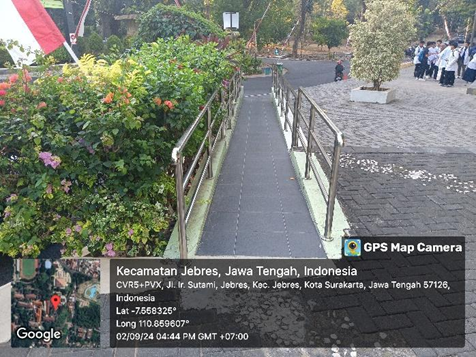
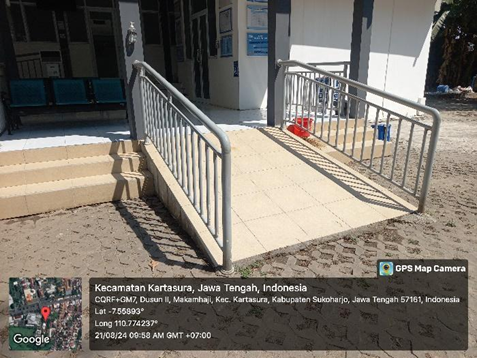
- Ramps and step-free pathways – Ramp facilities that eliminate the need for stairs, making it easier for wheelchair users and people with mobility difficulties to move seamlessly across buildings and outdoor areas.
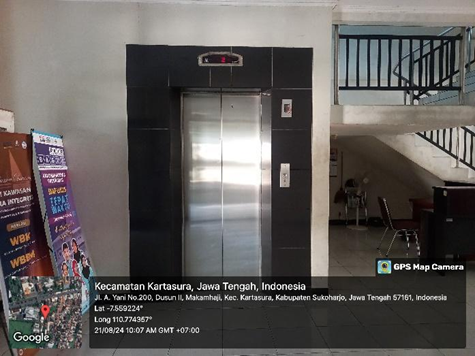
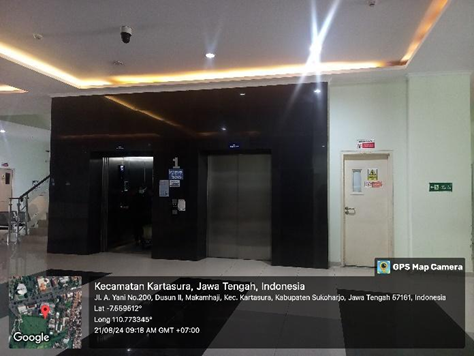
- Lifts/elevators – In multi-story buildings, lifts and elevators are provided to ensure full access to the upper floors.
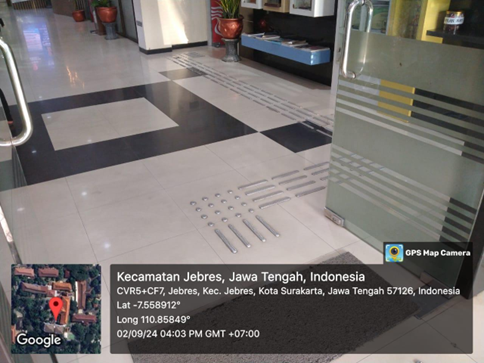
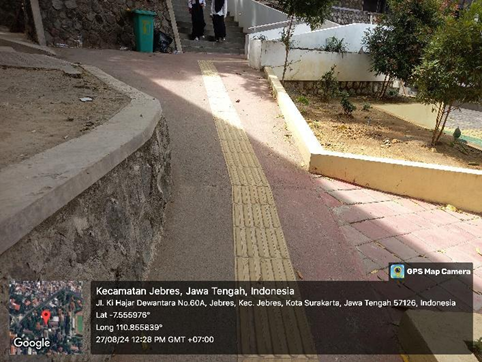
- Guiding blocks and tactile paving – To assist visually impaired individuals, UNS has installed guiding blocks (tactile paving) and floor markings indicating safe paths, warnings, and potential obstacles such as curbs, staircases, and crossings to help them navigate campus safely.
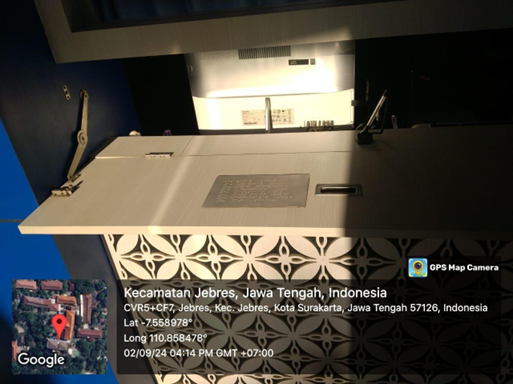
- Braille signage and information systems – Braille signs and information provided in strategic areas to enhance accessibility for individuals with visual impairments, to ensure that they can access information independently.
Specialized Facilities and Amenities
Beyond basic mobility, UNS provides specialized facilities to support the daily needs of persons with disabilities and maternity care:
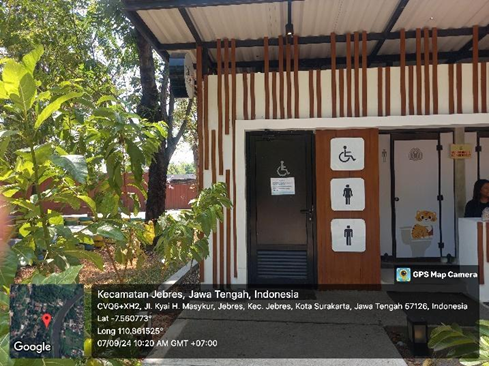
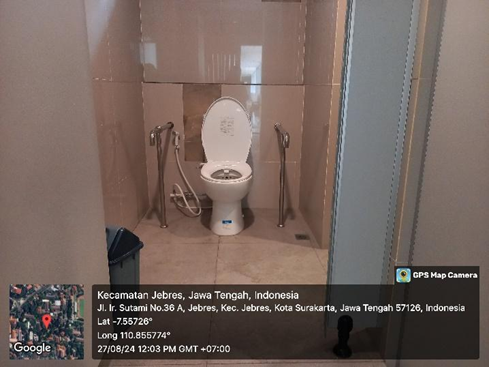
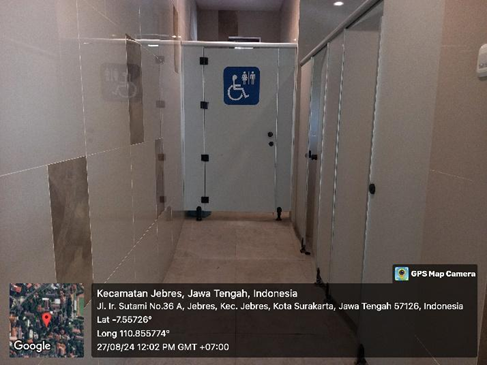
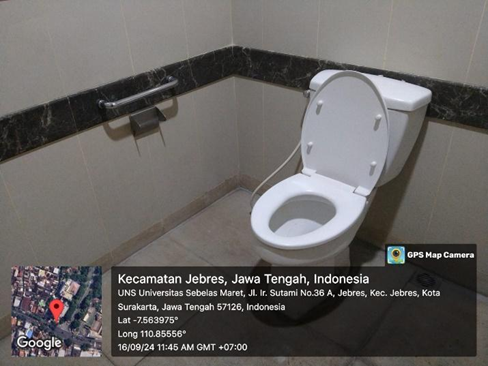
- Accessible restrooms/toilets – Special toilets equipped with handrails and sufficient space for wheelchair maneuvering, designed to accommodate people with disabilities.
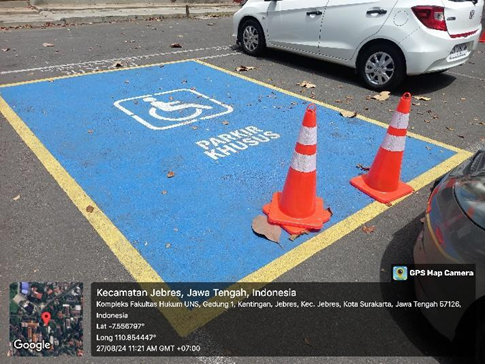
- Dedicated accessible parking spaces – Parking spaces strategically located at the nearest possible points to building entrances to minimize travel distance for persons with disabilities.
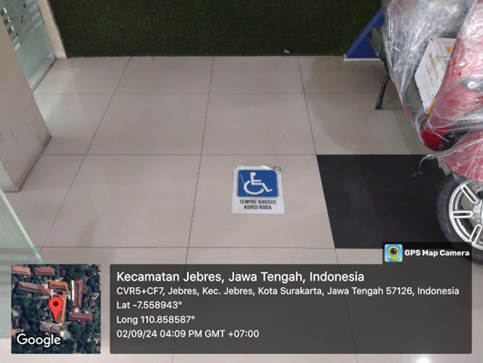
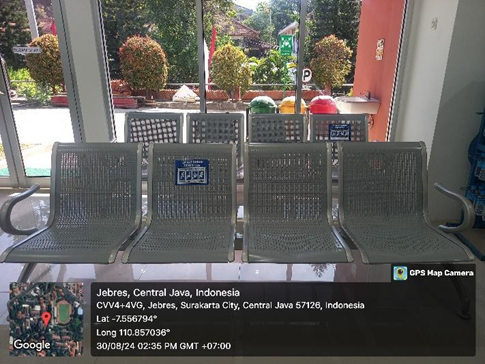
- Priority seating areas – public areas and waiting rooms, UNS provides designated priority seating that provides a safe and easily accessible place for visitors with mobility constraints or those who cannot stand for long periods.
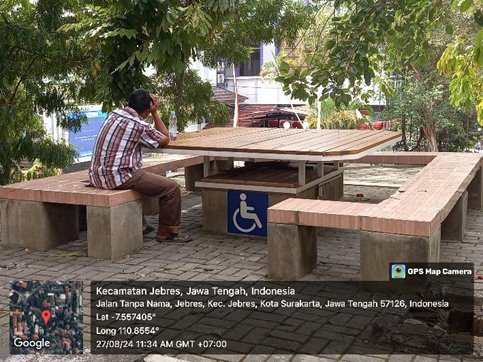
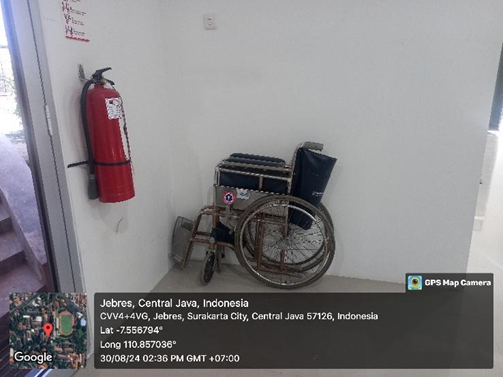
- Mobility assistance – Wheelchair facilities are available on-site to support mobility across campus for individuals who have temporary or permanent balance and walking issues.
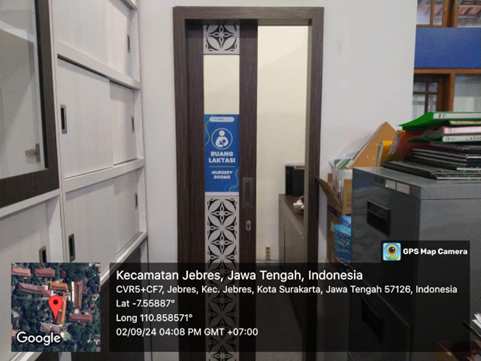
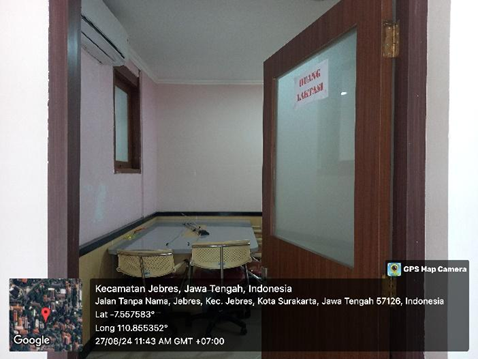
- Maternity care – To support mothers, UNS provides dedicated lactation/breastfeeding rooms, ensuring a private and comfortable space for nursing.
Technical Specifications of Accessibility Features
Facility | Purpose & Benefit |
Ramps | Eliminating stairs for easy wheelchair and mobility access. |
Lifts/Elevators | Providing seamless vertical access to all building floors. |
Guiding Blocks | Assisting visually impaired navigation through tactile paths. |
Braille Signage | Providing inclusive information for the blind community. |
Diffable Toilets | Standardized accessible restrooms for comfort and safety. |
Diffable Parking | Ensuring close access to buildings for disabled drivers/passengers. |
These facilities are distributed across campus buildings and public areas, ensuring that accessibility is not limited to specific locations but embedded throughout the university environment. The integration of tactile guidance systems, inclusive sanitation, and mobility-support infrastructure demonstrates a holistic approach to accessibility that goes beyond compliance, aiming to create a truly inclusive campus ecosystem.
By continuously investing in accessible infrastructure, UNS ensures that students, staff, and visitors with disabilities can participate fully in academic, social, and professional activities without physical barriers. These efforts support the university’s strong commitment to equity, diversity, and inclusion, while advancing the principles of sustainable and inclusive education.
Through these efforts, UNS continues to improve its campus infrastructure and services, making the campus environment more inclusive and easily accessible to everyone, including people with disabilities, ensuring that no one is left behind.