

SDG 13 In Number
Total energy used (GJ)
19,141
Total energy used from low-carbon sources (GJ)
9,413
13.3.5 Environmental Education Collaborate With NGO
Strengthening Climate Resilience through Environmental Education and NGO Partnerships
Universitas Sebelas Maret (UNS) collaborates with non-governmental organizations (NGOs) and environmental organizations to promote environmental education, share knowledge, and encourage community participation in addressing climate-change-related environmental challenges. Through academic activities, public engagement, and community-based initiatives, UNS offers students and local communities opportunities to learn about sustainable practices and environmental protection. These collaborations contribute to SDG 13 (Climate Action) by raising awareness, strengthening environmental knowledge, and supporting actions that can improve the resilience of communities and ecosystems to climate-related challenges.
1. Promoting Climate-Resilient Agriculture through Collaboration with Rikolto Indonesia

On April 14, 2025, the Faculty of Agriculture at UNS, through its Agricultural Extension and Communication Study Program, organized an International Public Lecture entitled “.” The event featured Mr. Tuan Le, Rice Program Director for Southeast Asia at Rikolto Indonesia, an international NGO that promotes sustainable and inclusive food systems. Through this collaboration, UNS provided students with direct access to practical knowledge and international experience in implementing sustainable rice farming practices.
The lecture introduced students to the Sustainable Rice Platform (SRP), which promotes environmentally responsible rice production, efficient resource use, biodiversity conservation, and reduced environmental impacts. These practices support climate change adaptation by promoting more sustainable agricultural systems and strengthening farming communities’ capacity to respond to environmental challenges. By engaging an NGO in environmental education and knowledge exchange, UNS contributes to SDG 13 by promoting sustainable agricultural practices and increasing awareness of climate resilience in the agricultural sector.
References:
2. Raising Environmental Awareness through Collaboration with Ecoton Foundation
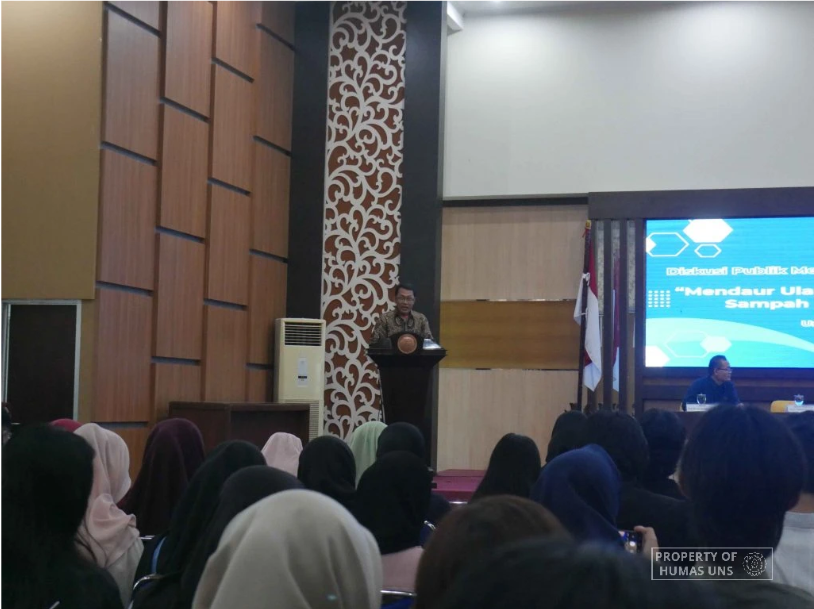
On June 25, 2025, the Master’s and Doctoral Programs in Environmental Science at the Graduate School of UNS organized a public discussion entitled “Recycling the Future: Reducing Plastic Waste through Innovation” to commemorate World Environment Day. The event featured Prigi Arisandi, Founder of Ecoton Foundation, an environmental NGO, who presented findings from environmental expeditions and research on microplastic pollution in Indonesian rivers. His presentation covered the distribution of microplastics, their impacts on aquatic ecosystems and human health, and the importance of collective action to reduce plastic pollution.
The collaboration also included an educational art installation created by Ecoton Foundation in front of the Graduate School building. The installation served as a public awareness initiative to encourage people to reduce single-use plastic consumption. By bringing together academics, students, an environmental NGO, and the wider community, UNS strengthened environmental education and public engagement in addressing environmental problems. Although the activity focused primarily on pollution prevention rather than direct climate adaptation, protecting aquatic ecosystems and promoting sustainable environmental practices contribute to broader environmental resilience and support SDG 13 by increasing environmental awareness and collective action.
Reference: Public Discussion on Microplastics: UNS Graduate School and Ecoton Foundation – UNS
3. Supporting Coastal Ecosystem Protection through Collaboration with Sungai Watch
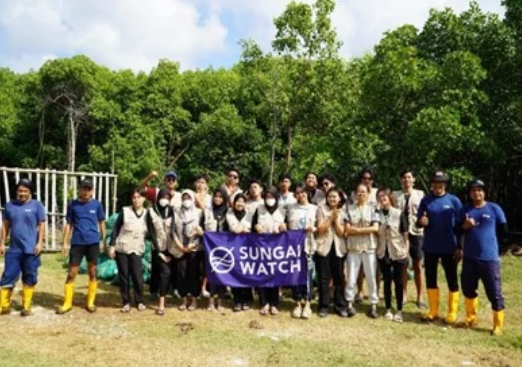
In July 2025, a group of students from the 127th Community Service Program (KKN) of UNS collaborated with Sungai Watch, an environmental NGO that works to prevent plastic pollution in waterways and protect aquatic and coastal ecosystems through community-based waste management initiatives, in a coastal environmental action entitled “Save Mangrove Jimbaran.” The activity took place at Mangrove Harvestland, Jimbaran, Bali, on July 26, as part of the commemoration of World Mangrove Day. The initiative involved collecting plastic and other non-organic waste accumulated around the mangrove area, which the Sungai Watch team then sorted and recycled.
Through this collaboration, UNS students took part in practical environmental action while raising public awareness of the importance of protecting mangrove ecosystems. Mangroves play an important role in coastal protection, helping reduce coastal erosion and providing natural protection against environmental pressures. Their conservation also supports ecosystem resilience in the face of climate-related risks, including rising sea levels and coastal impacts. This community-based engagement demonstrates how UNS students can work alongside environmental organizations to promote environmental protection and strengthen awareness of ecosystem-based approaches relevant to climate change adaptation, contributing to SDG 13.
Conclusion
Through its collaborations with Rikolto Indonesia, Ecoton Foundation, and Sungai Watch, UNS demonstrates its engagement with NGOs and environmental organizations in promoting environmental education, knowledge exchange, and community participation. These initiatives address different but complementary aspects of environmental sustainability, ranging from climate-resilient agricultural practices and pollution awareness to coastal ecosystem protection.
Together, these collaborations support SDG 13 (Climate Action) by strengthening environmental awareness, promoting sustainable practices, and encouraging community involvement in protecting ecosystems and responding to climate-related challenges. They also demonstrate UNS’s commitment to integrating environmental education and external partnerships into its academic and community engagement activities.