

SDG 1 In Number
Number of student
27,537
Number of low income students receiving financial aid
20,870
1.4.1 Local Start-Up Assistance
UNS Support for Developing Sustainable Businesses in Local Communities
As a higher education institution, Universitas Sebelas Maret (UNS) supports local communities in starting and developing financially and socially sustainable businesses through education, training, technical assistance, knowledge transfer, and relevant resources. This support is delivered through community engagement programs, research group activities, and community empowerment initiatives involving faculty members, students, and local partners.
Throughout 2025, UNS implemented various initiatives to strengthen the capacity of micro, small, and medium-sized enterprises (MSMEs) and community groups in business management, product development, innovation, digital literacy, and marketing. These initiatives are thematically aligned with UNS research on digital transformation readiness among MSMEs and women’s economic empowerment. Relevant research knowledge can help inform educational and mentoring approaches that respond to community needs. Overall, these activities represent local start-up assistance through relevant education or resources to help local communities establish and develop financially and socially sustainable businesses, with a focus on nonfinancial support.
1. Lokawira Mandiri: Empowering MSMEs in Malanggaten Village through Business Training and Institutional Strengthening
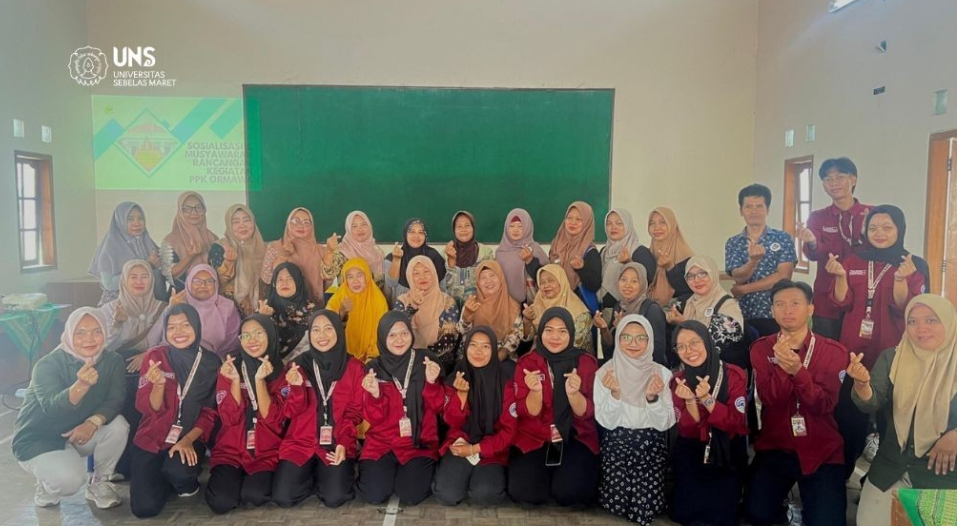
Through the 2025 Student Organization Capacity Strengthening Program (Program Penguatan Kapasitas Organisasi Kemahasiswaan or PPK Ormawa), the Student Executive Board of the UNS Faculty of Agriculture implemented a program entitled Lokawira Mandiri: Empowering MSMEs through Local Commodity Value-Added Development and Business Institution Strengthening toward an Inclusive and Sustainable Agrosociopreneur Village. The program took place in Malanggaten Village, Karanganyar Regency, and targeted local MSMEs and community members to strengthen entrepreneurship based on local economic potential.
The local start-up assistance provided included training in business management, financial management, marketing, branding, digital marketing, and digital financial literacy. Business owners also received support in developing products from local commodities, including turning rice into higher-value products such as rice-based cireng, gipang, and rice crackers. These activities provided community members with practical knowledge and skills to start or develop their businesses.
The program has thematic links to UNS research entitled “Readiness for Digital Financial Transformation: The Case of Micro, Small and Medium Enterprises in Indonesia”. This study, which surveyed 411 Indonesian MSMEs, highlights the importance of technological knowledge, market demand, and business owners’ education in preparing for digital transformation. These research themes help explain the importance of digital literacy and stronger business management skills for local MSMEs. However, a direct link between the research findings and the implementation of Lokawira Mandiri would need to be confirmed through program documentation.
The program also strengthened local business institutions by involving MSME communities, village-owned enterprises (Badan Usaha Milik Desa or BUMDes), and the Family Welfare Movement (Pemberdayaan Kesejahteraan Keluarga or PKK). This collaborative approach supports financial sustainability by improving business management and marketing, while also promoting social sustainability through the economic empowerment of rural communities. Lokawira Mandiri therefore demonstrates how UNS provides assistance to the local community through relevant education or resources to help develop financially and socially sustainable businesses.
Source : BEM FP UNS Empowers MSMEs in Malanggaten Village through the 2025 PPK Ormawa Program — UNS
2. Transforming Batik Manggar Blora through Business Management Assistance, Product Innovation, and Digital Marketing
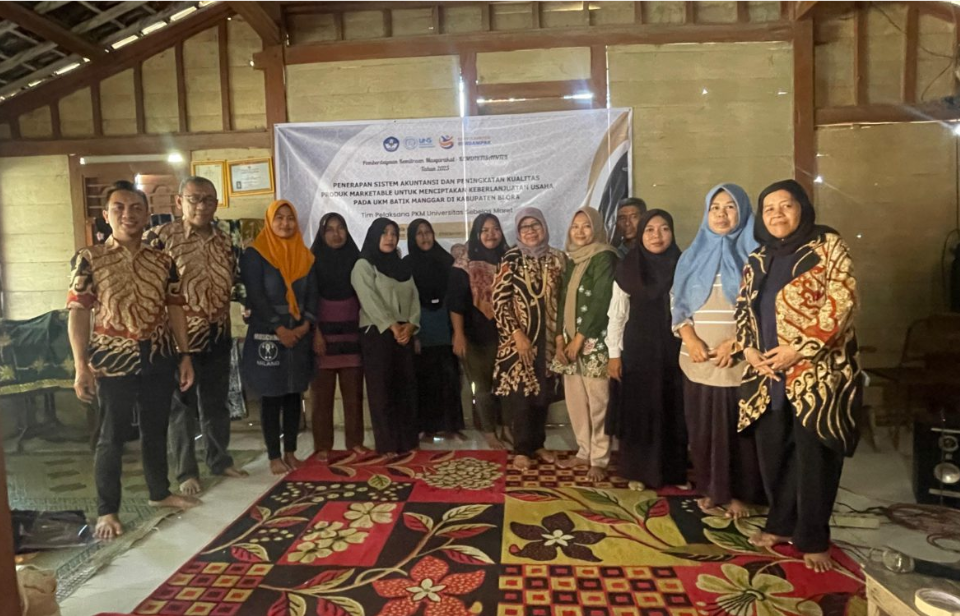
In 2025, the UNS Faculty of Economics and Business, through its Community Partnership Program team, supported the development of Batik Manggar, a local batik enterprise in Blora Regency. The program aimed to strengthen the local batik business’s competitiveness by improving business management, product innovation, production technology, and marketing.
The local start-up assistance included guidance on accounting systems, product development using the paper-stamp technique, use of production equipment, and marketing through websites, social media, and e-commerce platforms. This support provided practical knowledge and skills to improve operational efficiency and help the business reach a wider market.
The activity has thematic links to UNS research entitled “Readiness for Digital Financial Transformation: The Case of Micro, Small and Medium Enterprises in Indonesia”, particularly regarding digital readiness and stronger MSME management capacity. The research highlights the role of technological knowledge and market demand in supporting digital transformation. These themes are relevant to developing accounting systems and digital marketing at Batik Manggar, although the direct application of the research findings in this program has not been confirmed.
Through assistance in management, product innovation, production technology, and marketing, UNS helps local businesses strengthen their capacity and improve their prospects for financial sustainability. Developing the batik enterprise may also support social sustainability by empowering business owners and preserving skills within the local creative industry. This program shows UNS’s institutional support through relevant education and resources to help develop financially and socially sustainable businesses.
3. Supporting Ratu Botani Solo Herbal MSME through Product Quality Improvement and Development
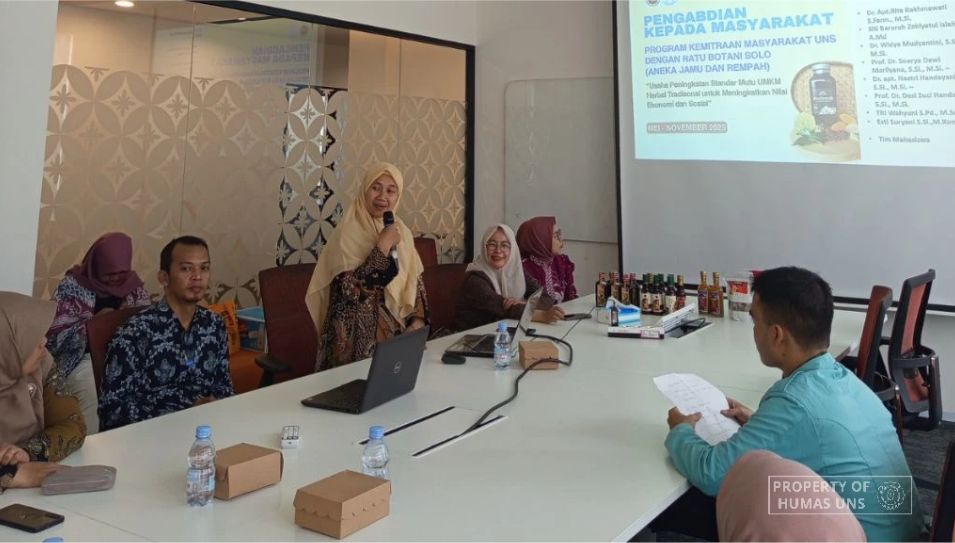
UNS, through a community engagement team from the Faculty of Mathematics and Natural Sciences, assisted Ratu Botani Solo, a local herbal MSME, in improving the quality and competitiveness of its products. This activity supported a local business by applying academic knowledge and technical expertise relevant to business owners’ needs.
The nonfinancial assistance included education on raw material selection, extraction methods, production processes, quality control, and herbal product development. This guidance helped the business owner understand the technical aspects required to produce quality products and respond to market needs.
This business development activity can be discussed in the context of UNS research entitled “From Social Trust to Halal Industry Dynamic: The Synergy of Islamic Social Capital and Financial Capability in Small Enterprises Sectors”. The research examines the relationship between social capital, financial capability, and small business development. These themes may provide a broader context for understanding the importance of business capacity and social relationships in supporting business sustainability.
In addition to improving product quality, social engagement involving Yayasan Disabilitas Anugerah Colomadu adds a social dimension to business development through community involvement. This supports the goal of fostering socially sustainable businesses. Overall, the assistance provided to Ratu Botani Solo represents local start-up assistance through relevant education and technical assistance, focusing on knowledge transfer, technical guidance, and product development rather than direct business financing.
Source: FMIPA UNS Provides Assistance to Ratu Botani Solo Business Owner — UNS
4. UKM Go Live: Digital Marketing Training for Natural-Dye Batik MSMEs in Klaten
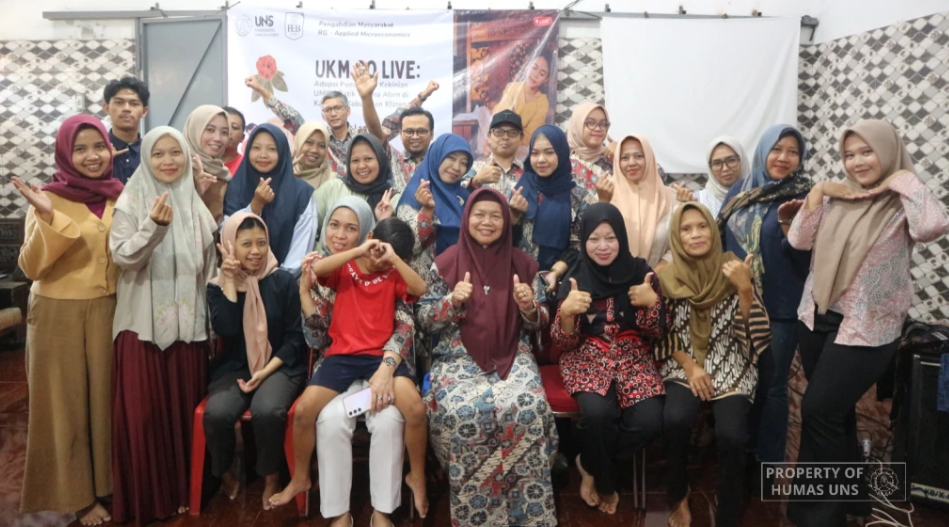
In May 2025, the Applied Economics Research Group of the UNS Faculty of Economics and Business organized a community engagement activity for natural-dye batik MSMEs in Gemblegan Village, Klaten Regency. The activity focused on improving digital marketing skills so that local business owners could use online marketing channels more effectively.
The local start-up assistance included digital marketing training, practical demonstrations of product promotion through TikTok Live, and guidance on social media marketing strategies. Through hands-on practice, participants learned how to introduce their products, interact with potential customers, and use digital platforms to expand their market reach.
The activity is thematically related to UNS research entitled “Readiness for Digital Financial Transformation: The Case of Micro, Small and Medium Enterprises in Indonesia”. The study highlights the importance of technological knowledge and market demand in MSMEs’ readiness for digital transformation. Although UKM Go Live focuses on digital marketing rather than digital financial transformation, both initiatives emphasize strengthening technological knowledge to help businesses adapt to changing market conditions.
The training supports financial sustainability by improving marketing skills and creating opportunities to reach more customers. Developing natural-dye batik businesses may also help sustain local economic activities based on locally produced goods. By providing relevant education to local business communities, UNS contributes to local start-up support for financially and socially sustainable businesses. A direct connection between the research findings and the training content should be confirmed before the activity is described as a direct application of the research.
5. Yogurt Processing Training for Women Farmers in Brajan Village, Boyolali
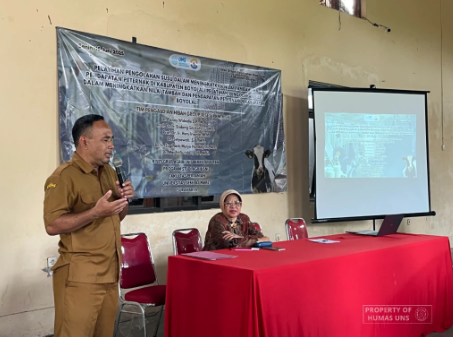
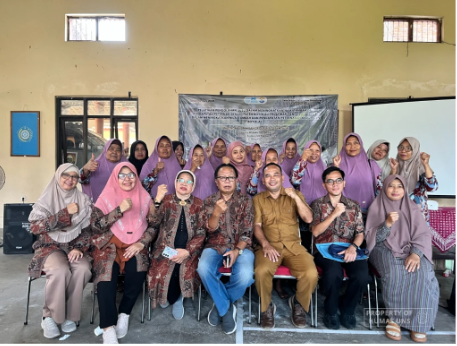
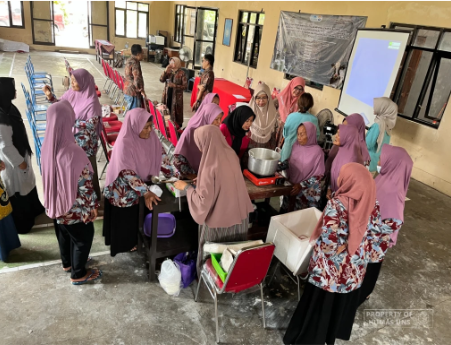
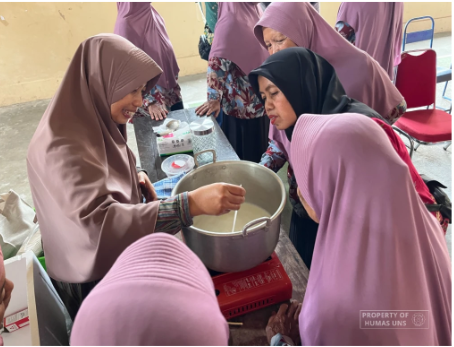
On June 16, 2025, the Sustainable Agribusiness Research Group of UNS organized yogurt-processing training for a Women Farmers Group (Kelompok Wanita Tani or KWT) in Brajan Village, Boyolali Regency. The activity aimed to increase the added value of local milk by developing food-processing skills and diversifying products.
The training covered pasteurization, fermentation, flavor development, hygienic packaging, and product marketing. Through knowledge transfer and practical processing sessions, participants gained skills that could be used to develop dairy products as business opportunities based on local resources.
This approach to women’s economic empowerment has thematic links to research entitled “Economic Empowerment of Coastal Female Farmers on the North Coast of Java through Implementing CSR Program”. The study examines women’s economic empowerment through farmer group organization, training, group development, and access to facilities and markets. These themes provide relevant context for understanding the role of capacity building and market access in women’s economic empowerment. However, the research was conducted in Pangkalan Village, Rembang Regency, and should not be presented as the direct basis for the KWT training in Boyolali without evidence of a connection between the research and the program.
The yogurt training supports financial sustainability by diversifying products and increasing the potential added value of dairy products. Women farmers’ involvement may also strengthen social sustainability by improving productive skills and creating opportunities for community-based economic activities. This activity represents local start-up assistance through relevant education and technical resources, helping local communities develop businesses based on local economic potential.
6. Tempe Chips Workshop for the Community of Gaum Village, Karanganyar
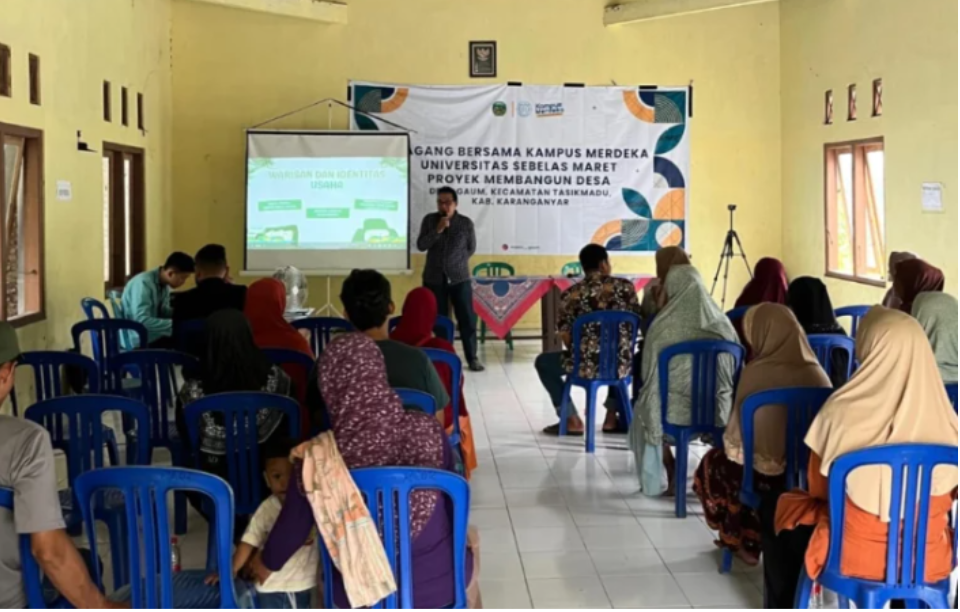
On April 26, 2025, students from the UNS Faculty of Economics and Business organized a tempe chips workshop in Gaum Village, Karanganyar Regency. The activity targeted MSME owners and homemakers, introducing opportunities to develop higher-value processed food products from local ingredients.
The workshop included practical demonstrations of tempe processing and knowledge sharing about production methods. It provided practical entrepreneurship education to community members, particularly by introducing ways to turn local raw materials into products that could potentially be marketed as home-based businesses.
These practical skills can be conceptually linked to UNS research entitled “Economic Empowerment of Coastal Female Farmers on the North Coast of Java through Implementing CSR Program”. The research highlights the role of training and capacity building in supporting women’s economic empowerment. This theme is relevant to providing productive skills for homemakers, although the research setting and beneficiaries differ from those involved in the Gaum Village workshop.
The workshop supports local start-up assistance through relevant education, helping community members build skills to develop value-added products. These skills may broaden their economic opportunities and support the sustainability of community-based businesses. For this indicator, the focus is on nonfinancial education and training. Evidence of UNS’s institutional involvement is also important to demonstrate that the activity represents university support for the local community.
Source: FEB UNS Students Hold Tempe Chips-Making Workshop in Gaum Village, Karanganyar — UNS
Conclusion
UNS activities in 2025 demonstrate support for local communities through entrepreneurship education, technical training, business management assistance, product innovation, and marketing development. These programs reached village-based MSMEs, creative industry businesses, women’s groups, and enterprises based on local economic resources.
Relevant UNS research, including “Readiness for Digital Financial Transformation: The Case of Micro, Small and Medium Enterprises in Indonesia”, “Economic Empowerment of Coastal Female Farmers on the North Coast of Java through Implementing CSR Program”, and “From Social Trust to Halal Industry Dynamic: The Synergy of Islamic Social Capital and Financial Capability in Small Enterprises Sectors”, provides research themes that may help inform approaches to business capacity development. However, using these studies as the research basis for specific activities requires evidence of a connection between the research and program implementation.
Overall, these six activities illustrate how UNS, as an institution, provides local start-up assistance through relevant education or resources to help local communities establish and develop financially and socially sustainable businesses.