

SDG 11 In Number
University expenditure (IDR)
1,561,027,263,159
University expenditure on arts and heritage (IDR)
220,320,172,206
11.2.4 Public Access to Green Spaces
Public Access to Green and Open Space
Universitas Sebelas Maret (UNS) provides permanent, free, and unrestricted public access to its main campus grounds in Kentingan, Surakarta, including green open spaces, landscaped gardens, pedestrian pathways, and outdoor recreational facilities. As an open campus, UNS allows the general public to enter and enjoy its outdoor environment without paying an entrance fee. These spaces are available not only to students and university staff but also to local residents and visitors.
The university’s green open spaces serve multiple purposes, including recreation, physical exercise, outdoor learning, relaxation, and social interaction. From the lakeside environment and campus forests to faculty gardens, jogging tracks, and pedestrian-friendly areas, these facilities provide the community with accessible, environmentally friendly public spaces. By providing free, permanent public access, UNS contributes to SDG 11: Sustainable Cities and Communities, particularly by promoting inclusive, safe, accessible, and sustainable public spaces that enhance community well-being and quality of life.
1. UNS Lake – Public Recreation and Community Interaction
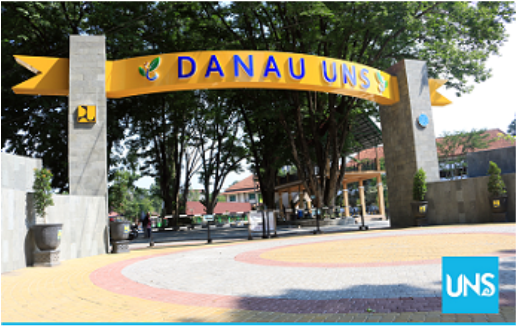
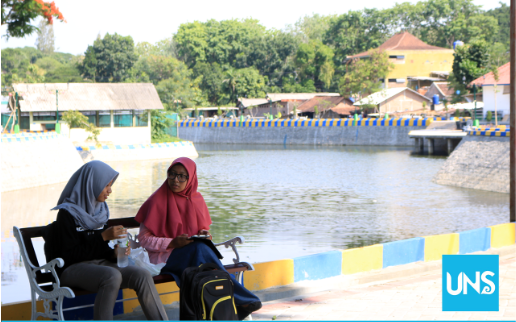
UNS Lake, located within the Kentingan Campus of Universitas Sebelas Maret (UNS) in Surakarta, is one of the university’s prominent green open spaces. Surrounded by trees and natural vegetation, the lake offers a peaceful outdoor space for students, university staff, and the general public. With free public access, visitors can walk, relax, read, and spend time outdoors while enjoying the natural landscape.
Beyond recreation, UNS Lake serves as a shared public space that encourages social interaction and community engagement. Visitors can gather, have informal discussions, and enjoy outdoor activities in a comfortable natural setting. The lake also supports environmental sustainability by facilitating water infiltration and providing habitat for aquatic biodiversity. By combining recreational, social, and ecological functions, UNS Lake provides inclusive green spaces for the wider community and contributes to SDG 11: Sustainable Cities and Communities.
References:
2. UNS FISIP Forest – Green Space for Social and Cultural Activities
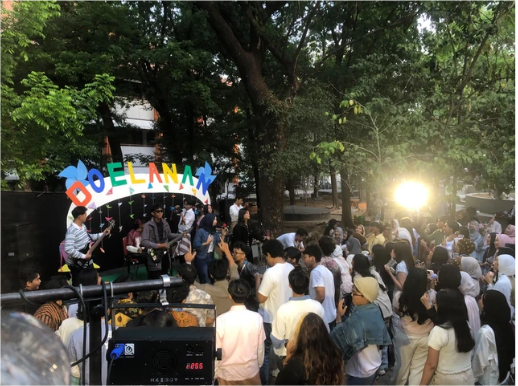
The UNS FISIP Forest (Hutan FISIP) is a green open space located within the Faculty of Social and Political Sciences at UNS. With shady trees and natural surroundings, the area offers an outdoor space for relaxation, informal gatherings, and social interaction. Its green, comfortable atmosphere makes it a shared space where students and visitors can take a break from daily activities while enjoying the campus environment.
Beyond recreation, the FISIP Forest can host cultural and community activities. As reported in the article “Ketika Hutan FISIP Berubah Jadi Halaman Bermain,” the area hosted Doelanan, an arts performance organized by students from the Communication Science program. The event transformed the green space into a lively cultural gathering place where participants could express their creativity, showcase their talents, and strengthen social connections. This demonstrates how campus green spaces can support cultural expression, community engagement, and inclusive social activities, contributing to SDG 11 objectives.
References: Kumparan – Ketika Hutan FISIP Berubah Jadi Halaman Bermain
3. Healthy Garden – Faculty of Medicine
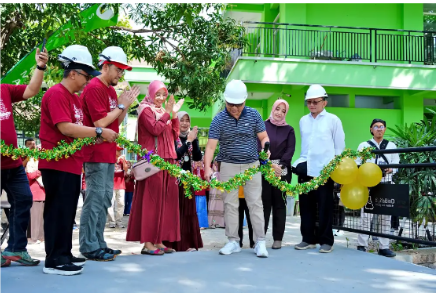
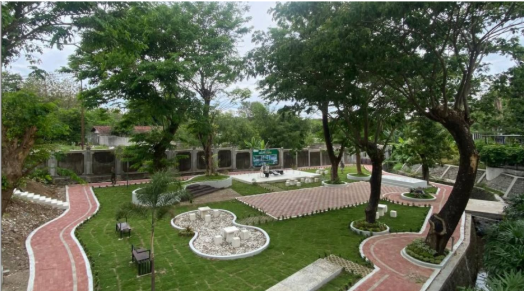
Healthy Garden is a green open space developed by the Faculty of Medicine at Universitas Sebelas Maret (FK UNS), located east of the Rahmi Mosque on the UNS campus in Surakarta. Officially inaugurated on September 6, 2025, the garden was established through collaboration between FK UNS and its alumnus, Dr. Bayu Dwi Siswanto, M.Si., founder of PT Syifa Bioderma. The facility features landscaped greenery, a walking track, and outdoor exercise equipment, providing a comfortable environment for physical activity and relaxation.
The faculty developed the garden as part of its commitment to creating a healthy, comfortable learning environment. Its green landscaping and recreational facilities encourage outdoor activity, support physical well-being, and provide opportunities for informal interaction among visitors. As part of UNS’s broader green campus environment, Healthy Garden contributes to accessible outdoor recreational spaces and supports healthier, more sustainable communities under SDG 11.
Reference: Faculty of Medicine UNS – Healthy Garden Inauguration
4. Justicia Garden – Faculty of Law
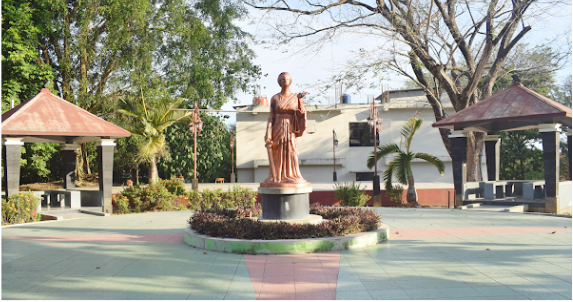
Justicia Garden (Taman Justicia) is a green open space located in Building 1 of the Faculty of Law at Universitas Sebelas Maret (UNS), Surakarta. The garden features four gazebos surrounding a statue of Dewi Themis, the symbol of justice. Its landscaped greenery and shaded seating areas create a comfortable outdoor environment within the faculty grounds.
The four gazebos provide spaces for students to work on group assignments, hold discussions, and relax amid the greenery. Beyond its aesthetic value, the garden supports informal learning, recreation, and social interaction by providing an outdoor alternative to conventional indoor study areas. The availability of such green spaces on campus reflects UNS’s efforts to create comfortable, inclusive surroundings that support community interaction and contribute to SDG 11: Sustainable Cities and Communities.
Reference: Faculty of Law UNS – Taman Justicia
5. UNS Campus Jogging Track – Public Access to Green Recreational Spaces

Universitas Sebelas Maret (UNS) provides an outdoor jogging track on its Kentingan Campus in Surakarta, offering an accessible recreational space for students, university staff, and the general public. One popular route is an approximately 1.2-kilometer loop around the Rectorate area and other parts of the campus. Visitors can access the route from several points, including UNS Lake, Lembah Teknik (Engineering Valley), and the area in front of the Rectorate Building.
The jogging track features paved pathways lined with mature trees and lush vegetation, creating a shaded, refreshing outdoor environment. Local residents and visitors regularly use it for jogging, walking, and other physical activities, particularly in the morning and late afternoon. By providing free public access to this recreational area, UNS encourages healthy lifestyles, promotes social interaction, and expands access to green outdoor spaces for the wider community. This initiative supports SDG 11 by providing accessible, inclusive public spaces that improve community well-being.
References:
6. UNS Stadium – Free Access to Outdoor Sports Facilities

UNS Stadium, located on the main Kentingan Campus of Universitas Sebelas Maret (UNS), is an outdoor sports facility that supports a range of athletic and recreational activities. The stadium features a football field, spectator stands, and surrounding outdoor areas, including pedestrian pathways and jogging facilities. Its location within the university’s green campus environment provides an outdoor setting for sports, exercise, and recreation.
The stadium’s surrounding outdoor areas and pedestrian facilities are accessible to students and the general public, offering opportunities for physical exercise and recreation without entrance fees. These spaces encourage an active lifestyle and create opportunities for social interaction among different campus users and local residents. By providing shared access to outdoor sports and recreational spaces, UNS supports community well-being and contributes to SDG 11 by promoting accessible, inclusive public spaces.
References:
7. Taman FEB Jaya – Faculty of Economics and Busines

Taman FEB Jaya is a landscaped green open space located within the Faculty of Economics and Business (FEB) at Universitas Sebelas Maret (UNS), Surakarta. The garden is part of the faculty’s outdoor environment and provides a green, comfortable setting for students, staff, and visitors to gather, relax, and interact. Its landscaped surroundings help provide green space across the university campus.
The garden also incorporates accessibility features, including a ramp that provides easier access for visitors with different mobility needs. This feature supports inclusive access to the outdoor facility and allows a wider range of campus users to enjoy the green surroundings. By providing accessible outdoor spaces, Taman FEB Jaya contributes to a more inclusive campus environment and supports SDG 11: Sustainable Cities and Communities, particularly by promoting accessible public spaces and opportunities for social interaction.
Reference: UNS Official Facebook – Taman FEB Jaya
8. UNS Boulevard Area – Public Space for Pedestrian Access, Social Interaction, and Local Economic Activities

The Boulevard Area at Universitas Sebelas Maret (UNS) in Surakarta serves as a central pedestrian corridor connecting different campus facilities. Surrounded by landscaped greenery and trees, the boulevard provides an accessible outdoor space for walking, commuting, and enjoying the campus. Its pedestrian-friendly pathways support daily mobility while offering open space for students, university staff, and the general public to enjoy the green campus environment.
Beyond its role as a pedestrian corridor, the Boulevard has become a lively community space that supports social interaction and local economic activity. Every afternoon and evening, local residents and student vendors sell a variety of food and beverages, attracting students, university staff, and visitors from the surrounding community. These activities support small-scale entrepreneurship while creating a shared space for people to gather, socialize, and enjoy the campus environment.
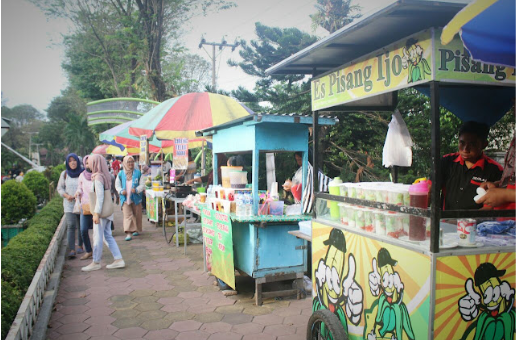
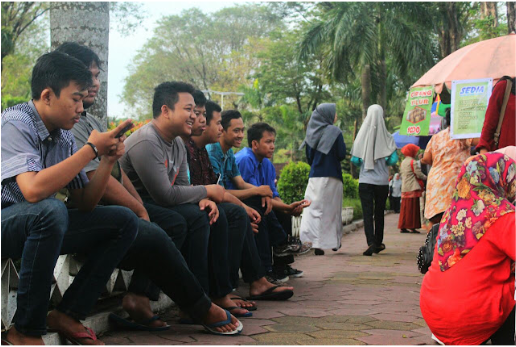
The boulevard becomes particularly lively during Ramadan, when its sidewalks host food and beverage vendors offering traditional snacks and refreshments for breaking the fast. The area attracts students and members of the public who gather to browse local food stalls, interact with vendors, and spend time together before sunset. This seasonal activity highlights the boulevard’s role as an inclusive public gathering space that supports community participation, student entrepreneurship, and local economic engagement.
By keeping its campus grounds freely accessible, UNS enables the boulevard to serve not only as a pedestrian corridor but also as a shared space for recreation, social interaction, and community-based economic activities. This multifunctional use of campus space supports SDG 11: Sustainable Cities and Communities, particularly by promoting accessible, inclusive public spaces that strengthen social connections, local economic participation, and community well-being.
References:
- UNS Green Campus – Setting and Infrastructure
- UNS Green Campus – Campus Green Spaces for Recreation and Community Activities
- Traveloka – 7 Recommendations for Takjil Hunting in Solo (Boulevard UNS)
- Radar Tegal – 7 Popular Takjil Hunting Spots in Solo During Ramadan
- https://www.lpmvisi.com/2018/05/ngabuburit-di-boulevard-uns-banyak-rasa.html
9. UNS Library Literacy Garden – Outdoor Learning and Community Interaction

The UNS Library Literacy Garden (Taman Literasi) is an outdoor learning space west of the Central Library building at Universitas Sebelas Maret (UNS) in Surakarta. Officially inaugurated on December 11, 2019, the garden was established through a grant from Bank Negara Indonesia (BNI) to enhance library services and provide an alternative learning environment outside the main library building. The facility features gazebos surrounded by greenery, creating a comfortable, refreshing setting for outdoor learning.
The garden provides an alternative space for reading, studying, group discussions, and relaxation. It also offers free Wi-Fi, allowing users to access e-books, academic journals, and other online learning resources while enjoying the outdoors. By combining green open space with educational facilities, the Literacy Garden supports outdoor learning, informal knowledge sharing, and social interaction. Its presence shows how campus green spaces can serve educational and recreational purposes while supporting a more inclusive and sustainable campus environment, in line with SDG 11.
Reference: UNS Official Website – Rector Inaugurates UNS Literacy Garden
10. Bromo Educational Forest – Public Recreation, Ecotourism, and Environmental Education

The Gunung Bromo Special Purpose Forest Area (Kawasan Hutan dengan Tujuan Khusus/KHDTK Gunung Bromo), also known as the Bromo Educational Forest, is a forest area managed by Universitas Sebelas Maret (UNS) in Karanganyar, Central Java. Covering approximately 122.78 hectares, the area was officially designated for educational and research purposes through Minister of Environment and Forestry Decree No. 177/MENLHK/SETJEN/PLA.0/4/2018. Managed by UNS through its Forestry Education and Training Unit (UPT Pendidikan dan Pelatihan Kehutanan), the forest serves as a natural learning environment for forestry education, research, training, and environmental conservation.
Beyond its academic functions, the Bromo Educational Forest has potential as a public destination for ecotourism and nature-based recreation. Activities include environmental education, nature exploration, bird watching, outdoor learning, and forest-based recreational experiences. Its pine and mahogany stands provide a natural setting for relaxation and environmental awareness activities, while its biodiversity supports ecological observation and conservation initiatives. The area also supports community engagement activities, including forest management training and programs involving local residents. These functions demonstrate how UNS manages its forest area as a multifunctional green space that connects environmental conservation, education, recreation, and community participation.
Through educational tourism and nature-based activities, the Bromo Educational Forest complements UNS’s provision of green open spaces and supports SDG 11: Sustainable Cities and Communities, particularly through environmental preservation, public engagement with natural spaces, and the promotion of sustainable community development.
References:
Conclusion
Through its open-campus approach, Universitas Sebelas Maret (UNS) provides free, permanent public access to a diverse range of green open spaces and outdoor facilities, extending beyond the university community to local residents and visitors.
By maintaining accessible green spaces and encouraging their use for various community activities, UNS contributes to a more inclusive, healthy, and sustainable environment. These initiatives demonstrate the university’s commitment to SDG 11: Sustainable Cities and Communities, particularly in promoting accessible, safe, inclusive, and sustainable public spaces that enhance community well-being and quality of life.