
SDG 6 In Number
Volume of water used in the university: Inbound (treated/extracted water) (m³)
60,056
Campus population
31,279
6.3.5 Water Conscious Planting
Water-Conscious Planting for Efficient Water Use at UNS
As part of its commitment to Sustainable Development Goal (SDG) 6: Clean Water and Sanitation, Universitas Sebelas Maret (UNS) implements various water-conscious planting initiatives to minimize water usage in campus landscaping and agricultural activities. Through sustainable greening programs, innovative research, and environmentally friendly water management practices, UNS promotes drought-tolerant plants, water-efficient planting methods, and efficient irrigation to conserve water resources and support a green, sustainable campus environment.
Using Drought-Tolerant Zoysia Grass in the Main Building Area
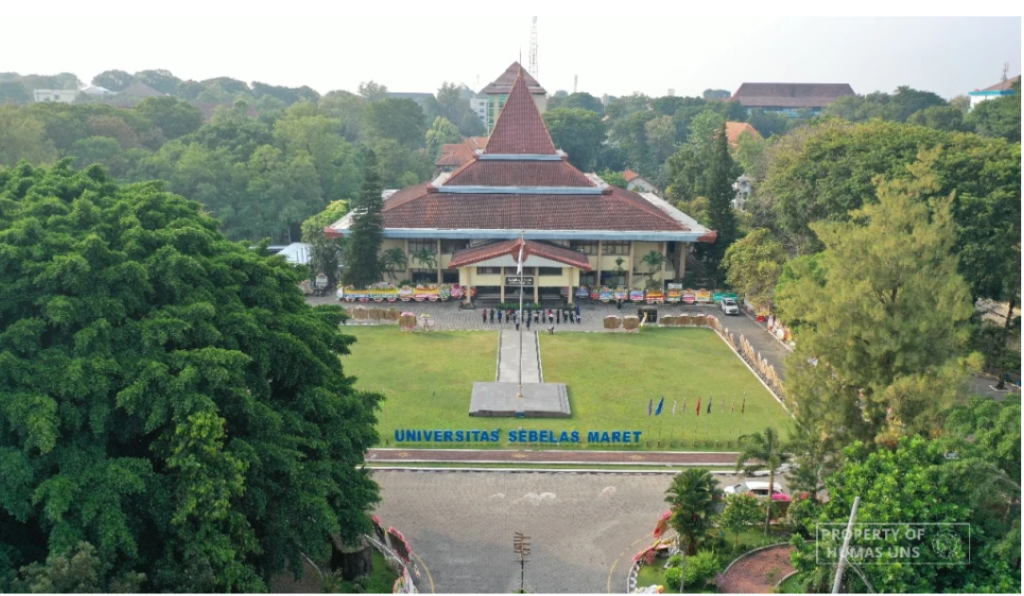
As part of its Green Campus program, Universitas Sebelas Maret (UNS) implements water-conscious landscaping practices by planting Zoysia grass in the courtyard of the Dr. Prakosa Main Building at the Kentingan Campus.
Zoysia was selected as a drought-tolerant, water-efficient grass species because it requires little water and fertilizer, especially during the dry season. It also requires minimal maintenance and can withstand regular use. The planting process involved preparing the soil using a mixture of sand, sediment from the Bengawan Solo River, and organic materials to support soil conditions and water absorption.
The result is a healthy, dense, green lawn that has remained well established for several years. Besides providing an attractive green landscape, the grass helps absorb rainwater, reduce surface temperatures, and prevent soil erosion. This initiative demonstrates UNS’s direct implementation of water-conscious planting by selecting drought-tolerant plant species to minimize water usage in campus landscaping.
Reusing Treated Wastewater for Landscape Irrigation
Beyond selecting water-efficient plants, Universitas Sebelas Maret (UNS) promotes sustainable landscape maintenance through an integrated water-recycling program that treats domestic wastewater and redirects suitable reclaimed water for non-potable landscape irrigation. This program combines centralized wastewater treatment infrastructure, a dedicated water distribution network, and decentralized water-reuse initiatives across faculty buildings.
The centralized wastewater treatment plant (WWTP) collects, treats, and distributes domestic wastewater from campus facilities through a dedicated 2.5 km pipeline network with 82 irrigation outlets. The reclaimed water is then used to irrigate campus trees and grass, with approximately 1,000–1,200 m³ of treated water used daily for landscape irrigation.
In addition to the centralized system, UNS implements decentralized water-reuse practices at the faculty and building levels. These include reusing ablution water to irrigate planted areas at the Faculty of Mathematics and Natural Sciences and the Faculty of Medicine; using treated ablution water for sprinkler irrigation at the Faculty of Agriculture; and collecting and reusing air-conditioner condensate to irrigate vertical gardens at the Graduate School.
These initiatives reduce dependence on freshwater resources for maintaining campus vegetation and green spaces while promoting more efficient water consumption. By integrating wastewater treatment, water recycling, and sustainable landscape irrigation, UNS demonstrates its commitment to responsible water management and contributes to Sustainable Development Goal (SDG) 6: Clean Water and Sanitation through the conservation and efficient use of water resources.
Cultivating Rice and Legumes in Pots as a Water-Efficient Planting Practice
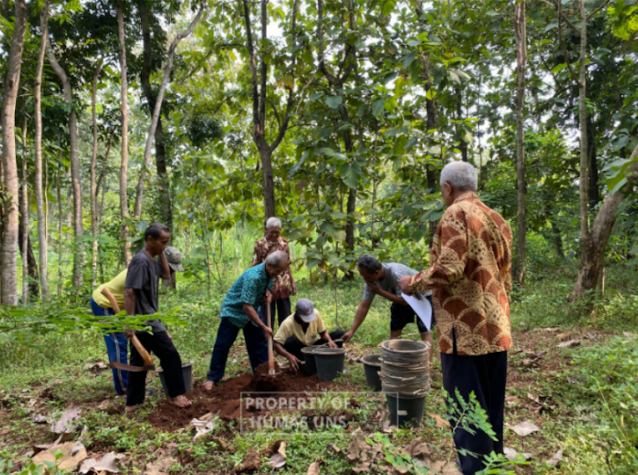
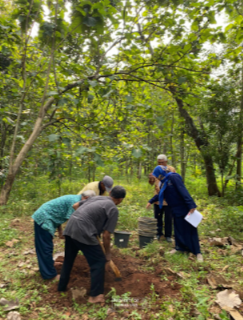
As part of its efforts to promote water-conscious planting and efficient water use in agriculture, the Food and Plantation Crops Research Group from the Agrotechnology Study Program, Faculty of Agriculture, Universitas Sebelas Maret (UNS), developed a method of growing rice and various types of legumes in pots in Bakaran Hamlet, Sukosari Village, Jumantono District, Karanganyar.
This cultivation method reduces water use by letting farmers manage each plant’s water needs more precisely. The pot-based system enables better control over water quantities, watering frequency, and irrigation methods, thereby reducing unnecessary water consumption. This approach is also suitable for areas with limited land availability and urban farming.
Through this research, UNS contributes to developing water-efficient planting practices and promotes responsible water use in agriculture. It further demonstrates the university’s commitment to environmentally friendly cultivation methods that support water conservation.
Contribution to Sustainable Water Management
Through its water-conscious planting initiatives, Universitas Sebelas Maret demonstrates its commitment to minimizing water use by selecting drought-tolerant plant species, maintaining sustainable campus landscaping, reusing wastewater for landscape irrigation, and conducting water-efficient agricultural research. These initiatives combine responsible planting practices with sustainable water management to reduce freshwater consumption while maintaining green spaces and supporting environmentally friendly agricultural activities.
By promoting water-efficient landscaping and planting practices, UNS contributes to SDG 6: Clean Water and Sanitation, particularly by responsibly using and conserving water resources for a more sustainable campus environment.