

SDG 3 In Number
Number of graduates
6.192
Number of graduates in health professions
927
3.3.7 Mental Health Support for Staff
Promoting Mental Health Awareness and Facilitating Access to Psychological Support
Universitas Sebelas Maret (UNS) recognizes mental health and psychological well-being as important components of a healthy, supportive, and inclusive working environment. Through mental health awareness initiatives, counseling and assistance pathways, and access to professional psychological and medical services, UNS seeks to promote good mental health and help individuals obtain appropriate support when needed. These efforts are relevant to SDG 3: Good Health and Well-being, particularly the promotion of mental well-being and access to appropriate health services. The following initiatives illustrate UNS’s approach to mental health promotion and support, with particular attention to the availability of services for lecturers and education personnel.
A. Active Promotion of Good Mental Health
UNS promotes mental health awareness through organizational capacity-building and public education. These initiatives aim to improve understanding of mental health issues, encourage early help-seeking, reduce stigma, and foster a supportive university environment. Mental health education and awareness are important components of promoting good mental health among members of the university community, including staff.
1. Establishment and Training of Mental Health Agents Across Faculties and Work Units
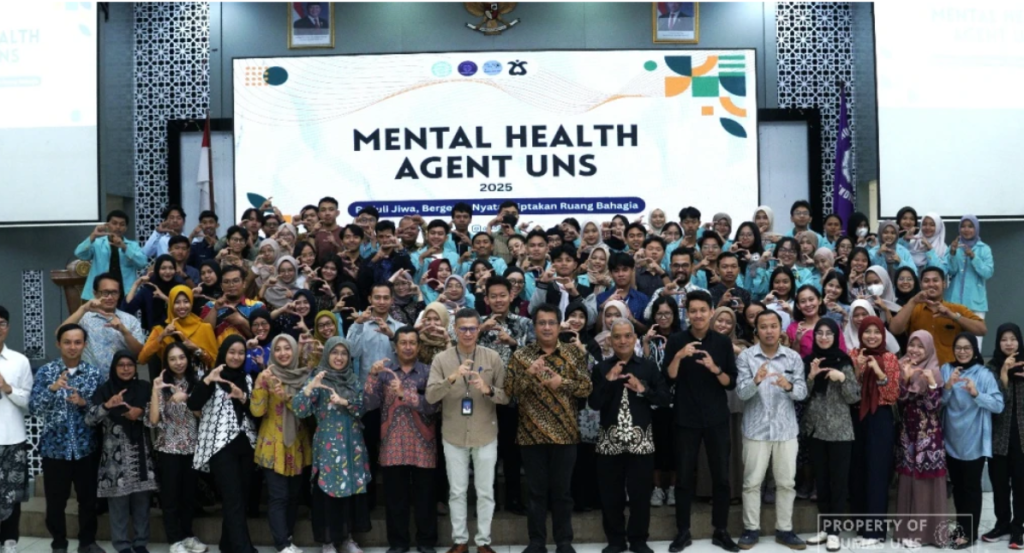
On May 9, 2025, UNS organized the Establishment and Training of Mental Health Agents (MHA) at the Faculty of Teacher Training and Education (FKIP). The initiative was part of the university’s efforts to build a campus environment that is more aware of mental health issues and responsive to psychological challenges.
The Mental Health Agent initiative was designed to establish agents across faculties and strengthen mental health awareness within the university community. The training introduced mental health concepts and information about available counseling services, while encouraging participants to contribute to a more supportive campus environment. By developing mental health awareness and peer-support networks, UNS seeks to foster a culture of care, early recognition of psychological challenges, and appropriate help-seeking.
Source: UNS — UNS Forms Mental Health Agents for Every Faculty
2. FK UNS Talks: Public Education on Bipolar Disorder
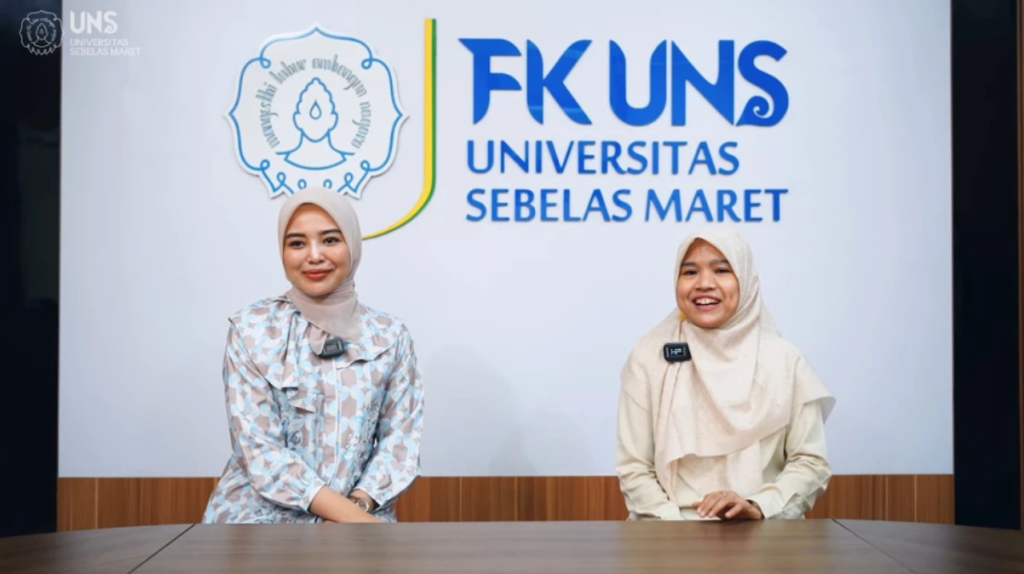
Complementing its mental health awareness initiatives, UNS disseminates professional mental health information through digital platforms to broaden access to educational resources.
On August 5, 2025, the Faculty of Medicine at UNS held an online edition of FK UNS Talks through its official YouTube channel, focusing on bipolar disorder and mental health awareness. The session featured Dr. Rohmaningtyas H.S., a psychiatrist and Head of the Psychiatry Study Program at the Faculty of Medicine. The discussion covered the characteristics of bipolar disorder, the importance of professional diagnosis, treatment approaches, and the role of family and social support.
By making the session available on YouTube, UNS provided a publicly accessible source of mental health information that staff and other members of the university community could access. The discussion encouraged viewers to avoid self-diagnosis, understand the importance of professional assessment, reduce stigma, and seek appropriate assistance when necessary.
Source: UNS — FK UNS Discusses the Importance of Mental Health
Together, the Mental Health Agent initiative and FK UNS Talks demonstrate UNS’s efforts to promote good mental health through capacity-building and accessible public education. These activities contribute to a more informed and supportive university environment and align with SDG 3: Good Health and Well-being, particularly the promotion of mental well-being.
B. Access to Free Mental Health Support
Access to appropriate assistance is an important part of mental health support for staff. UNS has established institutional assistance and healthcare pathways that can help members of the university community obtain professional support when facing situations that affect their well-being. The eligibility requirements, scope of services, and fee arrangements must be considered when determining which pathways qualify as free mental health support for staff.
1. Psychological Counseling and Assistance through Satgas PPK UNS
UNS provides a formal assistance mechanism through its Sexual Violence Prevention and Response Task Force (Satgas PPK UNS). According to its official assistance guidelines, eligible beneficiaries include victims and witnesses who are students, lecturers, education personnel, campus residents, and other members of the campus community.
The assistance provided by Satgas PPK UNS includes counseling by UNS psychologists, health services through UNS Hospital, legal assistance from the Faculty of Law, advocacy by a trusted companion, and social and spiritual guidance. For individuals with disabilities, referrals are coordinated with the UNS Disability Studies Center to help ensure that appropriate assistance is provided. Assistance is provided with the consent of the victim or witness, with alternative consent arrangements applied when the individual is unable to provide consent.
By explicitly including lecturers and education personnel among its beneficiaries, Satgas PPK UNS establishes an institutional pathway through which staff members who experience sexual violence or related situations can seek psychological counseling and other forms of assistance. This mechanism supports access to professional help and contributes to a safer and more supportive working environment.
2. Access to Health Services through UNS Medical Center
UNS operates the UNS Medical Center to provide healthcare services to members of the university community, including lecturers and employees. The center serves as an institutional point of contact for individuals who require medical attention and information about appropriate healthcare services.
For staff members who experience health concerns, the Medical Center can provide an initial point of contact for healthcare and information about further assistance when needed. Where a person’s needs exceed the scope of primary healthcare, further evaluation or referral may be appropriate, depending on the individual’s condition and the available services.
Source: UNS — Medical Center
3. Psychological Services through the Psychological Service Unit (ULAPSI)
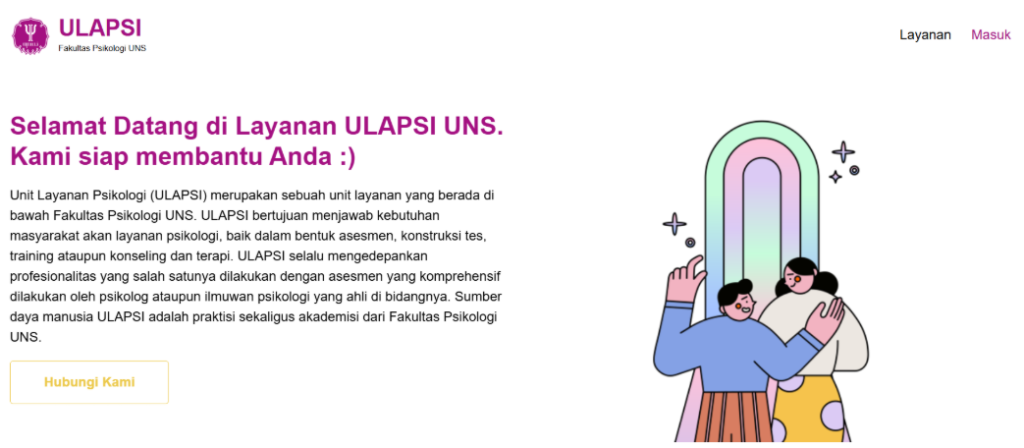
UNS also provides professional psychological services through the Psychological Service Unit (ULAPSI) at the Faculty of Psychology. ULAPSI offers psychological counseling and assessment services for individuals seeking professional support.
Its listed services include psychologist counseling and various psychological assessments, with applicable fees published on its official website. These professional psychological services provide an additional pathway for individuals who need consultation or assessment beyond general healthcare services.
For staff members eligible to access these services, ULAPSI may offer an additional option for obtaining professional psychological assistance. The unit’s service information can also help individuals understand the available support and applicable service requirements.
Source: ULAPSI — Official Service List
These assistance and healthcare pathways demonstrate the availability of institutional support mechanisms within UNS. To establish compliance with the specific requirement for access to free mental health support, additional documentation should confirm which psychological services are available to staff without charge.
C. Access to Fee-Based Mental Health Support
In addition to mental health awareness and institutional assistance pathways, access to professional psychological assessment and specialized medical care is important for individuals who require further evaluation or treatment. UNS provides psychological services through the Psychological Service Unit (ULAPSI) and specialist medical services through UNS Hospital (RS UNS). These services offer potential pathways for further care, subject to eligibility requirements, professional recommendations, referral procedures, and applicable fees.
1. Fee-Based Psychological Assessment and Counseling through ULAPSI
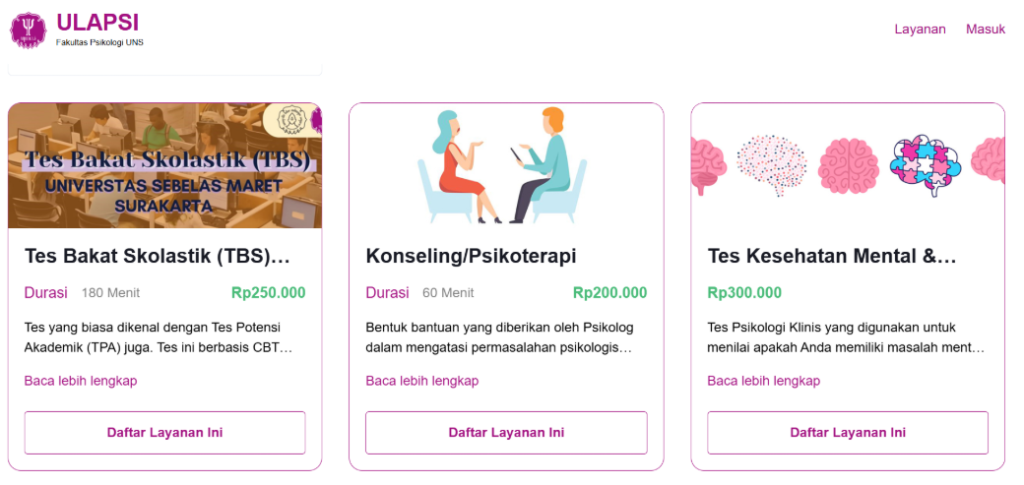
UNS provides professional psychological services through the Psychological Service Unit (ULAPSI) at the Faculty of Psychology. ULAPSI offers psychologist counseling and a range of psychological assessments for individuals who require professional consultation or a more detailed evaluation of their psychological needs.
According to ULAPSI’s official service listing, psychologist counseling costs IDR 200,000 for a 60-minute session. Other services include scholastic aptitude assessments, health-related psychological assessments, and additional psychological testing, with fees determined by the type of service.
For individuals who require further assessment or follow-up, ULAPSI provides a pathway to more detailed psychological evaluation and professional guidance. These fee-based services offer an additional option for obtaining psychological support according to individual needs and the recommendations of relevant professionals.
Source: ULAPSI — Official Service List
2. Referral to Specialized Medical Care through UNS Hospital
When an individual’s health needs require further medical assessment or specialized treatment, a hospital referral may be necessary. UNS Hospital (RS UNS) provides specialist medical services and serves as a referral destination for patients who require care beyond the scope of initial healthcare services.
The UNS Medical Center provides primary healthcare services, while ULAPSI provides psychological counseling and assessment. When further evaluation or treatment is needed beyond the services available at these units, individuals may be directed to an appropriate healthcare facility or specialist, depending on their clinical needs and the relevant referral procedures.
For individuals who require specialist mental health care, referral to the appropriate specialist at UNS Hospital can provide a pathway to further medical evaluation and treatment. Specialist services complement the university’s psychological support system by connecting initial consultation and assessment with more specialized care when needed.
Source: UNS Hospital (RS UNS)
Together, these services offer complementary pathways to professional assistance based on individual needs. This evidence would help demonstrate how staff can access fee-based mental health support when further psychological assessment or specialized treatment is needed.
Conclusion
UNS promotes mental health awareness through capacity-building initiatives and public education while maintaining institutional pathways to psychological assistance, healthcare, and specialized medical services. The establishment of Mental Health Agents and the dissemination of professional mental health information through FK UNS Talks contribute to awareness, early help-seeking, and a more supportive university environment. Satgas PPK UNS provides a formal assistance mechanism that explicitly includes lecturers and education personnel, while ULAPSI and RS UNS offer pathways to professional psychological and medical care, subject to their respective eligibility requirements and fees.
These initiatives contribute to SDG 3: Good Health and Well-being by supporting mental health awareness, promoting psychological well-being, and facilitating access to appropriate care. This demonstrates how UNS supports staff mental health as part of its commitment to a healthy, safe, and inclusive university environment.