
SDG 8 In Number
Number of employees
3.760
Number of academic staff
1.950
University expenditure (IDR)
1.850.122.866.706
Number of students
27.604
Number of students with work placements for more than a month
12.832
Number of employees on contracts of over 24 months
3.760
8.2.3 Employment Policy on Discrimination
Employment Policy on Ending Discrimination
Universitas Sebelas Maret (UNS) has established a clear policy that emphasizes its commitment to non-discrimination in the workplace and across the campus environment, as outlined in Rector Regulation Number 48 of 2023 on the Prevention and Handling of Sexual Violence. This policy is derived from the Minister of Education, Culture, Research, and Technology Regulation Number 55 of 2024 concerning the prevention and handling of sexual violence in higher education institutions. The regulation functions not only as a tool for preventing and addressing cases of sexual violence but also represents UNS’s concrete efforts to create a safe, equitable, and discrimination-free environment for both work and study. University leaders emphasize that this policy is not merely a formal document, but a tangible demonstration of management’s commitment to ensure that all employees, regardless of religion, gender, age, social background, or status, have equal rights and opportunities to work and develop professionally.
According to this regulation, all members of the campus community—including lecturers, educational staff, students, and international staff—receive equal protection without discrimination based on religion, gender, age, or other social backgrounds. UNS also provides a clear complaint mechanism, victim support services, and sanctions for violators, ensuring that every individual has legal certainty and a sense of security while working or studying.
Additionally, UNS has the Board of Trustees Regulation Number 04 of 2021 on UNS Employees. Article 12, paragraph (2), states: “The non-civil servant employment system as referred to in paragraph (1) is open, based on performance, and without discrimination based on ethnicity, religion, race, or group.” This article explicitly confirms a policy to ensure that the non-civil servant employment system is free from discrimination.
Another regulation containing anti-discrimination principles is Rector Regulation Number 38 of 2023 on Employee Management. Article 3 states that “employee management is based on a non-discriminatory principle.” Further, Article 4, paragraph (3), and its explanation in Article 5 describe the core value “harmonious” as “caring for and respecting differences” and “respecting everyone without distinguishing backgrounds.” This includes valuing differences, which can be interpreted as a means of opposing discrimination. Moreover, Article 5, paragraph (2), letter d, elaborates that the core value “harmonious” means “caring for and respecting differences, including respecting everyone regardless of their background.” This indicates a clear policy to prevent workplace discrimination by requiring all employees to respect one another, regardless of their religion, sexual orientation, gender, age, or refugee status. The policy emphasizes the importance of valuing diversity to create an inclusive and non-discriminatory work environment.
With these policies in place, UNS reaffirms that the principles of equality, fairness, and respect for human rights form the main foundation for employment and academic governance, aligning with SDG 8 standards for fair and inclusive employment practices.
Education and Awareness Initiatives
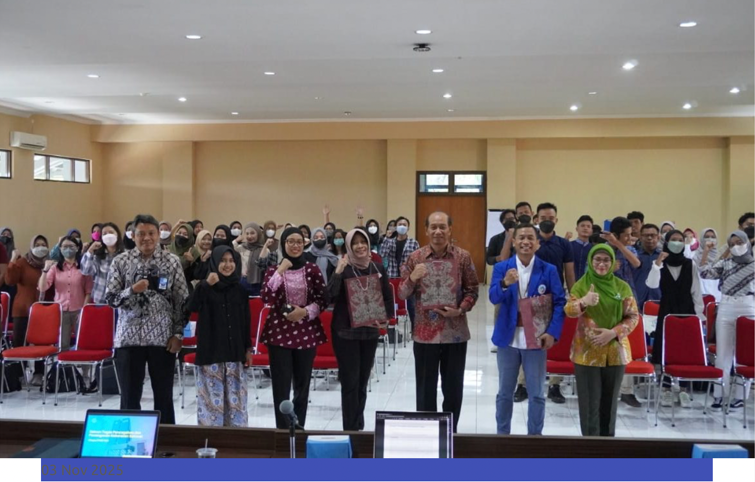
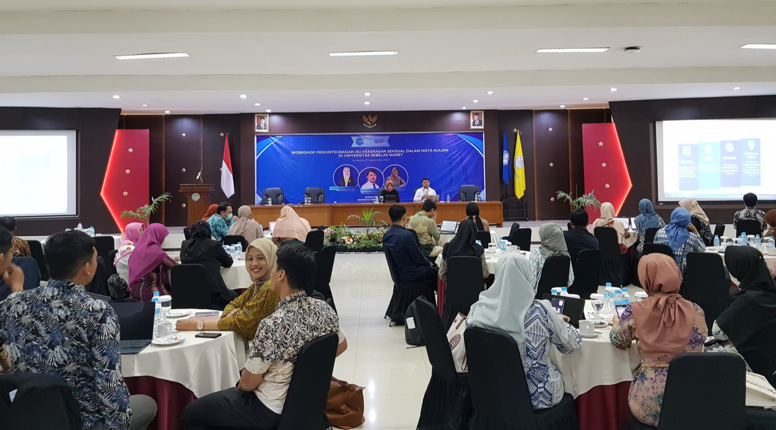
UNS goes beyond regulations by actively organizing seminars and socialization programs. These include sex education seminars and workshops on integrating sexual violence issues into academic courses. These activities serve as important platforms to introduce the content of the regulations, raise awareness among the academic community about the importance of a safe campus environment, and train sensitivity in recognizing and preventing potential sexual violence. As a result, the UNS sexual violence prevention policy is not only a formal document but is also actively implemented through education, dialogue, and participation of the entire campus community.
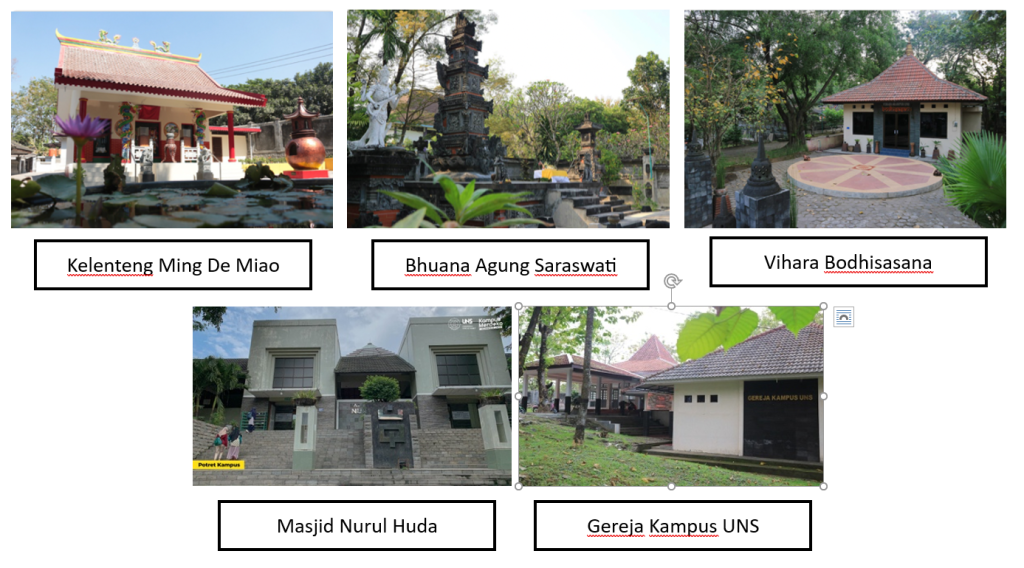
Furthermore, UNS demonstrates support for interfaith harmony by providing worship facilities for all religions, including Islam, Christianity, Catholicism, Hinduism, Buddhism, and Confucianism. These six places of worship serve both the spiritual needs of the academic community and as a symbol of unity in diversity. The campus’s experiences of interfaith harmony reflect values of tolerance and coexistence, in line with UNS’s reputation as the “Fortress of Pancasila,” upholding unity within diversity.
Future Commitment
Moving forward, UNS is committed to sustaining these programs through long-term measures. Diversity and inclusion education and training will be conducted regularly, complaint mechanisms will be strengthened through the involvement of independent institutions, and compliance audits will be conducted routinely to ensure effective policy implementation. The university also plans to integrate anti-discrimination principles into its workplace culture and reward systems, ensuring that inclusivity becomes not only a policy but a shared value. Through this sustainable strategy, UNS aims to remain a fair, safe, and dignified workplace for all employees.
Employment Policies Ensuring Non-Discrimination at Universitas Sebelas Maret (UNS)
SDG 8 Indicator
Employment Practice
|
Policy |
Link |
Summary |
Relevant Article |
|
Law Number 13 of 2003 on Manpower |
Regulates the rights, obligations, and protection for workers and employers in Indonesia. It covers equal employment opportunities without discrimination, employment relations, wages, working hours, occupational health and safety, welfare guarantees, and protection for vulnerable groups, including women, children, and persons with disabilities. |
Articles 5 and 6: eliminate discrimination in the workplace, both in access to employment and treatment during the employment relationship. |
|
|
Law Number 7 of 1984 |
https://peraturan.bpk.go.id/Details/46978/uu-no-7-tahun-1984 |
Eliminates all forms of discrimination against women in various areas of life, including education, health, politics, employment, and social life. This ratification serves as the basis for national policies that promote gender equality and protect women’s rights. |
Article 1: ratification of CEDAW, which obliges Indonesia to remove discrimination against women, including in the workplace. |
|
Minister of Education, Culture, Research, and Technology Regulation Number 55 of 2024 |
https://peraturan.bpk.go.id/Details/305767/permendikbudriset-no-55-tahun-2024 |
Eliminates all forms of discrimination against women in various areas of life, including education, health, politics, employment, and social life. This ratification serves as the basis for national policies that promote gender equality and protect women’s rights. |
Article 13: prohibits not only physical or sexual violence but also bullying, discrimination, and intolerance. |
|
UNS Rector Regulation Number 48 of 2023 |
https://drive.google.com/file/d/1qbcbB0MB_KX0YQ0m_2BHZUlhVVJ9YBhi/view?usp=sharing |
Regulates the prevention and handling of sexual violence on campus as a follow-up to Ministerial Regulation No. 30/2021. This includes preventive measures, victim support and recovery mechanisms, and sanctions for perpetrators, supported by the Sexual Violence Task Force (Satgas PPKS). Through this policy, UNS is committed to creating a safe, equal, and non-discriminatory learning and working environment. |
Article 2: explicitly bans all forms of discrimination based on race, skin color, gender, disability, religion, political beliefs, nationality, and more. |
|
Rector Regulation Number 38 of 2023 on Employee Management |
Provides comprehensive guidance on employee management at UNS, including principles, core values, code of ethics and conduct, work culture, types and positions of employees, workforce planning, recruitment, performance management, career and competency development, rewards, transfers, and digital management. This regulation serves as the primary reference for establishing professional, transparent, fair, and performance-oriented employee management. |
|
|
|
Board of Trustees Regulation Number 04 of 2021 on Universitas Sebelas Maret Employees |
https://kantorhukum.uns.ac.id/detailDokumen/345 |
Sets provisions on status, rights, obligations, recruitment, career development, retirement age, performance targets, outsourcing, and foreign workers for UNS employees, including lecturers and administrative staff, whether civil servants or non-civil servants, with the goal of creating an open, performance-based, and non-discriminatory employment system. |
Article 12, paragraph (2): states that “the non-civil servant employment system as referred to in paragraph (1) is open, performance-based, and without discrimination based on ethnicity, religion, race, or group.” |