
SDG 6 In Number
Volume of water used in the university: Inbound (treated/extracted water) (m³)
60,056
Campus population
31,279
6.3.2. Preventing Water System Pollution
Preventing Water System Pollution at Universitas Sebelas Maret (UNS)
In line with Sustainable Development Goal (SDG) 6: Clean Water and Sanitation, Universitas Sebelas Maret (UNS) is committed to ensuring the availability and sustainable management of clean water through various actions aimed at preventing polluted water from entering the water system. These efforts include institutional wastewater management, technological measures, regular water-quality monitoring, and community-based initiatives to reduce water contamination from campus activities and surrounding communities. UNS implements an integrated water pollution prevention system to ensure wastewater is properly collected, treated, monitored, and safely reused or discharged, minimizing the risk of water pollution across campus.
Wastewater Treatment Processes to Prevent Groundwater and Surface Water Pollution
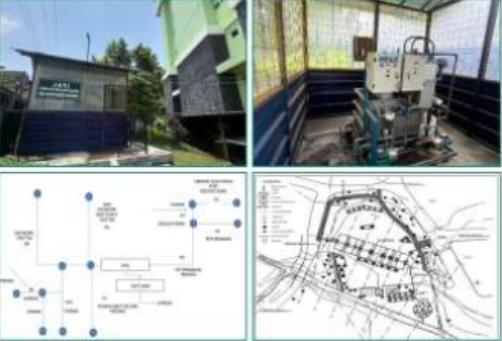
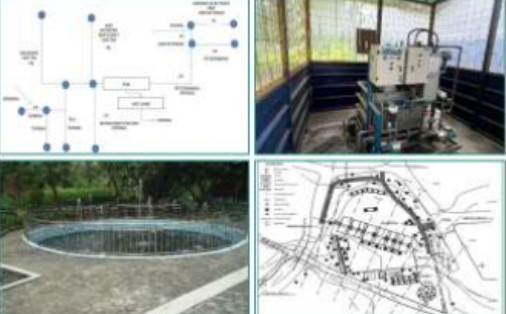
As part of its systematic efforts to prevent polluted water from entering the water system, Universitas Sebelas Maret (UNS) operates a centralized Wastewater Treatment Plant (WWTP or IPAL) within its Surakarta campus. Built by the Directorate General of Cipta Karya under the Ministry of Public Works and Public Housing (Kemen PUPR), this facility treats wastewater from various campus activities, including laboratories, canteens, bathrooms, toilets, and other facilities, to prevent groundwater and surface water pollution.
The communal WWTP has a domestic wastewater treatment capacity of approximately 1,290 m³ per day. It uses a combination of physical, biological, and nature-based treatment processes to remove suspended solids and organic pollutants before releasing wastewater into the environment or reusing it. The treatment system includes wastewater collection and equalization, primary and secondary sedimentation, anaerobic and aerobic biofiltration, and a final wetland treatment stage. These processes ensure that domestic wastewater undergoes appropriate treatment before discharge, preventing untreated or polluted water from entering the campus drainage network.
In addition, UNS uses source segregation as a key pollution-prevention measure. UNS separates laboratory wastewater and hazardous and toxic (B3) waste from the domestic wastewater stream and manages them through separate procedures. This approach prevents potentially hazardous substances from contaminating the domestic wastewater system and reduces the risk of polluted water entering campus drainage channels and surrounding water bodies.
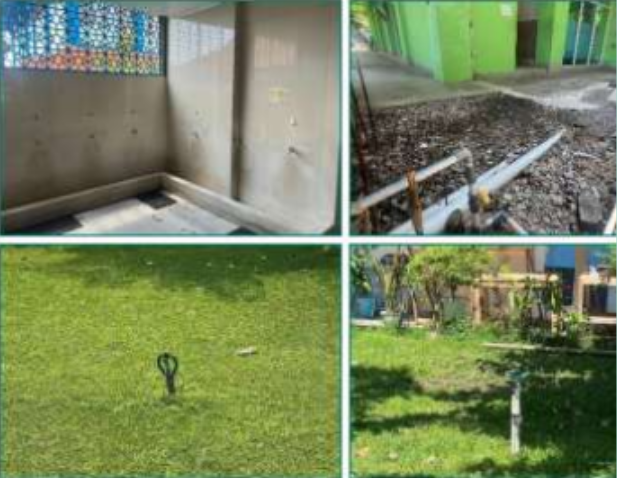
Most treated wastewater comes from handwashing, ablution, and bathing, and is reused for plant irrigation through a sprinkler system installed in several faculties across the campus. Approximately 38% of treated WWTP water is reused through the garden sprinkler system. Furthermore, recovered water from handwashing and ablution facilities supplies around 50% of the campus’s daily irrigation needs. Overall, recycled sources supply approximately 44% of irrigation water. These practices help reduce groundwater consumption while supporting sustainable water management.
In addition, UNS applies reverse osmosis technology to purify lake water for hydroponic farming, further strengthening the university’s circular water management approach.
UNS conducts regular water-quality monitoring every three months to ensure the wastewater treatment and water management systems operate effectively and comply with established standards. Monitoring includes groundwater and Drinking Water Management System (SPAM) quality assessments, as well as testing for physical, chemical, and microbial parameters. The measurement results indicate that the WWTP parameters comply with Class I and Class II water-quality standards as specified in Central Java Provincial Regulation No. 5 of 2012. The monitoring documentation also refers to SNI 3554:2015 and SNI 3553:2015 for water-quality assessment. These regular inspections and laboratory tests provide quality-assurance evidence that UNS’s wastewater treatment and recycling processes help protect surface water and groundwater systems from pollution.
Compliance with Water Pollution Prevention Guidelines
Universitas Sebelas Maret follows Government Regulation No. 82 of 2001 on Water Quality Management and Water Pollution Control, which provides guidelines for water-quality management and pollution control. The university ensures that domestic wastewater is treated properly before discharge and that hazardous laboratory waste is separated from the domestic wastewater system.
To strengthen these pollution prevention measures, UNS implements operational procedures through its communal WWTP Standard Operating Procedures (SOPs), covering wastewater collection, equalization, sedimentation, anaerobic and aerobic biofiltration, final treatment, and sludge management. These procedures establish operational controls to prevent untreated or contaminated wastewater from entering the water system.
Furthermore, UNS conducts regular water-quality monitoring and reviews its water-quality management guidelines and discharge procedures at least once every three years. These preventive and operational controls help minimize the risk of water pollution, including potential contamination arising from accidental releases, operational failures, and other incidents associated with university activities. Through wastewater segregation, controlled treatment, monitoring, and periodic procedural reviews, UNS seeks to prevent pollution before it affects the campus water system and surrounding water resources.
Community-Based Efforts to Prevent River Pollution
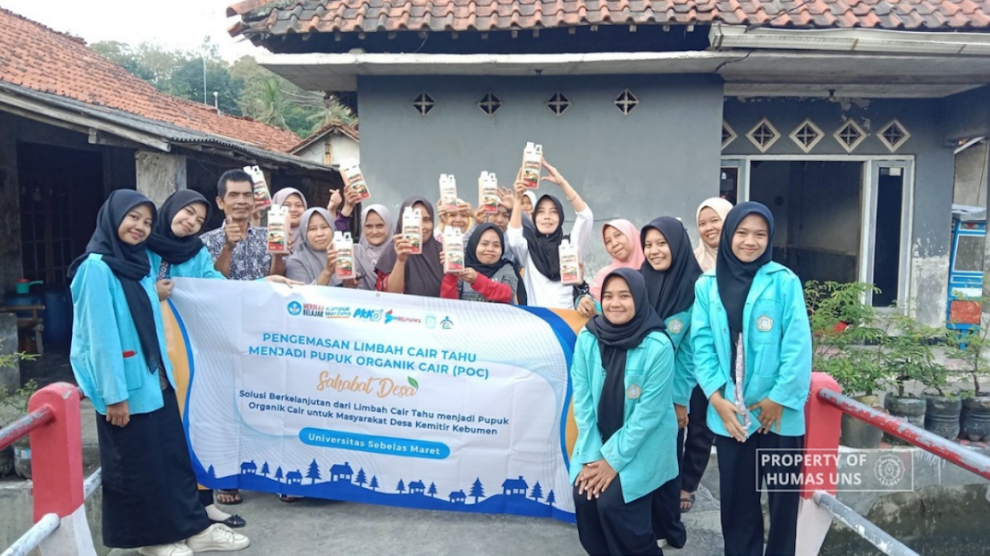
UNS students have developed an innovative approach to prevent water system pollution by processing tofu wastewater into Liquid Organic Fertilizer (LOF). This initiative aims to reduce river pollution in Kampung Kemitir, which has experienced contamination from waste generated by a tofu factory over the past two years. Through the Student Creativity Program (PKM-PM), the UNS “Sahabat Desa” team organized awareness and training sessions for local tofu producers and members of the Family Welfare Empowerment Group (PKK) to independently produce LOF using tofu wastewater as raw material.
The program consisted of three sessions: two focused on the technical process of converting wastewater into LOF, and one on packaging and marketing. The resulting LOF serves not only as an environmentally friendly fertilizer but also as an educational tool, demonstrating that wastewater can be converted into a useful product rather than released into the environment as a pollutant. This initiative empowers the local community to maintain a clean environment and helps prevent polluted water from entering the river system.
Through this initiative, UNS makes a tangible contribution to SDG 6: Clean Water and Sanitation by promoting pollution prevention, reducing the discharge of untreated wastewater into water bodies, and encouraging sustainable water resource management at the local level.
Institutional Efforts to Prevent Water Pollution in 2025

UNS continued strengthening its institutional commitment to preventing water pollution in 2025. On April 22, 2025, the Surakarta Environmental Agency (DLH) conducted an environmental compliance inspection at UNS Tower Hotel and MICE. The inspection assessed wastewater and hazardous waste management. UNS Tower Hotel and MICE had implemented an integrated wastewater management system as part of its environmental protection measures.
In addition, UNS maintained its commitment to wastewater treatment through its centralized Wastewater Treatment Plant (IPAL), which has operated since 2017 to manage domestic wastewater generated by campus activities and surrounding communities. An official UNS Green Campus publication in October 2025 also highlighted the facility and its role in campus environmental management.
These institutional initiatives demonstrate UNS’s continued efforts to establish preventive processes, strengthen wastewater management, and minimize the risk of polluted water entering the water system. Through centralized wastewater treatment, hazardous waste segregation, regular water-quality monitoring, operational procedures, and environmental compliance inspections, UNS supports the protection of water resources and the achievement of SDG 6: Clean Water and Sanitation.
Source: DLH Kota Surakarta Lakukan Pengawasan Lingkungan di UNS Tower Hotel dan MICE