
SDG 5 In Number
Number of women starting a degree
6.489
Number of first-generation women starting a degree
4.113
Number of students starting a degree
9.032
Number of first-generation students starting a degree
6.205
Number of students
27.604
Number of employees
3.760
Number of academic staff
1.950
Number of senior academic staff
685
Number of female senior academic staff
303
Number of graduates by subject area (STEM, Medicine, Arts & Humanities / Social Sciences): Total
6.192
Number of graduates: STEM
1.905
Number of graduates: Medicine
627
Number of graduates: Arts & Humanities / Social Sciences
3.660
Number of female graduates by subject area (STEM, Medicine, Arts & Humanities / Social Sciences): Total
4.353
Number of female graduates: STEM
1.244
Number of female graduates: Medicine
301
Number of female graduates: Arts & Humanities / Social Sciences
2.808
Number of graduates: Total
6.192
5.3.4 Women’s Application in Underrepresented Subjects
Encourage applications by women in subjects where they are underrepresented.
Encouraging Women’s Applications in Underrepresented Subjects
Universitas Sebelas Maret (UNS) is committed to encouraging women to apply to subjects where they are underrepresented, particularly in Science, Technology, Engineering, and Mathematics (STEM). Through university outreach and collaboration with educational institutions, international partners, research organizations, and other stakeholders, UNS promotes women’s access to learning opportunities and academic pathways in science and technology. These efforts support Sustainable Development Goal (SDG) 5: Gender Equality, particularly by challenging gender barriers and expanding opportunities for women and girls to pursue education and careers in fields traditionally dominated by men.
A. Through University Outreach
UNS conducts university outreach to introduce younger generations to science and technology fields and expand women’s access to educational and professional development opportunities in STEM. By providing information, learning experiences, and access to specialized programs, these initiatives aim to encourage female students and aspiring researchers to pursue subjects where women remain underrepresented.
1. STEM FAIR UNS 2025: Introducing STEM Opportunities to Young Female Students
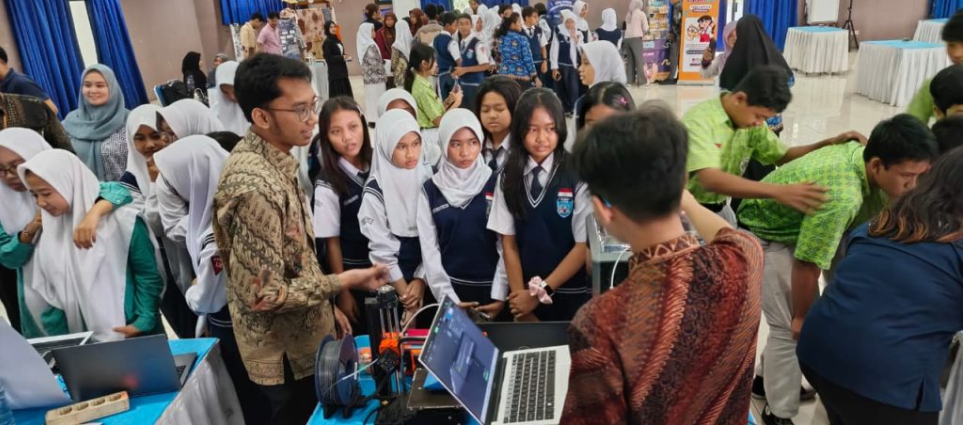
Through STEM FAIR UNS 2025, organized by the Faculty of Teacher Training and Education (FKIP), UNS reached students from elementary, junior high, and senior high schools through national and international educational competitions. The activities included the Tangible Rangers Competition, STEM Lesson Plan Competition, and 3-Minute Research Presentation. The event brought together educational institutions from various regions of Indonesia and international participants, giving students opportunities to explore science, technology, engineering, and mathematics through practical, competitive learning experiences.
This initiative served as a university outreach platform to introduce STEM subjects to young learners, including female students who may face gender stereotypes or limited encouragement to pursue science and technology. By providing opportunities to develop scientific interest, creativity, and problem-solving skills, STEM FAIR UNS helped create an encouraging environment for girls to consider STEM-related subjects in their future educational choices and applications to higher education programs.
Through this initiative, UNS seeks to broaden women’s interest in underrepresented subjects and challenge traditional perceptions of gender roles in science and technology. This effort supports SDG 5 by promoting equal educational opportunities and encouraging girls to pursue academic pathways based on their interests and abilities rather than gender-based expectations.
2. Australia Awards Short Course in STEM: Expanding Women’s Access to STEM Development Opportunities
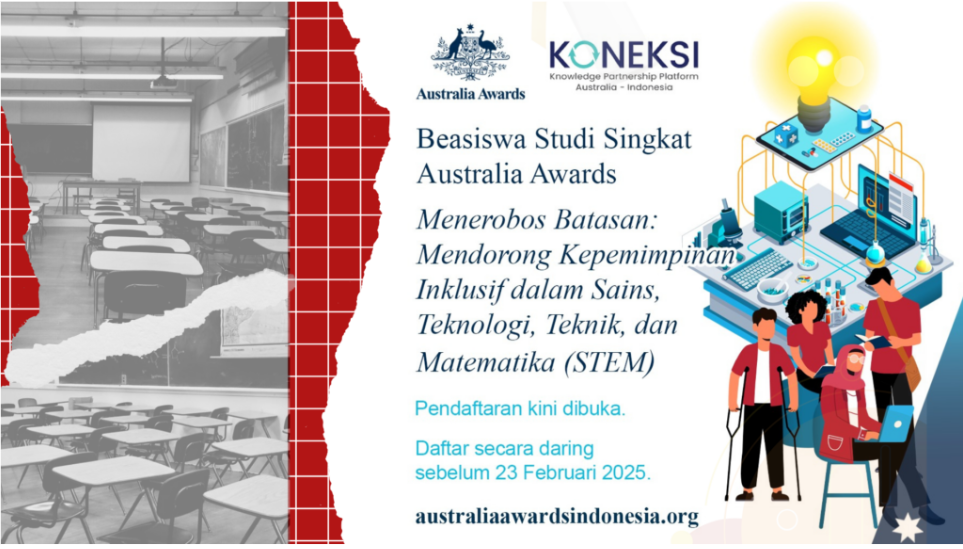
UNS, through the Department of Mathematics, Faculty of Mathematics and Natural Sciences (FMIPA), disseminated information about the Australia Awards Short Course in STEM, particularly the program Breaking Barriers: Promoting Inclusive Leadership in STEM. Supported by Australia Awards in Indonesia and KONEKSI, the program gave participants opportunities to strengthen their knowledge and leadership capacity in science, technology, engineering, and mathematics. Women, particularly those from vulnerable groups, were among the priority target participants.
By sharing this opportunity through its academic network, UNS encouraged greater female participation in STEM-related learning and professional development. The program addressed barriers that may limit women’s access to opportunities in science and technology and promoted more inclusive participation in fields where gender representation remains unequal. This outreach also helped make specialized STEM development opportunities more visible and accessible to women within the university’s academic community and wider professional networks.
By sharing targeted opportunities, UNS supports women’s participation in STEM and encourages them to pursue further academic and professional development in underrepresented subjects. This initiative contributes to SDG 5 by promoting gender equality, reducing barriers to women’s participation, and supporting inclusive access to knowledge and development opportunities.
Source: Australia Awards Opens Applications for STEM Short Course Scholarships
B. Through Collaboration with Other Universities, Community Groups, Government, and NGOs in Regional or National Campaigns
UNS also promotes women’s participation in higher education and science through institutional collaborations at national and international levels. By working with universities, international organizations, NGOs, and research partners, UNS supports initiatives that address gender-related barriers, promote women’s academic development, and strengthen opportunities for women in underrepresented fields. These collaborative efforts contribute to broader campaigns for gender equality in education, research, and professional development.
1. Embracing Gender Equality in Higher Education Institutions: Strengthening Gender Equality Through International University Collaboration
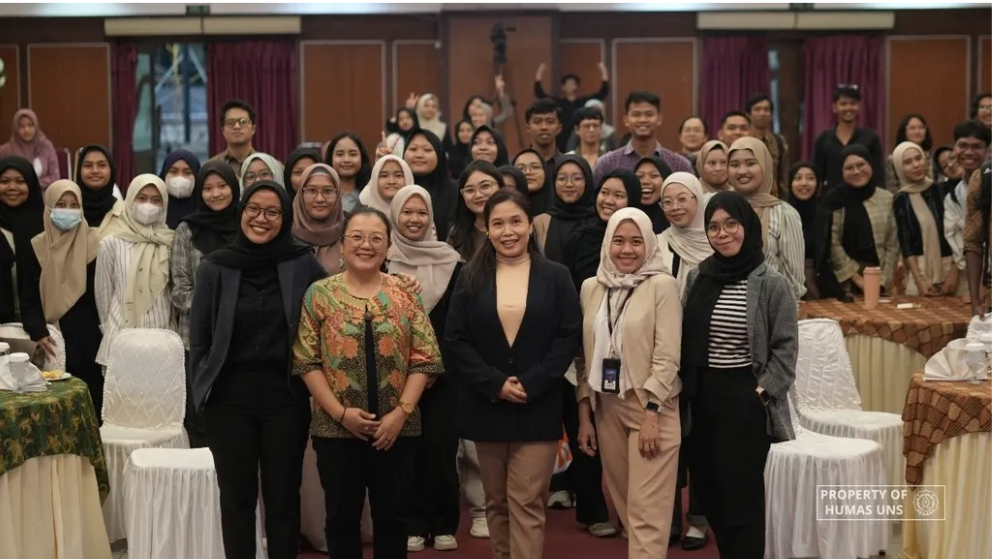
On February 20, 2025, UNS organized the seminar Embracing Gender Equality in Higher Education Institutions at the G.P.H. Haryo Mataram Auditorium. The event was part of the Global Equality Partnership, a collaborative initiative between UNS and Aston University, United Kingdom, supported by the British Council through its Gender Equality Program and the Kedaireka Matching Fund. The seminar also involved representatives from other Indonesian universities and SPEK-HAM Surakarta, a non-governmental organization working on human rights and gender-related issues.
The initiative addressed gender-related challenges in higher education, including barriers female graduates face in entering the workforce and the need to strengthen gender perspectives in university curricula and institutional practices. Through discussions and knowledge exchange among universities and partner organizations, the program encouraged institutions to create more inclusive educational environments and improve women’s access to academic and professional opportunities. The collaboration also provided a platform to share experiences and strengthen institutional approaches to gender equality across different regions.
By promoting gender mainstreaming in higher education and encouraging institutional action to address gender-based barriers, UNS contributes to improving women’s participation and opportunities in academic fields where gender inequalities persist. This collaboration supports SDG 5 by strengthening partnerships and promoting equal opportunities for women in education, research, and professional development.
Source: Seminar Embracing Gender Equality in Higher Education Institutions
2. L’Oréal–UNESCO For Women in Science Fellowship 2025: Supporting Women’s Participation and Advancement in Science
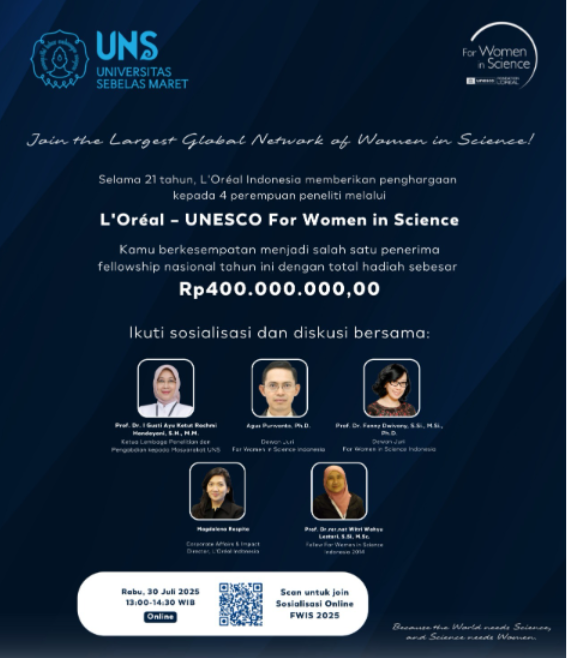
In 2025, UNS, through its Institute for Research and Community Service (LPPM), promoted the L’Oréal–UNESCO For Women in Science (FWIS) National Fellowship to expand opportunities for women researchers in science. As part of this initiative, LPPM UNS disseminated information about the fellowship and organized an online information and discussion session on July 30, 2025. The session involved the Head of LPPM UNS, members of the national fellowship jury, a previous fellowship recipient, and representatives of L’Oréal Indonesia.
The fellowship provides opportunities and recognition for women researchers pursuing scientific careers, particularly those who have completed or are undertaking doctoral studies. By promoting this national program, UNS helped raise awareness of support available to women in science and encouraged female researchers to apply for opportunities that strengthen their academic development, research capacity, and professional recognition. The initiative also highlights the importance of women’s contributions to scientific advancement and the need to address barriers that may limit their participation and career progression in research fields.
Through this collaboration involving the academic community, an international organization, and the private sector, UNS supports women’s participation and advancement in science. The initiative contributes to SDG 5 by promoting equal opportunities, recognizing women’s contributions to research, and encouraging greater female representation in scientific fields where gender gaps remain.
Source: L’Oréal–UNESCO For Women in Science (FWIS) Fellowship 2025
Overall, through university outreach and collaboration with national and international partners, UNS continues to promote women’s participation in underrepresented subjects, particularly in science, technology, engineering, and mathematics. By introducing STEM opportunities to younger generations, expanding access to specialized development programs, supporting women researchers, and strengthening gender equality initiatives across higher education institutions, UNS seeks to encourage more women and girls to pursue academic pathways in these fields.
These efforts reflect UNS’s commitment to creating an inclusive educational environment, challenging gender stereotypes, and reducing barriers to women’s participation in science and higher education. Through these initiatives, UNS contributes to SDG 5 (Gender Equality) by promoting equal opportunities and empowering women and girls to participate fully in education, research, and academic development.