
15.2.6 Sustainable Management Of Land For Tourism (Educational Outreach)
Educational Outreach on Sustainable Management of Land for Tourism in Tapak Village
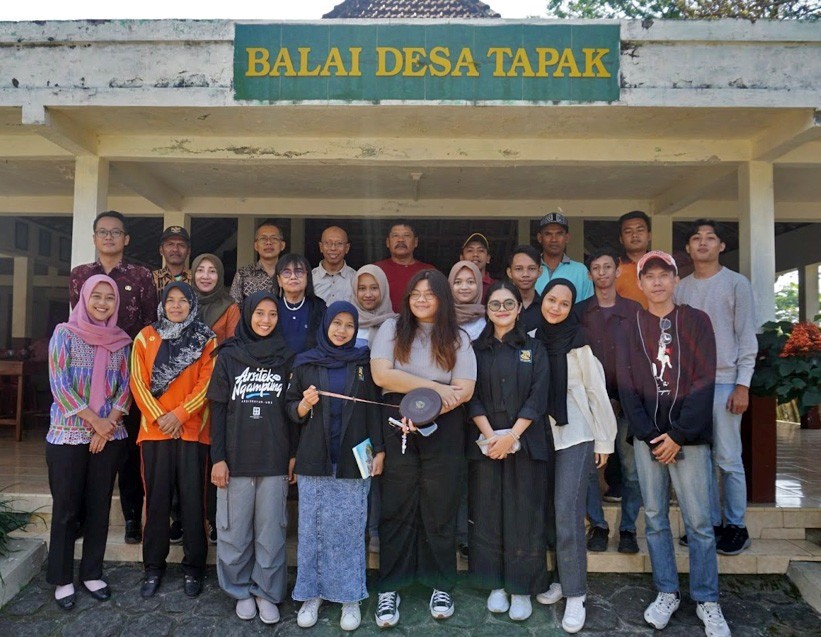
In 2024, the Urban Rural Design and Conservation (URDC) Research Group, Architecture Study Program, Faculty of Engineering, Universitas Sebelas Maret (UNS), undertook a community service grant project focusing on the planning and design of the master plan for Tapak Village, Panekan District, Magetan Regency, East Java. The initiative, which has been ongoing since the odd semester of 2023, aims to educate and empower local communities through participatory design and cultural mapping activities that promote the sustainable management of land for tourism. This program was conducted free of charge as part of UNS’s community service and educational outreach.
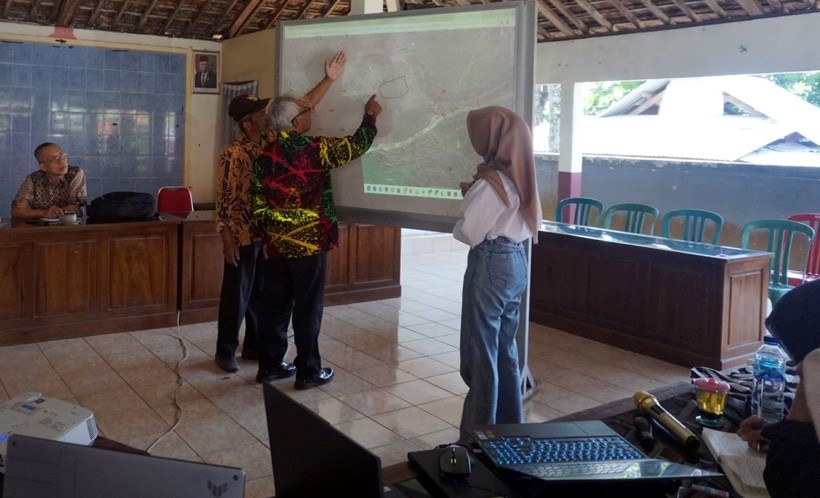
During the 2023–2024 academic year, the URDC team facilitated cultural mapping workshops and Focus Group Discussions (FGD) with residents to identify the village’s natural, cultural, and agricultural potentials as well as key challenges. Field visits were conducted in November 2023, followed by a final design dissemination meeting on May 31, 2024, at which villagers and local authorities actively reviewed and provided feedback on the proposed designs. This collaborative process strengthened community understanding of how sustainable land planning could enhance both tourism and agricultural productivity.
Located on the slopes of Mount Lawu, Tapak Village holds significant potential for agro-tourism with its agricultural and plantation landscapes. However, several issues were identified, including disconnected transport access, unmanaged water spring areas, and complex topography. The masterplan design provided sustainable recommendations to improve the area’s tourism ecosystem, such as:
- Developing road and visual connectivity to create a clear agro-tourism route;
- Designing water spring attractions as fishing or picnic areas;
- Proposing architectural designs that adapt to the terrain through responsible land management (cut and fill) principles.
The master plan also proposed facilities to support local economic growth, such as small business clusters, souvenir kiosks, restaurants, and community-based production spaces for local agricultural products. These facilities were designed using local materials, such as wood, to ensure environmental sustainability and cost efficiency.
This initiative was collaboratively supervised by URDC researchers, including Dr. Titis Srimuda Pitana, S.T., M.Trop.Arch., and team—and involved students from the Architecture Study Program (Batch 2021) through the Merdeka Belajar–Kampus Merdeka (MBKM) scheme, recognized under relevant academic courses.
By integrating education, design, and community participation, this outreach project not only provides short-term design solutions but also strengthens long-term community resilience through the sustainable management of land for tourism. It contributes to improving local welfare and diversifying economic activities beyond agriculture.