

SDG 16 In Number
Number of graduates
6,213
Number of graduates from law and enforcement related courses
1,554
16.2.5 University principles on corruption and bribery
UNS Commitment to University Principles on Corruption, Bribery, and Organized Crime through Integrity Zones, Bureaucratic Reform, and Anti-Corruption Education
Universitas Sebelas Maret (UNS) has taken strategic steps to establish, communicate, and implement its institutional principles and commitments to preventing corruption, bribery, and organized crime. These commitments are reflected in an official Rector’s Circular, the university’s bureaucratic reform initiatives, the development of Integrity Zones (Zona Integritas – ZI), public awareness campaigns, and anti-corruption education programs. Through these initiatives, UNS promotes integrity, transparency, accountability, and ethical conduct across its academic and administrative activities. These efforts also demonstrate the university’s contribution to SDG 16, particularly in strengthening effective, accountable, and transparent institutions.
Institutional Principles and Public Commitment to Anti-Corruption
UNS has formally established its institutional commitment to preventing corruption, bribery, gratification, and organized crime through Rector’s Circular No. 9282/UN27/HK.06/2025 concerning the Commitment to Preventing Corruption, Bribery, Gratification, and Organized Crime within Universitas Sebelas Maret, issued on January 5, 2025. Signed on behalf of the Rector by the Vice Rector for Planning, Cooperation, Internationalization, and Information, this circular serves as an official institutional statement of UNS’s principles and commitments. It requires all university leaders, lecturers, educational staff, students, and members of the university community to uphold the following five principles:
- Reject all forms of corruption, bribery, illegal gratification, and abuse of authority.
- Refrain from involvement in organized crime activities and other illegal practices that violate the law.
- Uphold transparency, accountability, integrity, and the prevention of conflicts of interest in all academic and non-academic activities.
- Support the implementation of Integrity Zones and the establishment of clean and corruption-free university governance.
- Report suspected violations through the university’s official complaint mechanisms in accordance with applicable regulations.
Through this circular, UNS formally communicates its institutional principles and commitments against corruption, bribery, and organized crime, providing a common foundation for integrity and ethical conduct across the university community.
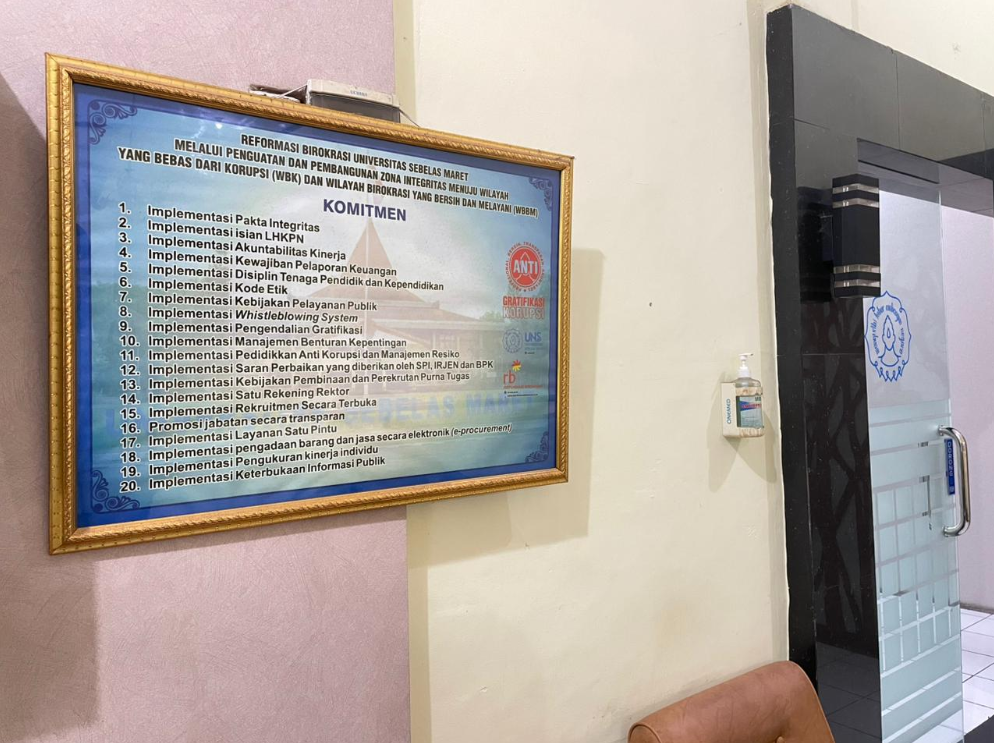
In addition to the formal circular, UNS communicates its institutional commitments to integrity and anti-corruption through publicly displayed information and awareness materials across campus. One example is the university’s Bureaucratic Reform Commitment Board, which outlines institutional commitments to achieving Corruption-Free Region (Wilayah Bebas dari Korupsi – WBK) and Clean and Serving Bureaucracy Region (Wilayah Birokrasi Bersih dan Melayani – WBBM) status. The board presents a series of institutional measures, including the implementation of integrity pacts, the State Officials’ Wealth Report (Laporan Harta Kekayaan Penyelenggara Negara – LHKPN), performance accountability, internal control systems, codes of conduct, public service policies, whistleblowing systems, transparent procurement, and gratification control. These commitments demonstrate UNS’s efforts to establish transparent, accountable, and corruption-free institutional governance.
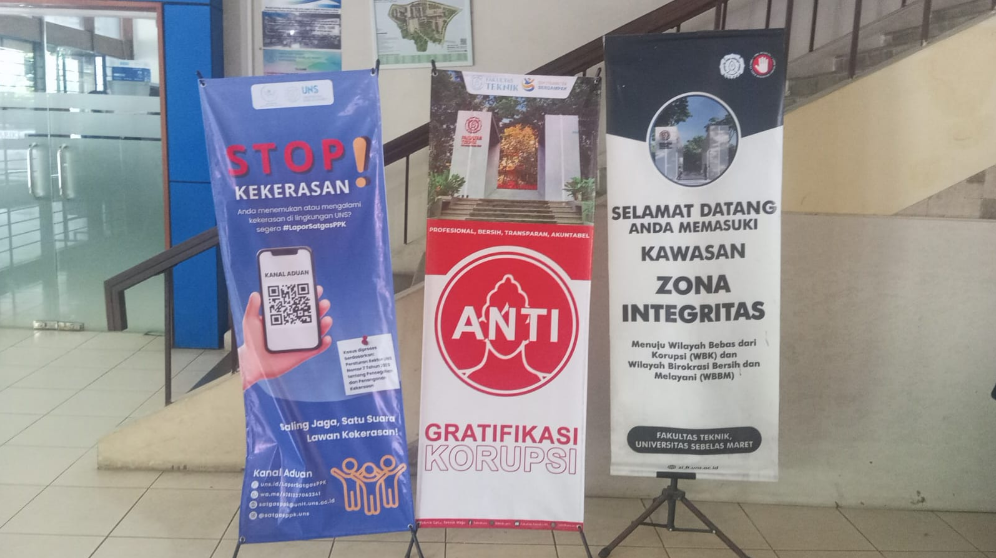
Furthermore, UNS displays anti-gratification and anti-corruption campaign materials, along with signage identifying Integrity Zone areas on campus. These materials serve as visible reminders for university staff, students, and visitors to reject corruption, bribery, and gratification practices. Together, these initiatives show how UNS communicates its institutional values and promotes ethical conduct, transparency, and accountability within its campus community.
Implementation of Integrity Zones at the Faculty Level
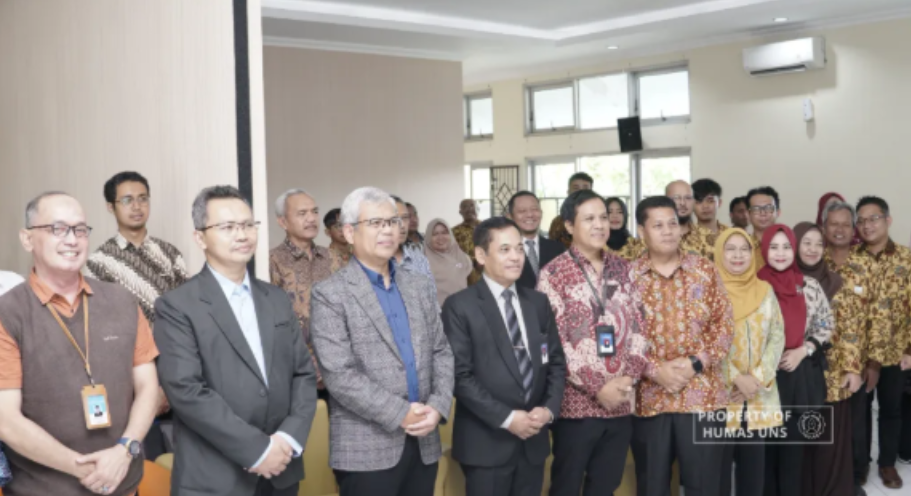
UNS has officially launched the Integrity Zone (Zona Integritas – ZI) within the Faculty of Information Technology and Data Science (FATISDA UNS). This strategic initiative aims to propel FATISDA UNS toward achieving the status of Corruption-Free Region (Wilayah Bebas dari Korupsi – WBK) and Clean and Serving Bureaucracy Region (Wilayah Birokrasi Bersih dan Melayani – WBBM). Held on Wednesday, January 22, 2025, the declaration marks a significant milestone in FATISDA UNS’s steadfast commitment to fostering clean, transparent, and accountable faculty governance. Through this initiative, UNS reinforces its institutional principles against corruption and bribery while promoting preventive measures against practices that undermine institutional integrity and public trust.
Key university leaders and external institutional stakeholders attended the declaration ceremony, including UNS Rector Prof. Dr. Hartono, dr., M.Si.; Chairman of the FATISDA Academic Senate, Prof. Bambang Harjito, M.App.Sc., Ph.D.; Director of the Information and Communication Technology (ICT) Directorate of UNS, Prof. Ary Setyawan, M.Sc., Ph.D.; representatives from the Communication and Information Services (Diskominfo) of Karanganyar and Sragen Regencies; representatives from the Central Agency on Statistics (BPS) Surakarta; heads of study programs; and faculty members of FATISDA UNS.
Prof. Dr. Wiharto, S.T., M.Kom., Vice Dean for Academic, Non-Academic, and Student Affairs at FATISDA UNS, emphasized that the establishment of the Integrity Zone is a continuation of an ongoing effort pioneered prior to the faculty’s separation from the Faculty of Mathematics and Natural Sciences (FMIPA UNS). By declaring the Integrity Zone, FATISDA UNS follows in the footsteps of several other faculties within the university that have previously established similar frameworks. This step reinforces the university’s ongoing commitment to delivering enhanced service quality and operational excellence for all campus stakeholders. It also shows how UNS translates its anti-corruption, anti-bribery, and accountable governance principles and commitments into institutional practices.
Source:
https://uns.ac.id/id/uns-update/fatisda-uns-canangkan-zona-integritas-menuju-wbk-dan-wbbm.html
Promoting Anti-Corruption Values through Education and Community Engagement
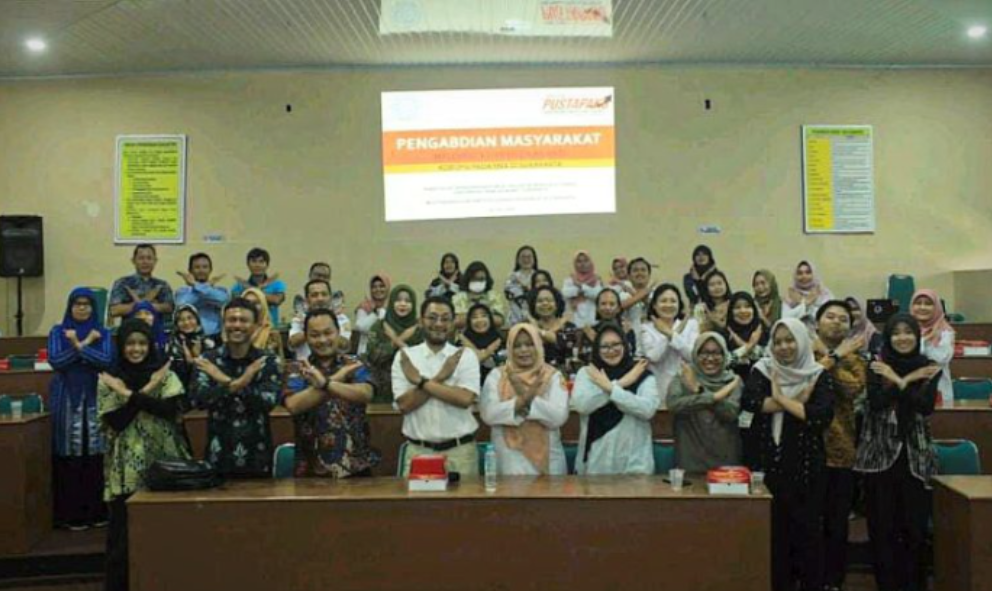
In addition, UNS, through the Center for Public Transparency and Anti-Corruption Studies (PUSTAPAKO) under the Institute for Research and Community Services (LPPM UNS), reaffirmed its dedication to cultivating a high-integrity younger generation by organizing an educational workshop titled “Implementation of Anti-Corruption Education at the Senior High School Level.” Hosted at State Senior High School 1 (SMA Negeri 1) Surakarta, the event convened Economics teachers from state high schools across Surakarta who are members of the Economics Subject Teachers’ Forum (Musyawarah Guru Mata Pelajaran / MGMP Ekonomi).
In secondary education, Economics plays a strategic role. It extends beyond imparting fundamental concepts of economic behavior and resource management to instilling essential values such as efficiency, fairness, and accountability. Regrettably, various forms of misconduct persist, ranging from academic dishonesty and grade manipulation to the normalization and rationalization of dishonest behavior. Through this initiative, UNS promotes anti-corruption principles and ethical values beyond the university environment, recognizing education’s role in preventing corruption and fostering a culture of integrity from an early age.
The event culminated in the official signing of a Memorandum of Understanding (MoU) between PUSTAPAKO UNS and the Surakarta High School Economics Subject Teachers’ Forum (MGMP Ekonomi Kota Surakarta). This landmark agreement serves as the cornerstone for systematically and sustainably integrating anti-corruption values into the senior high school economics curriculum and instructional practices. In his address to the educators, Dr. Khresna emphasized that “anti-corruption education extends beyond mere subject matter; it is fundamentally about exemplary leadership and the consistent embedding of core values within the teaching and learning process. Educators do not merely teach theory—they forge character.”
Source:
Strengthening Institutional Integrity in Support of SDG 16
Through its Bureaucratic Reform commitments, Integrity Zones, public anti-corruption campaigns, and anti-corruption education initiatives, UNS demonstrates its commitment to upholding university principles against corruption, bribery, and organized crime. These initiatives communicate the university’s institutional values and commitments through publicly displayed information, formal declarations, governance improvement measures, and educational programs.
By promoting integrity, preventing corrupt and unethical practices, strengthening accountability, and encouraging a culture of transparency, UNS seeks to embed these principles in institutional governance and share them with the wider university community. These efforts support SDG 16 by helping develop effective, accountable, transparent, and inclusive institutions and promoting peaceful and just societies.