

SDG 1 In Number
Number of student
27,537
Number of low income students receiving financial aid
20,870
1.4.2 Local Start-Up Financial Assistance
Financial Support for Start-ups and Sustainable Business Development in Local Communities
Universitas Sebelas Maret (UNS), as a university, supports local communities in starting and developing financially and socially sustainable businesses. This support is provided through community service programs that supply productive assets to local business groups, as well as institutional programs that provide start-up funding and entrepreneurship development. Through these initiatives, UNS aims to strengthen production capacity, increase income opportunities, and expand local economic activities. The following examples highlight UNS initiatives in 2025.
1. Business Equipment Assistance for Karang Taruna Genilangit, Magetan
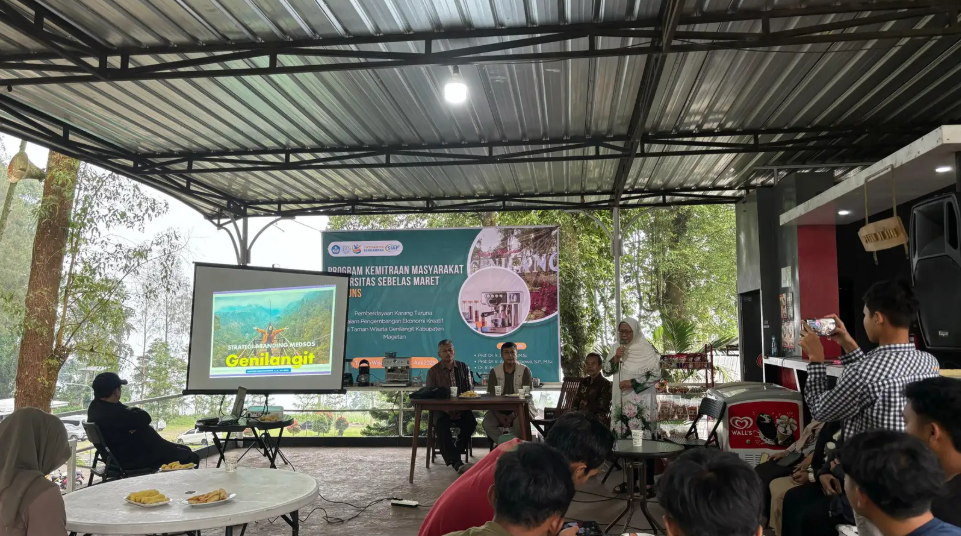
In July 2025, UNS provided barista equipment to Karang Taruna, a youth organization in Genilangit Village, Magetan Regency, East Java. The assistance was intended to support the development of a café business in the Taman Wisata Genilangit tourist area and to promote economic empowerment among local youth.
The assistance included barista equipment, including an espresso machine, a coffee grinder, and a milk steamer. These items serve as productive assets that can help the local business group improve its services, develop beverage products, and create additional income opportunities. Providing this equipment therefore represents practical economic support for a community-based business.
This initiative demonstrates UNS’s institutional contribution through its community service activities to support local businesses. By providing productive assets, UNS helps local communities strengthen their business activities and develop enterprises with the potential to become financially sustainable while creating social benefits through youth empowerment.
The social impact of community-based business support is also relevant to the research entitled “Economic Empowerment of Coastal Female Farmers on the North Coast of Java through Implementing CSR Program.” The study highlights the importance of providing productive resources, developing community groups, improving skills, and expanding market access to strengthen women’s economic opportunities. These findings provide a relevant research context for understanding how support for local business groups can contribute to community empowerment and socially sustainable economic activities.
Sources:
2. Appropriate Technology Assistance for the Boyolali Organic Rice Producers Association
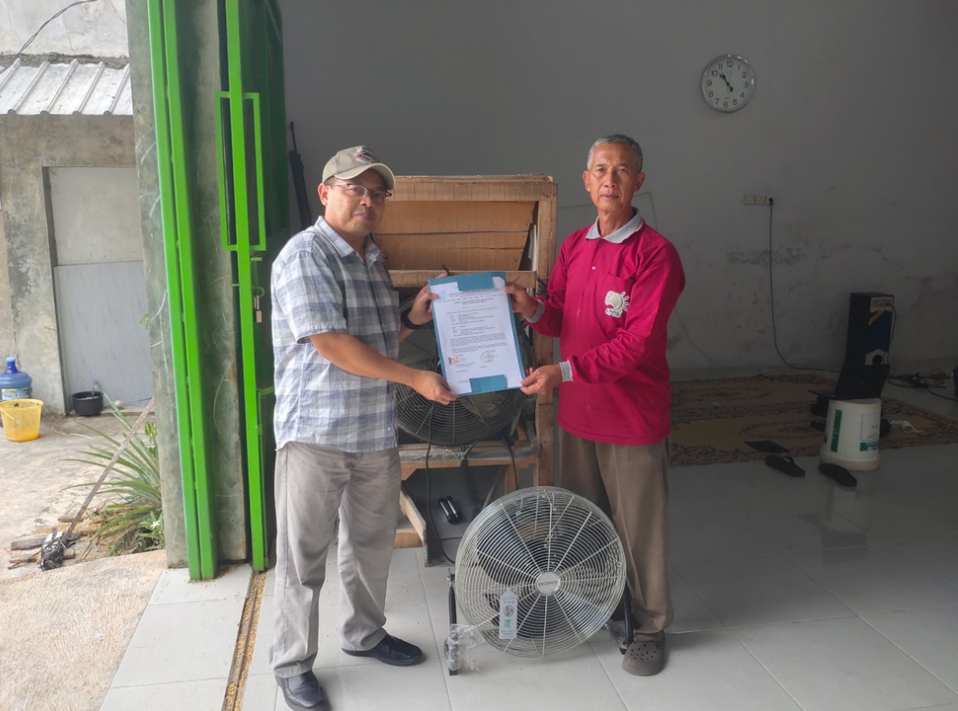
In 2025, the Community Service Team from the Center for Cooperative and MSME Development Studies (PSP-KUMKM), under the Institute for Research and Community Service (LPPM) at UNS, provided appropriate technology equipment to the Boyolali Organic Rice Producers Association (APOB) in Boyolali Regency. The assistance included one blower fan and two magnets to support rice grain cleaning and improve organic rice quality.
These productive assets provide practical economic support by helping local producers improve processing efficiency and product quality. Better product quality can strengthen business competitiveness, improve market access, and support more sustainable income for local producers. This assistance is therefore relevant to developing financially sustainable businesses within local communities.
Through this initiative, UNS demonstrates its institutional involvement in supporting community-based businesses by providing production equipment. The activity provides supporting evidence of UNS’s efforts to help local businesses improve their capacity and build financially and socially sustainable operations.
The importance of production technology and community capacity is also reflected in the research entitled “Smart Farming and Its Governance for Rural Agricultural Resilience in Indonesia.” The study highlights how local institutions, community capacity, and participatory governance influence the adoption of agricultural technologies and the resilience of rural farming systems. These findings provide relevant context for UNS’s provision of production equipment to APOB, particularly for improving production processes and strengthening local producers’ business capacity.
Source:
3. Start-up Funding through the 2025 New Student Entrepreneurship Program (WIBAWA)
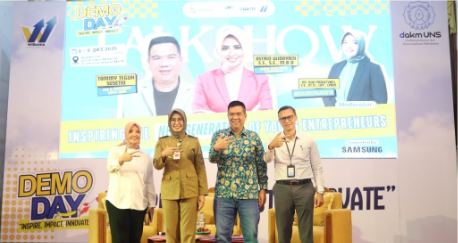
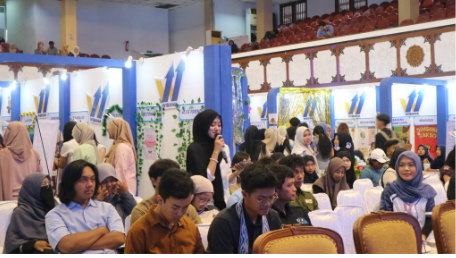
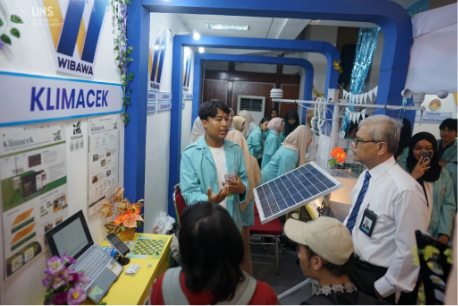
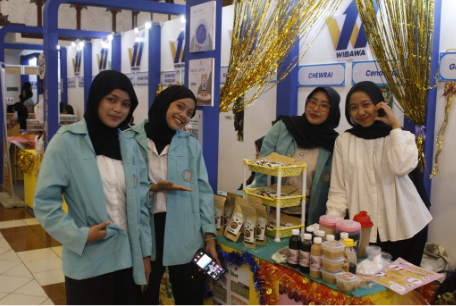
In 2025, UNS, through the Directorate of Alumni and Student Entrepreneurship (DAKM), organized the New Student Entrepreneurship Program (WIBAWA) to support the establishment and development of start-up businesses. The program provided business funding of IDR 5,000,000–10,000,000 per group, together with training, faculty mentoring, progress monitoring, and product promotion opportunities.
WIBAWA provides direct financial support to student business groups to help them develop products, strengthen production activities, and improve their business readiness. In 2025, 825 students organized into 153 groups were selected for the program. The Demo Day event later in the year also gave participating entrepreneurs an opportunity to present and promote their products.
As an official university program, WIBAWA demonstrates that UNS has an institutional mechanism for providing start-up funding and supporting the development of financially sustainable businesses. The accompanying training and mentoring also help strengthen participants’ entrepreneurial capabilities. However, because the direct recipients are UNS students, this program is presented as supporting evidence of university-level financial assistance rather than as the main evidence of financial assistance to the external local community.
The importance of strengthening business capabilities alongside financial support is also relevant to the research entitled “Readiness for Digital Financial Transformation: The Case of Micro, Small, and Medium Enterprises in Indonesia.” Based on a survey of 411 MSMEs, the study highlights the role of technological knowledge, market demand, and owners’ education in readiness for digital financial transformation. These findings provide context for the value of combining start-up funding with business guidance and capacity development.
Sources:
4. ZCorner BAZNAS at UNS: Business Support for Beneficiarie
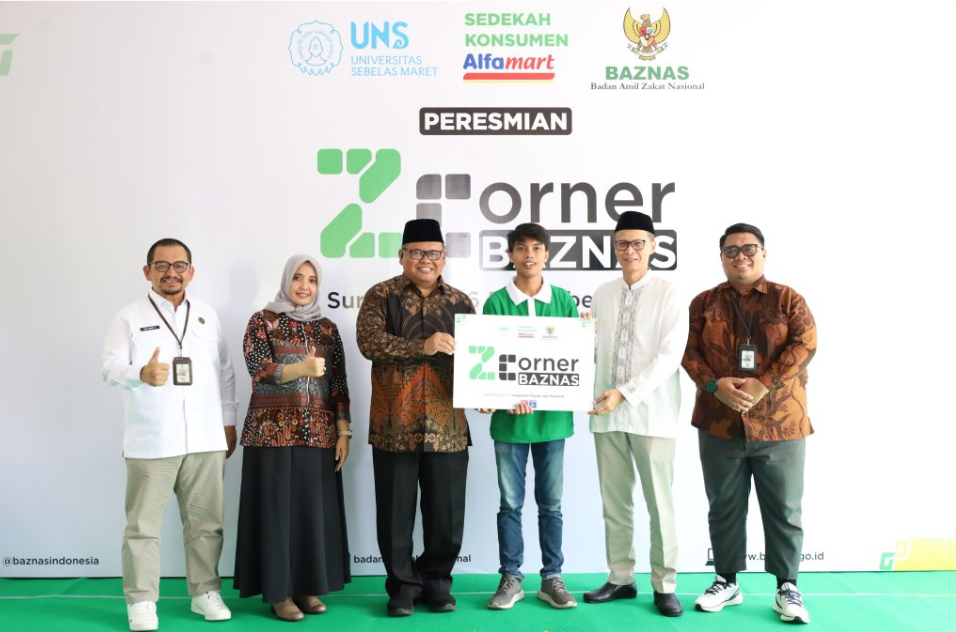
In December 2025, UNS collaborated to develop ZCorner, a zakat-based business empowerment program involving BAZNAS Indonesia, BAZNAS Surakarta City, UNS, and Alfamart. The program was reported to provide a total of IDR 272,450,000 in business support for nine MSME tenants and one shared kitchen, benefiting 20 zakat recipients (mustahik).
Through business facilities and tenant development, the program provides beneficiaries with opportunities to conduct economic activities, develop products, and generate income. This approach supports financially and socially sustainable businesses, particularly by expanding opportunities for people who need economic support.
UNS’s involvement in this collaboration shows its potential role in supporting an inclusive entrepreneurship ecosystem. Research on women’s economic empowerment through community groups highlights the importance of productive resources, group development, training, and market access in strengthening economic opportunities and social benefits. These findings provide a useful context for understanding the value of inclusive business empowerment initiatives such as ZCorner
Sources:
Conclusion
In 2025, UNS implemented several initiatives that contributed to business development and local economic empowerment. These included productive equipment assistance for Karang Taruna Genilangit in Magetan and the organic rice producers’ group in Boyolali. The assistance supported production capacity and income-generating opportunities while strengthening community-based economic activities. In addition, WIBAWA demonstrated an institutional mechanism for providing start-up funding, while ZCorner illustrated the potential of collaborative, zakat-based MSME empowerment.
Research on community empowerment, rural agricultural resilience, and digital financial transformation provides further context for the importance of productive resources, community capacity, and financial capabilities in developing financially and socially sustainable businesses. Overall, these initiatives demonstrate UNS’s contribution to business development and economic empowerment. To fully establish compliance with the Local Start-up Financial Assistance indicator, however, the evidence should be supported by documentation of funding sources, the value of assistance, the recipients’ business status, and the transfer or delivery of productive assets to local community members.