Elevating Impact Through Sustainability/ Climate Action Policy
Universitas Sebelas Maret (UNS) demonstrates a profound commitment to global environmental preservation by establishing a robust Institution’s Sustainability by Climate Action Policy. This policy is not merely a statement of intent but a functional framework designed to combat climate change through measurable institutional efforts.
Climate Action Plan
The cornerstone of this initiative is the Rencana Strategis Pengembangan UNS Green Campus 2025–2029 (UNS Green Campus Strategic Development Plan). As a formal policy, this document provides the legal and operational basis for sustainable management across the university. The plan specifically targets critical areas such as energy efficiency, climate change mitigation, waste management, and sustainable transportation development.
evidence: https://greencampus.uns.ac.id/legal-basis/
Transitioning to Low-Carbon Energy
A primary objective of the university’s policy is the transition to cleaner energy sources. UNS actively monitors its carbon footprint across all faculties and units to evaluate the effectiveness of its energy strategies. The university currently utilizes three types of renewable energy: solar panels, biodiesel, and biogas. In 2025, the institution successfully expanded its energy capacity. This growth was driven by the installation of new solar panel systems at the Faculty of Law and the Faculty of Engineering.
evidence: https://greencampus.uns.ac.id/indicator-13-2-1/
Academic Integration and Climate Literacy
UNS ensures that its Climate Action extends into the classroom and the community through comprehensive education programs. By integrating climate risks, mitigation, and adaptation into the curriculum, the university builds capacity at the undergraduate, master’s, and doctoral levels. The university employs an integrated approach combining formal academics with community service.
evidence: https://greencampus.uns.ac.id/indicator-13-3-1/
Collaborative Climate Action
Recognizing that climate action requires collective effort, UNS shares its policy framework with external stakeholders to foster regional resilience.
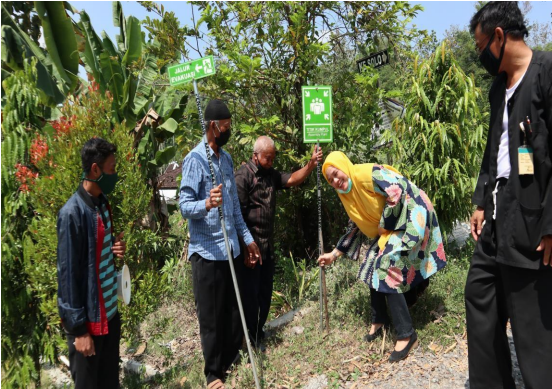
- For example, the Master’s Program in Geography Education leads community-based projects focused on multi-hazard disaster preparedness.
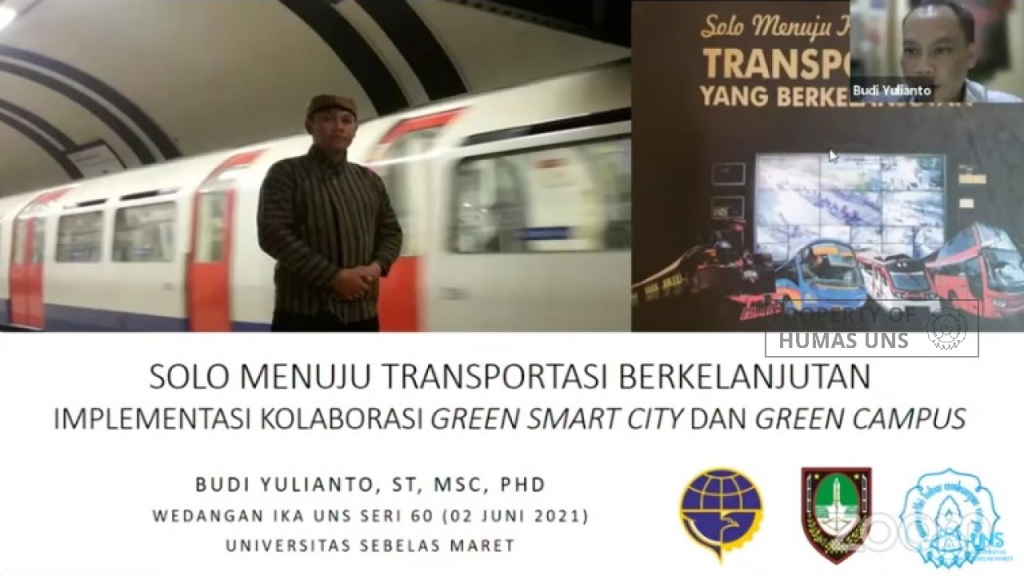
- The university also collaborates with the Surakarta City Government to support sustainable urban mobility and green transportation
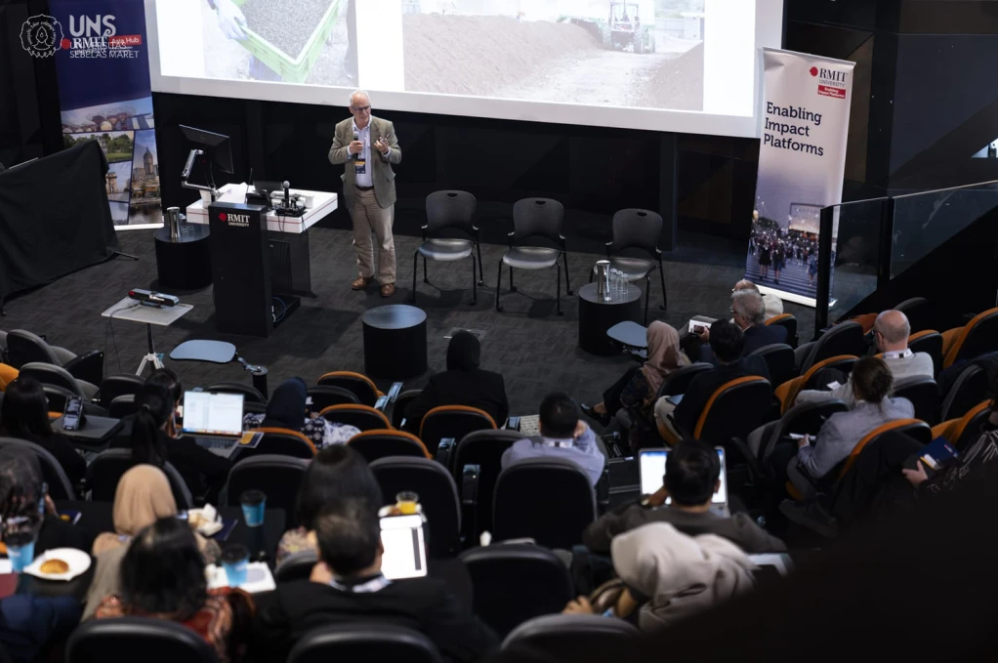
- UNS, in collaboration with the Royal Melbourne Institute of Technology (RMIT) University, organized the International Conference on Climate Change 2025. The conference brought together researchers, academics, policymakers, and practitioners from across the world. Participants discussed the challenges of climate change and the importance of cross-disciplinary global collaboration.
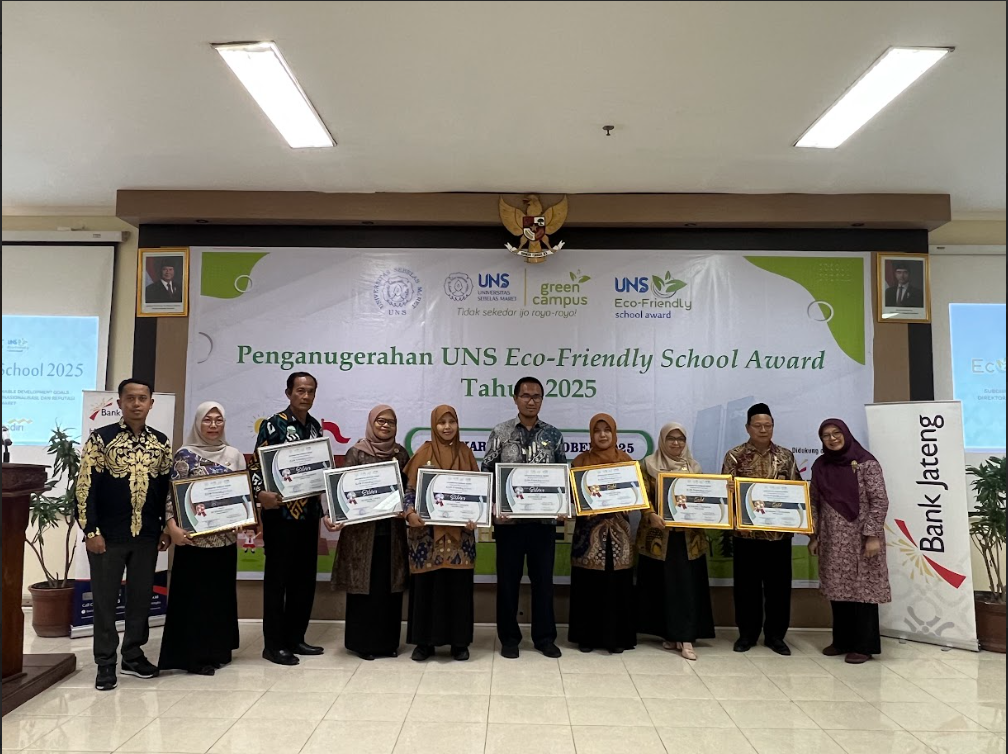
- On an educational level, the Eco-Friendly School Award initiative promotes sustainable behavior among local students and educators.