
15.2.6 Sustainable Management of Land for Tourism (Educational Outreach)
Empowering Local Communities through Sustainable Tourism and Landscape Management
Universitas Sebelas Maret (UNS) actively promotes sustainable land management for tourism through educational programs and community outreach initiatives. In 2025, UNS engaged local communities across several regions through training, participatory planning, workshops, and community support to improve their knowledge and skills in sustainably managing tourism areas.
These initiatives focused on developing educational tourism destinations, planning sustainable rural landscapes, identifying local environmental resources, and strengthening community capacity in tourism management. Through collaboration with village governments, tourism awareness groups, local enterprises, and residents, UNS encouraged tourism development that considers environmental protection, responsible land use, and local community participation. These activities demonstrate UNS’s contribution to SDG 15 by promoting the sustainable use of terrestrial resources and supporting the protection of local ecosystems.
Educational Programs and Community Outreach
UNS implemented the following initiatives in 2025 to provide educational programs and outreach for local communities on sustainable land management for tourism.
1. Community Training on Sustainable Educational Tourism Land Management in Mundu Village, Klaten
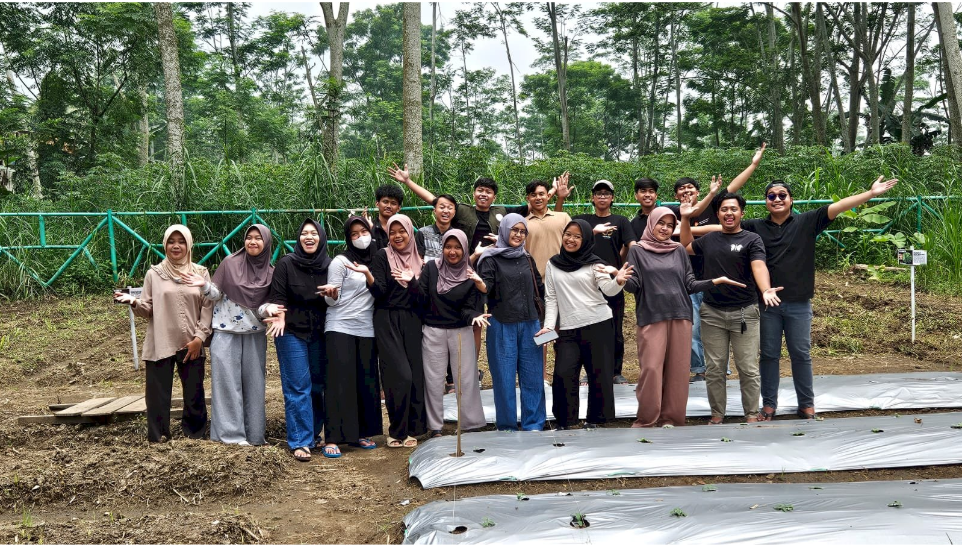
In 2025, Universitas Sebelas Maret (UNS) conducted a thematic community engagement program in Mundu Village, Tulung District, Klaten Regency, Central Java. The program involved UNS students and academic supervisors working directly with local residents and the Village Tourism Awareness Group (Pokdarwis). It aimed to strengthen community capacity to develop and manage an educational tourism destination based on local agricultural, livestock, and energy resources.
The educational outreach included training local residents to become tourism facilitators and guides, socialization on developing educational tourism packages, and guidance on arranging and managing land for educational tourism. The community also received assistance in developing physical tourism route maps, optimizing household garden areas, producing organic fertilizer, and planting animal feed crops in the educational tourism area. These activities provided practical knowledge on sustainable land management while helping the community integrate agricultural and livestock activities into tourism development.
The program was delivered through UNS’s community engagement activities, with no participant fees reported in the published source; it is therefore classified as Free. By combining community education, responsible land use, and sustainable tourism development, this initiative supports SDG 15 by promoting environmentally responsible management of terrestrial resources.
2. Participatory Landscape Planning and Sustainable Tourism Masterplan Development in Sumbersawit Village, Magetan
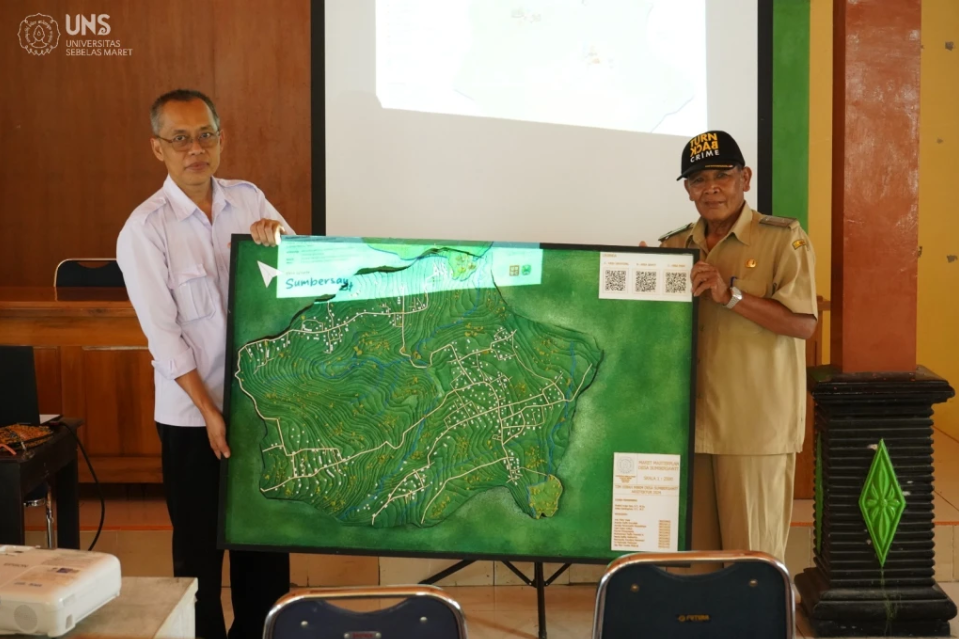
In 2025, the Urban Rural Design and Conservation Research Group (RG URDC Labo) from the Department of Architecture, Faculty of Engineering, UNS, conducted a community-based planning initiative in Sumbersawit Village, Sidorejo District, Magetan Regency, East Java. The program involved local residents and village authorities in identifying the village’s natural, cultural, and landscape resources as a foundation for sustainable tourism development.
The educational outreach involved participatory mapping, field observations, community interviews, and Focus Group Discussions (FGDs) to identify local tourism potential and environmental characteristics, including agricultural landscapes, natural springs, and cultural assets. Through these activities, community members helped develop a tourism master plan that provided planning directions for the sustainable management of the village landscape and its tourism resources. The results were also presented to the local community and village authorities to support future tourism development decisions.
This community engagement initiative was provided through UNS’s academic and community service activities, with no participant fees reported in the published source; it is therefore classified as Free. By involving local communities in landscape planning and sustainable tourism development, UNS contributes to SDG 15 through responsible land management and the protection of natural and terrestrial resources.
Reference: UNS – RG URDC Labo Develops a Tourism Village Masterplan for Sumbersawit Village, Magetan (2025)
3. Community Education and Sustainable Rural Tourism Development in Gentungan Village, Karanganyar
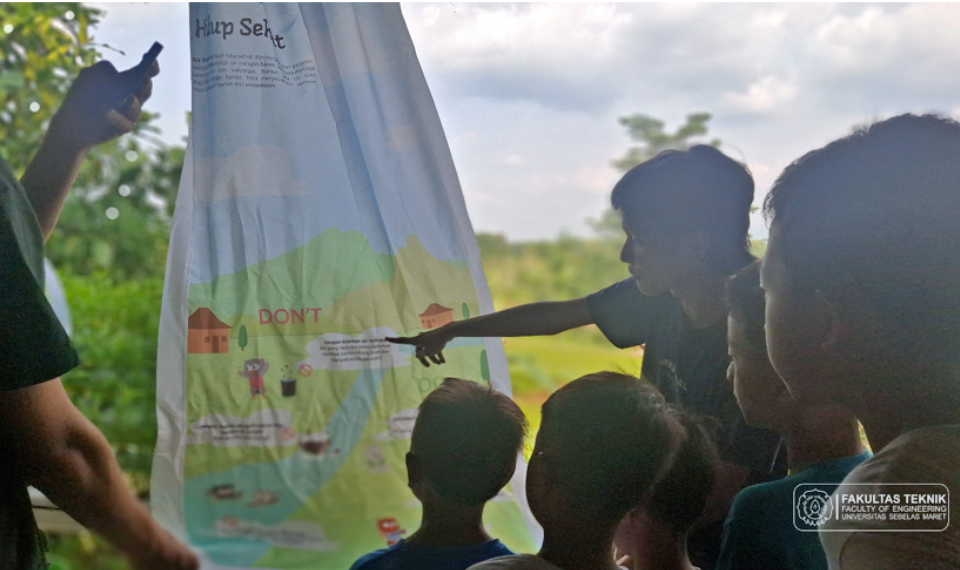
In 2025, the Faculty of Engineering UNS, through its Urban Rural Design and Conservation Laboratory (URDC), collaborated with Rotterdam University of Applied Sciences to support community-based development in Gentungan Village, Mojogedang District, Karanganyar Regency, Central Java. The initiative involved local residents and farming groups in identifying village assets and exploring opportunities for sustainable rural tourism development.
The educational outreach included community discussions and participatory mapping using the Green Map approach to identify agricultural landscapes, cultural heritage, and other local resources that could support village tourism. The program also provided environmental education through educational posters, interactive learning activities, and a simple water filtration workshop. These activities helped improve community awareness of environmental management and the value of local agricultural and cultural landscapes in sustainable tourism development.
The program was conducted as an academic collaboration and community engagement initiative, with no participant fees reported in the published source; it is therefore classified as Free. Through community participation, environmental education, and identifying sustainable tourism resources, UNS supports SDG 15 by encouraging responsible management of terrestrial landscapes and strengthening local awareness of ecosystem protection.
4. Community Capacity Building for Sustainable Tourism Management in Ponggok Village, Klaten
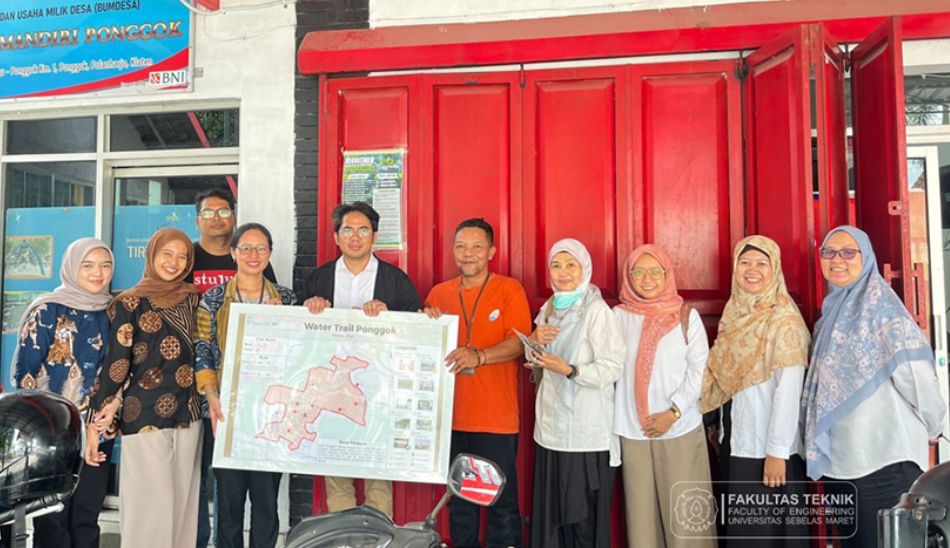
In October 2025, the Sustainable Urban Region Research Group from the Urban and Regional Planning Study Program, Faculty of Engineering UNS, conducted a community engagement initiative in Ponggok Village, Polanharjo District, Klaten Regency, Central Java. The program involved the management team of BUMDes Tirta Mandiri and local residents. Its main objective was to strengthen local institutional capacity in developing sustainable tourism strategies while maintaining the environmental quality of the village’s water-based tourism attractions.
The educational outreach included a mini-workshop on sustainable tourism diversification, field observations, and collaborative learning activities. The program also supported the development of a Water Trail map to identify tourism attractions and educational routes. Additional environmental education activities addressed spring conservation, plastic waste reduction, and community-based waste management through the village waste bank. The team also developed educational posters and tourism promotion materials to raise awareness of environmental protection among visitors and the local community.
This program was delivered as part of UNS’s community engagement activities, with no participant fees reported in the published sources; it is therefore classified as Free. By strengthening community knowledge of sustainable tourism management, water resource conservation, and environmental responsibility, the initiative contributes to SDG 15 through the sustainable management of tourism areas and the protection of terrestrial ecosystems.
References:
Conclusion
Through these four initiatives, Universitas Sebelas Maret demonstrated its commitment to offering educational programs and outreach for local communities on the sustainable management of land for tourism. The programs provided practical training, participatory landscape planning, environmental education, and institutional capacity building for communities involved in rural and nature-based tourism development.
By integrating sustainable land use, community participation, landscape planning, and environmental conservation into tourism development, UNS helps local communities manage their tourism resources responsibly. These initiatives strengthen the relationship between education, community empowerment, and environmental sustainability, contributing to SDG 15 and the broader goal of protecting terrestrial ecosystems while supporting sustainable tourism development.