
SDG 8 In Number
Number of employees
3,699
Number of academic staff
1,923
University expenditure (IDR)
1,561,027,263,159
Number of students
27,537
Number of students with work placements for more than a month
13,282
Number of employees on contracts of over 24 months
3,699
8.2.2 Employment Practice Unions
Recognition of Employment Unions and Protection of Staff Association Rights at Universitas Sebelas Maret
Universitas Sebelas Maret (UNS) is committed to promoting fair, inclusive, and non-discriminatory employment practices by recognizing all staff’s rights to freedom of association and collective bargaining. This commitment applies to lecturers, educational staff, support staff, women, and international employees. UNS recognizes the importance of employee organizations as platforms for expressing aspirations, protecting workers’ interests, promoting professional development, and supporting staff welfare.
The university’s approach is guided by national labor and human rights regulations, particularly Law No. 21 of 2000 on Trade Unions, Law No. 13 of 2003 on Manpower, and Law No. 39 of 1999 on Human Rights. Through its institutional commitment and support for employee organizations, UNS seeks to foster an inclusive working environment in which staff participation, equal rights, and collective well-being are respected. These efforts contribute directly to SDG 8 by promoting decent work, protecting labor rights, supporting inclusive employment practices, and fostering a fair and supportive working environment for all employees.
1. Institutional Commitment to Freedom of Association and Collective Bargaining
UNS recognizes freedom of association and collective bargaining as important principles of fair employment practices. The university acknowledges employees’ right to establish or join legitimate organizations to express their interests, advocate for their rights, and engage in constructive dialogue on employment and welfare matters. The Rector has also affirmed that the rights to freedom of association and labor organization have been considered fundamental principles since the beginning of his leadership.
This commitment is supported by national regulations. Law No. 21 of 2000 guarantees workers’ rights to establish, join, and manage trade unions without discrimination. Law No. 13 of 2003 on Manpower recognizes trade unions’ role in representing workers’ interests, including through collective bargaining. Furthermore, Law No. 39 of 1999 on Human Rights protects individuals’ right to form organizations to defend their interests.
These legal foundations support an inclusive approach to employment practices, ensuring that the rights to freedom of association and collective representation are respected regardless of gender or employment background.
References:
2. Employee Participation and Welfare through KPRI UNS

The Koperasi Pegawai Republik Indonesia (KPRI) UNS provides an organizational platform for employees to participate in activities that support their economic interests and welfare. Membership is open to members of the UNS community, including civil servants, permanent non-civil servant employees, and extraordinary members, such as retirees. Through savings and loans, retail, and other services, KPRI supports members’ economic needs and promotes their well-being.
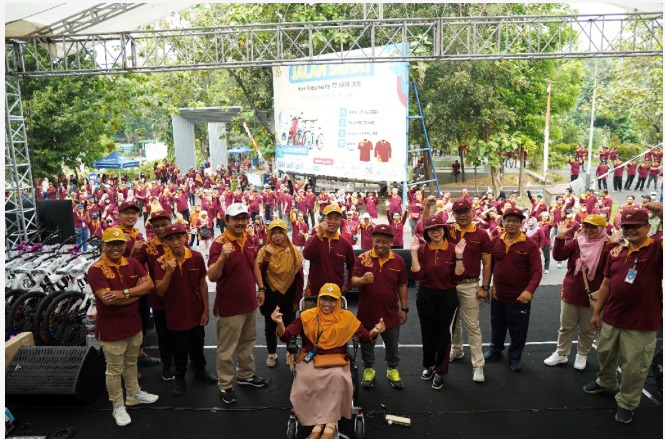
In 2025, KPRI continued to facilitate member participation through its Annual General Meeting for the 2024 financial year, held on February 19, 2025. The meeting was attended by the Rector of UNS as the cooperative’s advisor, university leaders, and 226 member representatives. This annual forum gives members an opportunity to participate in organizational discussions and decision-making. KPRI also organized a joint healthy walk and exercise activity on July 18, 2025, to commemorate the 78th Cooperative Day and strengthen solidarity among its members.
Through these activities, KPRI contributes to employee participation, economic welfare, and social solidarity. By supporting employees’ economic interests and providing opportunities for collective participation, these initiatives contribute to SDG 8, particularly promoting decent work and inclusive economic well-being.
References:
3. Women’s Participation and Social Welfare through Dharma Wanita Persatuan UNS

Dharma Wanita Persatuan (DWP) UNS provides a platform for women’s participation within the university community, particularly wives of civil servants, female lecturers, and female educational staff. Its activities focus on improving members’ welfare, knowledge, skills, and social participation while supporting broader community development initiatives. Through DWP, UNS encourages women’s participation in social and welfare activities and promotes an inclusive environment that values their contributions.
During 2025, DWP UNS continued to organize activities that supported women’s participation and social well-being. On April 15, 2025, DWP UNS held a Halalbihalal gathering and commemorated Kartini Day with a theme emphasizing gender equality and inclusive women’s empowerment. DWP also continued its social initiatives, including blood donation activities in collaboration with the Indonesian Red Cross (PMI) and participation in community activities such as the Solo Jenang Festival.
In addition, on December 9, 2025, DWP UNS collaborated with the Indonesian Cancer Institute to organize education on tumors and cancer, early detection of cervical cancer, and breast self-examination awareness at the Faculty of Engineering.
These initiatives demonstrate the organization’s continuing role in supporting women’s participation, knowledge, and welfare. By promoting gender equality, women’s empowerment, and inclusive participation in the workplace community, these activities support the objectives of SDG 8, particularly its commitment to decent work and equal opportunities for all.
References:
4. Professional Associations and Staff Representation

In addition to supporting employee organizations, UNS provides lecturers and educational staff opportunities to participate in professional associations relevant to their fields. These include the Indonesian Engineers Association (Persatuan Insinyur Indonesia/PII), the Indonesian Doctors Association (Ikatan Dokter Indonesia/IDI), the Indonesian Accountants Association (Ikatan Akuntan Indonesia/IAI), and other professional organizations.
Participation in these associations enables staff to strengthen their professional networks, develop their expertise, exchange knowledge, and contribute to their respective professional communities. Examples of organizational participation include the election of the Chair of the Professional Engineering Program at the Faculty of Engineering, UNS, as Chair of the PII Surakarta Branch, as well as the confirmation of the Indonesian Doctors’ Wives Association (IIDI) Solo Branch management at the Faculty of Medicine, UNS.
These examples reflect UNS’s support for professional association and staff participation. Such organizational involvement complements the university’s broader commitment to freedom of association and an inclusive working environment.
References:
Conclusion
Universitas Sebelas Maret demonstrates its commitment to fair employment practices by recognizing freedom of association, supporting employee participation, and promoting inclusive organizational involvement. Through its institutional commitment, KPRI UNS, DWP UNS, and professional associations provide opportunities for staff to participate in activities that support their interests, professional development, and welfare, including initiatives that encourage women’s participation.
Supported by national labor and human rights regulations, these efforts reflect UNS’s commitment to an inclusive working environment in which the rights, dignity, and well-being of employees are valued. By supporting freedom of association, employee participation, women’s empowerment, and economic welfare, UNS contributes to SDG 8 through its commitment to decent work, labor rights, and inclusive economic growth.