
15.3.5 Collaboration for Shared Land Ecosystems
UNS Collaborates with Local Communities to Maintain and Conserve Shared Land Ecosystems
Universitas Sebelas Maret (UNS) actively collaborates with local communities, farmer groups, village governments, and other partners to maintain and conserve shared land ecosystems through community-based environmental programs in 2025. These collaborations involve practical efforts to protect slopes, improve agricultural land management, conserve vegetation, prevent soil erosion, and restore soil quality.
Through its community service programs, student initiatives, research groups, and institutional partnerships, UNS works directly with local communities to address environmental challenges affecting their surrounding land ecosystems. These activities promote shared responsibility for maintaining land resources and supporting long-term environmental sustainability. They also demonstrate UNS’s contribution to Sustainable Development Goal (SDG) 15: Life on Land, particularly through collaborative conservation, sustainable land management, and protecting terrestrial ecosystems.
Community-Based Collaboration to Maintain Shared Land Ecosystems
The following initiatives demonstrate how UNS collaborates with local communities to maintain shared land ecosystems through different conservation approaches and local partnerships.
1. TANGKAS Program: Promoting Slope Conservation and Community Participation in Jambeyan Village
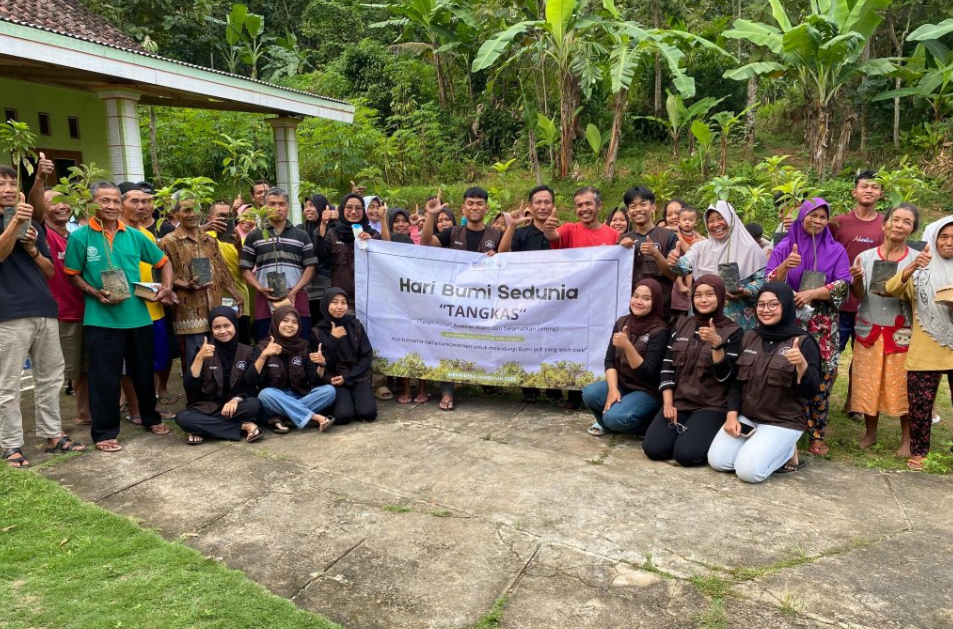
In April 2025, Universitas Sebelas Maret (UNS), through the Community-Based Learning Program (MBKM) of its Geography Education Study Program, implemented the TANGKAS (Planting Trees to Strengthen Nature and Protect Slopes) program in Jambeyan Village, Sambirejo District, Sragen Regency. The initiative brought together the UNS academic community, village officials, community leaders, and local residents to maintain shared land ecosystems in an area vulnerable to landslides.
The program involved planting 60 avocado seedlings on vulnerable slopes as a practical measure to strengthen vegetation cover and support slope conservation. Local residents participated in the program’s planning and implementation, with an emphasis on community involvement in maintaining the planted trees. Through this partnership, UNS promoted shared responsibility for protecting local land resources and reducing environmental risks. This initiative supports SDG 15 by strengthening community-based land conservation and maintaining the ecological functions of terrestrial ecosystems.
Reference: Geography Education Study Program, FKIP UNS – TANGKAS Program in Jambeyan Village (2025)
2. Organic Coffee Farming: Collaborating with Farmer Groups to Conserve Agricultural Land in Tlahab Village
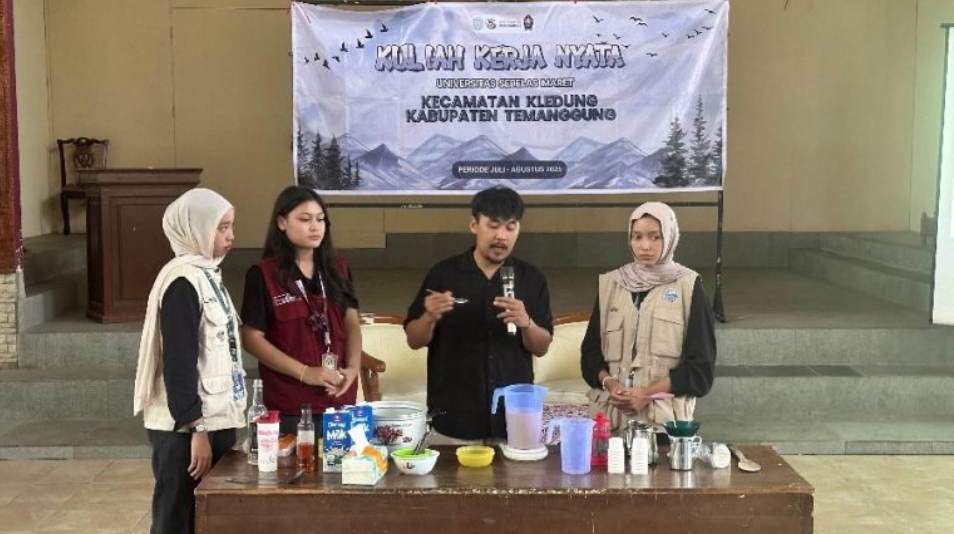
In July 2025, UNS, through its Thematic Community Service Program (KKN), collaborated with local farmer groups in Tlahab Village, Kledung District, Temanggung Regency, to promote organic coffee farming as a way to conserve land. The initiative involved local farmers in discussions and educational activities on sustainable agricultural practices to maintain the productivity and ecological condition of their shared agricultural land.
The program encouraged coffee cultivation in landslide-prone areas to help reduce soil erosion and maintain vegetation cover. It also promoted compost made from agricultural waste and natural pest-management practices to reduce dependence on chemical fertilizers and pesticides. Through this collaboration, UNS and local farmers supported more sustainable land management, improved soil fertility, and protected the local agricultural ecosystem. These efforts contribute to SDG 15 by maintaining terrestrial ecosystems and promoting sustainable use of land resources through community participation.
3. Ponggok Lestari: Partnership with Perhutani and the Local Community for Vegetation Conservation
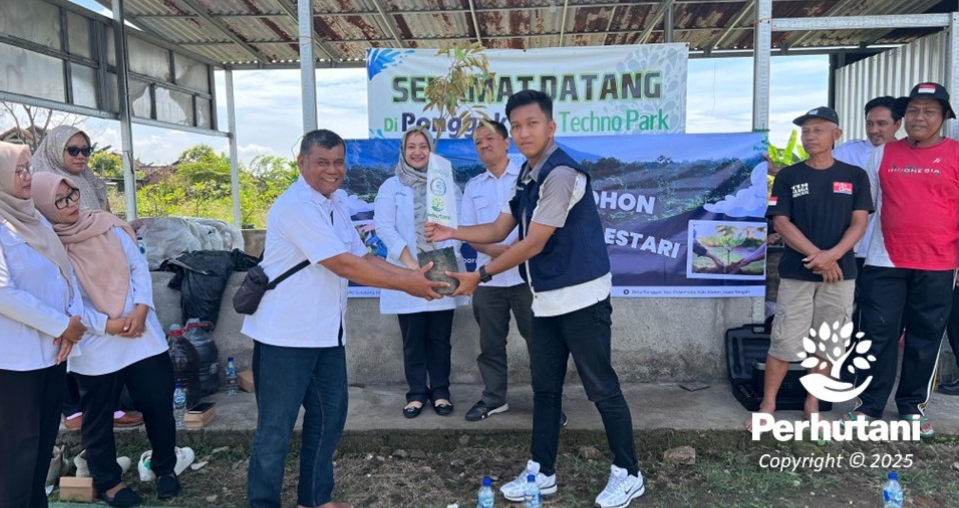
In August 2025, UNS students participating in the Community Service Program (KKN) collaborated with Perhutani and the village government of Ponggok, Polanharjo District, Klaten Regency, through the Ponggok Lestari tree-planting initiative. This partnership brought together the university, a state forestry enterprise, and the local community to support the maintenance of shared land ecosystems and improve local environmental conditions.
Under this collaboration, Perhutani provided fruit tree seedlings, while UNS students and local stakeholders participated in the planting activities. The initiative also emphasized the village government and residents’ role in maintaining and managing the planted vegetation. By combining institutional support with local participation, the program promoted shared responsibility for maintaining green spaces and protecting local environmental resources. This initiative supports SDG 15 through community-based vegetation conservation and collaborative efforts to sustain terrestrial ecosystems.
4. Land Conservation through Malang Orange Cultivation in Setren Village
In 2025, UNS conducted a community-based land conservation initiative with local farmers in Setren Village, Wonogiri Regency, by introducing Malang orange cultivation as a sustainable land-management approach. The program focused on agricultural land conservation, particularly in sloping areas vulnerable to soil erosion. In collaboration with farmers, the initiative promoted practical cultivation methods that support both agricultural productivity and the land’s ecological functions.
The activities included technical assistance on land management and the application of terracing to reduce surface runoff and prevent soil erosion. By introducing suitable cultivation practices and soil conservation techniques, UNS supported local farmers in maintaining soil quality and managing agricultural land more sustainably. This collaboration contributes to SDG 15 by promoting soil conservation, preventing land degradation, and maintaining the productivity and ecological sustainability of shared agricultural ecosystems.
Reference: UNS PRIMA Journal – Introduction of Malang Oranges as a Solution for Soil and Land Conservation
5. Agro Rumpun Hijau: Collaborative Management of Sustainable Agricultural Land in Matesih Village
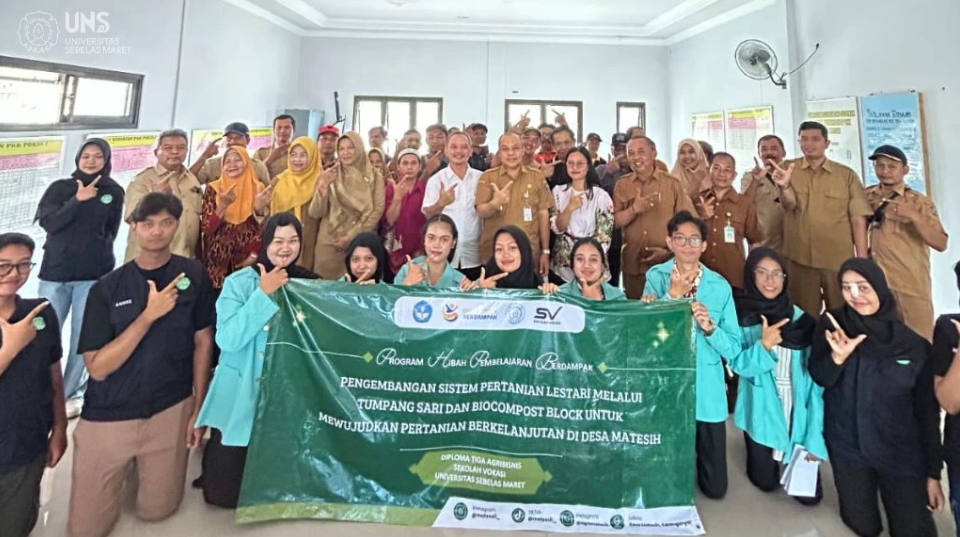
In September 2025, UNS, through the D3 Agribusiness Program of the Vocational School and the GAMAGRITA Student Organization Capacity Strengthening Program (PPK Ormawa), developed Agro Rumpun Hijau, a community-based agro-education initiative in Matesih Village, Karanganyar Regency. The program involved local farmer groups, the village-owned enterprise (BUMDes), village officials, and other local stakeholders in developing a shared agricultural management initiative.
The program promoted sustainable farming practices through intercropping, organic agricultural inputs, and the development of a farmer-managed agricultural area. Through training, community engagement, and agricultural capacity development, UNS supported local stakeholders in improving land management and promoting environmentally responsible farming. The initiative demonstrates collaboration with the local community in managing agricultural land as a shared resource. It contributes to SDG 15 by encouraging sustainable agricultural land management and maintaining the ecological quality of local terrestrial ecosystems.
6. Organic Waste Composting and Community-Based Greening in Daleman Village
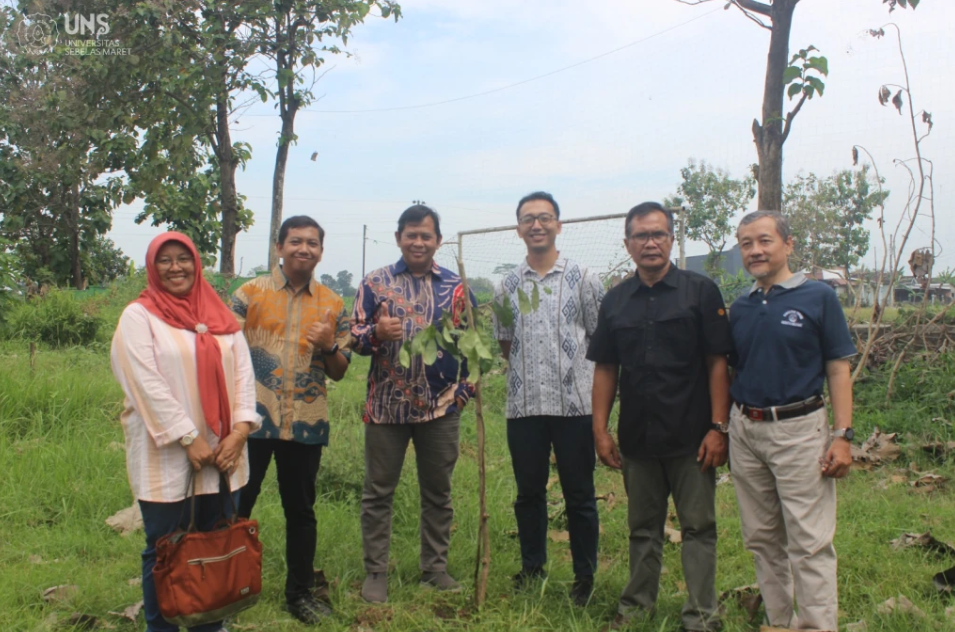
In 2025, UNS, through the Water Resources and Sustainable Environment Research Group of its Faculty of Engineering, collaborated with the local community of Daleman Village, Klaten Regency, and the relevant environmental authorities to promote organic waste management and soil improvement. The initiative focused on introducing composting technology to process organic waste, particularly palm sugar processing residues, into compost that can be used to support soil fertility and sustainable land management.
The collaboration also included community-based tree planting activities around the village public area, supported by local stakeholders. Through composting training, environmental support, and joint greening activities, UNS encouraged the local community to help maintain soil quality and improve the surrounding land environment. By connecting organic waste management with soil improvement and vegetation conservation, the program supports SDG 15 through collaborative efforts to maintain shared land ecosystems and promote more sustainable use of local natural resources.
Conclusion
Through these six initiatives, Universitas Sebelas Maret demonstrates its commitment to collaborating with local communities to maintain and conserve shared land ecosystems. The programs address different environmental contexts, including vulnerable slopes, agricultural land, forest vegetation, and community-managed green spaces. They also involve practical conservation measures such as tree planting, organic farming, terracing, composting, and sustainable agricultural land management.
By working together with local residents, farmer groups, village governments, and institutional partners, UNS promotes shared responsibility for protecting land resources and maintaining the ecological functions of terrestrial ecosystems. These collaborative initiatives strengthen the university’s contribution to SDG 15: Life on Land, particularly by supporting community participation, sustainable land management, soil conservation, and the long-term protection of local ecosystems.