
SDG 8 In Number
Number of employees
3,699
Number of academic staff
1,923
University expenditure (IDR)
1,561,027,263,159
Number of students
27,537
Number of students with work placements for more than a month
13,282
Number of employees on contracts of over 24 months
3,699
8.2.9 Employment Practice Labour Rights
Recognition and Protection of Labor Rights, Freedom of Association, and Collective Bargaining for All Employees
Universitas Sebelas Maret (UNS) recognizes the importance of protecting labor rights and ensuring fair and inclusive employment practices for all employees, including academic staff, administrative staff, support staff, women, and international staff. The university supports freedom of association and collective bargaining, allowing employees to organize, express their interests, and participate in discussions about their employment and welfare.
As a public university, UNS operates within Indonesia’s national legal framework on employment and trade unions. Its institutional commitment to decent work and economic growth is reflected in its support for employee organizations, professional associations, women’s participation, and activities that promote awareness of workers’ rights. These efforts contribute to SDG 8 by supporting fair employment practices, protecting labor rights, and promoting safe and inclusive working environments.
1. National Legal Framework for Labor Rights
UNS follows national regulations that recognize and protect workers’ rights, including freedom of association and collective bargaining. Law No. 13 of 2003 on Manpower provides the legal framework for employment relations and workers’ rights, including the right to establish and join trade unions. Furthermore, Law No. 21 of 2000 on Trade Unions recognizes workers’ rights to establish, join, and participate in trade unions to protect their interests and improve their welfare.
These regulations provide the foundation for recognizing labor rights across the university workforce, regardless of gender or nationality. By operating within this legal framework, UNS supports the principles of decent work, equal treatment, and the protection of employees’ rights, in line with SDG 8’s commitment to promoting decent work and protecting labor rights for all workers.
References:
2. Employee Organizations and Freedom of Association
UNS provides opportunities for employees to participate in organizations that support their professional interests, collective participation, and welfare. One such organization is the Koperasi Pegawai Republik Indonesia (KPRI) UNS, an employee cooperative that includes university employees, including civil servants, non-civil servants, and retired staff. Through its organizational activities and Annual General Meeting (Rapat Anggota Tahunan/RAT), KPRI provides a platform for members to participate in organizational decision-making, communicate their interests, and discuss matters related to their collective welfare.
In addition, lecturers and administrative staff are encouraged to join professional associations such as the Indonesian Engineers Association (PII), Indonesian Medical Association (IDI), and Indonesian Institute of Accountants (IAI). These associations offer opportunities for professional development, networking, and idea exchange. Together, these organizations contribute to a working environment that values employee participation, professional solidarity, and freedom of association.
Reference: Universitas Sebelas Maret – KPRI UNS
3. Inclusion of Women and International Staff
UNS supports an inclusive approach to employment practices by recognizing the importance of equal participation and opportunities for all employees, including women and international staff. The university’s employee cooperative and professional association activities provide organizational spaces for employee participation, while international employees are reported to have opportunities to join KPRI and take part in its activities.
Women’s participation is also supported through Dharma Wanita Persatuan (DWP) UNS, which promotes women’s empowerment, social welfare, and skills development among its members. Although DWP is not a trade union, its activities complement the university’s efforts to support women’s participation and well-being within the university community. These initiatives reflect the broader principles of SDG 8 by promoting inclusive employment practices and supporting women’s welfare and participation in the workplace.
4. Promotion and Awareness of Workers’ Rights in 2025
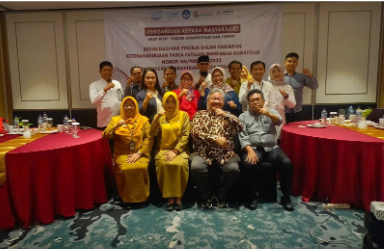
In 2025, the Faculty of Law at UNS, through its Administrative and Energy Law Research Group, collaborated with the Surakarta City Manpower Office and the Regional Wage Council to organize a socialization program on workers’ rights following Constitutional Court Decision No. 168/PUU-XXI/2023. The activity involved representatives from the government, employers’ associations, trade unions, academics, and social security institutions.
The discussion provided a platform for different stakeholders to exchange views on workers’ rights, wage policies, and the implications of regulatory changes for employment relations. Through the involvement of its academics in this multi-stakeholder dialogue, UNS helped promote awareness of labor rights and support more inclusive, evidence-based employment policies. This engagement reinforces the university’s contribution to SDG 8, particularly in promoting decent work, protecting workers’ rights, and encouraging constructive dialogue among employment stakeholders.
Conclusion
Through its compliance with national labor regulations, support for employee organizations and professional associations, promotion of women’s participation, and engagement in discussions on workers’ rights, Universitas Sebelas Maret demonstrates its commitment to recognizing and supporting labor rights. These efforts reflect the principles of freedom of association, employee participation, and inclusive employment practices for all, including women and international staff.
By promoting awareness of workers’ rights and supporting employee welfare, UNS contributes to SDG 8: Decent Work and Economic Growth. The university recognizes that protecting labor rights and ensuring opportunities for collective participation are key to building a fair, inclusive, and sustainable working environment.