
15.2.5 Sustainable Management of Land for Agriculture (Educational Outreach)
Sustainable Agricultural Land Management through Community Education and Outreach
Universitas Sebelas Maret (UNS) actively provides educational programs and community outreach to local communities to promote sustainable agricultural land management. Through community service programs, student community engagement, and faculty-led initiatives, UNS shares practical knowledge and skills with farmers and local community groups on sustainable farming practices, soil fertility management, organic agriculture, and environmentally friendly agricultural technologies.
These programs combine education, training, demonstrations, and direct assistance to help communities adopt responsible agricultural practices. Activities include organic farming, natural pest control, organic fertilizer production, soil improvement, and using agricultural waste as a productive resource. Through these initiatives, UNS contributes to SDG 15 (Life on Land) by promoting sustainable land use, protecting soil quality, reducing environmental impacts from agricultural activities, and supporting the long-term sustainability of local agricultural systems.
1. Organic Farming Education for Land Conservation in Tlahab Village, Temanggung
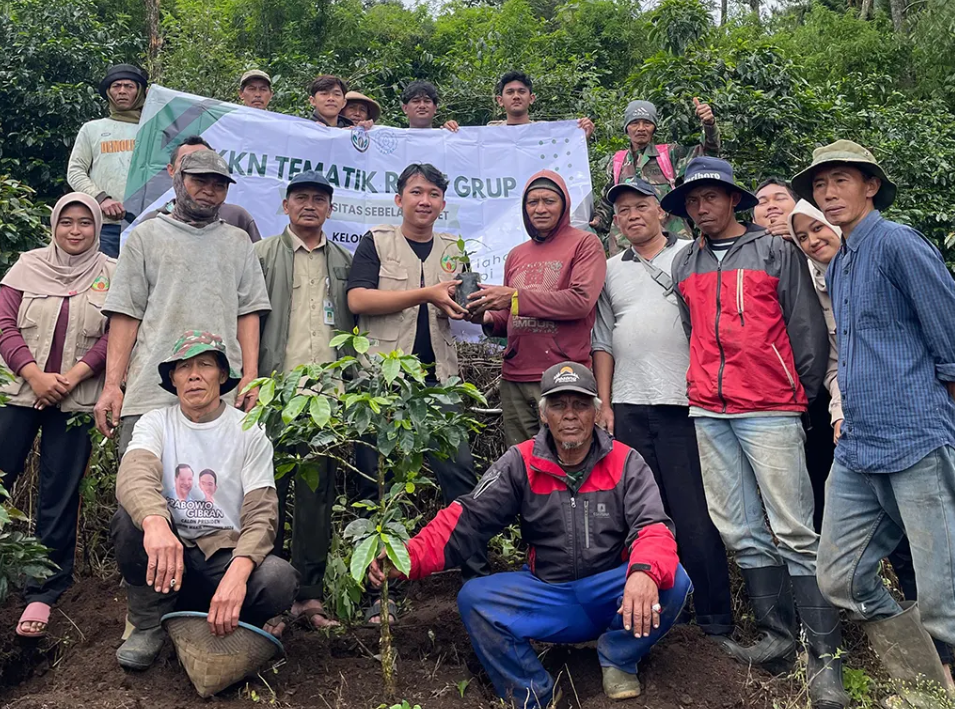
On July 28, 2025, UNS Thematic Community Service Program (KKN) Group 334 conducted an educational outreach program on organic farming as an approach to land conservation in Tlahab Village, Temanggung. The program involved representatives from local farmer groups. It introduced the basic principles of organic agriculture, focusing on maintaining natural soil fertility and protecting agricultural land through environmentally responsible farming practices. UNS provided the educational outreach free of charge to participating local farmers as part of its community service program.
The educational program covered the use of organic compost made from agricultural waste, natural pest and disease management, and crop rotation. Farmers also received information on planting coffee trees on landslide-prone land to reduce soil erosion and protect land stability. These activities provided local communities with practical knowledge of sustainable agricultural land management.
By promoting organic farming and land conservation practices, this outreach program supports SDG 15 by protecting soil resources, preventing land degradation, and promoting sustainable agricultural land management.
Reference: UNS – Students Promote Organic Coffee Farming as a Land Conservation Approach in Tlahab Village
2. Sustainable Farming System and Biocompost Block Training in Matesih Village, Karanganyar
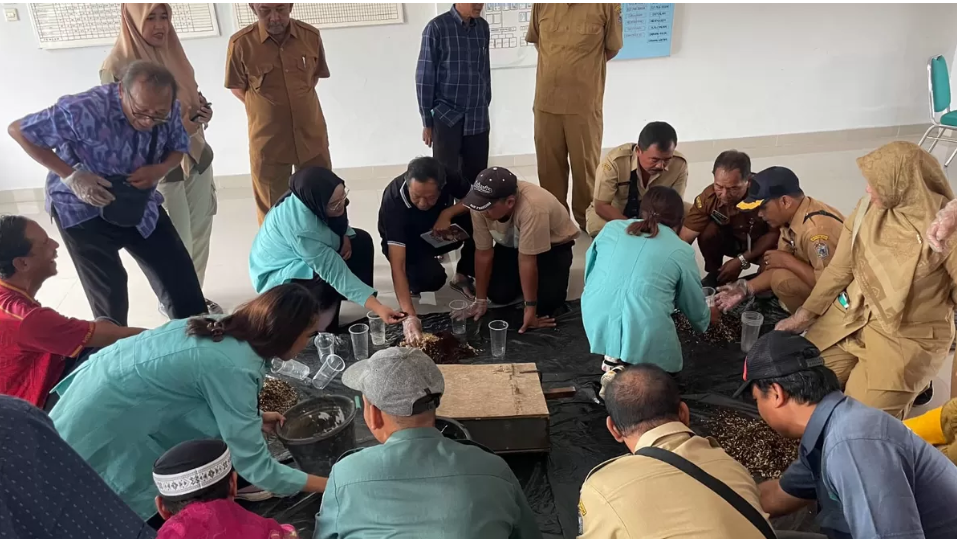
On September 15, 2025, the JARPAK Community-Based Learning Grant Team from the D3 Agribusiness Program, Vocational School of UNS, conducted an educational outreach and training program on sustainable farming systems in Matesih Village, Karanganyar. The program engaged residents and farmer groups in learning environmentally responsible agricultural practices, including intercropping systems and using agricultural waste as a resource for sustainable farming. The program was offered free of charge to local community members and farmer groups as part of UNS’s community-based learning initiative.
The training introduced the production of biocompost blocks from agricultural waste as an environmentally friendly fertilizer input. Through practical demonstrations, community members learned how to process agricultural residues into useful materials that support soil fertility and reduce farming waste. The program also promoted sustainable farming practices that encourage more efficient use of local agricultural resources.
This initiative contributes to SDG 15 by encouraging sustainable agricultural land management, improving soil quality through organic inputs, and supporting local communities in adopting more environmentally responsible farming systems.
Reference: UNS – Community-Based Learning Grant Team Develops Sustainable Farming Systems
3. Trichoderma and Botanical Pesticide Training in Karangbangun Village, Karanganyar
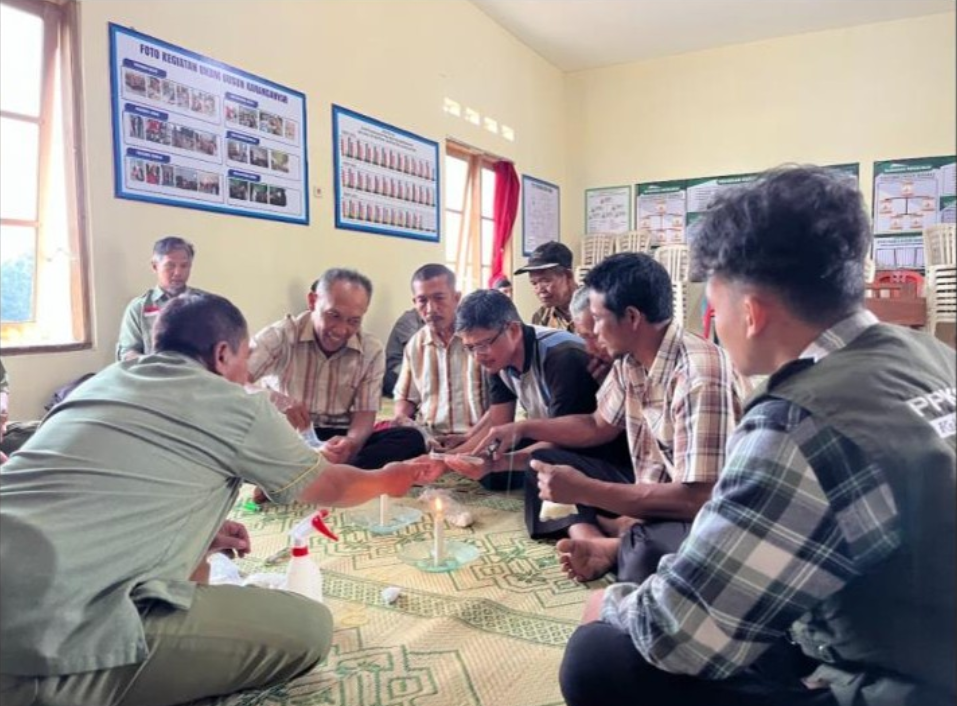
On October 21, 2025, the Student Organization Capacity Strengthening Program (PPK Ormawa) team from the Faculty of Agriculture, UNS, in collaboration with the Karanganyar Regency Agriculture, Food, and Fisheries Office, held training on using Trichoderma and botanical pesticides in Karangbangun Village, Karanganyar. The program involved 20 participants representing eight farmer groups and one women’s farmer group (KWT). UNS provided the training free of charge as part of its community empowerment initiative.
The educational outreach introduced beneficial microorganisms and plant-based pesticides as environmentally friendly approaches to agricultural production. Through training and practical application, farmers learned how these biological technologies can support soil health and help manage agricultural pests while reducing dependence on synthetic chemical inputs.
By strengthening farmers’ knowledge of biological pest management and environmentally responsible farming practices, this program supports SDG 15 through improved land management, better soil quality, and reduced environmental pressure from chemical inputs.
Reference: Faculty of Agriculture UNS – Trichoderma and Botanical Pesticide Training in Karangbangun Village
4. Organic Fertilizer and Natural Pesticide Training in Sengon Village, Klaten
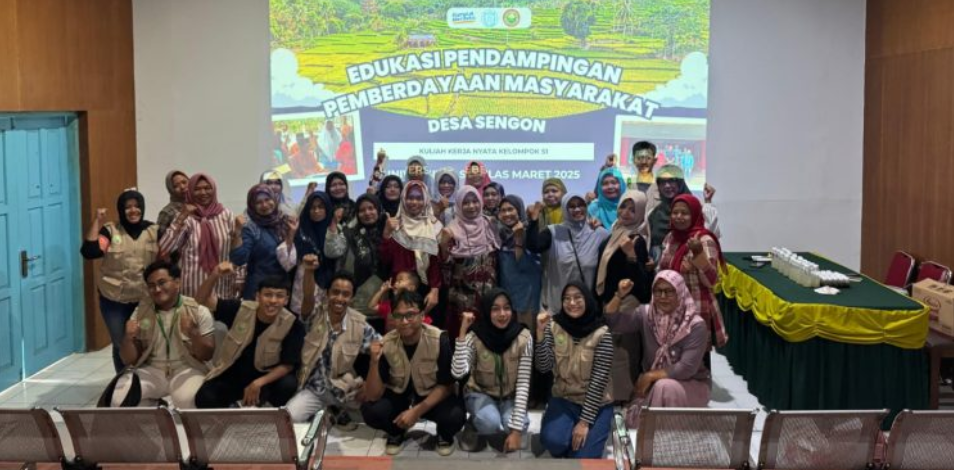
On February 1–2, 2025, Universitas Sebelas Maret (UNS), through its Thematic Community Service Program (KKN) Group 51, conducted a two-day educational outreach program on sustainable agricultural practices in Sengon Village, Prambanan District, Klaten Regency. The program involved members of the local Women Farmers Groups (Kelompok Wanita Tani/KWT) from all 11 neighborhood units (RW) and aimed to strengthen their knowledge and practical skills in sustainably managing agricultural land.
The first training session focused on producing and applying organic pesticides using locally available natural materials, including lemongrass, tobacco, and neem leaves. Participants received information about the environmental risks of excessive synthetic pesticide use and took part in hands-on demonstrations of organic pesticide preparation. The second session introduced Jadam Microbial Solution (JMS), a microbial preparation intended to support soil biological activity and improve soil conditions. The training addressed local agricultural challenges, particularly hard and sticky clay soils and concerns about soil nutrient availability. Participants learned about JMS preparation and application through educational presentations, practical demonstrations, instructional leaflets, and sample distribution for trial use on their agricultural plots.
By providing practical education on organic pest management and biological approaches to soil improvement, UNS encouraged local farmers to adopt more environmentally responsible agricultural practices and reduce unnecessary reliance on synthetic chemical inputs. This community outreach program contributes to SDG 15 (Life on Land) by supporting soil health, promoting sustainable agricultural land management, and strengthening local communities’ capacity to maintain productive agricultural land.
UNS provided the educational sessions, practical demonstrations, and learning materials free of charge to participating local farmers as part of its community service program.
5. Biochar and Environmentally Friendly Seedling Media for Cabbage Farmers in Pancot Village, Karanganyar
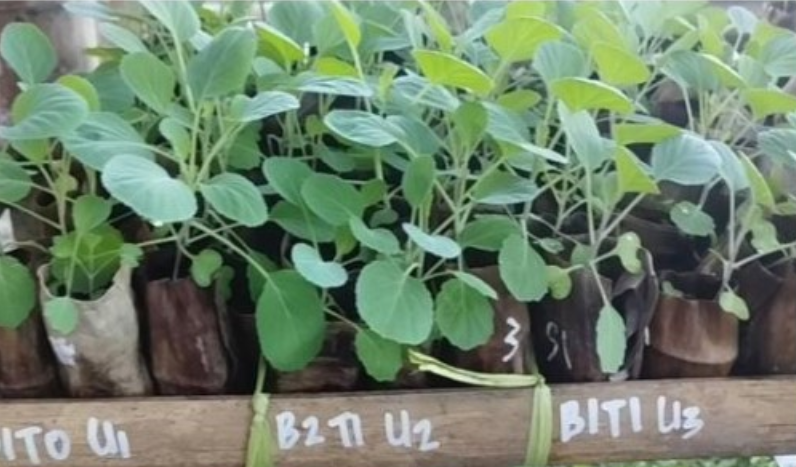
Between June and August 2025, an UNS community service team introduced environmentally friendly seedling media to cabbage farmers in Pancot Village, Karanganyar. The program focused on using biochar as a growing medium and biodegradable planting bags made from banana leaves as an alternative to conventional plastic bags. UNS provided the program free of charge to participating local farmers as part of its community service activities.
The initiative aimed to introduce more sustainable agricultural materials and practices to local farmers. Biochar was introduced as a growing medium that supports soil health and improves seedling conditions. At the same time, biodegradable banana-leaf bags provide an alternative that can reduce plastic waste associated with agricultural activities. The program also addressed clubroot disease in cabbage cultivation through environmentally responsible approaches.
This initiative supports SDG 15 by promoting sustainable agricultural inputs, encouraging better management of growing media, and reducing potential pollution from agricultural materials. It also contributes to community awareness of more sustainable approaches to agricultural production.
Reference: Faculty of Agriculture UNS – Biochar for Sustainable Seedling Media
6. Organic Fertilizer and Botanical Pesticide Training Using Local Microorganisms in Darmorejo Village
On February 6, 2025, an UNS community service team conducted an educational program for farmer groups in Darmorejo Village through training on the production of California paste (Bubur California) and the use of local microorganisms (MOL). The program was documented in the Journal of Policy, Volume 16, Number 2, published on December 31, 2025. It aimed to strengthen farmers’ knowledge and skills in applying sustainable agricultural practices and Good Agricultural Practices (GAP). UNS provided the training and practical demonstrations free of charge to participating farmer groups as part of its community service program.
The educational activities included socialization and practical demonstrations on producing MOL from locally available organic materials as a composting starter, as well as preparing California paste as a botanical pesticide. These activities helped farmers develop the skills to produce organic fertilizer and plant-based pest-control materials independently, using locally available resources and reducing reliance on synthetic agricultural inputs.
Through this community outreach program, UNS promotes sustainable land management by encouraging organic soil inputs, environmentally friendly pest management, and responsible agricultural practices. The initiative contributes to SDG 15 by supporting soil health, reducing farming’s environmental impacts, and strengthening local capacity for sustainable agriculture.
References:
7. Organic Fertilizer Production Training and Assistance for the Boyolali Organic Rice Producers Cooperative
On May 31, 2025, the Center for Cooperative and MSME Assistance Studies (PSP-KUMKM) of the UNS Institute for Research and Community Service (LPPM UNS) conducted training and assistance on organic fertilizer production for approximately 15 members and administrators of the Boyolali Organic Rice Producers Cooperative (APOB). The program aimed to strengthen farmers’ knowledge and practical skills in using organic materials to support sustainable agricultural production. UNS provided the training and assistance free of charge to participating cooperative members as part of its community service program.
The training covered several types of organic fertilizer, including manure-based fertilizer, biofertilizer, liquid organic fertilizer, biochar, and green manure. Through practical sessions and direct assistance, participants learned about different organic inputs that can help maintain soil fertility and support organic rice farming. The program also encouraged farmers to make better use of locally available organic resources in their agricultural activities.
This initiative supports SDG 15 by promoting sustainable agricultural land management through improved soil fertility practices, the use of organic agricultural inputs, and stronger community capacity to maintain environmentally responsible farming systems.
Reference: PSP-KUMKM LPPM UNS – Organic Fertilizer Production Training and Assistance for APOB Boyolali
Conclusion
Through its community service and educational outreach programs in 2025, Universitas Sebelas Maret demonstrated its commitment to sharing knowledge and practical skills with local communities on sustainable land management for agriculture. The six free programs provided education, training, practical demonstrations, and assistance to farmers and community groups on organic farming, land conservation, soil fertility improvement, biological pest control, and the productive use of agricultural waste.
These initiatives show how UNS contributes to sustainable agricultural practices beyond the university campus by engaging directly with local communities and supporting their capacity to manage agricultural resources responsibly. By promoting soil conservation, reducing dependence on synthetic chemical inputs, encouraging organic fertilizer production, and improving farming practices, UNS supports the objectives of SDG 15: Life on Land, particularly protecting terrestrial ecosystems and promoting sustainable land use.