
15.2.1 Events About Sustainable Use Of Land
Promoting Sustainable Land Use and Forest Conservation through Education, Research, and Community Engagement
Universitas Sebelas Maret (UNS) actively supports and organizes events that promote the conservation and sustainable use of land, including forests and natural ecosystems. Through educational programs, community engagement, field activities, and institutional collaborations, UNS encourages students, researchers, and local communities to understand the importance of protecting terrestrial ecosystems and managing natural resources responsibly.
Throughout 2025, these initiatives addressed several aspects of SDG 15 (Life on Land), including forest conservation, biodiversity protection, sustainable land management, ecosystem restoration, and preventing land degradation. The activities also gave participants opportunities to gain practical knowledge and take part in conservation efforts.
1. Supporting Forest Biodiversity through Sonokeling Seedling Conservation at KHDTK Gunung Bromo
In 2025, Universitas Sebelas Maret, through its Forestry and Soil Science Study Programs at the Faculty of Agriculture, supported a community engagement program to develop a genetic resource nursery for Sonokeling (Dalbergia latifolia) at the Special Purpose Forest Area (KHDTK) of Mount Bromo, Karanganyar. The initiative focused on conserving this valuable forest tree species, which faces conservation concerns, while supporting its sustainable utilization.
The program involved the KHDTK management team and the Putri Serang Forest Farmers Group (KTH). Activities included developing a simple nursery, providing training on root-cutting propagation techniques, and improving local knowledge and skills in Sonokeling cultivation. By combining forest tree conservation with community capacity building, the initiative promoted the responsible management of forest resources and supported local participation in protecting forest biodiversity.
Reference: Assistance in Developing a Genetic Resource Nursery for Sonokeling Conservation at KHDTK Gunung Bromo – Journal of Sustainable Community Development (DOI: https://doi.org/10.19166/jspc.v10i2.10848)
2. Promoting Forest Conservation through the Mount Merbabu International Summer Course
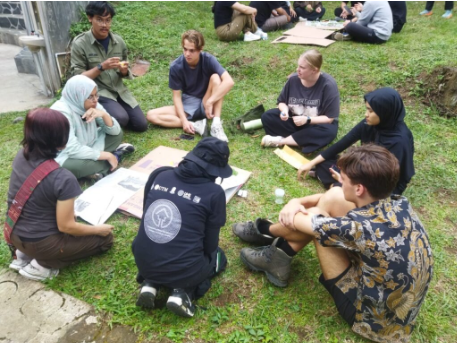
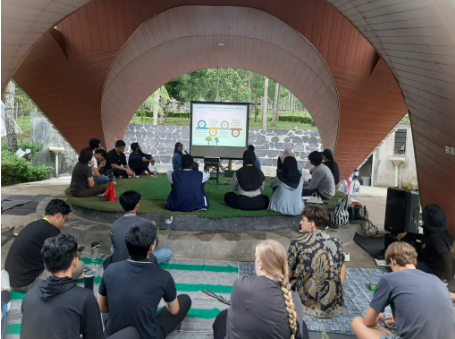
On September 19–21, 2025, the Faculty of Mathematics and Natural Sciences (FMIPA UNS), in collaboration with the Mount Merbabu National Park Authority, organized an international summer course entitled Uncovering the Charm of Mount Merbabu. The program brought together students from Indonesia and several other countries, including the Netherlands, Pakistan, Nigeria, Bangladesh, and Turkmenistan, to explore forest ecosystems and learn about biodiversity conservation.
The program combined classroom sessions with field-based learning in Mount Merbabu National Park. Participants took part in vegetation observation, endemic flora and fauna studies, ecosystem exploration, and discussions on conservation practices, scientific data collection, and ecological research methods. Through direct engagement with a protected forest area, the event promoted awareness of the importance of forest conservation and the sustainable management of natural ecosystems.
This initiative directly supported SDG 15 by connecting scientific education with practical efforts to protect terrestrial biodiversity and maintain the ecological functions of forest ecosystems.
3. TANGKAS Program: Promoting Slope Conservation and Community Participation in Jambeyan Village
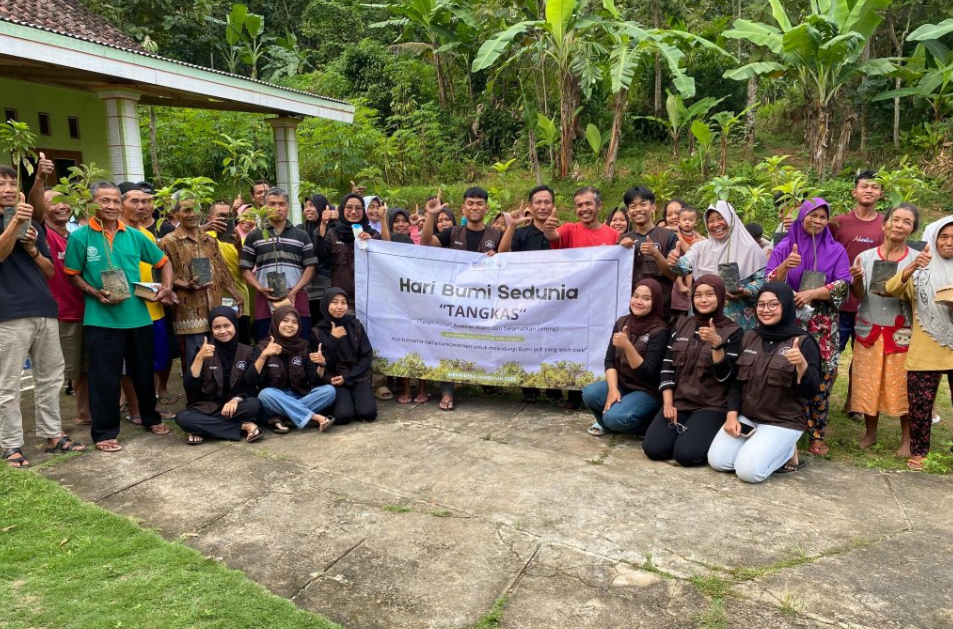
On April 28, 2025, the Geography Education Study Program, Faculty of Teacher Training and Education (FKIP UNS), organized the TANGKAS program (Tanam Pohon untuk Kuatkan Alam dan Selamatkan Lereng) in Jambeyan Village, Sragen Regency. The program aimed to strengthen community resilience to landslides through environmental education and practical slope conservation activities.
The event began with an educational session on landslide risks and the importance of slope conservation, involving local residents, village officials, and community representatives. This was followed by the planting of 60 avocado seedlings in areas identified as vulnerable to landslides. The selected trees were expected to stabilize slopes while providing potential economic benefits to the community.
By combining environmental education, tree planting, and community participation, TANGKAS promoted sustainable land use and helped prevent land degradation. The initiative also demonstrated UNS’s contribution to SDG 15 through community-based conservation and the protection of terrestrial ecosystems.
4. Strengthening Forest Conservation through the Alam School and Rare Tree Monitoring at KHDTK Alas Bromo
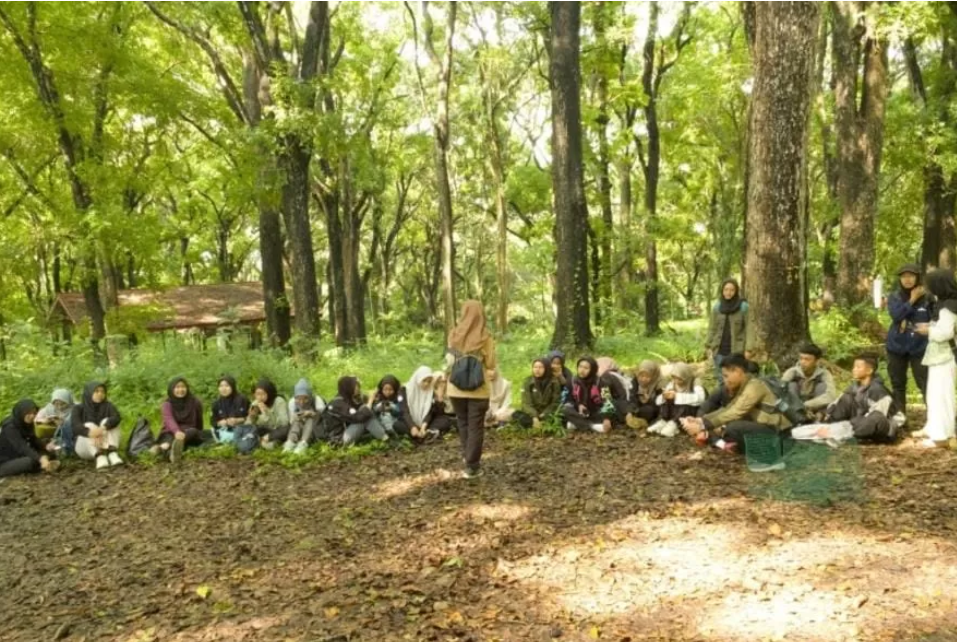
In December 2025, educational and conservation activities were conducted at KHDTK Alas Bromo, a special-purpose forest area managed by UNS in Karanganyar. The activities included an Alam School program focusing on geospatial technology and a field-based monitoring program for rare tree seedlings previously planted in the forest area. Participants included university students, environmental activists, and members of the public.
The educational sessions introduced participants to practical tools for understanding and monitoring terrestrial ecosystems, including GPS applications, satellite imagery interpretation, vegetation cover analysis, and land-use change monitoring. Participants also learned about river and watershed bioengineering as an approach to erosion control and ecosystem restoration. The program was complemented by monitoring and maintaining rare tree seedlings to assess their growth and support their survival.
Through these activities, UNS promoted forest conservation as a continuous process involving education, monitoring, and active ecosystem management. The initiative supported SDG 15 by encouraging public participation in protecting forest biodiversity, monitoring land-cover changes, and maintaining the ecological functions of forest areas.
5. Introducing Forest Ecosystems through the 2025 Forest Ecosystem Introduction Practice (PPEH)
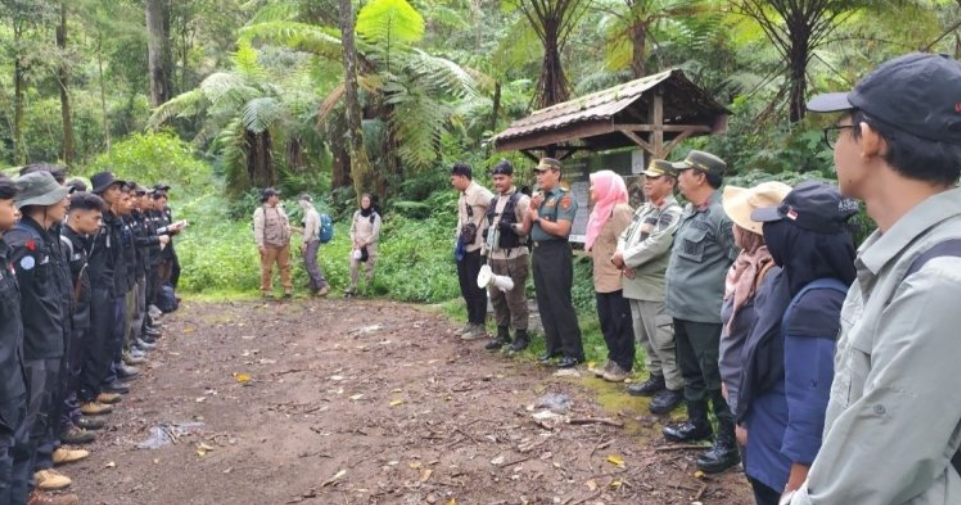
On June 14, 2025, the Forestry Study Program, Faculty of Agriculture, UNS, conducted the Forest Ecosystem Introduction Practice (Praktik Pengenalan Ekosistem Hutan) in a protected forest area managed by Perhutani in Licin, Banyuwangi. The field activity involved 102 second-semester students and was supported by Perhutani’s Banyuwangi Barat Forest Management Unit (KPH).
The activity provided students with direct learning experiences about different forest ecosystems, including coastal forests, mangrove forests, lowland forests, and mountain forests. Through field observation and practical learning, students gained a better understanding of forest diversity, ecological characteristics, and the importance of maintaining forest ecosystems.
By introducing students to different forest types and their ecological functions, the activity promoted knowledge and awareness of forest conservation and sustainable forest management. It also supported SDG 15 by preparing future forestry professionals to contribute to protecting and responsibly using terrestrial ecosystems.
6. Promoting Sustainable Coffee Farming and Soil Conservation through the KopiNatura Program
In 2025, UNS academics and students conducted a community engagement program in Glapansari Village, Temanggung Regency, through the KopiNatura initiative. The program promoted sustainable coffee farming through local-based natural pesticide education, organic agricultural practices, and environmentally friendly technologies.
One supporting activity focused on soil conservation through terracing, a land management practice designed to reduce soil erosion and support the sustainable use of sloping agricultural land. Other activities included using agricultural and livestock waste, environmental education through the Alam School program, and developing a vertical garden.
Through participatory education, demonstrations, and community discussions, the initiative encouraged farmers to adopt more sustainable agricultural practices. By addressing soil degradation and promoting responsible agricultural land management, KopiNatura contributed to SDG 15 and demonstrated how community-based education can support the conservation and sustainable utilization of land.
7. Promoting Sustainable Agricultural Land Use through the International Public Lecture on the Sustainable Rice Platform
On April 14, 2025, the Agricultural Extension and Communication Study Program, Faculty of Agriculture, UNS, in collaboration with Rikolto, organized an international public lecture entitled Transforming Sustainable Agriculture through Communication of Sustainable Rice Platform (SRP) Innovations and Practices. Mr. Tuan Le, Rice Program Director for Southeast Asia at Rikolto Indonesia, served as the main speaker.
The lecture introduced participants to innovations and best practices under the Sustainable Rice Platform, focusing on more environmentally friendly, economically viable, and socially inclusive rice farming. It provided a platform to discuss how sustainable agricultural practices can improve farming systems while reducing environmental pressures associated with land use.
Through this event, UNS promoted the sustainable utilization of agricultural land by encouraging knowledge exchange on responsible farming practices and environmental sustainability. The initiative supported SDG 15 by highlighting the importance of maintaining soil health, reducing land degradation, and balancing agricultural productivity with protecting terrestrial ecosystems.
Conclusion
Through these educational, research-based, and community engagement initiatives,
Universitas Sebelas Maret demonstrates its institutional commitment to supporting and organizing events that promote the conservation and sustainable utilization of land, including forests and natural ecosystems. The activities address different but complementary aspects of land conservation, from protecting rare forest tree species and exploring protected forest ecosystems to promoting soil conservation, sustainable agriculture, and community participation in environmental management.
These initiatives contribute to SDG 15 by strengthening biodiversity conservation, supporting sustainable forest and land management, preventing land degradation, and increasing public awareness of the importance of protecting terrestrial ecosystems. By involving students, academics, local communities, and external partners, UNS continues to promote practical knowledge and collective action toward the long-term conservation and sustainable utilization of land.