

SDG 16 In Number
Number of graduates
6,213
Number of graduates from law and enforcement related courses
1,554
16.3.1 Provide expert advice to government
Strengthening Evidence-Based Governance Through Academic Expertise and Policy Advisory Contributions
Universitas Sebelas Maret (UNS) actively strengthens governance by providing expert advice, policy guidance, and evidence-based recommendations to local, regional, and national governments. Through its faculty members, research centers, and academic units, UNS applies its academic expertise to support government institutions in formulating regulations, developing strategic policies, and addressing public challenges.
These contributions take various forms, including appointing university experts to government committees, preparing policy roadmaps, providing scientific evidence, and collaborating on policy research and development. By connecting academic knowledge with government decision-making, UNS supports more informed, inclusive, and accountable public institutions. These initiatives reflect the university’s commitment to Sustainable Development Goal (SDG) 16, which promotes effective, accountable, and inclusive institutions at all levels.
A. Local Government
At the local level, UNS provides expert advice and policy recommendations to city and regency governments through faculty experts and university research centers. These contributions help local governments develop regulations, improve public services, and address social and economic challenges through evidence-based approaches.
- UNS Faculty Members as Expert Advisors to the Surakarta City Council in Drafting Local Regulations
In 2025, several UNS faculty members were officially appointed as expert advisors to the Special Committees (Panitia Khusus/Pansus) of the Surakarta City Council (DPRD Kota Surakarta). Their involvement supported discussions and the preparation of five draft local regulations (Rancangan Peraturan Daerah/Raperda) covering disaster management, early childhood education, regional development planning, archival management, and local taxation.
The appointed experts included Prof. Dr. Ir. Prabang Setyono for disaster management; Dr. Upik Elok Endang Rasmani for early childhood education; Dr. Mulyanto for the 2025–2029 Regional Medium-Term Development Plan (RPJMD); Prof. Dr. Rahayu Subekti for archival management; and Ariyanto Adhi Nugroho for amendments to local tax and retribution regulations. Their appointments were documented through official decisions issued by the Secretary of the Surakarta City Council, supported by assignments from the university’s leadership or faculties.
Through their participation in legislative committees, UNS faculty members provided academic expertise and analytical input to support the review and formulation of local regulations. This involvement represents direct expert advice to local government through committee participation and the provision of evidence and policy guidance. It also shows how UNS helps improve the quality of local legislation and strengthen accountable public institutions, in line with SDG 16.
Supporting evidence:
- Decision No. 8.1/2025 – Disaster Management
- Decision No. 24.2/2025 – Early Childhood Education
- Decision No. 40/2025 – Surakarta Regional Development Plan
- Decision No. 44.5/2025 – Archival Management
- Decision No. 50.3/2025 – Local Tax and Retribution Regulations
- Surakarta City Council Decision No. 21/2025 – Approval of the 2025–2029 RPJMD
- Development of the Disability Employment Roadmap for Magelang City
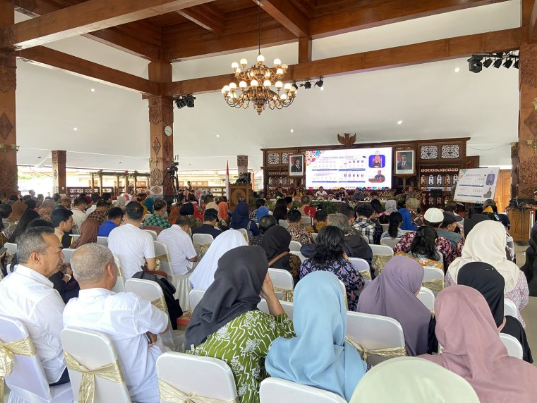
In 2025, UNS, through the Center for Disability Studies (Pusat Studi Difabilitas/PSD) under the Institute for Research and Community Service (LPPM), provided expert advice to the Magelang City Government through its collaboration with the Magelang City Manpower Office. The collaboration focused on developing the Disability Employment Roadmap for 2025–2030 and mapping the employment needs of working-age persons with disabilities.
UNS contributed scientific research, data analysis, field assessments, and policy recommendations to identify employment opportunities, skills development needs, and structural barriers faced by persons with disabilities. The university’s experts also participated in coordination meetings and focus group discussions to validate research findings, assess labor market needs, and formulate strategic policy directions. The resulting roadmap addressed workforce mapping, employment projections, vocational training needs, and inclusive employment policies.
Through this process, UNS provided specific expert advice and evidence-based policy guidance to support the local government’s decision-making in developing more inclusive employment programs. The roadmap was presented to the local government and supported by the Mayor of Magelang as a reference for strengthening cross-agency programs and expanding equal employment opportunities. This contribution reflects UNS’s commitment to supporting inclusive governance, equal access to public opportunities, and stronger local institutions in line with SDG 16.
Supporting evidence:
- PSD LPPM UNS – Initial Follow-up Meeting with the Magelang City Manpower Office, January 13, 2025
- PSD LPPM UNS – Presentation of Research Findings and Policy Recommendations, April 23, 2025
- PSD LPPM UNS – Employment Assessment for Persons with Disabilities, September 23, 2025
- PSD LPPM UNS – Roadmap Validation Focus Group Discussion, October 7, 2025
- PSD LPPM UNS – Roadmap Development Focus Group Discussion, October 21, 2025
- PSD LPPM UNS – Socialization of the Disability Employment Roadmap, November 10, 2025
B. Regional Government
At the regional level, UNS contributes academic expertise to the Central Java Provincial Government through strategic collaboration, research-based recommendations, and faculty involvement in regional development initiatives. These activities support the use of scientific evidence and academic knowledge to address development challenges and improve regional policy planning.
- Academic Expertise from the Faculty of Engineering to Support Regional Development in Central Java
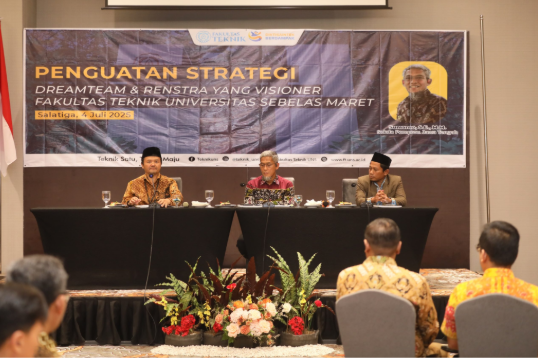
In 2025, the Faculty of Engineering (FT) UNS strengthened its collaboration with the Central Java Provincial Government by providing academic expertise and technical recommendations to address regional development challenges. Following the cooperation agreement signed on March 17, 2025, UNS proposed several specific areas of contribution aligned with the province’s development priorities.
These contributions included supporting the development of the Rawa Pening area as part of flood control and regional tourism development, evaluating adequate housing across Central Java, and exploring electric transportation and renewable energy solutions. The Faculty of Engineering also proposed involving multidisciplinary academic teams to provide technical studies and recommendations for these development programs.
During a strategic forum held in Salatiga on July 4, 2025, the Regional Secretary of Central Java explicitly called for academic input, ideas, and recommendations from universities to address regional challenges. The Dean of the Faculty of Engineering UNS outlined the university’s proposed contributions and emphasized the importance of integrating academic recommendations into regional development planning through coordination with the Regional Development Planning Agency (Bappeda).
Through this engagement, UNS demonstrates its role in providing expert advice, technical policy guidance, and research-based recommendations to regional government. This contribution supports more informed regional planning and strengthens cooperation between academic institutions and government agencies, reflecting SDG 16’s objectives of promoting effective and accountable institutions.
Supporting evidence:
- Central Java Provincial Government – Universities Encouraged to Help Address Regional Challenges, July 4, 2025
- Central Java Provincial Government – Universities Encouraged to Address Regional Problems, July 5, 2025
- UNS – Faculty of Engineering and Central Java Government Strengthen Strategic Collaboration, July 7, 2025
- UNS Faculty Members Nominated for the 2025 Central Java Development Research Award
In 2025, four UNS faculty members were selected as nominees for the Central Java Development Research Award, organized by the Central Java Regional Research and Innovation Agency (BRIDA). This initiative recognized academic research with the potential to contribute to regional development and strengthen the relationship between scientific research and government policy formulation.
As part of the initiative, the nominated academics were expected to prepare draft policy briefs to communicate research findings and offer recommendations aligned with regional development priorities. Through this process, UNS faculty members contributed their academic expertise and research-based perspectives to support the development of evidence-informed policies for Central Java.
UNS academics’ involvement in this initiative demonstrates the university’s contribution of expert knowledge and potential policy recommendations to regional government. By encouraging the translation of research findings into practical policy guidance, UNS supports more informed public decision-making and strengthens the role of scientific evidence in regional governance. These efforts contribute to the broader objectives of SDG 16, particularly the development of effective, accountable, and knowledge-based public institutions.
Supporting evidence: UNS – Four Faculty Members Nominated for the 2025 Central Java Development Research Award, July 26, 2025
C. National Government
At the national level, UNS supports government institutions through institutional partnerships that connect academic research, scientific studies, and professional expertise with national policy development. These collaborations give universities formal channels to contribute to legislative processes, policy analysis, and evidence-based decision-making.
- Strategic Collaboration with the House of Representatives’ Expertise Agency to Support Evidence-Based Policy Formulation
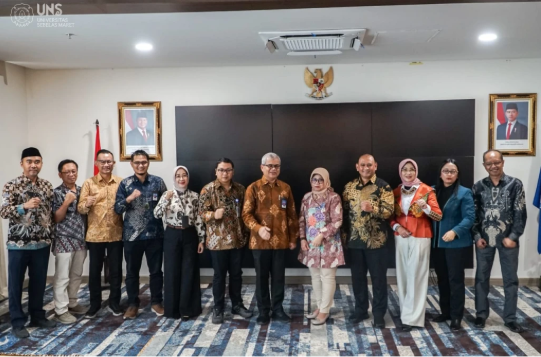
On July 11, 2025, UNS signed a Memorandum of Understanding (MoU) with the Expertise Agency of the House of Representatives of the Republic of Indonesia (Badan Keahlian DPR RI). The partnership aimed to strengthen meaningful public participation and improve the scientific basis of national policymaking, particularly in supporting the legislative, oversight, and budgetary functions of the House of Representatives.
The collaboration established several areas of cooperation, including joint research, scientific studies, academic publications, data exchange, seminars, workshops, and human resource development. The agreement was further supported by five Cooperation Agreements between LPPM UNS and several specialized centers within the Expertise Agency, including the Center for Legislative Drafting, the Center for Monitoring Law Implementation, the Center for Budget Analysis and State Financial Accountability, and the Center for Parliamentary Analysis.
Through this institutional partnership, UNS established a formal mechanism to provide academic expertise, scientific evidence, and policy recommendations to a national legislative institution. The collaboration creates opportunities for UNS researchers and experts to contribute to academic papers, policy analysis, and legislative discussions. By connecting university research with parliamentary policymaking, UNS supports transparent, accountable, and evidence-based governance, in line with the objectives of SDG 16.
Supporting evidence: UNS – Memorandum of Understanding with the Expertise Agency of the House of Representatives, July 11, 2025
Conclusion
Through its contributions at local, regional, and national levels, UNS demonstrates its commitment to providing expert advice and supporting government decision-making through academic knowledge, scientific research, and policy recommendations. Its faculty members have participated in legislative committees, research centers have developed policy roadmaps for local governments, and academic units have contributed technical expertise to regional development initiatives. At the national level, institutional collaboration with the Expertise Agency of the House of Representatives provides a formal channel for academic research to support legislative and policy processes.
These initiatives demonstrate UNS’s role as an academic partner in strengthening public institutions and improving the quality of governance. By promoting evidence-based policymaking, supporting regulatory development, and providing expert guidance to government institutions, UNS contributes to more effective, inclusive, and accountable decision-making. These efforts reflect the university’s ongoing commitment to advancing SDG 16 and supporting sustainable development through stronger institutions and knowledge-based governance.