Anti-Bribery and Corruption Policy at UNS
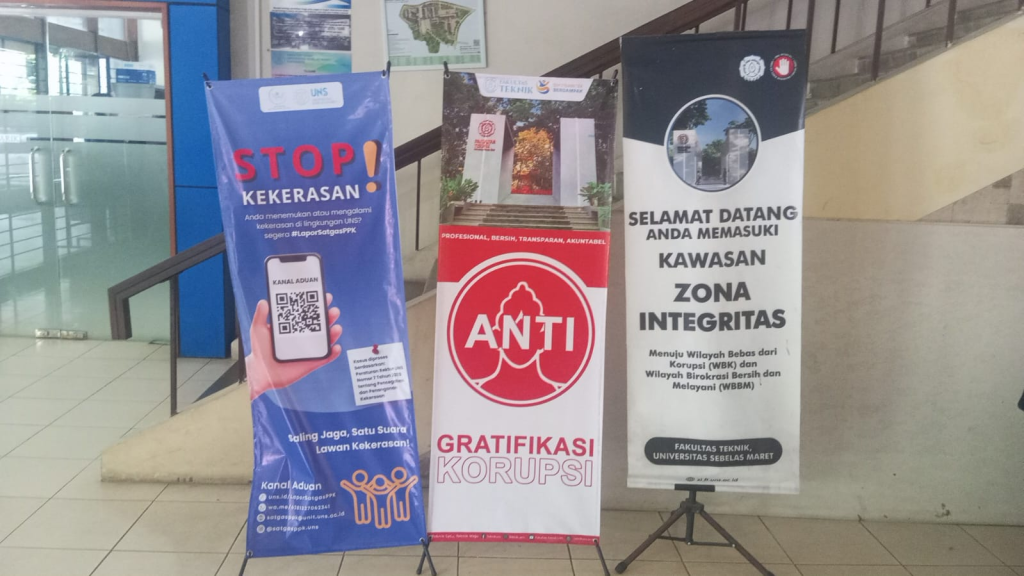
Universitas Sebelas Maret (UNS) has established a comprehensive, institution-wide anti-bribery and anti-corruption policy framework, operationalized through the Integrity Zone (Zona Integritas, ZI) system. This framework functions as the university’s formal policy to prevent bribery, corruption, fraud, and maladministration, while promoting transparency, accountability, and ethical governance across all academic and administrative operations.
The Integrity Zone initiative serves as the primary institutional mechanism to achieve:
- Wilayah Bebas dari Korupsi (WBK) – Corruption-Free Zone
- Wilayah Birokrasi Bersih dan Melayani (WBBM) – Clean and Service-Oriented Bureaucracy
This policy applies to all faculties, administrative units, and leadership structures across the university.
Legal Basis and Institutional Governance
The anti-bribery and anti-corruption framework at Universitas Sebelas Maret (UNS) is formally established through a structured set of national and institutional regulations, ensuring a consistent, enforceable, zero-tolerance approach to corruption.
At the national level, UNS aligns with the Ministerial Regulation on Administrative and Bureaucratic Reform (Permen PANRB No. 5 of 2024), which governs the development and evaluation of Integrity Zones toward Corruption-Free Areas (WBK) and a Clean and Service-Oriented Bureaucracy (WBBM).
At the institutional level, this commitment is embedded in Rector Regulation No. 31 of 2024 on the UNS Strategic Plan (RENSTRA) 2024–2029, which mandates the implementation of Integrity Zones as a core component of institutional governance reform and reinforces transparency, accountability, and ethical conduct as long-term priorities.
The implementation of this framework is operationalized and formally enforced through Rector Decree No. 5.4/UN27/HK/2024 on the Designation of Work Units as Integrity Zones, which serves as the central institutional instrument for establishing anti-corruption practices across the university.
This decree formally designates faculties and administrative units as Integrity Zones and ensures that anti-bribery and anti-corruption commitments are systematically implemented across all organizational levels. As outlined in the decree, this designation applies to a comprehensive range of academic and administrative entities, including faculties, postgraduate and vocational schools, research and quality assurance institutes, and the university hospital, ensuring full institutional coverage and decentralized accountability.
More importantly, this decree functions not only as a policy instrument but as a formal institutional enforcement mechanism, ensuring that anti-corruption commitments are officially recognized, continuously monitored, and regularly evaluated across all units.
University-Wide Implementation
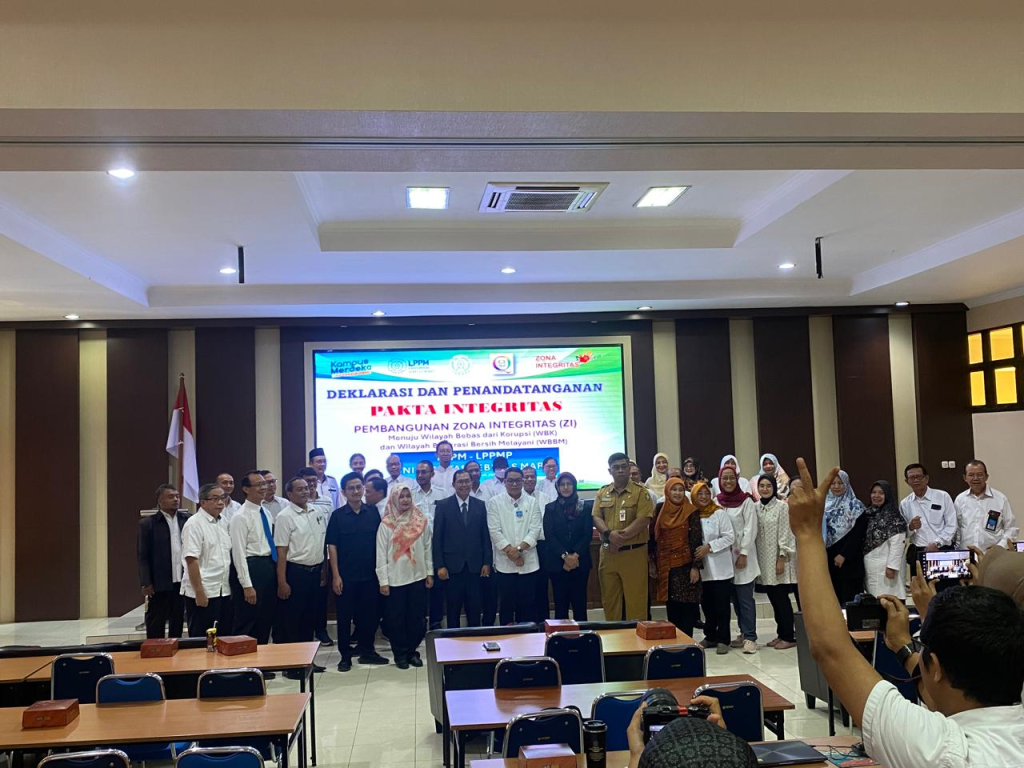
On 19 December 2023, UNS officially launched the Integrity Zone across all faculties and work units through a centralized institutional initiative coordinated by the Bureaucratic Reform unit under the Secretary of the University.
The launch was attended by the Rector, Vice Rectors, Deans, Directors, Heads of Institutes, and representatives from all faculties and units. Each unit established a dedicated Integrity Zone implementation team, ensuring full institutional participation and ownership.
This university-wide approach ensures that anti-bribery and anti-corruption principles are applied consistently across the entire institution, rather than limited to selected units.
Core Components of the Anti-Corruption Framework
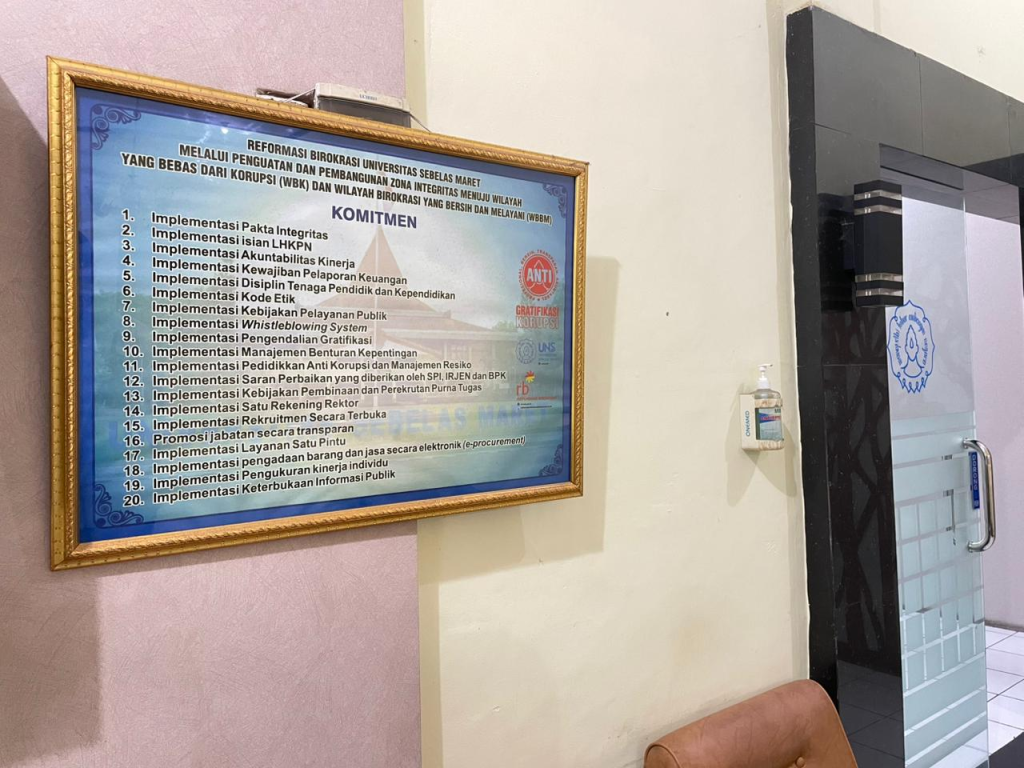
The Integrity Zone framework at UNS is built upon six core components mandated by national policy, which function as preventive and control mechanisms against bribery and corruption:
- Change Management: fostering an integrity-driven organizational culture
- Business Process Reform: improving SOPs and eliminating inefficiencies and informal practices
- Human Resource Management System Reform: ensuring merit-based systems and ethical conduct
- Strengthening Accountability: transparent performance planning and reporting
- Strengthening Oversight: including the implementation of a Whistleblowing System (WBS), gratification control mechanisms, conflict of interest management, and public complaint channels
- Improvement of Public Service Quality: delivering inclusive, efficient, and corruption-free services
Compliance and progress are monitored using the Evaluation Work Sheet (Lembar Kerja Evaluasi/LKE), a standardized national assessment tool to measure the maturity of Integrity Zone implementation.
Additional governance measures include implementing e-procurement systems, transparent recruitment and promotion processes, and public information disclosure, further reinforcing accountability and minimizing corruption risks.
Reporting and Enforcement Mechanisms
UNS provides formal reporting channels through its Whistleblowing System (WBS), enabling confidential reporting of suspected bribery, corruption, and other integrity violations. This system supports transparency, protects whistleblowers, and strengthens institutional oversight and accountability.
Regular monitoring and evaluation processes are conducted to ensure continuous improvement, risk mitigation, and enforcement of anti-corruption standards across all units.
These mechanisms ensure compliance with anti-corruption standards, mitigate institutional risks, and strengthen enforcement across all university operations.
Target and Institutional Impact
Through the institutionalization of Integrity Zones, UNS aims to:
- establish clean, accountable, and high-performing work units
- strengthen transparent and ethical governance
- enhance public trust and stakeholder confidence
- support the achievement of SDG 16 (Peace, Justice, and Strong Institutions)
As of 2024, 100% of faculties at UNS have formally implemented the Integrity Zone framework, with several units undergoing national evaluation for WBK/WBBM recognition.
Conclusion
Through a legally grounded, institution-wide, and systematically implemented Integrity Zone framework, UNS demonstrates a strong and enforceable commitment to preventing bribery and corruption. This approach integrates national regulatory standards, rector-level policies, and operational mechanisms, positioning UNS in alignment with global best practices in ethical governance and institutional integrity.
Supporting Evidence:
UNS Rector’s Decrees on Integrity Zone Implementation (2025)
- Rector Decree No. 118/2025 – Faculty of Sports Science
- Rector Decree No. 121/2025 – Faculty of Social and Political Sciences
- Rector Decree No. 122/2025 – Faculty of Cultural Sciences
- Rector Decree No. 123/2025 – Faculty of Economics and Business
- Rector Decree No. 126/2025 – Faculty of Law
- Rector Decree No. 127/2025 – Faculty of Mathematics and Natural Sciences
- Rector Decree No. 111/2025 – Vocational School
- Rector Decree No. 112/2025 – Institute for Educational Development and Quality Assurance
- Rector Decree No. 113/2025 – Faculty of Engineering
- Rector Decree No. 115/2025 – Faculty of Animal Science
- Rector Decree No. 116/2025 – UNS Hospital
- Rector Decree No. 117/2025 – Faculty of Agriculture
- Rector Decree No. 117/2025 – Faculty of Teacher Training and Education
- Rector Decree No. 120/2025 – Faculty of Medicine
- Rector Decree No. 124/2025 – Faculty of Art and Design
- Rector Decree No. 128/2025 – Postgraduate School
- Rector Decree No. 114/2025 – Institute for Research and Community Service