SDG 16 In Number
Number of graduates
6,192
Number of graduates from law and enforcement related courses
1,509
16.3.2 Policy and Lawmakers Outreach and Education
UNS Strengthens the Capacity of Policymakers and State Apparatus through Strategic Education and Training
As one of Indonesia’s leading public universities, Universitas Sebelas Maret (UNS) continues to demonstrate its commitment to supporting the Sustainable Development Goals (SDGs), particularly SDG 16: Peace, Justice, and Strong Institutions. One of the key aspects of this goal emphasizes the importance of higher education institutions in providing education, capacity building, and constructive dialogue for policymakers in the fields of law and governance.
- Seminar on the Urgency of Strengthening Dominus Litis in Criminal Procedure Law in Indonesia
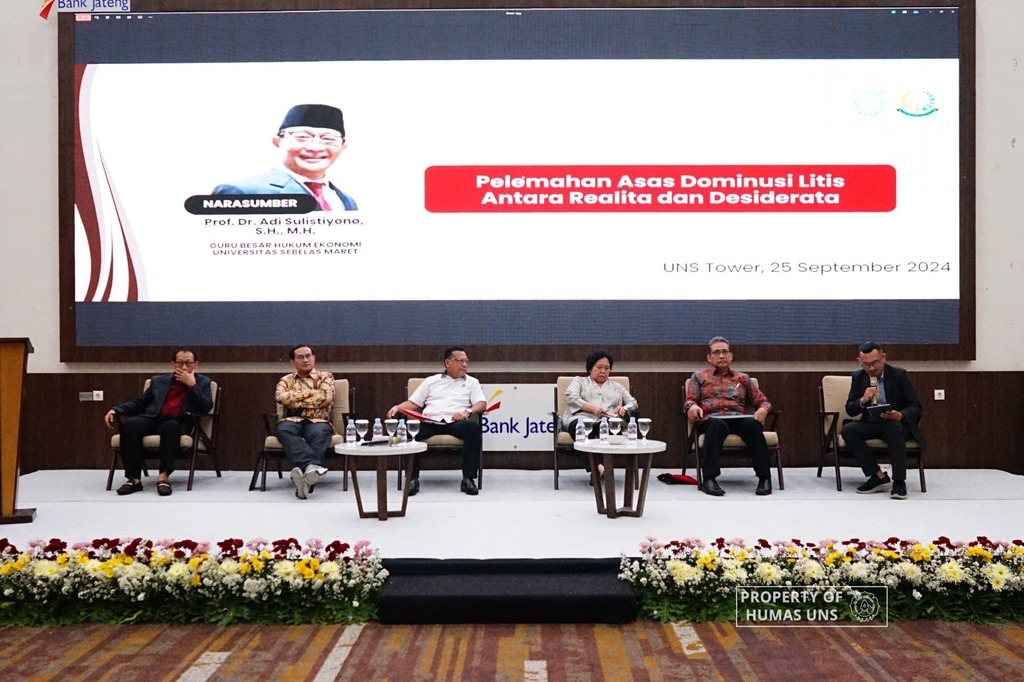
Through its Faculty of Law, UNS collaborated with the Attorney General’s Office of the Republic of Indonesia to hold a national seminar titled “The Urgency of Strengthening Dominus Litis in Criminal Procedure Law in Indonesia” on 25 September 2024 at UNS Tower. The seminar was attended by hundreds of participants from diverse backgrounds, including representatives from the Attorney General’s Office, academics, legal practitioners, students, and the general public.
The seminar addressed a fundamental issue regarding the unclear implementation of the dominus litis concept, or prosecutorial control of cases, within Indonesia’s criminal procedure system. Through this activity, legal experts and representatives from law enforcement agencies discussed and expanded their understanding of the attorney general’s crucial role in overseeing the investigation and prosecution process.
This activity falls under the policy and outreach efforts of lawmakers and their education, particularly in the field of law. UNS actively provides a platform for education and scholarly advocacy for law enforcers and policymakers to strengthen a national legal system that is more transparent, accountable, and just. Beyond enriching legal knowledge, the forum also serves as a capacity-building opportunity for legal personnel and policymakers. The discussions foster collaboration in developing legal policies that are adaptive, transparent, and equitable.
The output of this activity includes an increased theoretical and practical understanding of the dominus litis concept among law enforcement officers, academics, and law students. The expected outcome is the establishment of conceptual foundations and policy recommendations to strengthen the role of the attorney general within Indonesia’s criminal justice system, aligning with SDG 16’s goal of building strong and just institutions.
The seminar demonstrates UNS’s commitment to contributing to the strengthening of Indonesia’s legal institutions through education, research, and policy advocacy. By bridging dialogue between academics and government officials, UNS not only reinforces its role as a center of knowledge but also as a strategic government partner in creating a resilient and integrity-based legal system.
Through this concrete step, Universitas Sebelas Maret has shown that higher education institutions can play a vital role in building a peaceful, just, and inclusive society.
Sources:
https://uns.ac.id/id/uns-update/gandeng-kejaksaan-ri-uns-gelar-seminar-tentang-urgensi-penguatan-dominus-litis-penuntutan-dalam-hukum-acara-pidana-indonesia.htmlhttps://radarsolo.jawapos.com/pendidikan/845131632/seminar-nasional-uns-bahas-urgensi-penguatan-dominus-litis-dalam-sistem-hukum-indonesia
- Technical Training on Legal and Legislative Text Translation
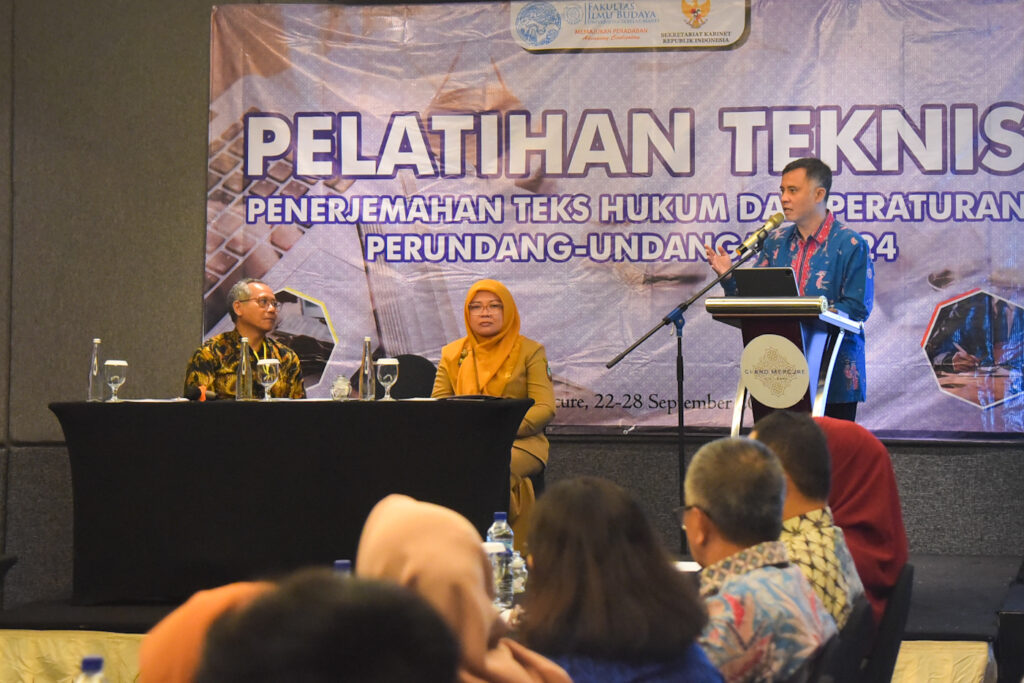
institutions, UNS collaborated with the Cabinet Secretariat (Setkab) of the Republic of Indonesia to organize the Technical Training on Legal and Legislative Text Translation from 22–28 September 2024 at Grand Mercure Solo Baru, Sukoharjo. The training was attended by 20 Functional Translator Officers (PFPs) from various ministries and government agencies, including the Ministry of State Secretariat, the Ministry of Home Affairs, and the Ministry of Education, Culture, Research, and Technology. The training aimed to improve the competencies of government translators in the field of law and legislation, which form the basis for the formulation and implementation of national policies.
This activity is part of upskilling and capacity-building for policy implementers to strengthen governance based on law and accountability. Through the collaboration between UNS and Setkab as the Supervisory Institution for Functional Translator Positions, the training equipped participants with an in-depth understanding of legal terminology, national regulatory dynamics, and the ability to translate legal texts in a global context. The implementation of this training aligns with the mandate of Minister of Administrative and Bureaucratic Reform Regulation No. 16 of 2023 on Functional Translator Positions, which emphasizes the importance of enhancing the professional competencies of the state apparatus.
The training lasted for seven days and included a combination of theoretical and practical materials with instruction in both Bahasa Indonesia and English. Participants gained knowledge of legal terminology, the principles of legislative text translation, and the socio-political context that influences public policy formulation. Through this approach, the activity not only strengthened linguistic skills but also enhanced legal literacy and public policy understanding among government personnel.
As a result, the training led to an increase in the technical and conceptual skills of government translators in supporting the formulation of national legal policies. The expected outcome is the creation of a more professional and integrity-driven state apparatus capable of serving as key intermediaries in the drafting, communication, and implementation of Indonesia’s legal regulations. This activity simultaneously reflects UNS’s active role in supporting SDG 16: Peace, Justice, and Strong Institutions through strategic collaboration in legal education and capacity-building of government institutions.
Sources:
https://fib.uns.ac.id/news/fib-uns-dipercaya-setkab-ri-adakan-pelatihan-teknis-penerjemahan-teks-hukum-dan-perundang-undangan https://setkab.go.id/sekretariat-kabinet-dan-uns-gelar-pelatihan-teknis-penerjemah-teks-hukum/
- Comprehensive Cybersecurity Training
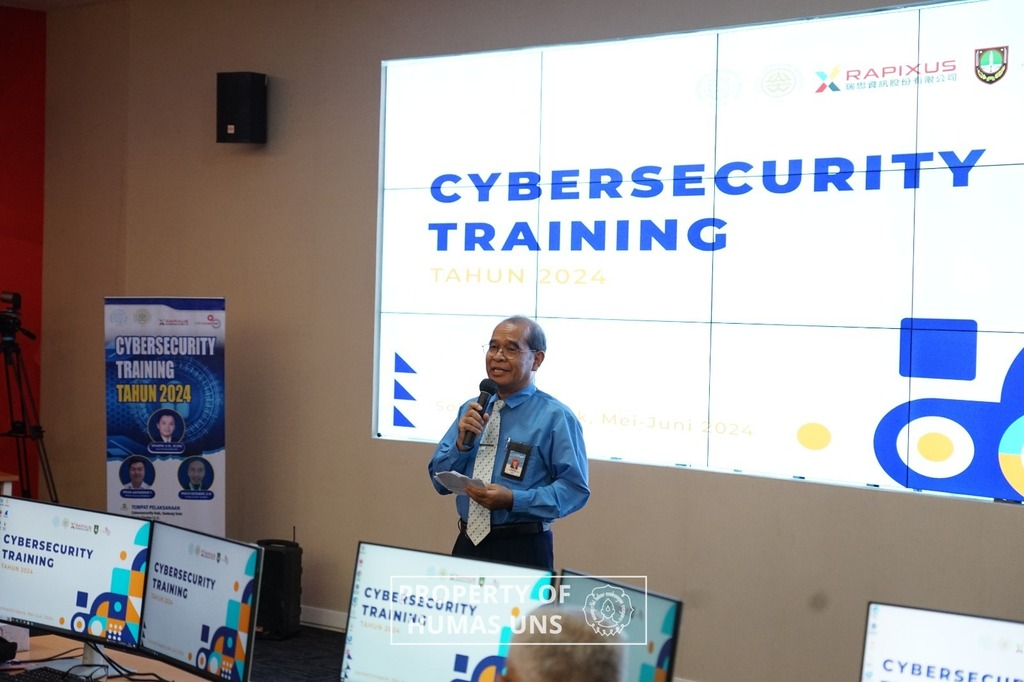
The Faculty of Information Technology and Data Science (Fatisda) at UNS, in collaboration with National Chung Hsing University, Taiwan, Rapixus Taiwan, and Solo Technopark, organized the Cyber Security Training 2024 on 28–29 May 2024 at the Cybersecurity Hub Solo Technopark. The training was attended by officials from eight district/city governments across Central and East Java, including Surakarta, Sukoharjo, Sragen, Wonogiri, Ngawi, Grobogan, Semarang, and Madiun. This training provided a concrete form of upskilling and capacity-building for regional government employees in cybersecurity, a strategic issue in the era of digital government transformation.
The training covered both theoretical and practical aspects of cybersecurity, focusing on attacks, threats, and vulnerabilities. It included a CompTIA Security+ simulation that allowed participants to directly practice responding to various cyber threat scenarios. Through this learning process, participants strengthened their ability to protect government information systems from potential data breaches, malware attacks, phishing, and ransomware. This activity aligns with the objectives of policy outreach and education for regional policymakers, helping them understand the importance of public data protection and enabling them to integrate digital security principles into governance policies.
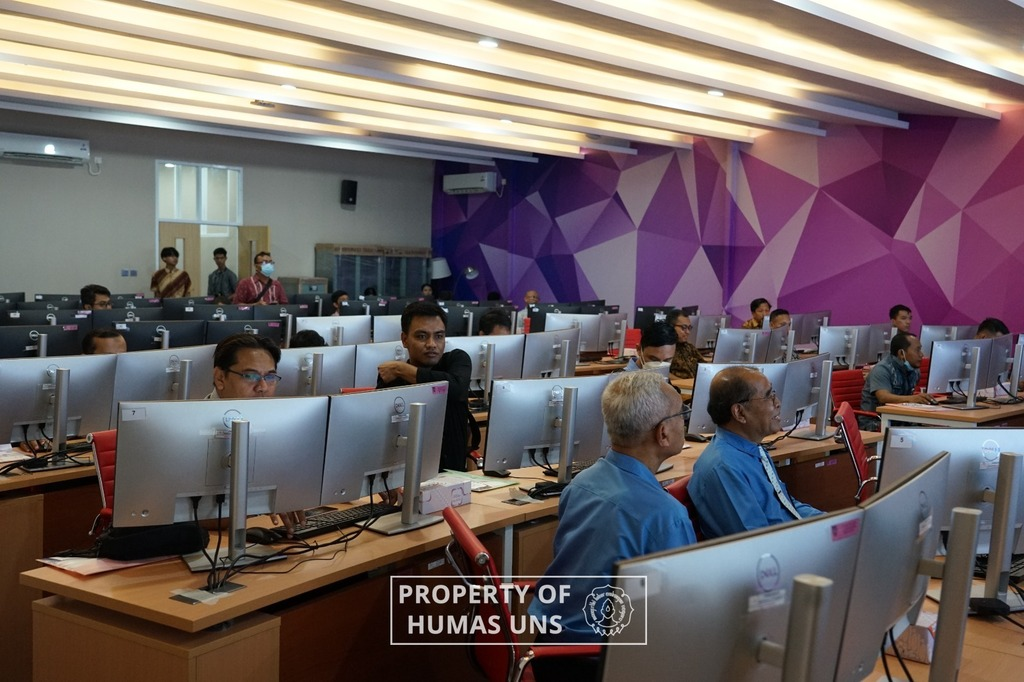
The Cyber Security Training 2024 produced tangible outputs, including enhanced technical capacity among participants in detecting and responding to digital threats, as well as strengthened collaboration networks among UNS, regional governments, and international partners in information technology. The medium-term outcome is improved cyber resilience and reliability of digital infrastructure within government institutions, contributing to safe, efficient, and transparent governance. As a follow-up, UNS through Fatisda plans to develop the Cyber Security Hub as a sustainable center for research, training, and cybersecurity certification. This program will expand to advanced levels through Advanced Cyber Security Training and partnerships with more government institutions. These strategic steps demonstrate UNS’s commitment to strengthening institutional capacity and national digital resilience while reinforcing the university’s role as a strategic government partner in policy, technology, and information security.
Source: https://uns.ac.id/id/uns-update/fatisda-uns-mengadakan-pelatihan-keamanan-siber-komprehensif.html
- Basic AMDAL Training by PPLH LPPM UNS and KLHK Human Resources Training Center for Sukoharjo Regional Government Agencies (OPD)
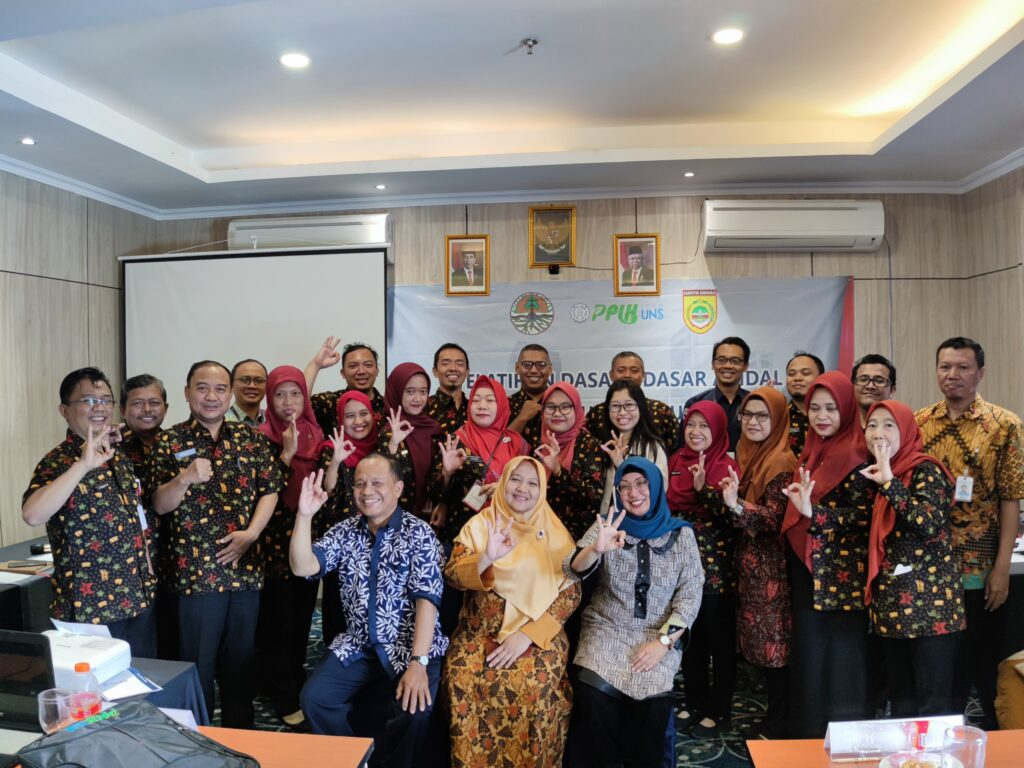
From 22–26 April 2024, the Center for Environmental Research (PPLH) of the Institute for Research and Community Service (LPPM) UNS, in collaboration with the Human Resources Training Center (Pusdiklat SDM) of the Ministry of Environment and Forestry (KLHK), conducted the 88th Basic Environmental Impact Assessment (AMDAL) Training at Hotel Solia, Surakarta. The training was attended by 22 participants, consisting of officials from various Regional Government Agencies (OPD) in Sukoharjo Regency, including the Environmental Agency, Public Works and Spatial Planning Agency, Investment and Licensing Agency, and RSUD Ir. Soekarno Hospital.
The training aimed to enhance participants’ understanding and skills in preparing AMDAL documents in accordance with the latest regulations, as outlined in the Decree of the Head of P2SDM KLHK No. SK.9/P2SDM/DIK/DIK.2/5/2023. Over five days, participants received instruction from UNS academics and KLHK resource persons on the fundamental principles of AMDAL, environmental legal regulations, and techniques for analyzing the environmental impacts of development projects. The training combined theory sessions, discussions, and practical document preparation exercises, enabling participants not only to understand normative aspects but also to apply them directly in the context of local policy.
This training focused on upskilling and capacity-building for government officials involved in decision-making and environmental policy formulation at the regional level. Through the collaboration between UNS and KLHK, the program represented a concrete partnership between academia and policymakers aimed at strengthening institutional governance and evidence-based policy in environmental management. As a result, all participants successfully completed the training and received nationally recognized certificates. The activity enhanced technical capacity and environmental policy awareness at the regional level, strengthened the implementation of AMDAL instruments in development planning, and demonstrated UNS’s contribution to supporting strong and sustainable public institutions.