SDG 11 In Number
University expenditure (IDR)
1.550.122.866.706
University expenditure on arts and heritage (IDR)
20.280.022.432
11.4.3 Allow Remote Working
UNS Support Remote Working and Flexible Learning through Hybrid Learning
Universitas Sebelas Maret (UNS) has implemented policies that support telecommuting and remote work for its employees. This policy not only facilitates staff in performing their duties efficiently but also reduces commuting time and costs, which can be a burden for many employees. By decreasing staff mobility, greenhouse gas emissions from transportation are significantly reduced, aligning with UNS’s efforts to create a green campus and mitigate climate change impacts. Fewer motor vehicles circulating around campus also improve air quality in both the campus area and the city of Surakarta. Additionally, facilitating remote work helps to reduce traffic congestion, especially during peak hours, contributing to sustainable cities and communities as outlined in SDG 11.
Integration with Hybrid Learning Modalities
UNS further supports flexible work arrangements through hybrid learning modalities, as stipulated in Rector’s Decree No. 367/2025 on Learning Modalities.
For Diploma Three, Bachelor, Applied Bachelor, and Professional programs, at least 50% of learning activities are conducted face-to-face, up to 25% are conducted synchronously online, and the remaining 25% are conducted asynchronously online. For Master’s and Doctoral programs, at least 12.5% of learning is delivered in-person, with up to 75% conducted synchronously online and up to 25% asynchronously online. For instance, a course with 16 scheduled sessions per semester would include 8 face-to-face meetings, 4 synchronous online sessions, and 4 asynchronous online sessions for undergraduate programs. Graduate programs, on the other hand, would hold at least 2 face-to-face sessions, with the remaining sessions conducted online. This hybrid approach not only enhances the flexibility of teaching and learning but also supports remote working for academic staff, reducing the need for daily commuting and enabling work from various locations.
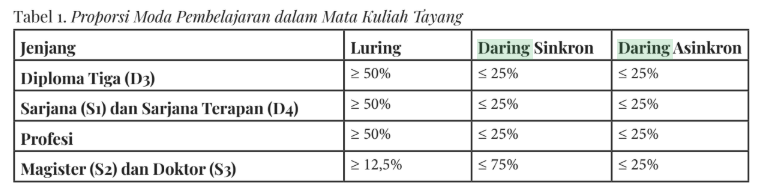
This structured approach not only enhances teaching and learning flexibility but also supports remote working arrangements (telecommuting or online engagement) for academic staff and faculty.
Benefits for Employees and the Environment
The implementation of telecommuting enables UNS staff to manage their work schedules more efficiently, balancing professional responsibilities with their personal lives. By allowing a significant proportion of activities to be carried out online, UNS reduces the need for daily commuting, which not only contributes to a more sustainable campus environment but also aligns with SDG 11 goals of promoting efficient, low-impact transport and flexible work practices. This approach has a positive impact on both mental and physical well-being, as studies indicate that remote workers tend to be more productive and experience lower stress levels. UNS further encourages the use of information technology to support both learning and administrative activities, facilitating remote work and enhancing employee productivity, while strengthening UNS’s position as a higher education institution committed to green and sustainable practices.