
SDG 11 In Number
University expenditure (IDR)
1.550.122.866.706
University expenditure on arts and heritage (IDR)
20.280.022.432
11.2.6 Record and Preserve Cultural Heritage
Efforts in Recording and Preserving Cultural Heritage
Efforts to record and preserve national and local cultural heritage, as carried out through various collections and research at the Universitas Sebelas Maret (UNS) Museum, are closely linked to the Sustainable Development Goals (SDGs). Activities such as inventorying, researching, and conserving collections at UNS play an active role in strengthening national initiatives to safeguard cultural heritage while preserving traditional knowledge that forms the foundation of social sustainability and national identity.
National Cultural Heritage
- Sangiran Early Man Site

The Sangiran Early Man Site is located approximately 15 kilometers north of Solo City, Central Java, Indonesia, covering an area of 5,600 hectares. The site became renowned after the discovery of Homo erectus remains and associated stone artifacts (known as the Sangiran flake industry) in the 1930s. It features a highly significant geological sequence from the Upper Pliocene to the late Middle Pleistocene, illustrating human, faunal, and cultural evolution over the last 2.4 million years. The site also contains important archaeological habitation layers from the Lower Pleistocene, dating back around 1.2 million years.
The abundant macrofossils emerging from these layers provide detailed and clear records of various faunal elements. The site has also revealed over 100 Homo erectus individuals, dating back at least 1.5 million years. These fossils illustrate the process of human evolution during the Pleistocene period, particularly from 1.5 to 0.4 million years ago. Having been inhabited for the last 1.5 million years, Sangiran is one of the key sites for understanding human evolution. Further discoveries of stone tools have been made since then. Human, faunal, and stone tool materials are deposited in uninterrupted stratigraphic layers.
UNS researchers actively conduct field studies and archaeological surveys at the Sangiran site, contributing to its documentation, conservation, and public education programs. The university collaborates with local authorities and international experts to maintain the site’s integrity, promote sustainable tourism, and integrate Sangiran’s findings into academic curricula, research, and exhibitions, ensuring that its heritage continues to support education, science, and cultural awareness.
Local Cultural Heritage
- Lontar Manuscripts
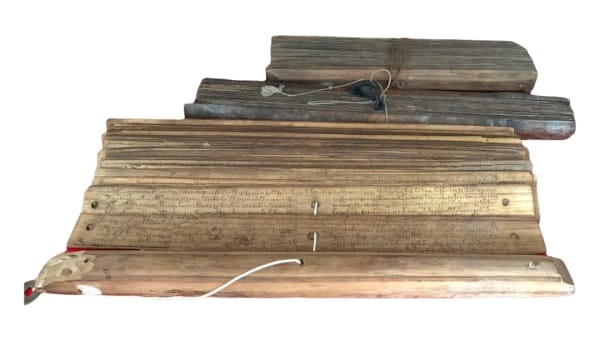
The Lontar (Rontal) manuscripts were donated by Huub Gaymans (2013), a German national interested in the efforts of the UNS Javanology Team to locate and collect ancient manuscripts. Thirteen (13) lontars were written from the late 19th to early 20th century. Their contents include information on medicinal plants, mantras, the Yusuf lontar, and babads or folk stories. The lontars were added to the UNS Javanology collection on 3 September 2013 and subsequently incorporated into the UNS Museum collection in 2017.
UNS Involvement: UNS researchers actively document, study, and conserve these manuscripts, making them accessible for academic research, exhibitions, and educational programs.
- Wayang Kulit (Shadow Puppets)
This collection belongs to IKIP Surakarta (now UNS) and was formerly displayed in the dean’s office as a decorative item and cultural symbol. Wayang kulit reflects the rich Javanese tradition of arts, with its philosophical and historical values, and has been an integral part of Indonesian culture for centuries.
UNS preserves, curates, and studies these puppets as part of the Javanology collection, while incorporating them into cultural performances and educational programs.
- Medang Kamulan Site Artifacts
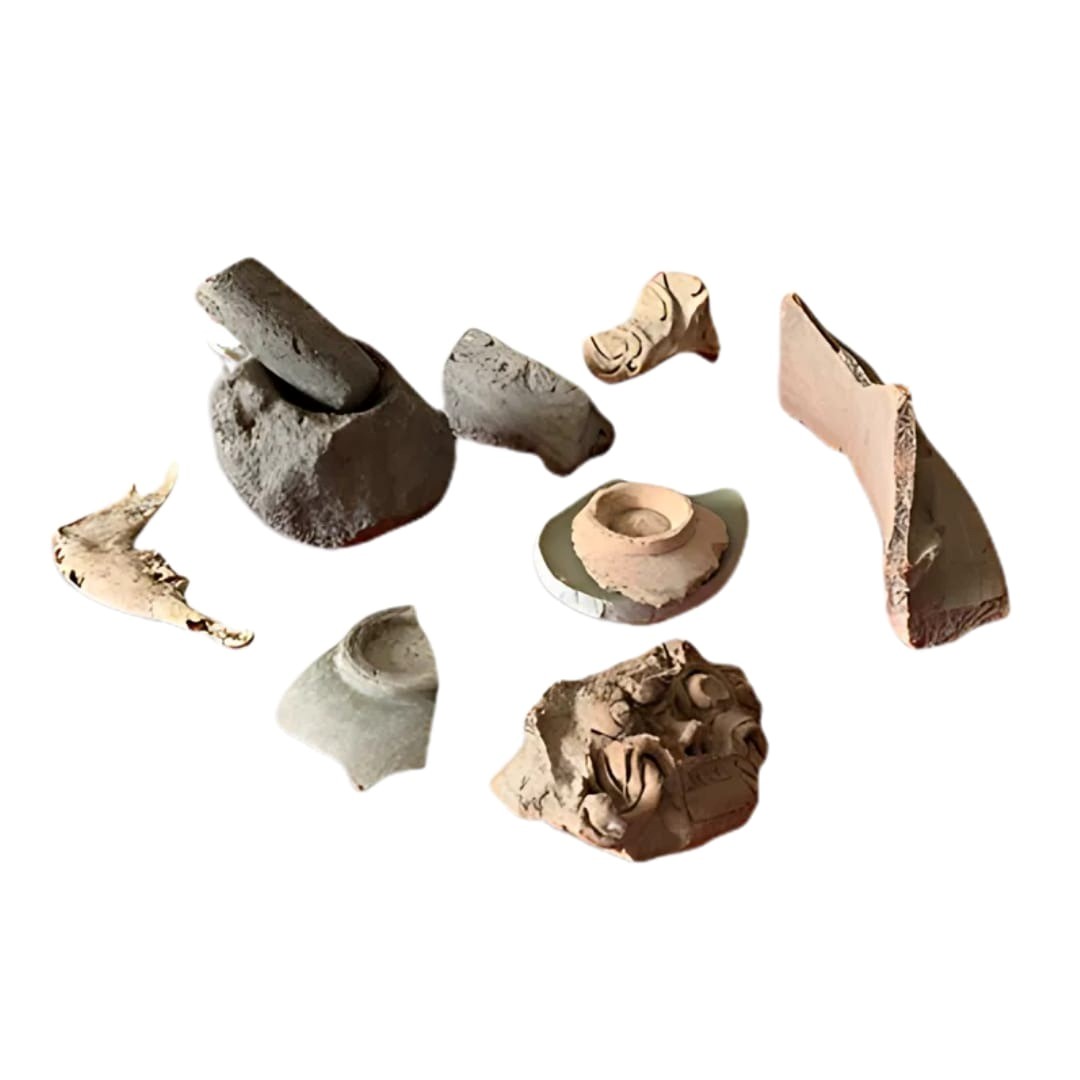
These artifacts were collected through research by the UNS Institute for Javanology Studies (PUI Javanology) at the Medang Kamulan Kingdom site in Banjarejo Village, Gabus District, Grobogan Regency, Central Java, in 2015. They were added to the UNS Museum collection in 2020.
UNS leads archaeological research, documentation, and conservation at the site, contributing to heritage preservation and public education.
- Reog Ponorogo
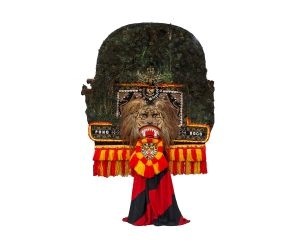
Reog Ponorogo is a traditional dance from Ponorogo, East Java. According to legend, King Singo Barong had a tiger’s head with a peacock perched atop. Accompanied by sounds, the procession of Prabu Kiana Sewandono and Prabu Singo Barong evolved into the performance that became the Reog art form known today.
UNS documents and promotes Reog Ponorogo through performances, research, and educational programs to ensure the cultural transmission of this tradition.
- Gong
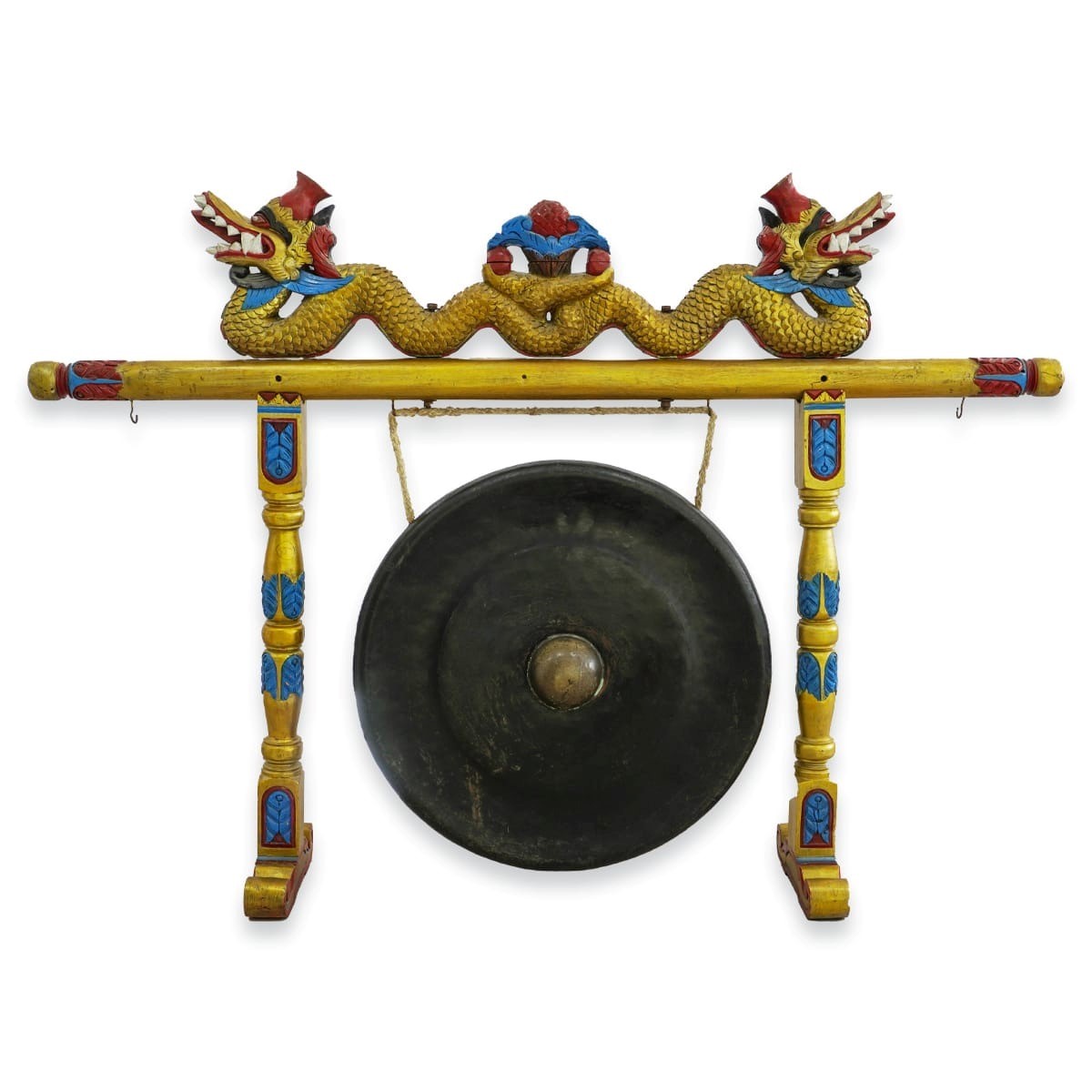
Gong is a gamelan musical instrument made of brass and mounted by hanging on a carved teak frame with traditional gamelan accents and colors. When played, the gong is held or supported with all five fingers and struck on its convex side using a mallet. The gong functions as a rhythmic anchor, reinforcing the kendhang (drum) in determining the structure of a gendhing (musical composition), and its sound signals the beginning and end of a gendhing.
UNS maintains, restores, and uses this instrument in performances, gamelan training, and cultural exhibitions to sustain traditional musical knowledge.
- Angklung
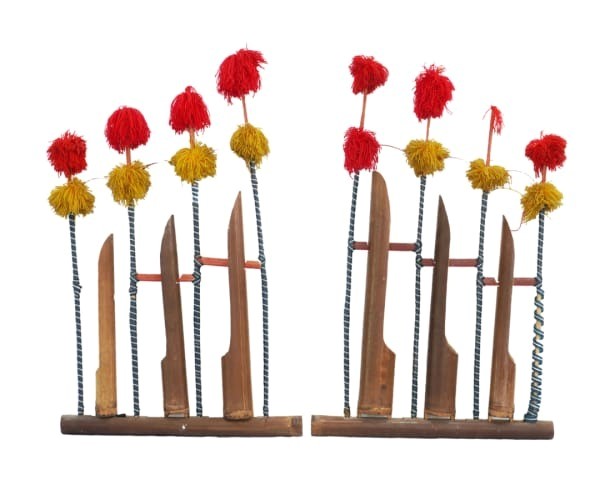
The angklung is a traditional musical instrument made of bamboo. It consists of two to four bamboo tubes mounted within a bamboo frame and tied together with rattan cords. To play the angklung, the handle of the bamboo tubes is shaken or rocked, causing the tubes to produce melodious notes.
UNS maintains, restores, and uses this instrument in performances, training, and cultural exhibitions to sustain traditional musical knowledge.
- Kendhang
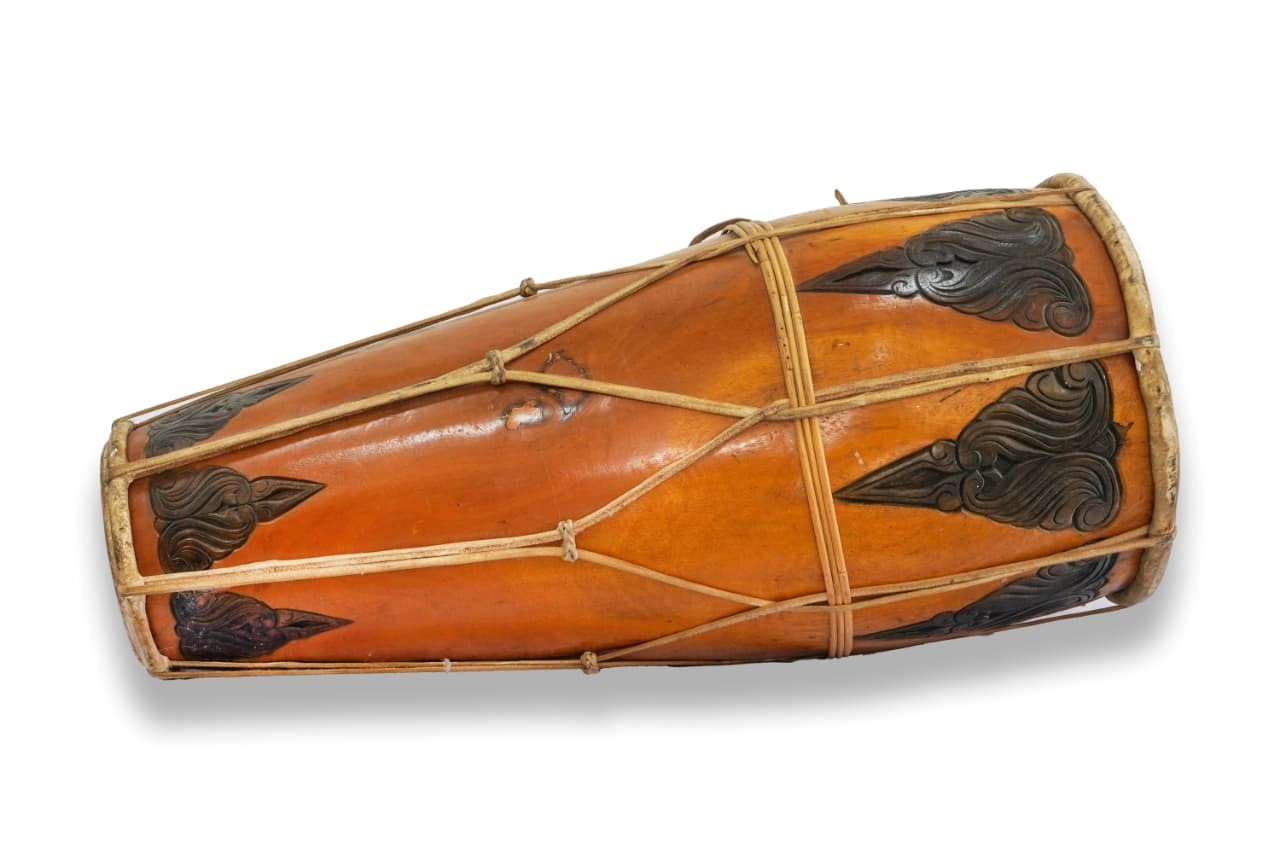
The kendhang functions as the regulator of rhythm and tempo in a gendhing (musical composition) being performed. It also plays a crucial role in gamelan performances as the leader of the accompanying ensemble. The kendhang controls the speed of the gendhing and signals the opening or closing of a gamelan performance. It is played by striking or hitting the drumhead, which is made of animal skin (typically cowhide), with the palms of the hands.
UNS maintains, restores, and uses this instrument in performances, gamelan training, and cultural exhibitions to sustain traditional musical knowledge.
- Lurik Cloth

Lurik cloth is an important collection at the UNS Museum, categorized under Javanology. It was produced through a Lurik design competition organized by the UNS Javanology Center in 2012. The collection represents the preservation and innovation of traditional Javanese textiles.
UNS documents, curates, and exhibits these textiles, promoting understanding of traditional crafts through competitions and educational programs.
- Classical Batik
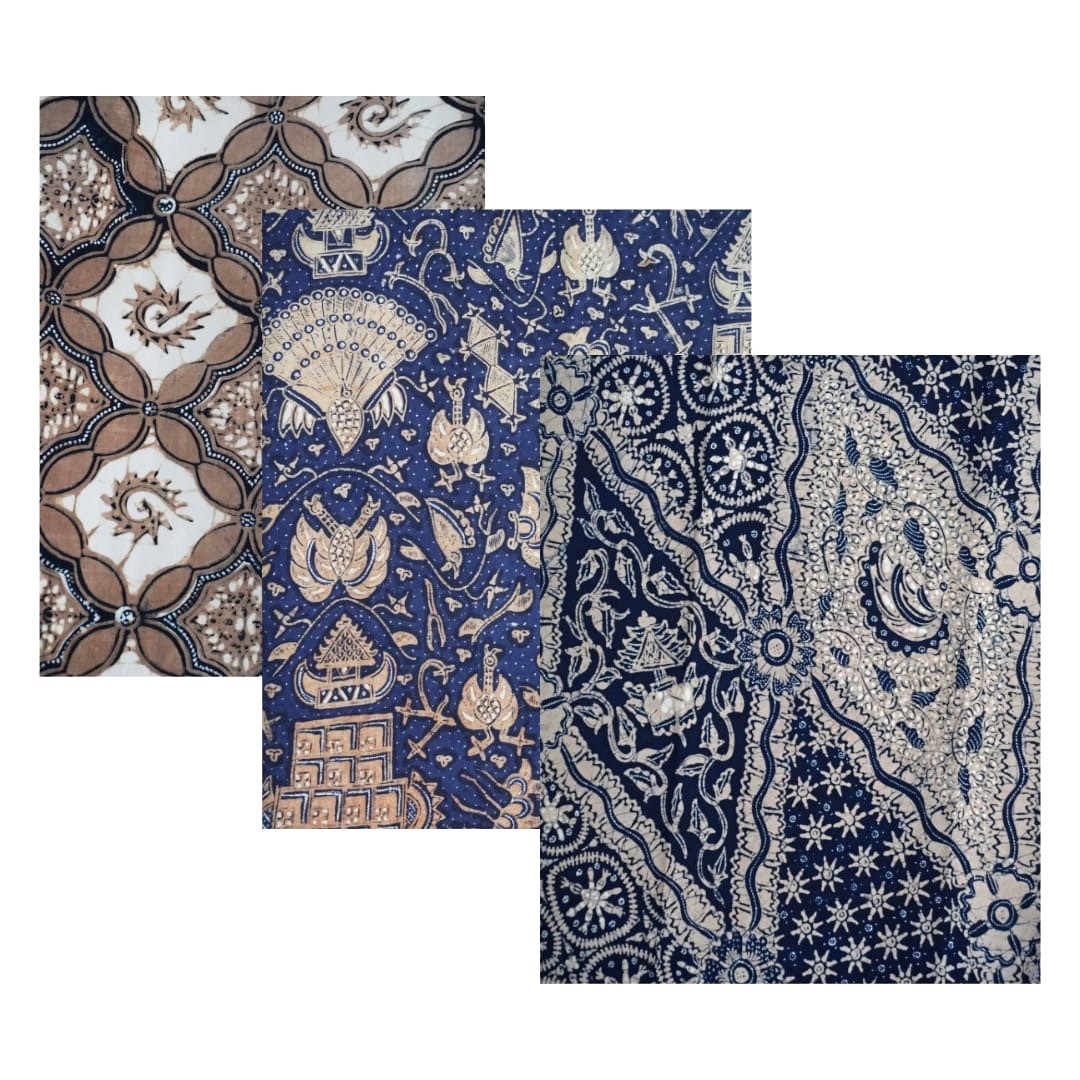
This classical batik collection, part of the Javanology category at the Universitas Sebelas Maret (UNS) Museum, consists of three pieces of fabric donated by the R. Soemarjo family from Surakarta. The motifs include Sekar Jagad, symbolizing the beauty of the Indonesian archipelago; Cekok Trenggiling Menthik, reflecting diligence; and Cuwiri model Semen, representing fertility. This collection showcases the philosophical values of Javanese batik as a valuable cultural heritage.
UNS conserves these textiles, integrates them into research and exhibitions, and uses them for educational programs in cultural heritage.
- UNS Batik
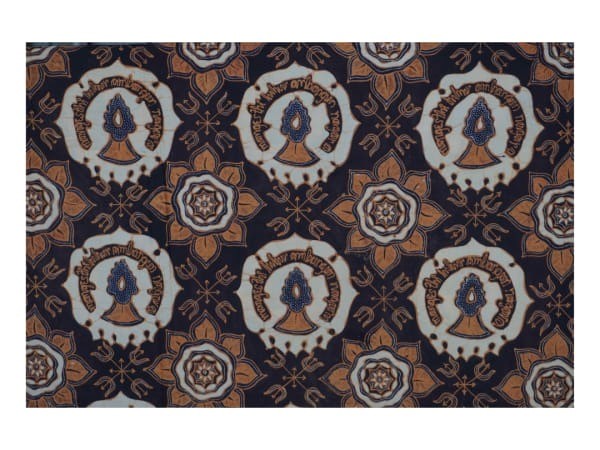
This UNS hand-drawn batik is part of the Javanology collection at the Universitas Sebelas Maret (UNS) Museum and was donated by RM Restu to the UNS Javanology Center (PUI Javanologi) in 2020. Batik, a traditional Indonesian textile art, is created using a distinctive wax-resist dyeing technique. Known for its intricate patterns and symbolic motifs, batik holds deep cultural significance, particularly on the island of Java, where it plays a vital role in rituals, social attire, and cultural identity.
UNS conserves these textiles, integrates them into research and exhibitions, and uses them for educational programs in cultural heritage.
- Batik Kimono
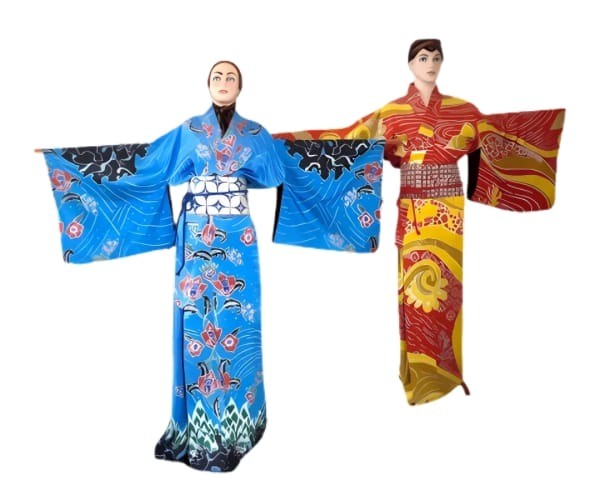
A non-traditional batik combining Javanese and Japanese cultures, developed by Dr. Theresia Widiastuti, Prof. Sahid Teguh Widodo, Dr. Kundharu Saddhono, and Dra. Tiwi Bina Affanti. Two types exist: Summer and Winter Batik Kimono.
UNS researchers study and document these hybrid designs to explore cross-cultural artistic innovation.
- Copper Batik Stamps
Copper batik stamps are traditional tools used in the production of stamped batik (batik cap). Made from copper plates shaped according to specific motifs, the stamps function like a seal to transfer hot wax onto the fabric. The stamp technology began to develop in the 19th century as an innovation to speed up batik production without compromising the beauty of the patterns. With these stamps, repetitive motifs such as kawung, parang, or floral designs can be applied precisely and efficiently.
Beyond their functional value, copper batik stamps also hold high artistic significance. Each stamp is crafted by skilled metal artisans with great precision. To this day, copper batik stamps are still used in batik centers across Java, including Solo, Yogyakarta, Pekalongan, and Lasem, serving as witnesses to the evolution of batik from manual craftsmanship to mass production.
UNS preserves these tools and demonstrates their use in educational workshops and exhibitions.
- Topeng Panji (Panji Masks)
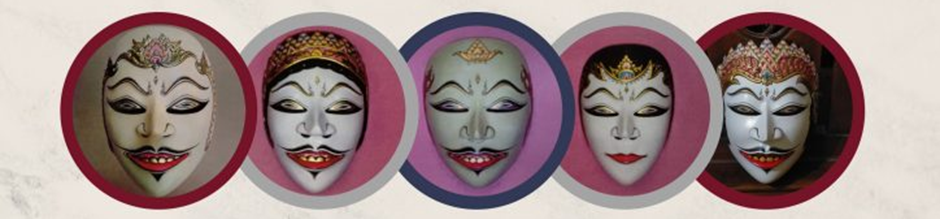
The Panji mask is a type of classical mask used in Javanese performing arts, particularly in Topeng Panji or Wayang Topeng, which developed in Central and East Java. This mask typically represents the character Panji Asmarabangun, a refined and noble figure from the Panji cycle, which has been popular since the 14th century.
The Panji mask is characterized by its smooth, serene, and dignified facial features, featuring a calm expression, narrow, downward-looking eyes, and thin lips that form a subtle smile. The mask is generally plain white, symbolizing purity, wisdom, and elegance.
The Panji mask is used in masked dance performances that serve both as entertainment and as a medium for ritual and moral education. Its presence not only represents the character Panji but also embodies harmony, wisdom, and refined character in the Javanese cultural tradition.
UNS maintains collections, documents their usage, and incorporates them into educational programs and performances.
- A Set of Slendro and Pelog Gamelan
Gamelan is a traditional Javanese musical ensemble comprising various instruments, primarily the gong, kendang, saron, gender, bonang, kenong, and rebab. The Javanese gamelan tuning system is divided into two main scales: slendro and pelog.
Slendro: consists of five notes within one octave with relatively equal intervals, producing a soft, calm, and harmonious impression.
Pelog: consists of seven notes within one octave with unequal intervals, creating a more dynamic, assertive, and varied tonal quality.
A complete gamelan set usually includes both scales, as each scale presents a distinct musical character. Gamelan is used to accompany dance, wayang (shadow puppet theater), songs, and traditional or religious ceremonies, making it an essential medium in the social, spiritual, and artistic life of Javanese society.
UNS maintains and teaches gamelan performance, ensuring cultural continuity.
- Taiko
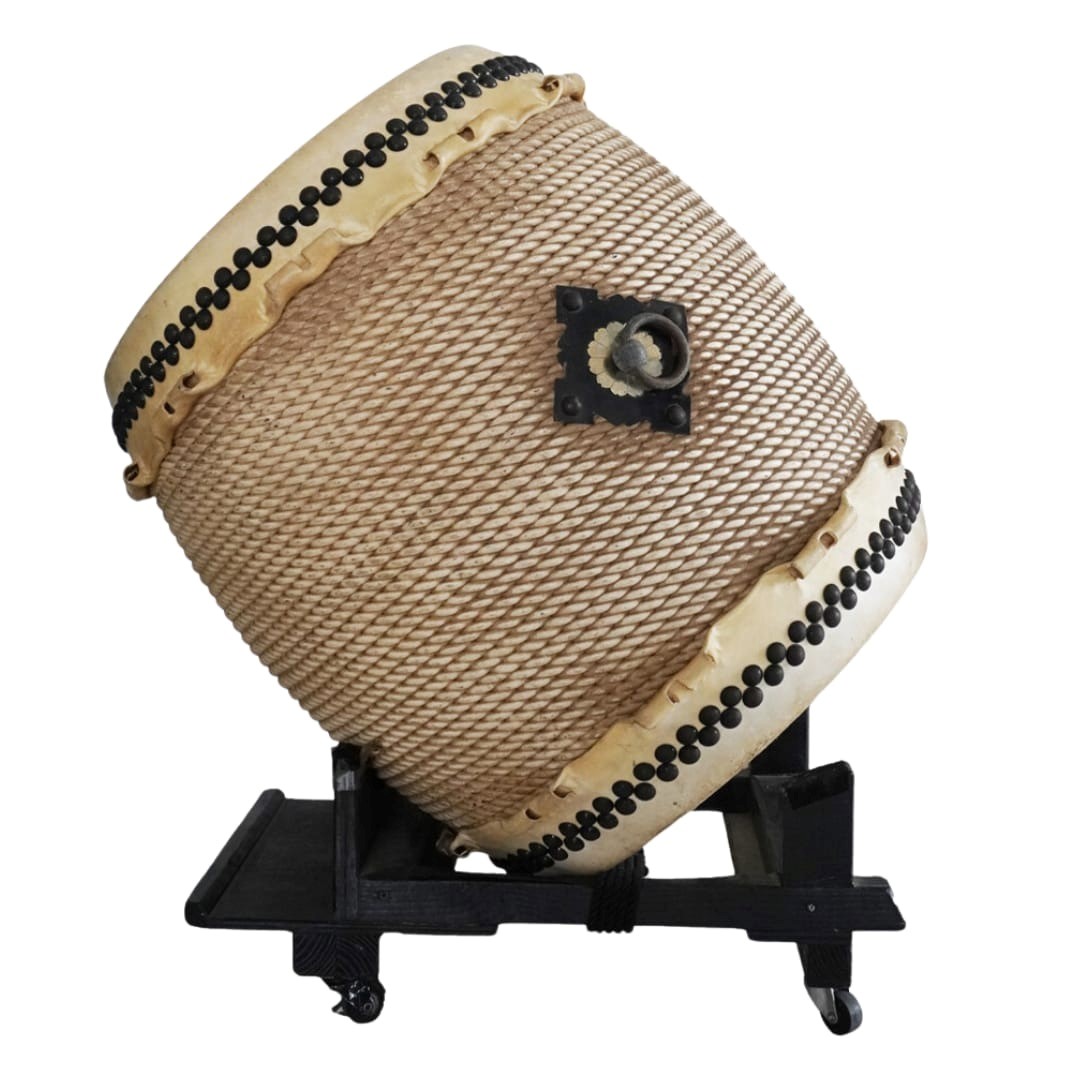
Taiko is a traditional Japanese musical instrument consisting of large drums of various sizes and shapes. These drums are played using special sticks called bachi. Taiko holds an important role in Japanese culture, being used in religious ceremonies, festivals, and traditional performing arts such as Kagura and Kabuki. In addition to its artistic value, taiko has a spiritual dimension, as it is believed to unify energy and create powerful vibrations. This taiko was donated by a Japanese student at UNS to the UNS Javanology Center (PUI Javanologi) in 2023.
UNS incorporates it into cultural exchange and music education programs.
- Golden Kimono
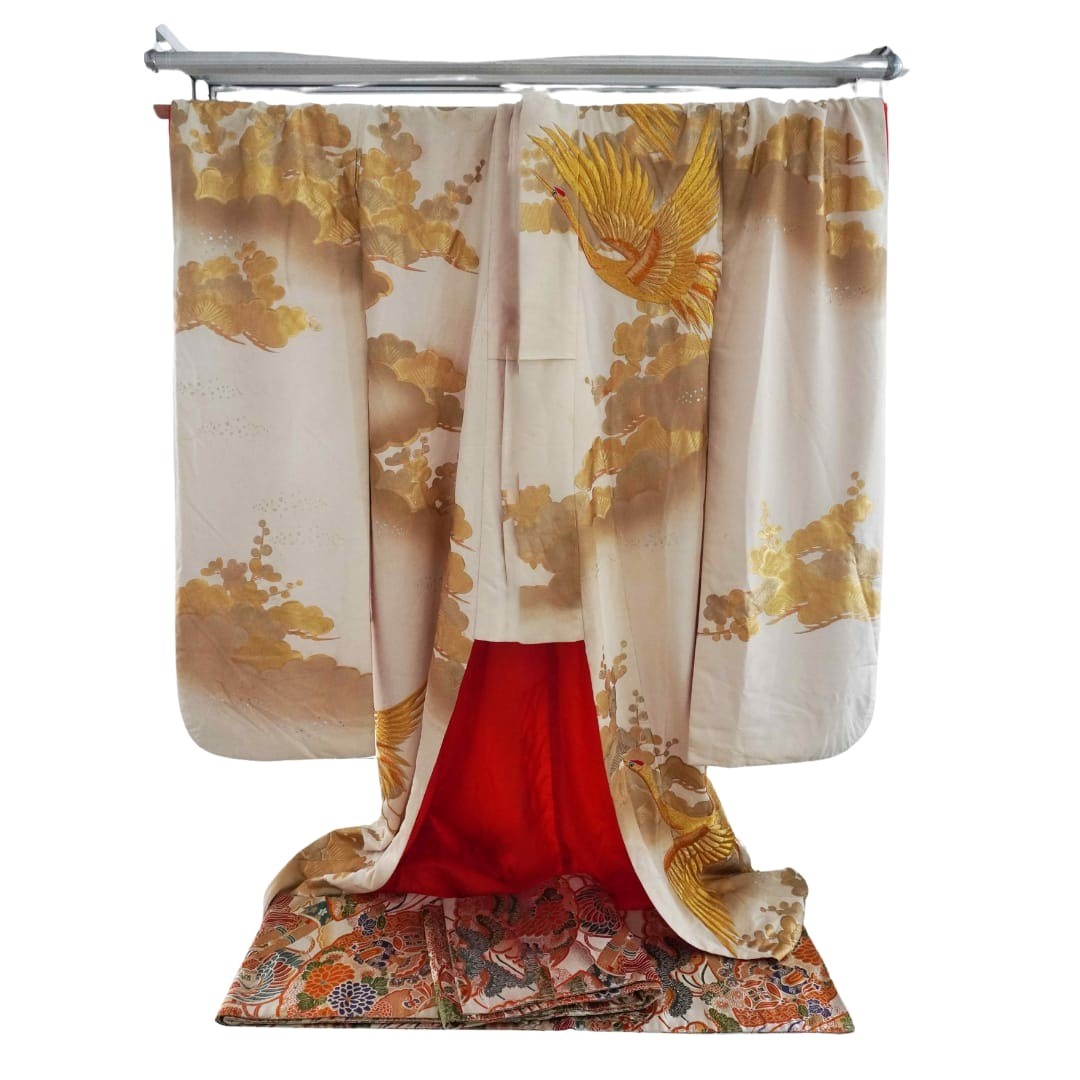
This kimono was donated by Professor Masakatsu Tozu from Kokushikan University to the UNS Javanology Center (PUI Javanologi) during the Koh-Do Fragrance Seminar in 2012. The kimono is a traditional Japanese garment that has existed since the Heian period (794–1185) and is known for its distinctive T-shaped form, as well as patterns and colors that reflect social status, seasons, or specific occasions. This collection highlights the cultural relationship between Japan and Indonesia, enriching our understanding of cultural heritage through traditional clothing practices.
UNS conserves and exhibits the kimono as part of cross-cultural heritage education, promoting understanding of Japanese-Indonesian cultural relations.
Heritage of Displaced or Community-Based Cultural Assets
- Arga Budaya
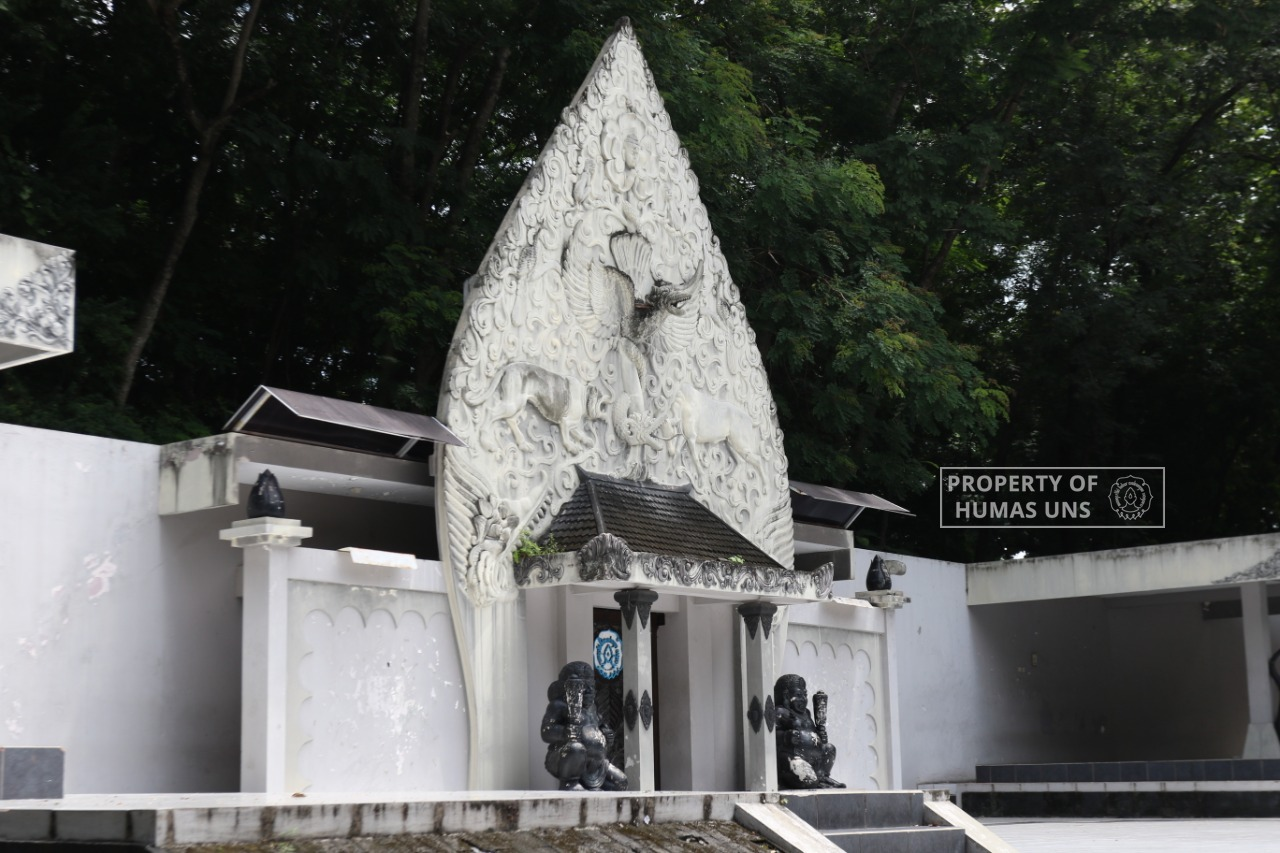
Arga Budaya, the oldest open-air performance space in Surakarta, has been standing since 1981. However, Prof. Sahid was unable to confirm the exact founding date due to a lack of precise historical records. Since its establishment, Arga Budaya has served as a venue for UNS students to perform arts and cultural activities.
The name Arga Budaya comes from two words: arga and budaya. Arga means mountain, interpreted as a large place holding various minerals and serving as a space for the growth of plants and life. Budaya refers to wisdom and power, representing a cultural space located west of Mount Kendil at the UNS Kentingan Campus. Prof. Sahid added that Mount Kendil, a highland within the UNS Central Campus, shares a similar meaning with the word arga.
Prof. Sahid explained that Arga Budaya is a silent witness to the popularity of theatrical performances in its time. The establishment of Teater Wiswakarman in 1989, the oldest theater in Surakarta, is closely linked to the existence of Arga Budaya. “When I was a student, I used this space since 1988 for Ketoprak rehearsals. Then, in 1989, Wiswakarman was officially inaugurated at the Faculty of Letters – now known as the Faculty of Cultural Sciences (FIB). I was the founder and mentor for 31 years,” Prof. Sahid stated.
Through Arga Budaya, UNS demonstrates its commitment to preserving and promoting Javanese cultural heritage. The university provides facilities and infrastructure to support its vision of being a World-Class University, while offering broad access to a representative and proud cultural center. UNS actively facilitates performances, workshops, and training at Arga Budaya, enabling students and the local community to engage with and sustain traditional arts.
- Pedel Master of Universitas Sebelas Maret
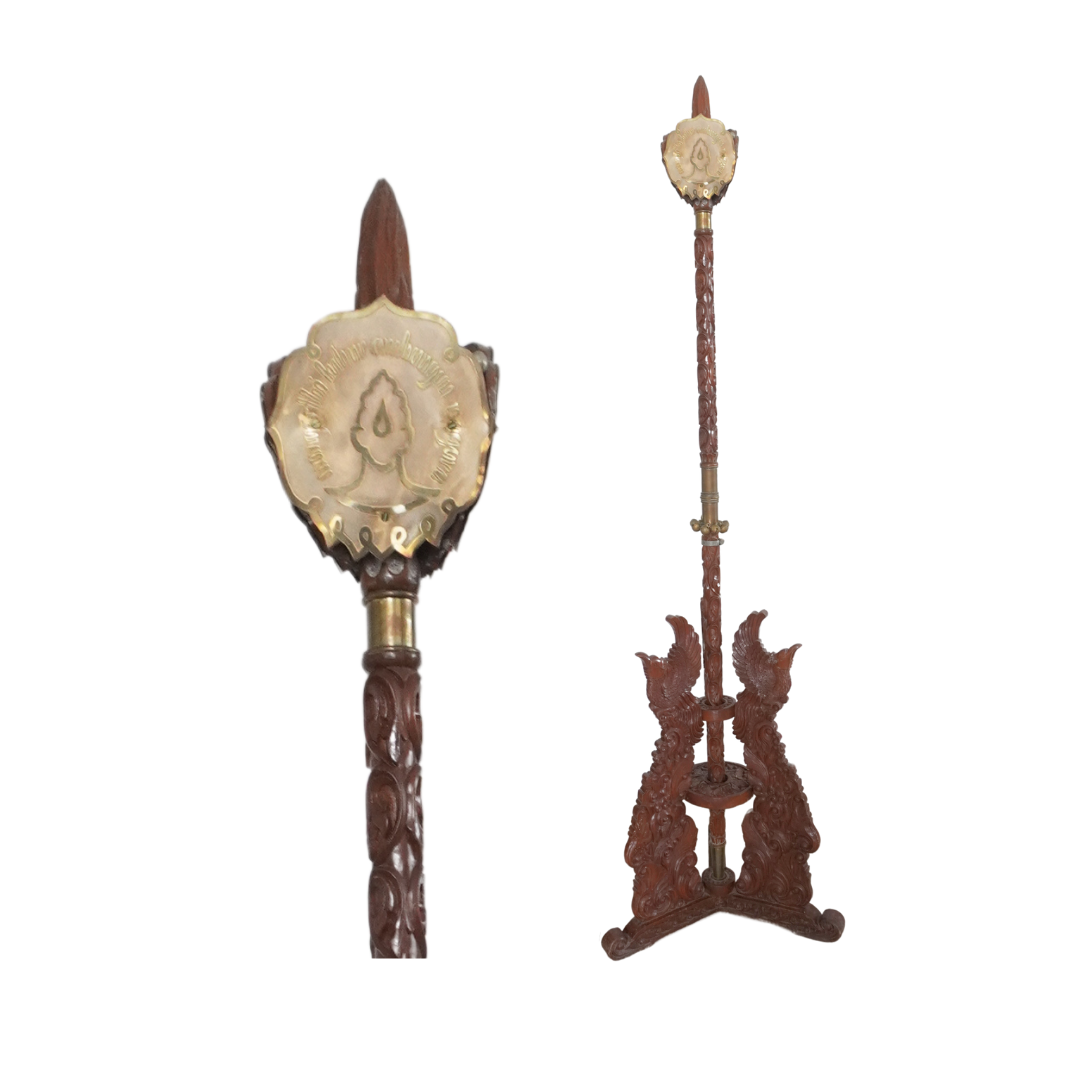
The Pedel Master staff baton is used in official UNS ceremonies such as graduations and senate sessions. As a symbol of authority and honor, it is held by the pedel officer leading the academic procession. Its design and carvings reflect UNS traditions and academic identity, adding solemnity to each event. Entered into the UNS Museum collection in 2017, the baton preserves academic and cultural values, honoring long-standing traditions. UNS ensures the maintenance, documentation, and exhibition of such ceremonial items, highlighting their significant role in the university’s heritage.
- Samir of Rector Haryo Mataram
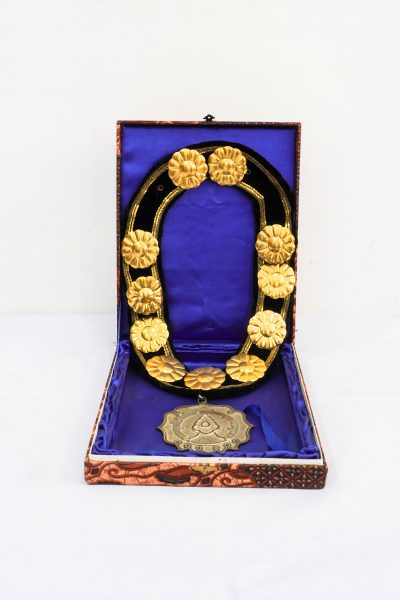
This Samir is made from velvet, brass, and sequins, created in Surakarta around 1976. It was worn by G.P.H. Haryo Mataram, UNS’s first rector and son of Pakubuwana X, during 1976–1977. The Samir was added to the UNS Museum collection in 2017. UNS preserves it as part of its historical ceremonial artifacts, integrating it into exhibitions and educational programs about the university’s history.
- Samir of Vice Rector
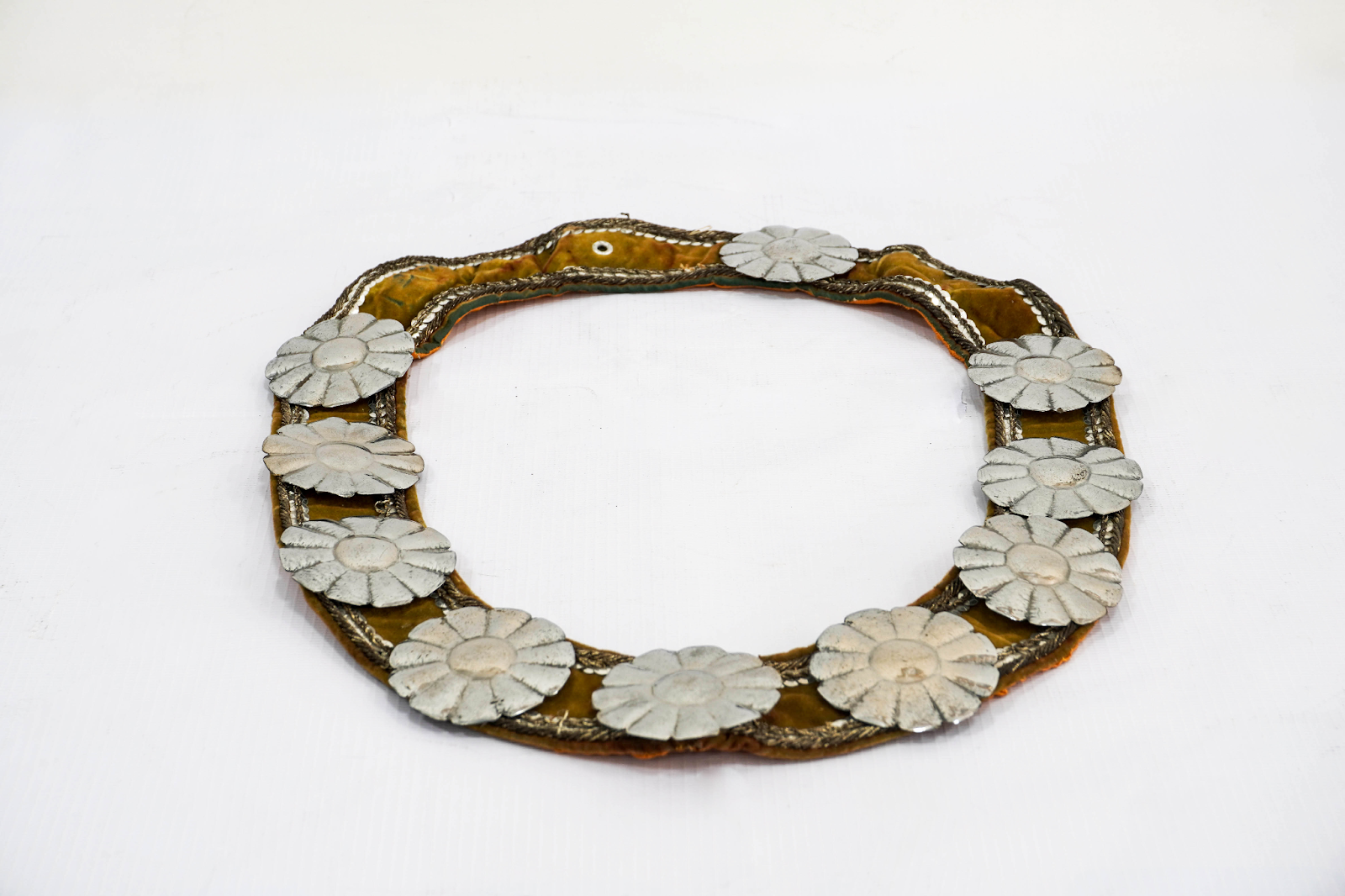
his samir was worn by G.P.H. Haryo Mataram during his tenure as Vice Rector of UNS from 1976 to 1977. In an academic context, samirs are often used in formal events such as graduations, inaugurations, and state ceremonies, symbolizing honor and academic responsibility. UNS actively curates and interprets these artifacts to educate students and visitors about the university’s ceremonial traditions and cultural heritage.
International / Displaced Community Cultural Heritage
UNS also promotes the preservation of cultural heritage through the active participation of international students, particularly those from conflict-affected countries, by providing them opportunities to share their cultures within local communities. One of the key initiatives is the UNS Cultural Night, an annual event organized by the UNS International Office to celebrate the cultural diversity of students from various countries. The event features cultural performances, including traditional dances, songs, and fashion shows, as well as culinary presentations from various countries.
Additionally, international students participate in Sharing Day at schools in Surakarta and surrounding areas, introducing their cultural traditions and heritage to local students and communities. Through these activities, UNS actively fosters intercultural dialogue, promotes mutual understanding, and integrates global cultural awareness into its community engagement programs, thereby strengthening the university’s role in supporting sustainable, inclusive, and culturally vibrant communities.
The activities described above directly support SDG 11 indicator “Record and preserve cultural heritage” by extending the preservation of cultural heritage beyond museum artifacts and collections, to include the living experiences and traditions of international communities that are displaced or affected by conflict. In this way, UNS plays a vital role in strengthening local, national, and affected community cultural heritage, while also raising cross-cultural awareness and fostering an inclusive social identity.
Research and Community Services
In 2024, a team of academic staff from the Faculty of Economics and Business carried out a community service program in the Sangiran Tourism Village. The team assisted local micro-entrepreneurs in improving the quality of their heritage-style products.
In addition, Surakarta, the home of UNS, is well known for its traditional Batik cloth. UNS teams have implemented community service programs to assist Batik entrepreneurs in improving their sales, enhancing product quality, and innovating new motifs while preserving traditional values. Below are some of the examples of community service programs conducted in 2024 to help preserve cultural heritage:
https://uns.ac.id/id/uns-research/tingkatkan-mutu-produk-tim-rg-fkip-uns-gelar-pelatihan-di-usaha-batik-dewi-ratih-sragen.html (community service at Batik Dewi Ratih Sragen)
https://www.youtube.com/watch?v=QlIz95qXEss (Batik Ecoprint community service)
https://www.youtube.com/watch?v=PiUJc_yo-q8 (the use of computer to support batik design process community service)
Moreover, a team from UNS delivered a community service program providing photography training to the community in Sidowarno Tourism Village, Klaten, renowned for its Wayang craftsmanship.