SDG 3 In Number
Number of graduates
6.192
Number of graduates in health professions
927
3.3.2 Health Outreach Programmes
Sebelas Maret University (UNS) is committed to promoting improved public health and well-being through various integrated and inclusive community service programs, in line with SDG 3: Good Health and Well-Being. Through this initiative, UNS implements outreach programs that reach local communities, disadvantaged people, and refugee/immigrant communities, leveraging the capacity of students, lecturers, and researchers as agents of change. These programs emphasize equitable access to health services, nutrition and hygiene education, and social support for vulnerable groups, while developing students’ abilities in contextual application of knowledge.
- Outreach Program and Project in the Local Community
- Community Service 2024: Independent Malnutrition Screening Assistance in Boyolali
On Monday, June 10, 2024, a community service activity was conducted by the Nutrition and Health Research Group, along with Master’s students in Nutrition who were on internships and the Sambi Community Health Center in Boyolali Regency. The activity aimed to train mothers/caregivers and cadres to recognize stunting risk factors in their families at the Mawar 4 Integrated Health Post (Posyandu) in Canden Village, Sambi District, Boyolali Regency.
Source : https://pasca.uns.ac.id/s2ilmugizi/category/kegiatan/sdgs/
- UNS Students Drive Health Equity Initiatives Through the UNS CARE 2024 Program
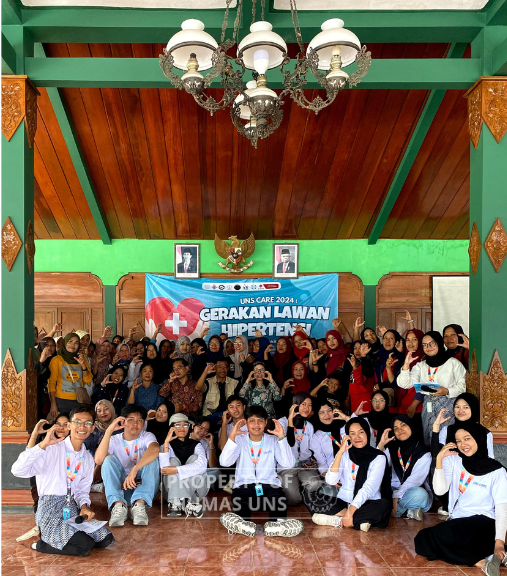
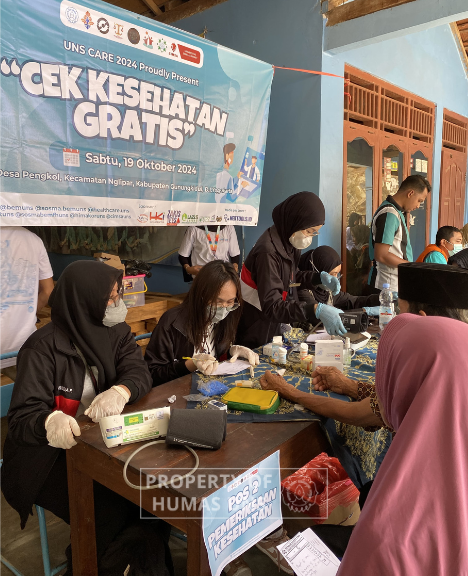
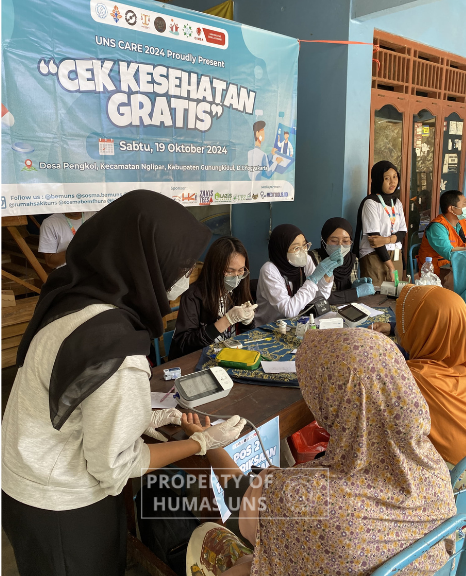
Sebelas Maret University (UNS), through its UNS CARE 2024: Students Lead Health Equity Initiative program, implemented a series of community service activities focused on improving health and well-being (SDG 3) in rural areas. The program ran throughout October 2024 and involved more than 200 students from across faculties, who served as the primary driving force in promoting equitable access to healthcare services. These activities targeted local communities and disadvantaged populations in UNS-supported villages in Surakarta and Karanganyar. UNS students directly provided free health checks to approximately 1,500 residents, while also providing education on clean and healthy lifestyles, counseling on the prevention of non-communicable diseases such as hypertension and diabetes, nutritional support for children and pregnant women, and basic health emergency response simulations in collaboration with local medical personnel.
The program’s implementation was fully supported by field supervisors and collaboration with community health centers (Puskesmas), village officials, and non-governmental organizations (NGOs), ensuring the sustainability of the health interventions. Students also conducted community health surveys and compiled local epidemiological data, which were then used as the basis for recommendations for improving primary health care services at the village level. The commitment of UNS leadership was reflected in the Rector’s statement, which emphasized that this program not only serves as a contextual learning platform for students but also represents the university’s concrete contribution to equitable health services.
The outputs and outcomes achieved from UNS CARE 2024 include the involvement of more than 200 students, direct health services to approximately 1,500 residents, and the development of data-based recommendations for improving health services in 10 partner villages. The program’s outcomes or impact are evident in increased community knowledge about health, nutrition, and disease prevention, strengthened student capacity as agents of change in the health sector, and the establishment of ongoing collaborations with national and international institutions to expand community-based health transformation. Long-term plans and program sustainability include developing UNS CARE as a model for sustainable activities in other villages in Indonesia, increasing program integration with village and provincial health policies, and potentially expanding program coverage to additional vulnerable groups, such as refugee/immigrant communities, if available in the UNS area.
Through UNS CARE 2024, UNS affirms its role as an educational institution that actively supports SDG 3, with the aim of fostering a healthier, more inclusive, and empowered society.
Source : https://uns.ac.id/en/uns-care-2024-students-lead-health-equity-initiative/
- Outreach Program and Project for Disadvantaged People
- UNS Promotes the Health and Well-Being of Students with Disabilities Through the Fordis Volunteer Forum
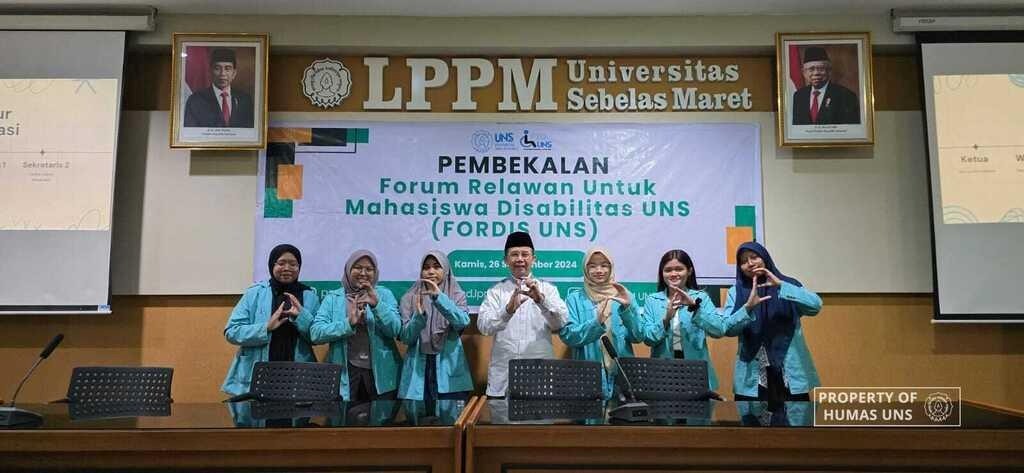
Universitas Sebelas Maret (UNS), through the Disability Study Center (PSD) of the Institute for Research and Community Service (LPPM), launched the Volunteer Forum for Students with Disabilities (Fordis UNS) as part of its efforts to support health and well-being (SDG 3) for students with disabilities. This initiative targets disadvantaged people, focusing on students who require academic and social support, while also promoting an inclusive campus environment.
The forum successfully attracted 177 UNS students who registered as volunteers to participate in activities such as mentoring, providing accessibility facilities, and raising awareness about the importance of a disability-friendly campus environment. Volunteers received comprehensive training on various types of disabilities, inclusive communication techniques, and mentoring methods responsive to individual needs. This training ensures that students with disabilities receive effective academic and social support, while also enhancing volunteers’ understanding of inclusion and equity principles.
The leadership commitment of UNS is reflected through the Head of PSD LPPM, Prof. Dr. Munawir Yusuf, M.Psi., who emphasized the importance of equal access and opportunities for all students. He stated that Fordis UNS is expected to become a pioneer in creating a more disability-friendly campus environment.
The program’s outputs and results include the formal establishment of Fordis UNS, the engagement of 177 student volunteers, and the provision of mentoring services and accessible facilities. The outcomes and impact include improved well-being of students with disabilities, the creation of a more inclusive academic environment, enhanced capacity of volunteers to provide responsive support, and increased awareness within the campus community regarding equity and diversity principles.
The long-term plan and sustainability of Fordis UNS involve expanding mentoring services, increasing the capacity of new volunteers annually, integrating inclusion principles into campus policies, and potentially extending support to other disability communities around UNS. This program reinforces UNS’s role as an institution committed to SDG 3, aiming to foster healthy, well-being, and inclusive lives for all students, including those from disadvantaged backgrounds on campus.
- Outreach Program and Project for Refugee/Immigrant Communities
- FKIP UNS Enhances Educational Well-Being for Papua and Repatriation Communities Through the ADEM Program
The Faculty of Teacher Training and Education (FKIP) at Universitas Sebelas Maret (UNS), in collaboration with the Educational Financing Service Center (Puslapdik) of Kemdikbud Ristek, implemented a series of activities to improve the well-being and quality of education for participants of the ADEM program (Afirmasi Pendidikan Menengah) in Papua, Special Regions, and Repatriation areas. This initiative targets disadvantaged people and refugee or immigrant communities, particularly the children of Indonesian Migrant Workers (PMI) living abroad, including in Sabah, Sarawak, and Johor Bahru, Malaysia. The initiative aligns with SDG 3: Good Health and Well-Being, which emphasizes the importance of healthy and thriving lives, including access to quality education that promotes mental health and social well-being.
During program implementation, UNS researchers and students actively participated in monitoring, evaluation, and studies related to the ADEM Repatriation program to enhance the quality of educational services for participants. Three main research projects were conducted: a Cost Structure Analysis (CSA) through the Profiling of ADEM Repatriation Students, a Financing and Service Model for ADEM Special Region Scholarships, and an Evaluation of Financing and Services for ADEM Papua Scholarships. These activities generated evidence-based data and recommendations that were used to refine financing mechanisms, enhance the quality of educational services, and inform affirmative education policies, including strategies to support the 12-year Universal Secondary Education (PMU) initiative.
The program’s outputs and results include the preparation of evaluation and study reports, improvement in ADEM educational service quality, and provision of quantitative and qualitative data to inform policymakers. The observed outcomes and impacts include increased educational access for ADEM students in Papua and the Special Regions, improved quality of services for ADEM Repatriation participants, and strengthened institutional capacity to design inclusive and sustainable affirmative education policies.
The program’s long-term plans and sustainability involve developing a more efficient ADEM financing and service system, expanding access for disadvantaged people and refugee/immigrant communities, and integrating research findings into national education policies to ensure fair, inclusive, and high-quality education. Through these activities, FKIP UNS reinforces its active role in supporting SDG 3, promoting better and more inclusive well-being through equitable access to quality education for all community groups.
Source : https://fkip.uns.ac.id/2023/10/fkip-uns-sepakati-kerjasama-dengan-puslapdik-kemendikbudristek/
Through the implementation of the outreach programs described above, UNS has successfully created a tangible impact on the health and well-being of various community groups, including local communities, vulnerable groups, and repatriation communities. These activities not only strengthen the capacity of students and researchers to contribute socially but also help to foster a more inclusive, equitable, and sustainable environment. By integrating evidence-based approaches, cross-sector collaboration, and clear long-term planning, UNS reinforces its active role in advancing SDG 3, promoting healthier, empowered, and thriving communities across all levels of society.
In order to achieve the SDG 3 goal: “To ensure healthy lives and promote well-being for all at all ages,” in 2024, UNS provides funding for research and community service projects related to SDG 3. For example, several UNS researchers have conducted research and community service initiatives to address health-related issues, including:
- “Pendekatan Farmakologi dan Non-Farmakologi untuk Mengatasi Penyakit Tidak Menular: Anemia, Obesitas, dan Diabetes Melitus” by Dr. Yuliana Heri Suselo
Outreach components in her research include health education and community guidance on managing non-communicable diseases through lifestyle modifications, nutrition, and physical activity. - “Upaya Peningkatan Derajat Kesehatan dan Kualitas Hidup Penderita HIV di Surakarta” by Dr. Evi Nurhayatun.
Her research incorporates health outreach programs for HIV patients and at-risk populations, providing education, counseling, and support to improve overall well-being. - “Investigasi Kontak Tuberkulosis dan Peningkatan Pengetahuan Mengenai Infeksi TB Laten di Puskesmas Gajahan” by Dr. Hendrastutik Apriningsih.
The study involves community-level interventions at Puskesmas Gajahan to raise awareness and knowledge about latent TB infection, targeting both patients and their contacts. - “Pengaruh Kur-Co Smart terhadap Derajat Demam Berdarah Dengue” by Prof. Dr. Hartono.
The Kur-Co Smart program includes community-based initiatives to prevent and control dengue fever, educating local residents on mosquito breeding site management and health behaviors.