SDG 4 In Number
Number of graduates
6.192
Number of students starting a degree
9.032
Number of first-generation students starting a degree
6.205
Number of students
27.604
Number of graduates who gained a qualification that entitled them to teach at primary school level
6.192
4.3.4 Education Outreach Activities Beyond Campus
UNS Expands Educational Outreach Beyond Campus to Strengthen Inclusive and Quality Learning
In alignment with SDG 4: Quality Education, Universitas Sebelas Maret (UNS) consistently expands its educational outreach beyond campus through both programmed and ad hoc initiatives aimed at enhancing inclusive and equitable learning opportunities. These activities reflect UNS’s strong commitment to extending the impact of higher education to local schools and communities. By engaging students, lecturers, and educational partners, UNS ensures that knowledge, teaching expertise, and innovative learning practices reach a wider audience beyond the university environment. Through structured school-based programs, student volunteer initiatives, and teacher capacity-building activities, UNS bridges the gap between academic knowledge and real-world educational needs, fostering sustainable improvement in teaching and learning quality.
- Activities On a Programmed Basis
- Pengenalan Lapangan Persekolahan (PLP) Program
Universitas Sebelas Maret (UNS) consistently conducts educational outreach programs beyond the campus through the Pengenalan Lapangan Persekolahan (PLP) program, which is held on a scheduled basis every year by the Faculty of Teacher Training and Education (FKIP). This program is part of UNS’s ongoing effort to strengthen the quality of teacher education by providing students with direct experience in understanding the dynamics and real conditions of school environments. PLP serves as an essential stage in shaping future professional educators, bridging theoretical learning at the university with practical implementation in schools.
In 2024, UNS deployed approximately 2,000 FKIP students to assist in teaching and educational activities across 389 schools in the Solo Raya region through the PLP Program (list of schools). The program was conducted over a period of three months, during which students participated in classroom teaching, mentoring, and school-based projects that enriched both their pedagogical and social competencies.
During the PLP activities, students were involved in various approaches to support learning. For example:
- At SMA Batik 2 Surakarta, PLP students conducted “practicum-based” learning sessions to help high school students better understand scientific concepts.
https://smabatik2solo.sch.id/wp/index.php/2024/11/05/kegiatan-mahasiswa-plp-fkip-uns-2024/ - PLP students at SMKN 1 Boyolali served as facilitators for creative educational projects, particularly in the implementation of the Projek Penguatan Profil Pelajar Pancasila (P5), which enhanced students’ character development and collaborative skills.
https://smkn1boyolali.sch.id/uncategorized/mahasiswa-plp-uns-2024-berperan-aktif-sebagai-fasilitator-proyek-penguatan-profil-pelajar-pancasila-di-smkn-1-boyolali/
- At SMA Batik 2 Surakarta, PLP students conducted “practicum-based” learning sessions to help high school students better understand scientific concepts.
Through the annual PLP program, UNS not only contributes to improving the quality of education and learning innovation in schools but also strengthens its role as a higher education institution actively engaged in community-based educational development aligned with SDG 4: Quality Education.
- Transfer of Specialized Skills and Teacher Training
UNS provides specialist expertise through tailored training (tailored lectures or demonstrations) off-campus, transferring cutting-edge technology and teaching skills. Towards the SDGs of Quality Education, the UNS FKIP Community Service Team Once Again Holds Information Technology Skills Training for Elementary School Teachers
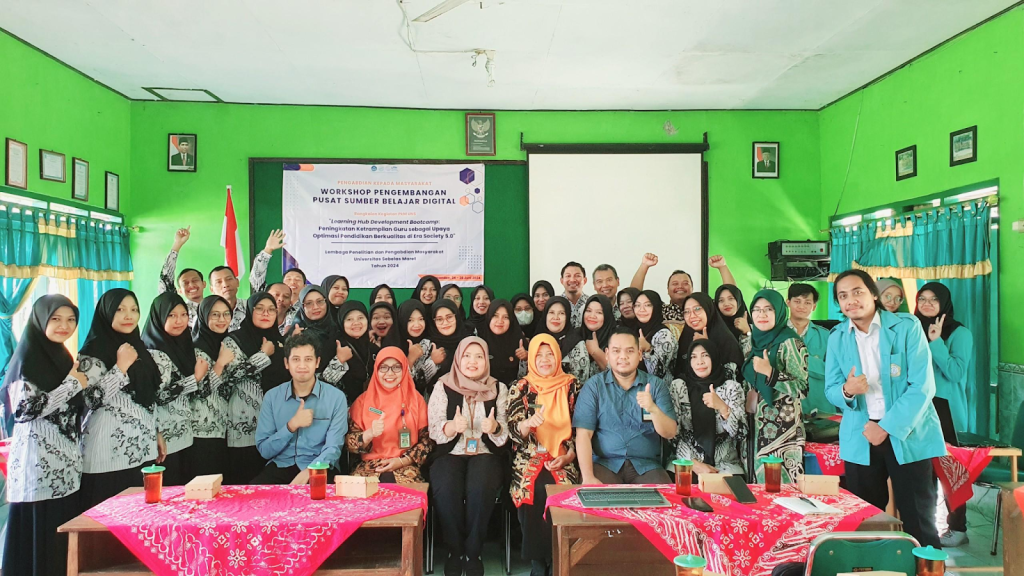
FKIP – The Community Service Team from the Faculty of Teacher Training and Education (FKIP) at Sebelas Maret University (UNS) once again contributed to the development of quality education through a Community Partnership Program themed “Digital Learning Resource Development (PSB) Training.” This activity was held in Karangpandan District, Karanganyar Regency, Central Java.
This activity is part of a series of ongoing activities that have been held for three consecutive years. The participants consisted of 35 elementary school teachers. This activity is part of the Faculty of Teacher Training and Education (FKIP) UNS’s ongoing efforts to improve information technology skills and develop ICT-based learning media among elementary school educators.
The Community Service Team involved in this activity consists of 3 lecturers from FKIP UNS, namely Dr. Septi Yulisetiani, M. Pd, who acts as the chief executive, Puspanda Hatta, M.Eng., who acts as a resource person for the Digital PSB Development material, and Yusfia Hafid Aristyagama, M.T., who acts as a resource person for the Augmented Reality-based learning media material.
The three lecturers were assisted by four students from the Informatics and Computer Engineering Education (PTIK) and Elementary School Teacher Education (PGSD) study programs, who also participated in the program. The three-day training, with a systematic agenda, aimed to provide participants with a theoretical understanding, practical training, and evaluation of the digital PSB products they produced.
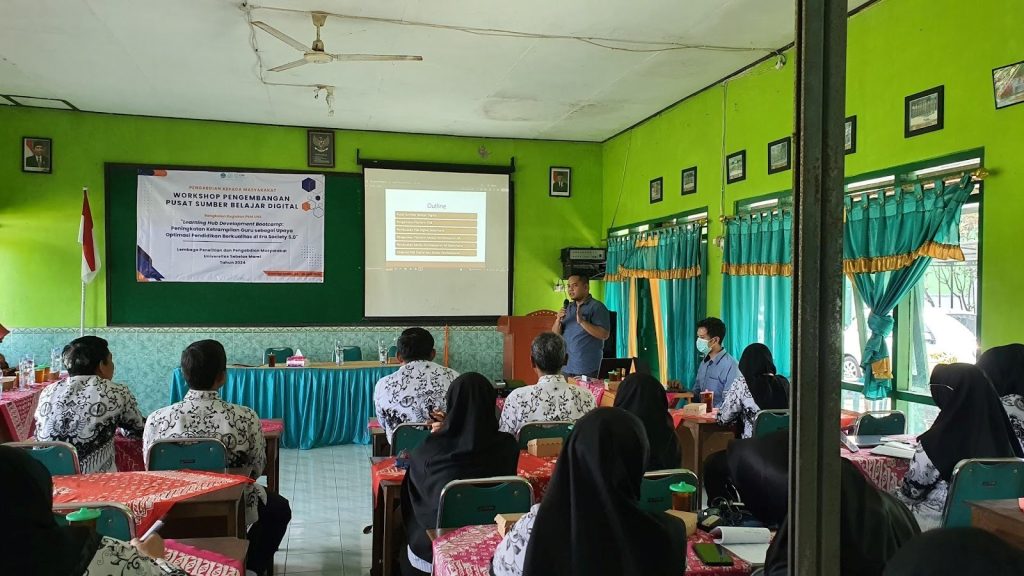
On the first day, participants received theoretical material on the concept and benefits of digital PSB in the learning process. The material covered the fundamentals of digital PSB development, the importance of technology integration in education, and various platforms teachers can use to create engaging and interactive digital PSB. This material aimed to provide participants with a comprehensive understanding of the potential of digital technology to enhance learning effectiveness.
The second day focused on practical sessions. Participants were invited to directly participate in creating a digital PSB. In this session, participants were tasked with creating a simple Learning Management System (LMS) website using the Google Sites platform, which would later be equipped with Augmented Reality (AR)-based learning media.
This approach was chosen to provide participants with hands-on experience in developing a website-based digital PSB, which proved to be a relatively straightforward process. They also learned how AR technology can be integrated into digital PSB, making it easily applicable as a learning tool in elementary schools. Participants were enthusiastic and actively participated in each session, demonstrating a strong interest in mastering this new skill.
On the third day, participants’ work was evaluated through the digital PSB products they had created. This evaluation was conducted to assess the extent to which participants were able to apply the theory and practice learned over the previous two days. The resulting products demonstrated a variety of creativity and technical skills, reflecting the teachers’ sincere efforts to integrate technology into their learning processes. This evaluation also provided constructive feedback for participants, allowing them to continue developing their skills in the future.
The activity proceeded smoothly and received positive feedback from the teachers involved. Participants appreciated the opportunity to learn and practice directly in developing digital learning resources, which they viewed as a much-needed skill in today’s digital age. They also expressed their hope that such activities would continue and be further developed, given the significant benefits they have seen in improving the quality of learning in elementary schools.
The success of this activity is inseparable from the full support of LPPM UNS, FKIP UNS, and partners (the Karangpandan District Elementary School Teacher Working Group), who have committed to contributing to this activity. This activity marks the third consecutive period of collaboration between the UNS research team and the elementary school teacher community in Karanganyar Regency in conducting training on the development of ICT-based learning media. This demonstrates the research team’s consistency and dedication in positively impacting the competency development of teachers in the region.
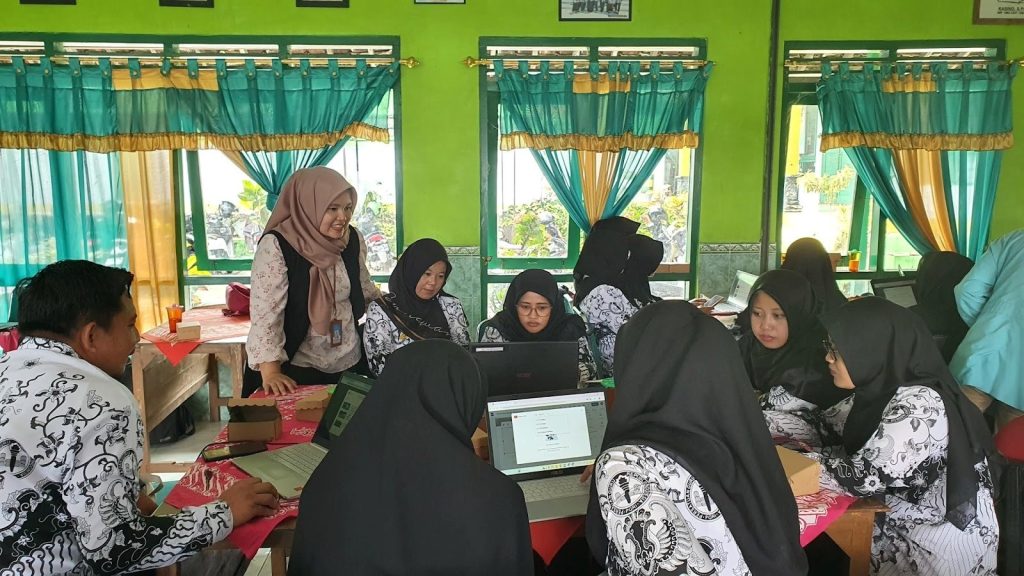
The digital PSB they learned and developed during this training is expected to be a solution to improve the quality of education in elementary schools and prepare students to face the challenges of the digital era. Through this community service activity, Sebelas Maret University demonstrates its important role in supporting the improvement of education quality in Indonesia. This aligns with the sustainable development goals (SDGs).sustainable development goalsThe direct involvement of lecturers and students in this activity also serves as a form of implementation of the three pillars of higher education, namely education, research, and community service.
In closing, the “Digital Learning Resource Development Training (PSB)” program not only benefited the participating teachers, but also provided valuable experience for the students involved. They learned firsthand how to apply the knowledge they gained in college to real-world contexts. This provided valuable tools for them as they prepared to become future educators and researchers.
It is hoped that this activity will inspire other educational institutions to conduct similar development programs, thereby creating a strong synergy between academics and educational practitioners in an effort to improve the quality of education in Indonesia. Community service activities like this demonstrate UNS’ commitment to supporting educational advancement and the development of competent and high-quality human resources.
- Ad Hoc Student Volunteer Initiatives
- UNS Mengajar 2024: Student-Led Educational Empowerment in Rural Boyolali
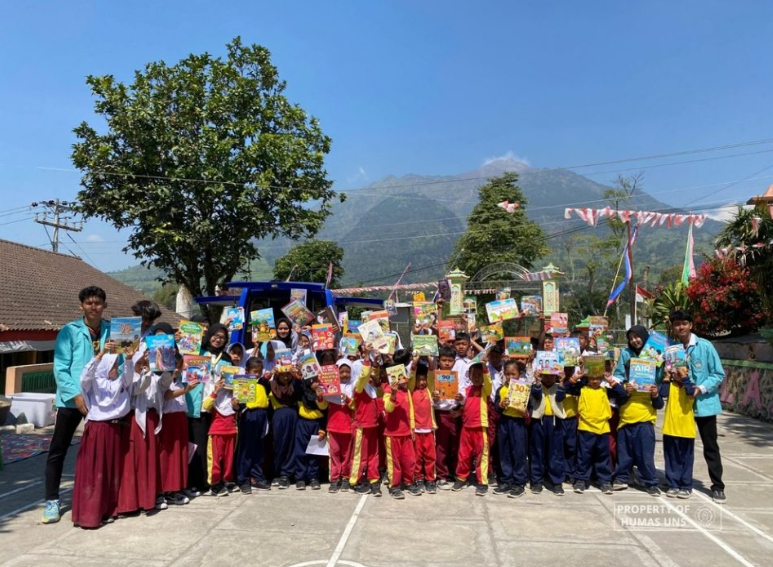
The Ministry of Social Affairs of the Student Executive Board (BEM) of Sebelas Maret University (UNS) Surakarta, under the Oasis of Meaning Cabinet, is again implementing the UNS Teaching 2024 program (UNS Teaching). With the theme “Igniting the Light of Literacy, Building the Character of the Golden Generation 2045: Towards a Sustainable Education Future”, this program is being implemented in two villages in Boyolali Regency: Genting Village in Cepogo District and Lencoh Village in Selo District.
The goal of UNS Mengajar 2024 is to improve the quality of education in rural areas. Addressing the educational gap between rural and urban areas is a key objective of the program. This initiative focuses on students, local communities, and young people, aiming to bring about positive change in these villages.
This program emerged in response to educational disparities in various regions. Equal access to education remains a widespread issue, prompting UNS Teaching to invite volunteers to act as bridges in education provision, particularly at the elementary level.
The volunteers were drawn from the broader UNS student community, representing various study programs. From 300 applicants, 33 students were selected to participate in UNS Teaching 2024, with a total of 55 volunteers deployed to the two villages. The program focused on primary education for two weeks in August 2024. The volunteers taught at several schools, including SD Negeri 1 Genting, SD Negeri 2 Genting, SD Negeri 2 Selo, and SD Negeri Lencoh. The enthusiasm of the villagers, teachers, and students contributed significantly to the success of this initiative.
UNS Mengajar 2024 focuses not only on classroom teaching but also incorporates various community service activities. Volunteers are actively involved in various activities, including legal education, workshops on liquid organic fertilizers, food aid (zakat) distribution, assisting with preparations for the Independence Day carnival, conducting Quranic study sessions (TPA), and distributing ice cream to children.
The legal education component aims to inform villagers about their legal rights and responsibilities. In Genting Village, legal outreach is conducted by Williem Laurentius Nainggolan, S.H., of the Mawar Saron Legal Aid Institute (LBH Mawar Saron).
Meanwhile, a Liquid Organic Fertilizer (POC) workshop targeted local farmer groups, providing them with valuable information on agricultural practices. Diesta Atha’ul Naafi and Bian Rafi Safaraz, students of the UNS Environmental Science Program, led the POC workshop in Lencoh Village in collaboration with the Selo Agricultural Extension Center (BPP).
Food aid was distributed to underprivileged villagers, especially orphans and those in need. All of these activities helped strengthen the bonds between the volunteers and the local community. UNS Mengajar 2024 had a direct and positive impact on these villages.
Speaking to uns.ac.id on Wednesday (September 11, 2024), Nisak Nur Azizah, Chair of UNS Mengajar 2024, stated that the program has successfully made a tangible contribution to the community in terms of teaching and learning. Nisak, a student in the Chemistry Education Study Program at the Faculty of Teacher Training and Education (FKIP), added that UNS Teaching will continue to improve in the future.
“The UNS Teaching Program has successfully achieved its goal of making a real contribution to society through teaching, learning, and the application of social values. Overall, the UNS Teaching initiative is a very positive endeavor and has provided significant benefits to the community. We are committed to improving the quality of this program so that it can have a broader and more sustainable impact in the future,” said Nisak.
Arifia Wijayanti, the principal of SD Negeri 2 Genting, praised UNS Mengajar 2024, calling it a commendable effort. She noted that the program inspired the school to be more enthusiastic about learning, with UNS students bringing a new dynamic to the school.
“The children are more enthusiastic and eager to learn. We hope the program can be extended, so its benefits can have a deeper impact on our students,” said Arifia.
Source : UNS Mengajar 2024: BEM’s Effort to Enhance Primary Education in Boyolali
Through the program outreach, with this diverse environment, UNS effectively expands its educational impact, not only improving academic quality on campus, but also proactively responding to the educational and practical skills needs of the wider community.
In 2024, UNS allocated research and community service funding related to SDG 4: Ensure inclusive and equitable quality education and promote lifelong learning opportunities for all. Some UNS researchers conducted studies related to educational outreach to local schools and communities:
- Prof. Dr. Sarwanto, S.Pd., M.Si. – “Inovasi Pembelajaran Berbasis Lifelong Learning untuk Mewujudkan Pendidikan yang Berkualitas“
Implements educational programs in communities and schools as part of lifelong learning. - Dr. Atik Catur Budiati, S.Sos., M.A. – “Workshop Penyusunan Bahan Ajar Berbasis Cultural Responsive Teaching pada Mata Pelajaran Sosiologi Fase F di Kabupaten Klaten“
Conducts workshops in schools and local communities to enhance teacher and student competencies. - Dr. Triana Rejekiningsih, S.H., K.N., M.Pd. – “Perwujudan Pendidikan Berkualitas untuk Mendukung Lingkungan Belajar yang Aman Anti Perundungan melalui Pengembangan Media Digital sebagai Implementasi dari SDGs di Kota Surakarta“
Distributes anti-bullying digital media to schools and local communities. - Prof. Sulistyo Saputro, M.Si., Ph.D. – “Pengembangan Kompetensi Abad 21 melalui Pendekatan Social Emotional Learning (SEL), STEM, dan STEAM dalam Pembelajaran IPA“
Uses STEM/STEAM/SEL learning materials in outreach activities at schools and communities to enhance 21st-century literacy.