SDG 6 In Number
Volume of water used in the university: Inbound (treated/extracted water) (m³)
94.092
Campus population
31.364
6.3.1 Wastewater treatment
Wastewater Treatment Process at Universitas Sebelas Maret (UNS)
The Ministry of Public Works and Housing (PUPR) has developed a centralized Wastewater Treatment Plant (WWTP) on the Universitas Sebelas Maret (UNS) campus as part of efforts to improve the campus environmental quality and support the Green Campus principles. The UNS WWTP serves several campus buildings and supporting facilities, aiming to reduce water pollution in the surrounding environment, particularly the Bengawan Solo River. The treatment plant has a capacity of 1,290 m³ per day, serving 135 building connections and 65 nearby households. Its capacity and service coverage are designed to treat wastewater from both the campus area and the surrounding community.
Through this program, wastewater from campus activities—including laboratories, canteens, and other facilities—is processed to meet the required quality standards before being discharged into the environment. The water quality measurements from the WWTP indicate that all parameters meet the Class I and Class II water quality standards as outlined in Central Java Provincial Regulation No. 5 of 2012. Currently, 38% of treated water from the WWTP is reused for the garden sprinkler system.
Additionally, UNS purifies lake water using the reverse osmosis method for use in hydroponic farming. This wastewater treatment process is crucial to assess the effectiveness of pollutant reduction, including the decrease in COD, BOD, and TSS levels. The use of reverse osmosis produces clear water with low levels of dissolved substances. By integrating both technologies, UNS can minimize dependence on increasingly limited groundwater sources.
Therefore, the presence of the WWTP at UNS helps improve the campus environmental quality, reduce water pollution, and strengthen UNS’s role in implementing the concept of a sustainable university. This program also demonstrates UNS’s strong commitment to responsible and sustainable water management.
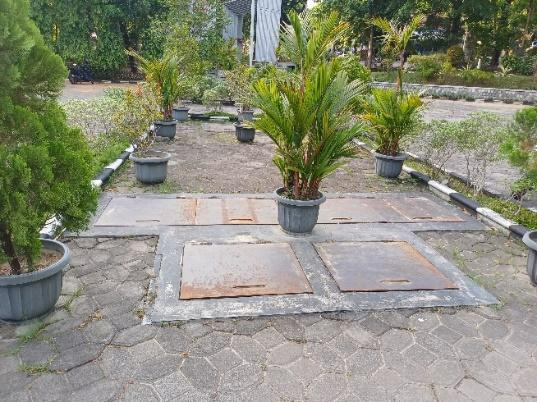
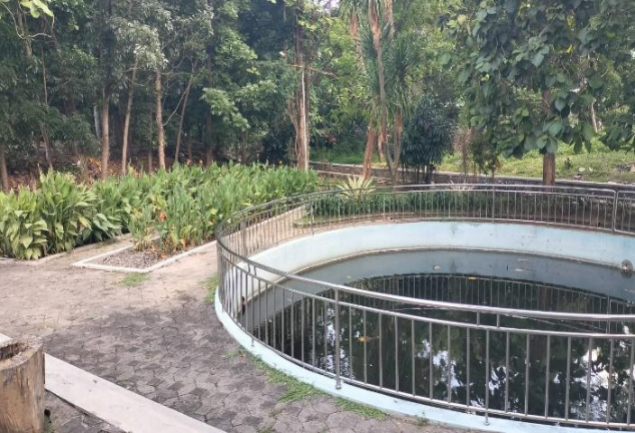
(Photo: Wastewater Treatment Plant at UNS Campus)
In 2024, Sebelas Maret University (UNS) provided research and community service funding, focusing on SDG 6 topics, to achieve SDG 6: Ensure availability and sustainable management of water and sanitation for all. For example, several UNS researchers conducted studies and community engagement related to water, including the research titled “Development of Superior Modified Magnetic Material from Iron and Steel Industrial Waste as an Agent for Water Pollution Management” by Lina Mahardiani, S.T., M.M., M.Sc., Ph.D.. This research supports the implementation of wastewater treatment processes through the development of magnetic materials capable of removing pollutants from industrial wastewater.