
SDG 12 In Number
Amount of waste generated (mt)
122
Amount of waste recycled (mt)
91
Amount of waste sent to landfill (mt)
31
12.2.5 Policy For Minimisation Of Plastic Use
Policy and Actions to Minimise Single-Use Plastic for Sustainable Campus Development
Plastic waste has become one of the most pressing environmental issues in the modern era. In higher education environments, the use of single-use plastics, such as drinking bottles, cups, and plastic bags, often generates large amounts of waste that are difficult to decompose and pollute the surrounding ecosystem. This challenge is also faced by Universitas Sebelas Maret (UNS), which has taken strategic steps to reduce the use of single-use plastics as part of its Green Campus commitment and the achievement of SDG 12.
As a manifestation of this commitment, UNS issued Rector’s Instruction No. 28 of 2023 on the Paper and Plastic Usage Reduction Program at UNS, designed to curb the use of disposable items through economical, efficient, and environmentally conscious practices. All work units, meetings, and canteen operations on campus are required to switch from single-use plastics to environmentally friendly equipment. UNS encourages the use of drinking water dispensers, as well as glass or ceramic pitchers and cups, and promotes the habit of bringing personal tumblers and eating utensils.
Efforts to reduce the volume of plastic waste are also reinforced through Circular Letter No. 29/UN27/SE/2020 concerning the Prohibition of the Use of Single-Use Plastic Water Bottles and/or Plastic Bags at UNS, which stipulates that all work units at UNS:
- Avoid using plastic and similar materials for eating and drinking utensils that generate waste.
- Increase the use of environmentally friendly materials (such as glass, ceramic, bamboo, stainless steel) for eating and drinking utensils, and develop the habit of bringing personal tumblers and eating utensils.
- Do not use plastic bags for buying and selling activities in the canteen area, and encourage the use of reusable shopping bags instead.
- Provide dispensers or water containers and glasses made of environmentally friendly materials in every workspace, meeting room, conference room, and hall;
- Heads of work units disseminate information on the prohibition of single-use plastic for eating and drinking utensils and/or plastic bags to support a zero-waste lifestyle.
The implementation of this policy has yielded tangible outcomes, including a reduction in the distribution of plastic bottled water at official campus events and a decrease in the use of plastic bags in the canteen. This has increased the awareness of the academic community about the importance of minimizing plastic use, reduced the volume of plastic waste, and created a cleaner and more environmentally friendly campus environment.
To ensure long-term sustainability, UNS is committed to strengthening this policy through ongoing educational campaigns, monitoring the implementation of the circular letter, and integrating plastic reduction principles in every campus activity and procurement process. In doing so, UNS not only reduces dependence on single-use plastics but also sets a concrete example in fostering a green culture in higher education institutions.
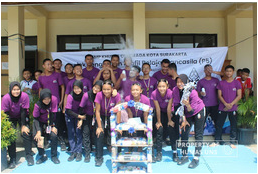
In line with strengthening sustainability practices on the ground, UNS MBKM students introduced a creative initiative to recycle waste into ecobricks at the Special Sports Junior High School of Surakarta, as part of environmental education and tangible action against plastic waste. This program not only supports campus policies on plastic minimization and waste management but also brings student and community actions to life, creating a chain of change that reaches from the local level to institutional levels.
With the combination of formal policies and field practices, UNS actively encourages the entire academic community to adopt a more environmentally friendly lifestyle, reduce reliance on single-use plastics, and serve as a tangible example in building a green culture within higher education.
SDG 12 Indicator
Operational Measures
Proportion Of Recycled Waste
Publication Of A Sustainability Report
|
Policy |
Link |
Summary |
Relevant Article |
|
Law Number 32 of 2009 on Environmental Protection and Management (UUPPLH) |
https://peraturan.bpk.go.id/details/38771/uu-no-32-tahun-2009 |
Affirms the principle of sustainable development by requiring every individual to maintain the integrity of environmental functions, prevent pollution and damage, and regulate the public’s right to a good and healthy environment. This law also includes prohibitions against indiscriminate waste disposal and provides a legal basis for the government to control waste, including single-use plastic, through monitoring instruments, administrative sanctions, and criminal penalties. |
Article 67: Every person is obliged to maintain the sustainability of environmental functions and to control pollution and/or environmental damage. |
|
Law Number 18 of 2008 on Waste Management |
https://peraturan.bpk.go.id/Details/39067/uu-no-18-tahun-2008 |
Regulates the principles, responsibilities, and governance of waste management in Indonesia to protect the environment and public health. This law emphasizes the importance of waste reduction at the source, reuse, recycling, and environmentally friendly final processing. |
Article 12: Every person, in managing household waste and household-like waste, is obliged to reduce and handle waste in an environmentally sound manner. |
|
Rector’s Instruction Number 28 of 2023 on the Paper and Plastic Usage Reduction Program at UNS Campus |
An official guideline for the entire academic community to reduce the consumption of disposable items on campus. This policy encourages the use of double-sided paper, the reuse of blank sheets, and the digitalization of organizational management to reduce physical printing. |
||
|
Circular Letter Number 55/UN27/SE/2020 on the Prohibition of Single-Use Plastic Drinking Containers and/or Plastic Bags in the Environment of Universitas Sebelas Maret |
Prohibition of the use of disposable plastic packaging or similar materials that can increase waste generation, and replace them with environmentally friendly equipment. |