SDG 7 In Number
Total energy used (GJ)
20.148
University floor space (m²)
505.885
Total energy used from low-carbon sources (GJ)
9.308
7.4.5 Assistance to Low-Carbon Innovation
UNS Support for Low-Carbon Start-Ups
As part of its efforts to build a sustainable future, Universitas Sebelas Maret (UNS) has embraced a proactive role in supporting innovation that drives the transition to a low-carbon economy. Recognizing that start-ups and young innovators are key to accelerating clean technologies, UNS provides direct assistance to start-ups that foster and support a low-carbon economy through incubation programs, technical guidance, and funding facilitation for energy efficiency, renewable energy, and carbon reduction. This initiative reflects UNS’s strong commitment to fostering an ecosystem where academic research, entrepreneurship, and sustainability come together to address urgent environmental challenges. At the same time, UNS’s support for low-carbon start-ups aligns with Sustainable Development Goal (SDG) 7: Affordable and Clean Energy, while advancing broader goals of inclusive and sustainable economic growth.
IoTanic is an agritech startup incubated by the UNS Innovation Hub (iHub) that develops Internet of Things (IoT) solutions to support sustainable farming practices. Founded by Mahdaviqia Dharmawan and Rizky Joanditya Nur Iman, IoTanic brings together students from diverse academic backgrounds, including agribusiness, informatics, and economics, to co-create integrated smart agriculture technologies.
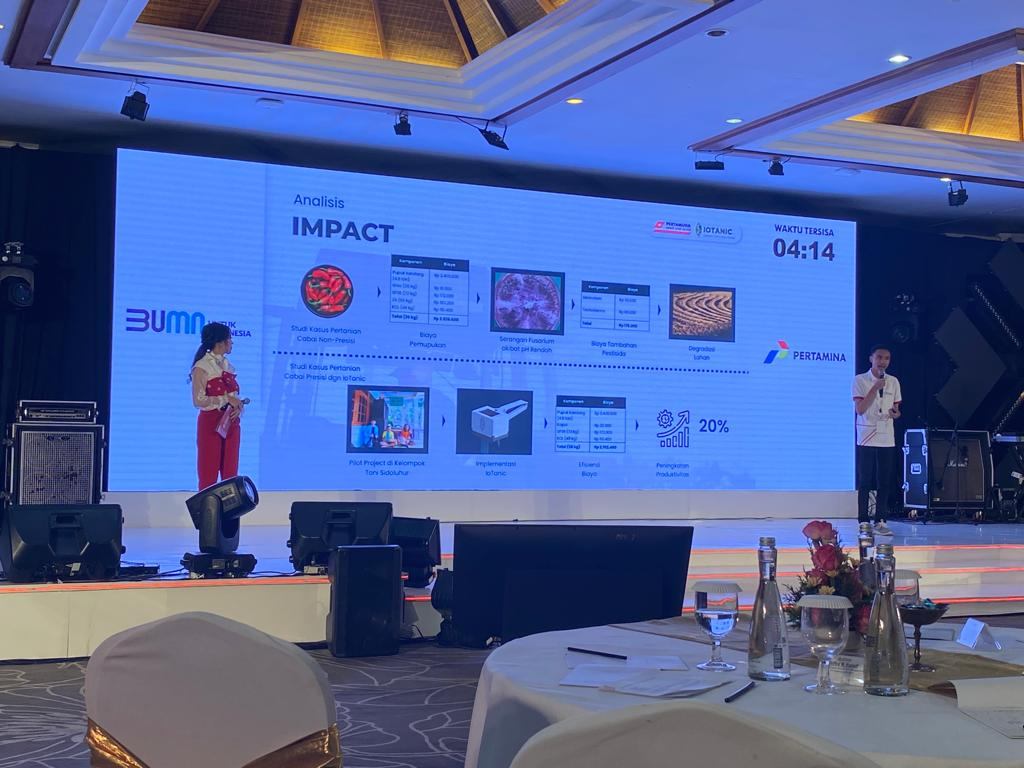
At the core of IoTanic’s innovation is a soil station equipped with sensors to measure essential soil nutrients, including nitrogen (N), phosphorus (P), potassium (K), and pH levels. The collected data is transmitted to a digital platform where it is processed to generate targeted fertilizer recommendations. Leveraging artificial intelligence (AI), the system provides farmers with precise guidance on the type, dosage, and placement of fertilizers, optimizing both efficiency and crop yields.
The technology has been piloted in seven regencies across Central Java and West Java, covering approximately 25,000 square meters of farmland. In one trial with chili cultivation in Sukoharjo, the system enabled farmers to save approximately Rp 200,000 in fertilizer costs while projecting a 20% increase in productivity. These results highlight IoTanic’s potential to significantly reduce input costs while enhancing agricultural output.
IoTanic also stands out for its affordable rental model, which makes its technology more accessible to smallholder farmers compared to many existing agritech solutions. By integrating sensor data with mobile and web applications, the startup enables farmers to monitor soil conditions and apply recommendations in real-time easily.
With its focus on practical innovation, accessibility, and sustainability, IoTanic exemplifies how university-based startups can translate research into real-world solutions that empower local farming communities and advance the adoption of smart, environmentally friendly agricultural practices in Indonesia.
RELEVANT RESEARCH
In 2024, UNS provided research and community service funding with a focus on SDG 7 topics to achieve SDG 7: Ensure access to affordable, reliable, sustainable, and modern energy for all. Several researchers, including Prof. Dr. Indah Widiastuti (Green Energy Generation), Dr. Eng. Risa Suryana (Material Maju untuk Mendukung Energi Terbarukan dan Produk Green Technology), Dr. Eng. Kusumandari (Pengembangan Energi Alternatif Biogas dari Sampah Organik), and Ir. Inayati (Desain dan Aplikasi Sistem Panel Surya Skala Kecil untuk Penerangan Area Pedesaan) supported low-carbon innovation through their research, strengthening the ecosystem for clean energy technology development.