SDG 6 In Number
Volume of water used in the university: Inbound (treated/extracted water) (m³)
94.092
Campus population
31.364
6.4.2 Water Reuse Measurement
Water Reuse Measurement at Universitas Sebelas Maret (UNS)
Universitas Sebelas Maret (UNS) is strongly committed to environmental preservation through the development of a clean water conservation program. This commitment is regulated in Rector’s Instruction No. 31 of 2023 on Clean Water Conservation at UNS Campus. The policy aims to create a sustainable and environmentally responsible university by ensuring efficient water management and promoting the reuse of water across the university.
The internal regulation outlines several important points, including:
- Implementation of water conservation policies to ensure sustainable management of water resources.
- Integration into the Tridarma of Higher Education, where water conservation efforts are incorporated into education, research, and community service.
- Groundwater management to ensure efficient use of clean water.
- Water-saving initiatives, including the reuse of water and the use of rainwater for non-consumptive purposes.
- Development of potable water management to provide clean and safe water.
- Utilization of water resources through rainwater harvesting systems, biopores, and infiltration wells.
- Domestic wastewater management through integrated systems.
- Monitoring and treatment of laboratory wastewater to minimize environmental impact.
Through this comprehensive policy, UNS strives to measure and optimize the reuse of water across various campus areas, ensuring that water is conserved, reused, and sustainably managed.
Concrete Actions in Measuring and Reusing Water
To support sustainable water management, UNS implements several initiatives to measure and reuse water effectively:
- Reuse of Ablution Water
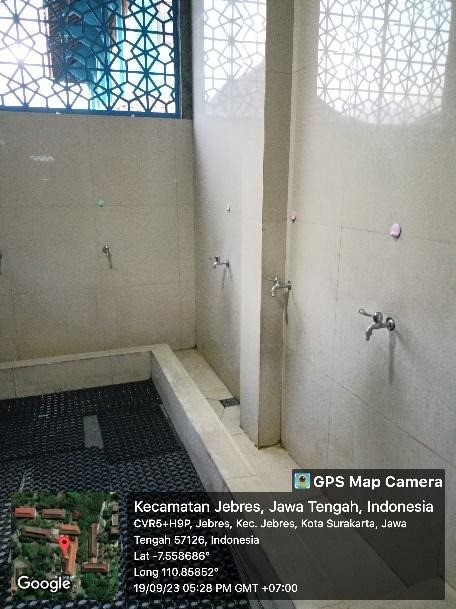
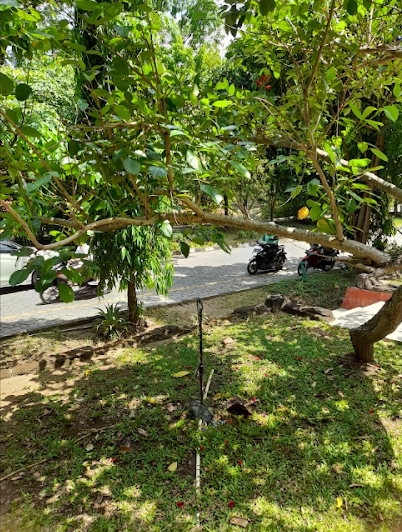
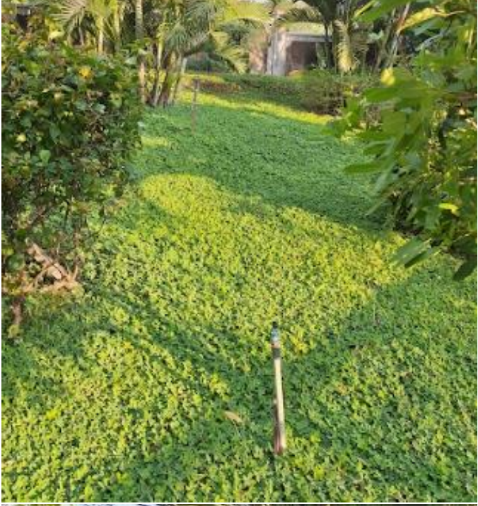
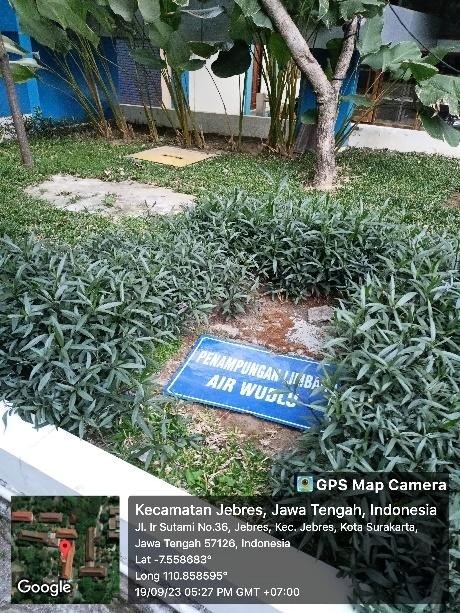
UNS reuse ablution (wudhu) water for watering plants. This practice reduces water usage while supporting the Green Campus program. Ablution water is collected through a piping system and storage tanks, then redirected to irrigate plants around mosques and prayer areas. This initiative demonstrates the university’s concrete steps in measuring and reusing water to minimize waste and encourage efficient resource use.
- Rainwater Collection and Ground Infiltration Systems
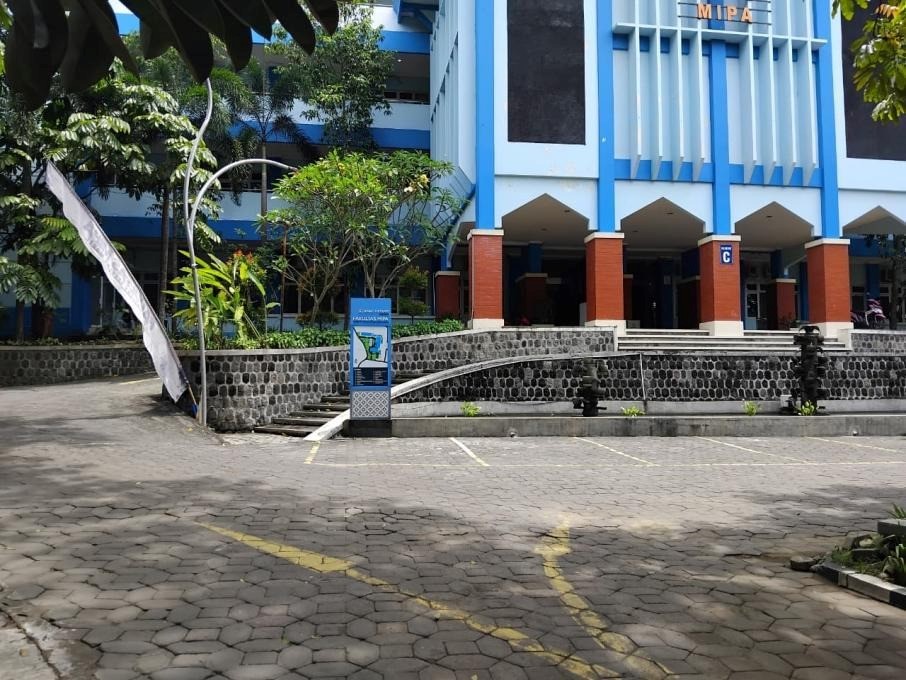
Across the campus, UNS uses paving surfaces instead of asphalt to improve natural rainwater infiltration. The Faculty of Mathematics and Natural Sciences (FMIPA) created 100 biopore holes over an area of 21,000 m² to enhance rainwater absorption and reduce runoff. This initiative helps maintain groundwater levels while providing a natural means of measuring rainwater infiltration and reuse.
- Rainwater and Surface Water Management in Campus Lakes
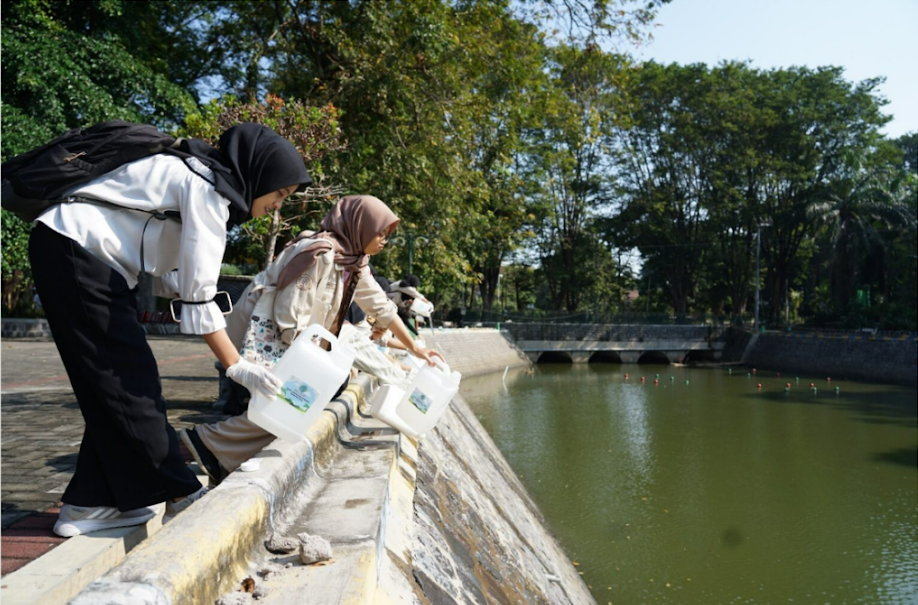
UNS maintains a campus lake that collects rainwater and surface water flowing through the area. In 2024, to maintain water quality, UNS academics poured 1,000 liters of eco-enzyme into the lake during the World Environment Day celebration. This initiative not only improves surface water quality but also serves as environmental education on water reuse and pollution prevention.
Source :
https://portalika.com/jernihkan-air-danau-uns-sivitas-akademika-uns-tuangkan-1-000-liter-ekoenzim/)
- Innovation in Light Wastewater Filtration and Measurement
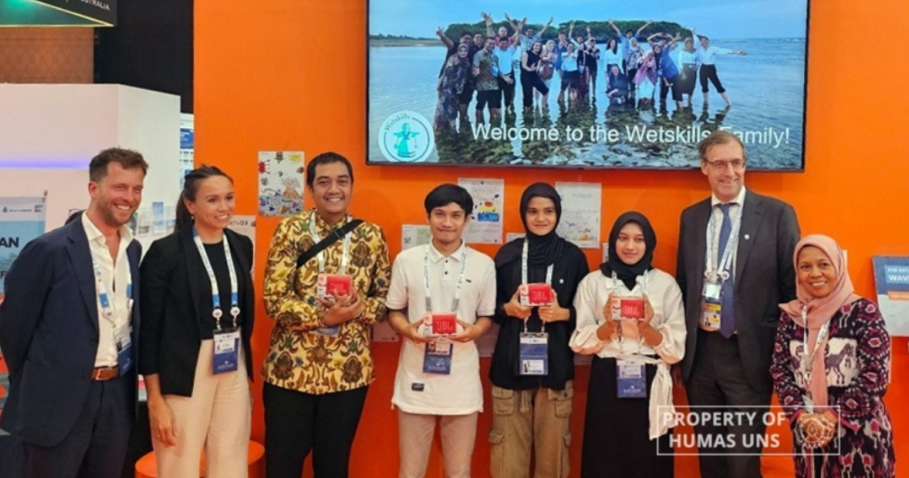
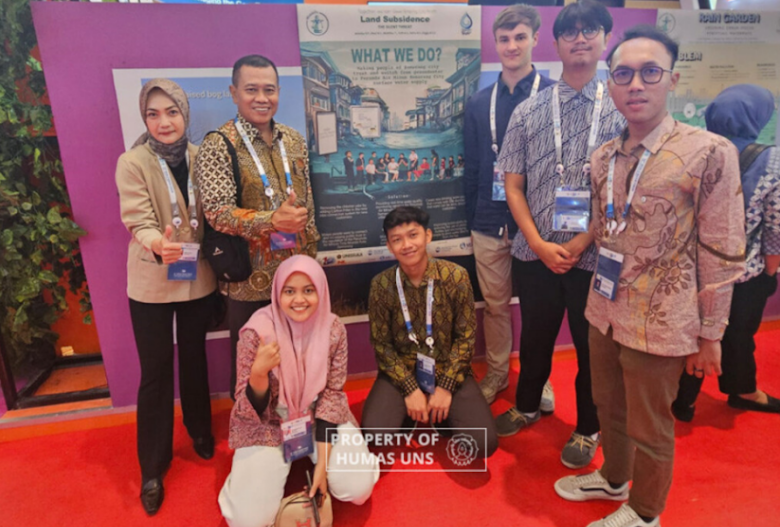
The Architecture Laboratory at the Faculty of Engineering participated in Wetskills Indonesia – World Water Forum 2024 in Bali, introducing an innovative system to filter and measure light wastewater, such as ablution water, for reuse in irrigation or even secondary ablution processes. This participation reflects UNS’s commitment to promoting innovation and research in water reuse measurement technologies.
Sources :
https://ft.uns.ac.id/berita-pengumuman/banyak-inovasi-ft-uns-lakukan-perencanaan-green-campus
https://uns.ac.id/id/uns-update/rg-urdc-labo-arsitektur-ft-uns-ikuti-wetskills-indonesia-world-water-forum-2024-di-bali.html
Through various efforts to measure, manage, and reuse water across the university—such as the reuse of ablution water, rainwater harvesting, wastewater filtration innovation, and eco-enzyme initiatives—UNS demonstrates its strong commitment to achieving SDG 6: Clean Water and Sanitation. These initiatives highlight UNS’s active role in promoting sustainable water reuse measurement, reducing clean water consumption, and building a green and environmentally conscious campus.
In 2024, UNS provided research and community service funding, focusing on SDG 6 topics, to achieve SDG 6: Ensure availability and sustainable management of water and sanitation for all. For example, the research “Allocation and Distribution of Water in the Colo Irrigation Area, Bengawan Solo” by RR. Ratri Werdiningtyas, S.T., M.T., Ph.D. examines irrigation water distribution systems and efficiency, which is relevant to the measurement and optimization of water reuse.