17.2.5 Collaboration with NGOs for SDGs
Universitas Sebelas Maret (UNS) demonstrates its strong commitment to achieving the Sustainable Development Goals (SDGs) through collaboration with non-governmental organizations (NGOs). These collaborations are realized through student volunteering programs, research programs, and the development of educational resources.
- Development of Educational Resources
UNS’s Collaboration with the Central Board of Muhammadiyah – Council for Higher Education, Research, and Development, One of the Largest NGOs in Indonesia
The Faculty of Economics and Business, Universitas Sebelas Maret (UNS), has signed a Memorandum of Agreement (MoA) with the Central Board of Muhammadiyah – Council for Higher Education, Research, and Development, as part of the implementation of the Memorandum of Understanding (MoU) between UNS and the Central Board of Muhammadiyah – Council for Higher Education, Research, and Development.
In 2024, several collaborative activities were successfully carried out as part of UNS’s collaboration with non-governmental organizations (NGOs) to support the Sustainable Development Goals (SDGs), particularly through the development of educational resources.
- Dr. Ibrahim Fatwa Wijaya, an academic staff member of the Faculty of Economics and Business, Universitas Sebelas Maret (UNS), plays a pivotal role in developing policies aligned with Sustainable Development Goal (SDG) 4: Quality Education. His work focuses on enhancing the quality of research and academic journal publications among academic staff across 160 higher education institutions under the Central Board of Muhammadiyah. In addition, Dr. Ibrahim has been actively involved in drafting and developing the Guidance on Academic Journal Publication for higher education institutions under the Central Board of Muhammadiyah, which represents a concrete example of developing educational resources that strengthen the research and publication capacity of partner institutions.
Universitas Sebelas Maret (UNS) demonstrates its strong commitment to achieving the Sustainable Development Goals (SDGs) through collaboration with non-governmental organizations (NGOs). These collaborations are realized through student volunteering programs, research programs, and the development of educational resources.
- Dr. Ibrahim Fatwa Wijaya also supported the Central Board of Muhammadiyah as a mentor and guest speaker in programs focused on academic journal paper writing at Universitas Muhammadiyah Ponorogo, Universitas Muhammadiyah Sukabumi, and Universitas Muhammadiyah Semarang. These activities directly contribute to UNS’s commitment to the development of educational resources in collaboration with NGOs to achieve the SDGs.
This collaboration reflects UNS’s continuous commitment to advancing educational quality, fostering academic excellence, and strengthening partnerships with leading national organizations to achieve the Sustainable Development Goals.
Sources:
https://pwmu.co/bersama-diktilitbang-pp-muhammadiyah-umpo-lakukan-pendampingan-penulisan-artikel-dan-tata-kelola-jurnal/
https://ummi.ac.id/id/berita/baca/1455-majelis-diktilitbang-pp-muhammadiyah-lakukan-pedampingan-mutu-ummi
- “International Certification Training of Trainer Tangible Coding Program for Computational Thinking” in Collaboration with Leva Foundation
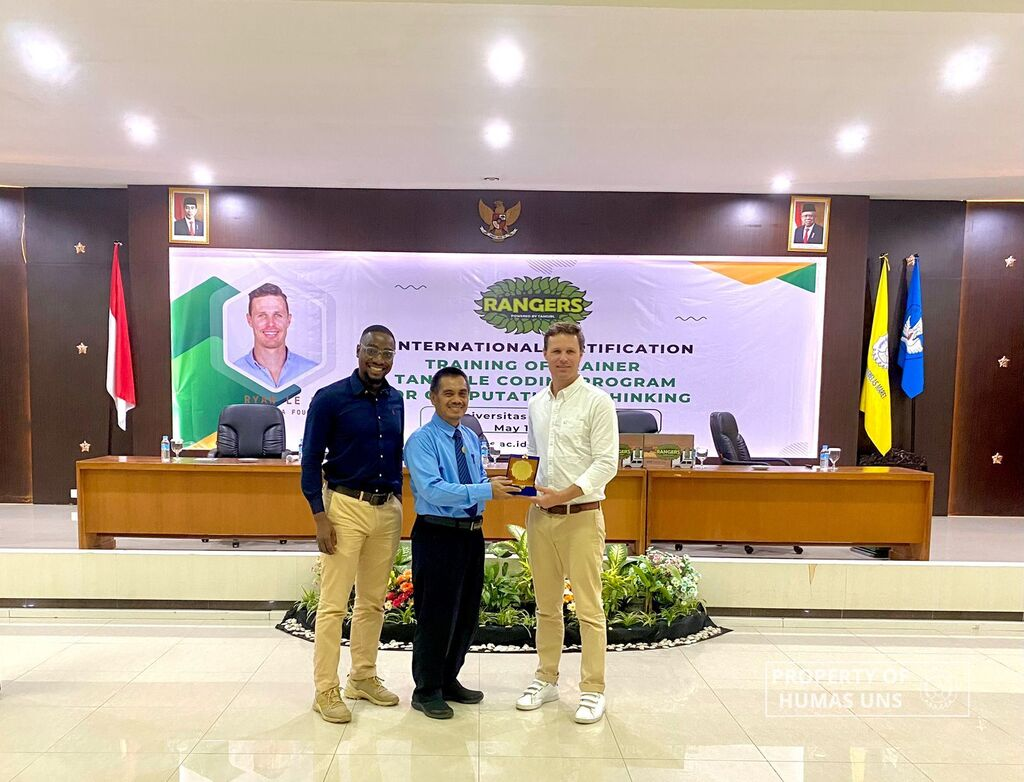
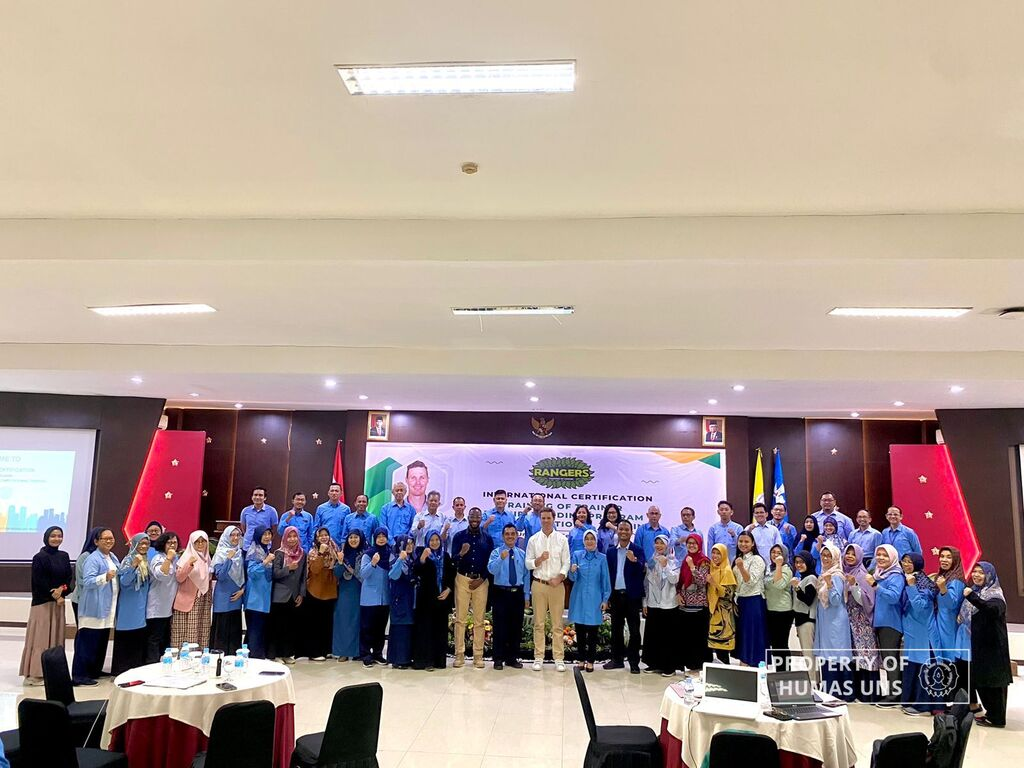
The Faculty of Teacher Training and Education (FKIP) UNS has established an international partnership with the Leva Foundation, an NGO based in South Africa that focuses on education, skills, technology, and sustainability. The collaboration was formalized through a Memorandum of Understanding (MoU) on 14 May 2024 at UNS Inn, Surakarta, with support from the Institute for Educational Development and Quality Assurance (LPPMP) at UNS.
One key implementation of this partnership is the “International Certification Training of Trainer Tangible Coding Program for Computational Thinking.” Through this initiative, the Leva Foundation introduced an innovative approach to educational resource development by promoting unplugged coding—teaching coding concepts without the use of computers, instead using simple, offline tools. The method is cost-effective, easy to apply, and suitable for areas with limited electricity or internet access. It enables teachers and facilitators—regardless of programming background—to deliver effective computational thinking lessons.
The joint training programme focuses on building the capacity of local educators and facilitators through a Training of Trainers (ToT) model. Participants learn the fundamental principles of coding and how to apply them in their teaching practice. In the next stage, the programme will be expanded to schools and community centers across regions, ensuring wider access to digital literacy and inclusive education.
This collaboration directly supports:
- SDG 4 (Quality Education) by improving technology-based learning quality,
- SDG 9 (Industry, Innovation, and Infrastructure) by creating adaptive learning solutions,
- SDG 10 (Reduced Inequalities) by ensuring inclusive access to digital education, and
- SDG 17 (Partnerships for the Goals) through strong collaboration with an international NGO.
By co-developing educational resources, training modules, and capacity-building initiatives, UNS and Leva Foundation empower teachers to deliver computational thinking education that is inclusive, scalable, and sustainable.
- Student Volunteering Program
Health Education on Diabetes Mellitus: Collaboration between UNS Public Health Postgraduate Students and PADIMAS
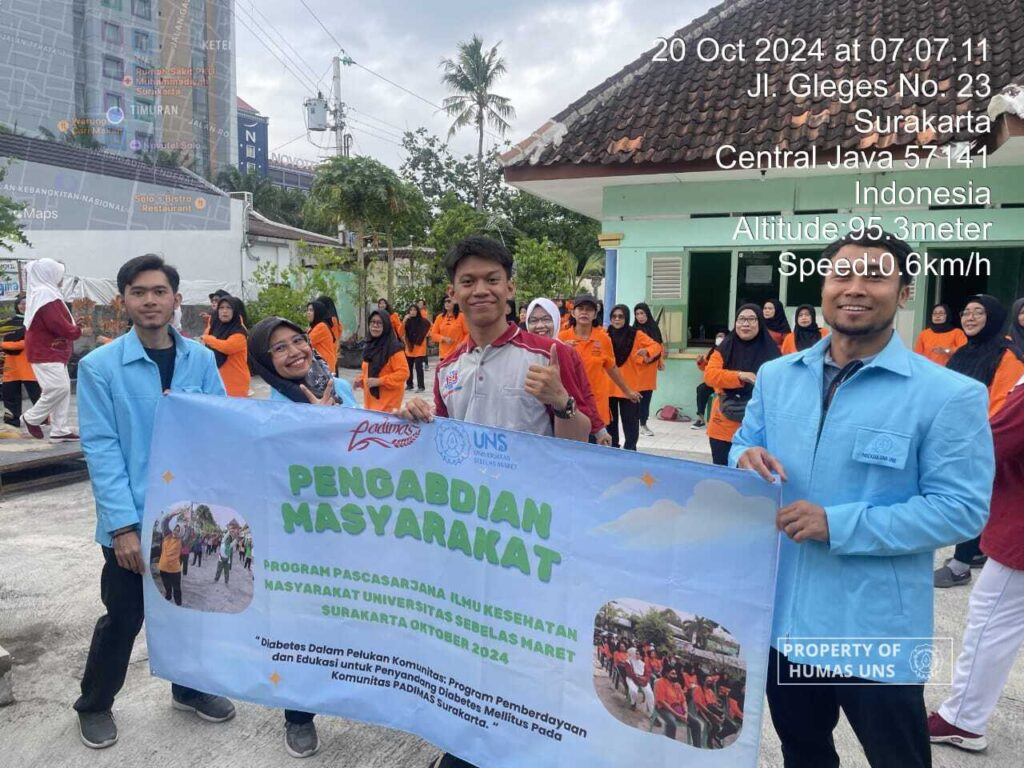
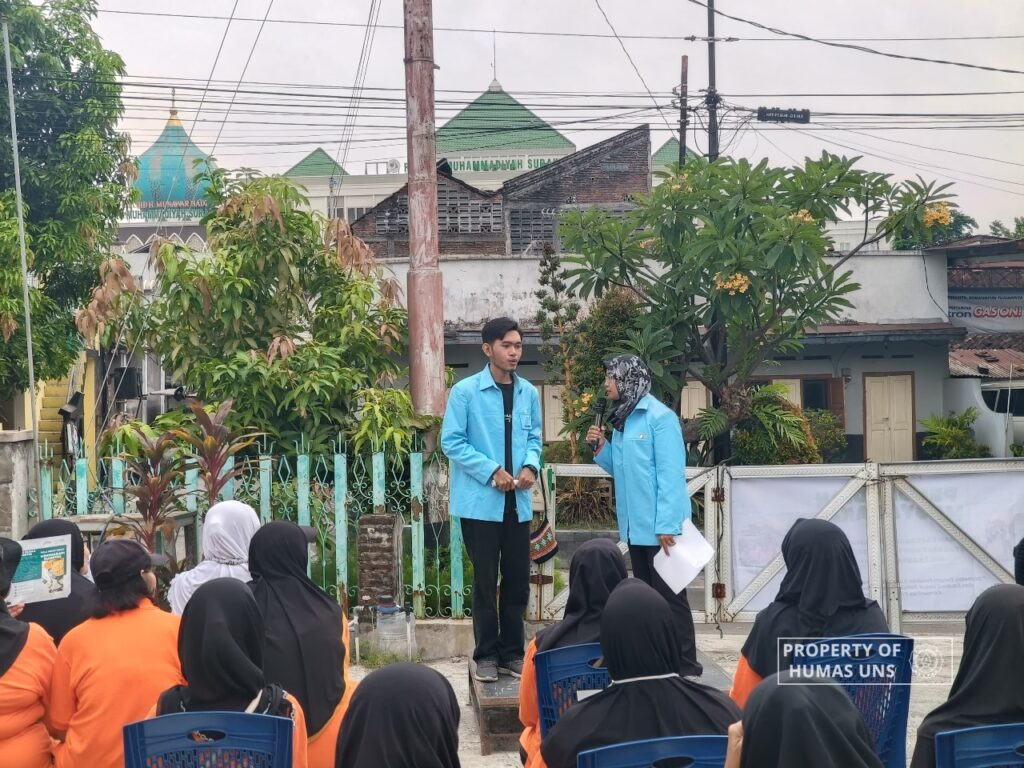
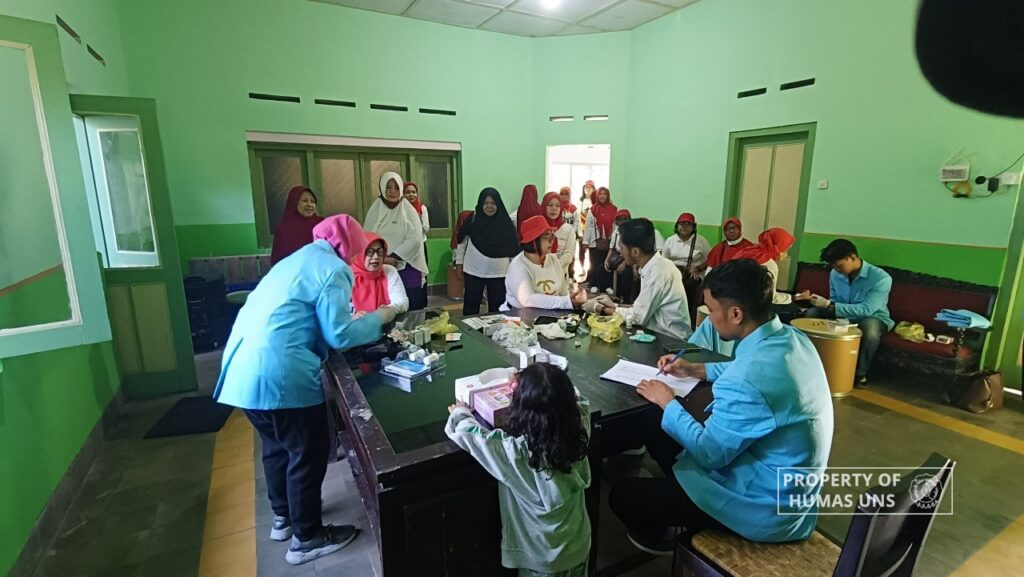
A community engagement group from the Public Health Postgraduate Program of Universitas Sebelas Maret (UNS) partnered with Paguyuban Penyandang Diabetes Mellitus Surakarta (PADIMAS)—a community-based organization under Klinik Pratama Jasmine 2—to conduct a public health programme in Sriwedari Village, Laweyan District, Surakarta City. PADIMAS serves as a community NGO/non-profit health provider focusing on grassroots healthcare.
The programme aimed to raise community awareness about Diabetes Mellitus through health education and physical activity sessions. Fully initiated and managed by postgraduate students as a form of student volunteering, the team consisted of Muh. Anan Wais Lahay, S.Tr.Kes. (team leader) and members Erlangga Yusa Bachtiar, S.K.M., Sari Tyaswikaning Aji, S.H., and Miswanto, S.Tr.RMIK. They were actively involved in every stage—from planning and education delivery to assisting the diabetes exercise sessions and monitoring the outcomes with PADIMAS’ elderly group.
During the activities, students delivered materials on the definition, causes, and symptoms of diabetes, as well as the importance of physical activity, a healthy diet, portion control, and discipline in medication adherence. Participants completed pre- and post-test questionnaires to measure understanding, and the education was followed by a diabetes-friendly exercise session. Participants’ blood glucose levels were checked before and after the exercise, showing the direct benefits of physical activity.
The programme had a significant impact, showing both improved knowledge and reduced blood glucose levels among participants. PADIMAS members expressed that the programme was highly beneficial and motivating for maintaining consistent physical activity and adopting healthier lifestyles.
This collaboration between UNS, PADIMAS, and Klinik Pratama Jasmine 2 exemplifies student volunteering through a partnership with a local community NGO, directly supporting SDG 3 (Good Health and Well-being) through disease prevention and health promotion, as well as SDG 4 (Quality Education) through evidence-based community education. The initiative also highlights how UNS students serve as agents of change, empowering communities to adopt and sustain healthy living practices.
- Research Program
International Community Engagement on Migrant Worker Issues in Malaysia
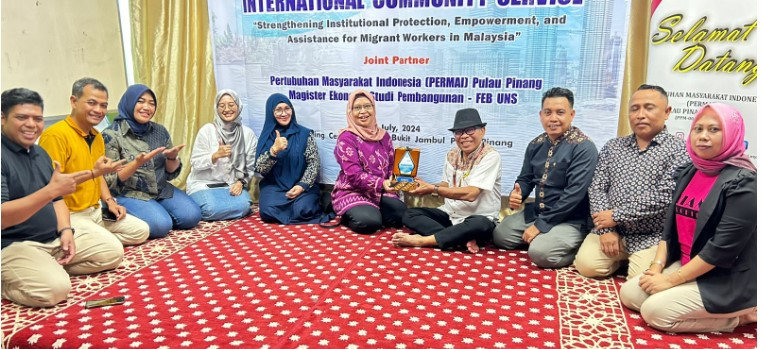
The challenges faced by Indonesian Migrant Workers (IMW) in Malaysia, especially in Penang Island, remain complex. These include weak institutional support, limited access to protection services, lack of financial literacy, and restricted access to education for migrant children.
To address these social challenges, the Master’s Program in Economics and Development Studies (MESP), Faculty of Economics and Business (FEB), UNS, collaborated with Universiti Sains Malaysia and PERMAI (Pertubuhan Masyarakat Indonesia)—a local Malaysian NGO that supports Indonesian migrant workers. Together, they conducted an international community engagement and research programme on 6–7 July 2024 at PERMAI Learning Centre, Bukit Jambul, Penang, Malaysia.
The main activity was a Focus Group Discussion (FGD) attended by approximately 30 participants, including PERMAI administrators and IMWs. The discussion highlighted the real problems faced by migrant workers and the challenges encountered by NGOs in assisting them. The FGD produced valuable primary data for academic analysis and the design of future evidence-based community action research.
In addition, the UNS team conducted financial planning and business management workshops for IMWs, as well as educational sessions for 25 children of migrant workers under PERMAI’s care. These activities included learning motivation and introductions to Indonesian culture, helping strengthen the children’s national identity while living abroad.
This collaboration contributes directly to several SDGs:
- SDG 1 (No Poverty) through the economic empowerment of migrant workers,
- SDG 4 (Quality Education) through learning support for migrant children,
- SDG 8 (Decent Work and Economic Growth) through entrepreneurship and financial literacy,
- SDG 10 (Reduced Inequalities) by focusing on vulnerable groups abroad, and
- SDG 17 (Partnerships for the Goals) through university-NGO international collaboration.
The initiative resulted in the collection of important primary data, raised financial awareness, and strengthened the motivation to learn among migrant families. Moving forward, UNS is committed to continuing the programme in 2025 with a focus on economic empowerment and education for IMWs, while involving students to integrate research, community engagement, and volunteering. This partnership demonstrates UNS’s commitment to sustainable and inclusive community development beyond national borders.
Conclusion
Through a series of student volunteering programmes, collaborative research projects, and educational resource development initiatives with both local and international NGOs, Universitas Sebelas Maret (UNS) strengthens its role as a university actively contributing to the achievement of the SDGs. These collaborations demonstrate UNS’s commitment to community empowerment, knowledge sharing, and sustainable partnerships, ensuring that education and research deliver a lasting positive impact on society.