SDG 7 In Number
Total energy used (GJ)
20,148
University floor space (m²)
505,885
Total energy used from low-carbon sources (GJ)
9,308
7.4.3 Energy Efficiency Services for Industry
Battery Energy Storage System (BESS) integrated with Solar Panel
The Center of Excellence for Electric Energy Storage Technology (PUI-PT TPEL) at Universitas Sebelas Maret (UNS) provides energy efficiency and clean energy services to local industries through research collaboration and technical capacity building. PUI-PT TPEL has established partnerships with leading companies, including PT Pertamina, PT LEN Industri, LIPI, BPPT, B4T, BSN, BATAN, and MIND ID (a mining consortium comprising INALUM, ANTAM, Freeport, and others).
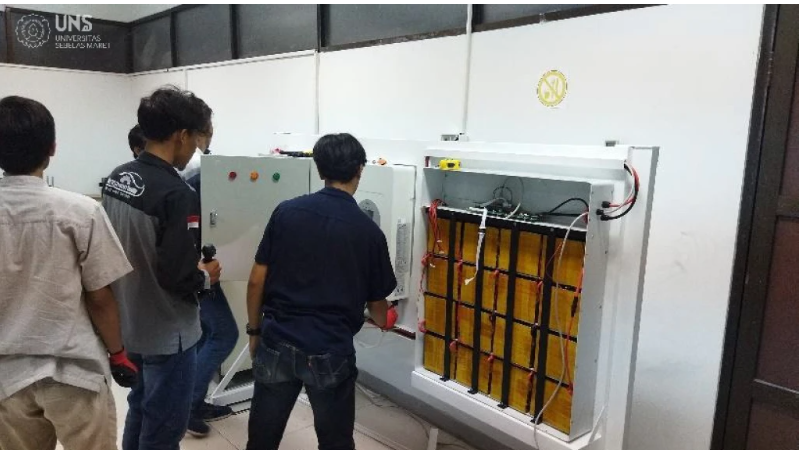
In 2024, PUI-PT TPEL collaborated with PT PLN Indonesia Power (PLN IP) to develop a Battery Energy Storage System (BESS) power wall prototype with a capacity of 100Ah/51.2V, equipped with a modern Battery Management System (BMS). The product was tested at the PLN Pelabuhan Ratu office, integrated with solar panels as a source of clean energy to power lighting and office equipment. This collaboration served as a direct service to industry, supporting the improvement of energy efficiency and the transition toward renewable energy systems.
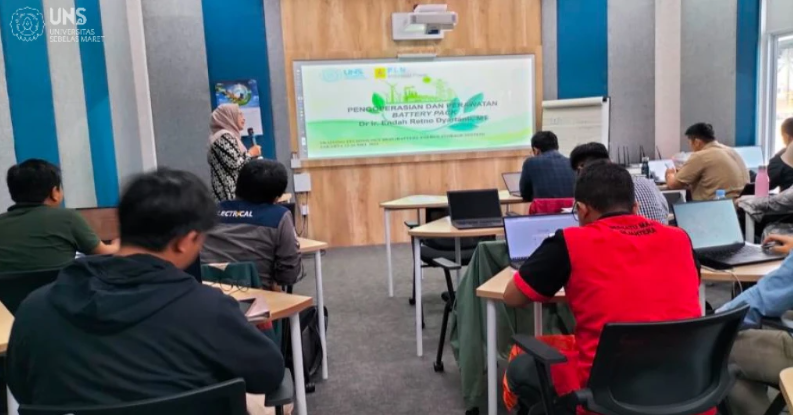
In addition, PUI-PT TPEL provided free training and workshops for PLN IP employees from across Indonesia to enhance their mastery of BESS technology, supporting PLN’s transition from coal-fired power plants (PLTU) to solar power plants (PLTS). These activities demonstrate UNS’s active contribution in providing energy efficiency services for industry through research on renewable energy options, technical assistance, and capacity development.
The 100Ah/51.2V BESS Powerwall prototype, capable of producing 5.12 kWh of energy, was tested together with PLN IP. This product addresses the problem of limited electricity access in remote areas that often experience blackouts and are difficult to reach by the national grid. The innovation not only replaces fossil-fuel-based power generation—since the Powerwall’s energy source comes from solar power—but also encompasses the development of batteries, hardware, software systems, and network connectivity. The product supports household energy independence, reduces the carbon footprint, and accelerates the transition toward clean and efficient energy in Indonesia.
Source :
https://uns.ac.id/id/kerja-sama-uns/bersama-pt-pln-indonesia-power-uns-membuat-prototyping-powerwall.html
https://uns.ac.id/id/kerja-sama-uns/uns-dan-pt-pln-indonesia-power-jalin-kerja-sama-strategis-dukung-transisi-energi-dan-pengembangan-sdm.html
Direct Services to Local Industry for Energy Efficiency and Clean Energy
In its pursuit of a sustainable future, Universitas Sebelas Maret (UNS) has taken a proactive role in strengthening local industries by integrating clean energy and energy efficiency solutions. Recognizing the vital role that community-based enterprises play in advancing low-carbon transitions, UNS provides direct services to local industries to help them improve energy efficiency and adopt clean energy solutions. This commitment reflects the university’s broader vision of linking academic research with practical solutions that drive both environmental and economic benefits. At the same time, UNS’s initiatives are closely aligned with the Sustainable Development Goal (SDG) 7: Affordable and Clean Energy, contributing to inclusive and sustainable growth at the community level.
A research team from the Faculty of Engineering at Universitas Sebelas Maret (FT UNS) has implemented a community service program (P2M) in Desa Daleman, Klaten, to enhance the productivity and sustainability of the local aren flour industry. The program is strategically designed to address both technical and environmental challenges in rural production systems, with a focus on enhancing operational efficiency and promoting clean energy solutions. This initiative reflects the university’s commitment to integrating academic research with community-based industrial development.
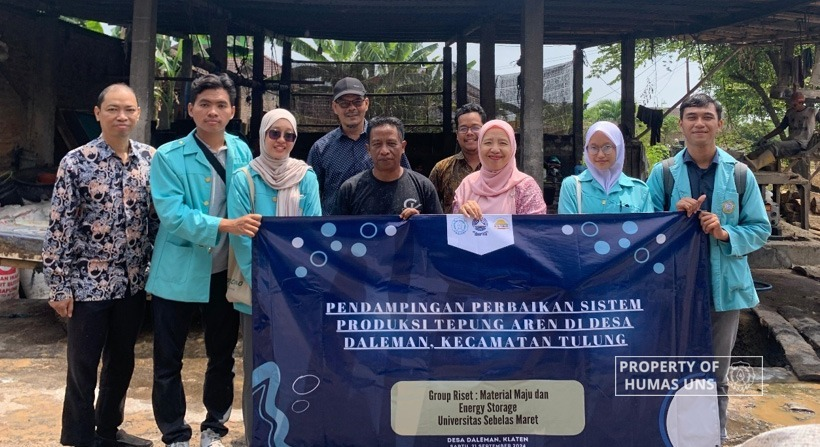
A key component of this program is the provision of direct services to local industry aimed at improving energy efficiency and clean energy. These services are provided free of charge to participating local industries, ensuring accessibility and encouraging adoption of energy efficiency and clean energy practices. The team conducted comprehensive energy efficiency assessments to identify sources of energy waste and propose cost-effective solutions. They also organized workshops and technical training sessions to build local capacity in energy management and process optimization. Additionally, the researchers examined renewable energy options, including solar and biomass systems, to facilitate the transition to more sustainable energy sources for local production activities.
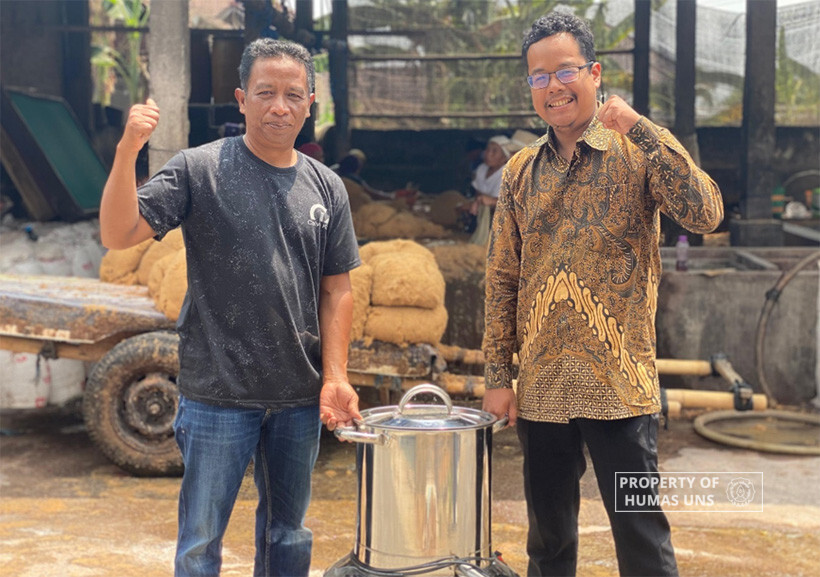
Initial outcomes indicate a positive impact on both energy consumption and production stability among participating small industries. Several aren flour producers have started implementing efficiency improvements recommended by the research team, resulting in reduced operational costs. This collaborative approach demonstrates how academic institutions can contribute directly to advancing cleaner production and energy transition at the community level, while supporting rural economic development.
RELEVANT RESEARCH
In 2024, UNS provided research and community service funding with a focus on SDG 7 topics to achieve SDG 7: Ensure access to affordable, reliable, sustainable, and modern energy for all. Dr. Eng. Risa Suryana (“Material Maju untuk Mendukung Energi Terbarukan dan Produk Green Technology”) and Dr. Wibawa Endra Juwana (“Analisa Teknis Sistem Optimalisasi Efisiensi Konversi Energi Terbarukan”) provided services and solutions for industrial energy efficiency, including material innovations and energy optimization systems to support the adoption of clean energy.